The way that we learn about Helen Keller in school is an absolute outrage. We read “The Miracle Worker”- the miracle worker referring to her teacher; she’s not even the title character in her own story. The narrative about disabled people that we are comfortable with follows this format- “overcoming” disability. Disabled people as children.
Helen Keller as an adult, though? She was a radical socialist, a fierce disability advocate, and a suffragette. There’s no reason she should not be considered a feminist icon, btw, and the fact that she isn’t is pure ableism- while other white feminists of that time were blatent racists, she was speaking out against Woodrew Wilson because of his vehement racism. She supported woman’s suffrage and birth control. She was an anti-war speaker. She was an initial donor to the NAACP. She spoke out about the causes of blindness- often disease caused by poverty and poor working conditions. She was so brave and outspoken that the FBI had a file on her because of all the trouble she caused.
Yet when we talk about her, it’s either the boring, inspiration porn story of her as a child and her heroic teacher, or as the punchline of ableist, misogynistic jokes. It’s not just offensive, it’s downright disgusting.
the reason the story stops once hellen keller learns to talk is no one wanted to listen to what she had to say
how’s that for a fucking punchline
It’s not that I disagree that we should all be aware of what a badass Helen Keller became, because she had a long and amazing career as an activist and yes, a feminist hero. It’s that somehow when people talk about the ableism of the way Helen’s story is told they always seem to forget this: Anne Sullivan, her teacher, was blind. Seriously. From Wikipedia:
“When she was only five years old she contracted a bacterial eye disease known as trachoma, which created painful infections and over time made her nearly blind.[2] When she was eight, her mother passed away and her father abandoned the children two years later for fear he could not raise them on his own.[2] She and her younger brother, James (“Jimmie”), were sent to an overcrowded almshouse in Tewksbury, Massachusetts (today part of Tewksbury Hospital). He, who suffered a debilitating hip ailment, died three months into their stay. She remained at the Tewksbury house for four years after his death, where she had eye operations that offered some short-term relief for her eye pain but ultimately proved ineffective.[3]“
Eventually some operations did restore part of her eyesight, but by the end of her life she was entirely blind. Also:
“Due to Anne losing her sight at such a young age she had no skills in reading, writing, or sewing and the only work she could find was as a housemaid; however, this position was unsuccessful.[2] Another blind resident staying at the Tewksbury almshouse told her of schools for the blind. During an 1880 inspection of the almshouse, she convinced an inspector to allow her to leave and enroll in the Perkins School for the Blind in Boston, where she began her studies on October 7, 1880.[2] Although her rough manners made her first years at Perkins humiliating for her, she managed to connect with a few teachers and made progress with her learning.[2] While there, she befriended and learned the manual alphabet from Laura Bridgman, a graduate of Perkins and the first blind and deaf person to be educated there.”
So Anne Sullivan, disabled and born into serious poverty, learns the manual alphabet from a deaf and blind friend; passes that alphabet on to her deaf and blind student. This isn’t the story of an abled-bodied teacher swooping in to ‘save’ a disabled child; it’s a series of disabled women helping each other. Helen Keller’s story is the story not of one badass disabled woman, but of two. Anne and Helen were lifelong friends; Anne died holding Helen’s hand.
Also is there a book called “The Miracle Worker”? I thought that was the movie/movies based on “The Story of My Life” by Helen Keller. But I could be wrong. And I didn’t learn any of this in school in general but that’s neither here nor there.
I can recommend the ‘62 version of “The Miracle Worker” with Anne Bancroft and Patty Duke. It’s blatant about Sullivan’s impoverished background and eye problems – her rage on Helen’s behalf isn’t abstract at all, it’s very, very personal. And that’s the most amazing thing about this movie: Anne and Helen are the angriest people on earth. I have no idea if that was erased from the remakes but in the original they are both allowed to have a ton of anger about what has been done to them and what they have been denied.
Anyway, I’ve rambled enough. Here’s a picture of Helen Keller meeting Charlie Chaplin:
omfg I am so mad right now because not only did the kids biography of Helen Keller I read when I was younger erase all her activism, but it very explicitly completely erased anything about Anne being blind herself.
There were scenes of her WATCHING Helen from across the room or yard, and it was all very “oh my, I just MUST save this poor little disabled girl, no other deaf blind person has EVER BEEN EDUCATED and basically it was awful and shitty.
I think everyone should read Helen and Teacher. It’s an absolute brick of a book, hundreds of pages, but it is wonderful. It’s about their whole lives, right up to Helen’s death in old age. It talks about Helen’s feminism, socialism, and campaigning for everything from equal rights to sexual health. Helen Keller was not a syrupy, greeting card girl who existed to make able people feel warm and fuzzy, she was a tireless academic, political activist and writer. She was making noise about the issues she cared about from the moment her partnership with Annie Sullivan began, and she never stopped.
I don’t know why, but this made my heart grow three sizes.
It is too late to assert the turgid manly rigour of the hard sciences. They have always had girl cooties. We literally stuck our underwear on your man-machines.
BP historian here: the Wrens (members of the Women’s Royal Naval Service) dried their underwear on Colossus, arguably the first computer, which took up most of a room, and got very warm. An Enigma machine, which is about the size of a typewriter, isn’t going to work very well for knickers-drying purposes. Using a computer designed to break German ciphers though – go for it.
advertising is important as it’s the historian’s best resource for identifying the values of an era. but yeah, these were fucked. the 60s was generally as fucked as the 50s. people forget that.
It literally says ‘men are better than women’ in bold type, what the fuck. I knew this was a thing, but that is a lack of subtlety I couldn’t have written into a spoof…
This is the generation that spawned most of our parents… People our parents’ age run Washington. Starting to make sense?
When you look to the past, the struggles of the present become a great deal more clear.
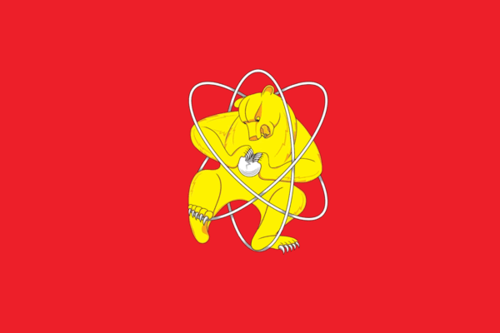
Their flag and coat of arms is a bear splitting the atom.
That is all.
*kicks down door, knocks over end table, vase crashes to the floor*
No that is NOT all, because Zheleznogorsk is really interesting.
It was a secret city, established in 1950 in the middle of Nowhere, Siberia for the purpose of researching nuclear weaponry and producing massive quantities of plutonium, the facilities for which were hidden inside a hollowed-out mountain. It appeared on no maps, and had no census data. Although more than 100,000 people lived there at one point, satellite imagery would have shown only a fairly small mining town. The mountain complex contained 3,500 rooms and three plutonium reactors, which were kept cool by one of the mightiest river in Siberia. The space had been excavated by tens of thousands of gulag slave laborers, who removed more rock from inside the mountain than was used to build the Great Pyramids. Protected under the granite peak of the mountain, these facilities would survive a direct nuclear attack.
No one called it “Zheleznogorsk.” Officially, it was “Krasnoyarsk-26,” which is something like naming a city ‘Arizona-17.’ Residents traveling outside the city called it Iron Town, if they had to refer to it at all. They were under strict instructions never to reveal to anyone the actual business of Krasnoyarsk-26.
And life there was fantastic. People living and working in the secret city received some of the best wages in the Soviet Union. There were sports stadiums, public gardens, a movie theater, and the shortages notorious in the rest of the USSR were unknown. The best nuclear scientists in Russia lived in a sealed-off utopia.
A third of all the nuclear weapons produced in Russia during the Cold War were powered by fuel from Zheleznogorsk. At the time, the image of the great Russian bear ripping an atom apart wouldn’t have seemed very funny at all.
I love the history side of Tumblr
UM, SO. MY GRANDFATHER ACTUALLY BUILT THIS TOWN, AND HELPED RUN IT FOR MANY YEARS.
He was a (Jewish) university student with a degree in electrical engineering (he volunteered for military service after his dad was killed in WWII and served during wartime even though he was underage and medically prohibited from serving in the military. He faked his papers and went to “avenge his dad” at 17.)
Anyway, after the war he started uni and graduated with a Master’s in engineering 5 years later, in the early 50s. He was then due to receive his mandatory 3 year assignment (as all Soviet uni students did – higher education was free, but you spent your first three years working wherever they sent you), except instead he was tapped by the KGB, for reasons he wasn’t clear on until his death (he has several relatives declared Enemies of the State during Stalin’s purges, and he was Jewish, so not exactly a prime candidate for top secret work.)
Anyway, they sent him to the middle of nowhere, Siberia, where he lived in a tent in the wilderness with a few other guys, and was in charge of building a city. It took over a year before any of his immediate superiors even moved out there, because it was literally in the middle of a snowy forest. My grandfather was in charge of making a city plan, laying roads, building houses, building the nuclear facilities, all of it. Eventually he and tent-mates moved into temporary houses, and then eventually real houses.
He wasn’t a nuclear scientist, he worked on the logistical side of the city, but he continued to run it until he left. They were in charge of all the infrastructure, including work inside the nuclear reactors. He was involved in an accident once, where a “minor” bomb exploded and knocked down a bunch of protective walls and he was in the hospital for a while, with radiation poisoning among other things.
Some of the most gruesome stories my grandfather used to tell were about supervising the prisoners who were extracting rock from the mountain. It was not only slave labor, it was also a death sentence. They were not given safety equipment and the rock dust would quickly settle in their lungs. Since they had nothing to lose the prisoners did everything to prolong or fuck up the process of carving the mountain. They’d set clever traps that would only be discovered months later and delayed construction. To be clear, tampering with this system, or with the fates of the prisoners, was considered treason, punishable by death. Similarly, any serious fuck up in constructing the town and facilities my grandfather was in charge of, would have similarly meant a conviction for treason and a potential execution for my grandfather.
Eventually on one of his vacations back home my grandfather met my grandma, they wanted to get married but she had to get security clearance before they let her move to a secure zone. This was actually a huge problem, and my grandparents lived apart for months when my grandpa had to go back to work and my grandma wasn’t allowed to join him. You see, my grandmother, who was 11 when WWII broke out, had to account for every single day during the war to prove she had actually been in a concentration camp the whole time and hadn’t been aiding the Germans and their allies (my grandmother was Jewish). If even one day was unaccounted for she’d be considered too risky to let into a place like Krasnoyarsk-26. She had to produce documents, witnesses, etc.
Eventually my grandparents were reunited, and life in Krasnoyarsk-26 was indeed pretty awesome. They had everything, no expense was spared. My grandmother, who had a teaching degree, became the teacher of the small school they eventually established for the children of the residents.
Probably my favorite story is how my uncle was born. My grandmother’s relatives obviously didn’t know anything about where she was, but she did write letters and tell them she was pregnant with her first child (she was also the firstborn, so it was the first grandchild for the family). Her mother, my great-grandmother, insisted on coming over to help her during and after the birth, as otherwise it was just my grandparents living on their own in their little apartment, and my grandfather would obviously not get any paternity leave.
This was strictly forbidden, no unathorized people were allowed into the town, and my grandfather wrote to his mother-in-law telling her as such. This did not even slightly deter my great-grandmother, who, among other things, managed to pull 5 little girls through Nazi concentration camps all on her own. She completely ignored my grandfather, packed her bags, went to Krasnoyarsk (the actual, non-secret city) and started asking questions about this mysterious Krasnoyarsk-26 and where she might find it. Eventually she actually managed to figure it out and showed up at the gates of Krasnoyarsk-26 asking for my grandfather. Since he was well known and well liked my grandfather was alerted to deal with the problem, and my great-grandmother made it clear to him that she wasn’t leaving. He had to sneak her in through a secret passage, basically making a long journey in the snow, and eventually illegally brought her into the city. This is probably my favorite story about my great-grandmother.
Eventually my mom was born, and as a child started having health issues. She got sick a LOT and the doctors told my grandparents that she wouldn’t survive another Siberian winter. My grandmother took her back to the south of Ukraine, to live with family, and my grandfather had to find a way to quit his job and join them. You have to understand you didn’t just quita top secret nuclear facility in the Soviet Union. No rules applied here, there were no workers’ unions. You worked there until your services were no longer needed.
My grandfather explained the situation to his superior, and his superior literally pulled out a map of the Soviet Union and said “point to any place on this map and I will find a sanatorium for your wife and children where they can live as long as they like, at the state’s expense, and enjoy every comfort and top notch medical treatment. We can do that for you, but you have to stay here.”
My grandfather refused and said he wouldn’t stay without his family, and his family couldn’t live here anymore, so. They actually eventually did let him go! He counted himself exceptionally lucky.
And then of course when he came home to Ukraine and was reunited with my grandmother he found that because the work had been top secret, it was like his record didn’t exist, and antisemitism in the real world was so severe that no one would give him a job as even a lowest level engineer. He spent months going to interviews, sending his paperwork everywhere and trying to cash in every favor he could just to get any kind of work. Eventually a friend from uni set him up somewhere, with a lower wage and a lower level position than he deserved going purely by his years of experience, nevermind the kind of work he actually did.
I only found out about all this in bits and pieces, and the majority of it started making sense in my head when my grandfather started sharing more, closer to when he died. I actually had no idea about any of this until I joined the military and became an intelligence officer. My family always used to laugh or not get why I couldn’t tell them things, but my grandfather suddenly started displaying a lot of sympathy and understanding for my position.
“There are secrets I signed my name to that I’ll never tell anyone,” he used to say. And i’d say “but grandpa, it’s been 60 years! It’s all been declassified, besides!” And he’d say “that doesn’t matter. I signed my name and I gave my word. I can talk about what daily life was like, but I’ll never talk about happened in the classified facilities. Not even when they make shows about it on television. I’ll never betray the promises I made.”
One part that was super fun/surreal though was comparing classification and information security protocols with my grandpa. “Oh did you do that as well? How interesting!”
Their flag and coat of arms is a bear splitting the atom.
That is all.
*kicks down door, knocks over end table, vase crashes to the floor*
No that is NOT all, because Zheleznogorsk is really interesting.
It was a secret city, established in 1950 in the middle of Nowhere, Siberia for the purpose of researching nuclear weaponry and producing massive quantities of plutonium, the facilities for which were hidden inside a hollowed-out mountain. It appeared on no maps and no census data. Although more than 100,000 people lived there at one point, satellite imagery would have shown only a fairly small mining town. The mountain complex contained 3,500 rooms and three plutonium reactors, which were kept cool by one of the mightiest river in Siberia. The space had been excavated by tens of thousands of gulag slave laborers, who removed more rock from inside the mountain than was used to build the Great Pyramids. Protected under the granite peak of the mountain, these facilities would survive a direct nuclear attack.
No one called it “Zheleznogorsk.” Officially, it was “Krasnoyarsk-26,” which is something like naming a city ‘Arizona-17.’ Residents traveling outside the city called it Iron Town, if they had to refer to it at all. They were under strict instructions never to reveal to anyone the actual business of Krasnoyarsk-26.
And life there was fantastic. People living and working in the secret city received some of the best wages in the Soviet Union. There were sports stadiums, public gardens, a movie theater, and the shortages notorious in the rest of the USSR were unknown. The best nuclear scientists in Russia lived in a sealed-off utopia.
A third of all the nuclear weapons produced in Russia during the Cold War were powered by fuel from Zheleznogorsk. At the time, the image of the great Russian bear ripping apart an atom with brute strength wouldn’t have seemed very funny at all.
It sometimes makes me so sad to think that throughout human history there have been hundreds upon millions of acts of heroism, self-sacrifice and love that no-one will ever know about.
pizza wasn’t invented until the late 19th century so that means everyone in les mis died before they could try their first pizza and that’s why les mis is such an upsetting story
if it’s any consolation, the part of Vergil’s Aeneid where they’re eating food on flatbread and thus “eating their tables” suggests that many precursors to pizza may have existed even prior to the late 19th century, so Les Amis may at least have been able to enjoy proto-pizza. I mean Grantaire would probably know where in Paris to find some.
The genetic code of King Richard III, the medieval monarch whose body was found buried under a parking lot in Leicester, England, is set to be sequenced. Researchers at the University of Leicester announced the project today (Feb. 11). “It is an extremely rare occurrence that archaeologists are involved in the excavation of a known individual, let alone a king of England,” Turi King, a geneticist at the University of Leicester who will lead the project, said in a statement. Sequencing the genome of Richard III is a hugely important project that will help to teach us not only about him, but ferment discussion about how our DNA informs our sense of identity, our past and our future.” [Photos: In Search of the Grave of Richard III]
Something about the moment Paul Delaroche chose to illustrate….really made this painting. Idk if that makes any sense.
This actually happened though. When she knelt down to put her head on the block she reached out for it but couldn’t find it and panicked, yelling out “Where is it?!”. Someone kindly guided her head and shoulders to the block.
Jane was 16-17 when she died. She was put to death for sitting on a throne she never tried to grab. Her parents and in-laws together came up with a plot to keep Catholic Mary off the throne after Edward the Protestant died. She willingly gave Mary back the throne, she never wanted to be Queen.
She was put to death after a lifetime of abuse from her parents over a plot contrived by her parents. The people who were supposed to love, guide, cherish, and take care of her. Even in her time her parents abuse of her was well known and frowned upon.
Her story is so tragic.
this is the painting that got me into loving art
I live near the place where Lady Jane Grey grew up. (It’s a ruin now, but you can still go see it.) The more I learn about her, the sadder I feel when I go there…
What fighting like a girl was all about in Georgian Era Britain —- Elizabeth “Lady Bare Knuckles” Stokes
Think that women’s boxing or MMA fighting is a recent development in fighting sports? Think again. From the 18th to early 19th century it was not uncommon for women to fight in the ring as well as men. Back then boxing was not the boxing of today, not by a long shot. Venues tended to be saloons, pubs, small arenas, or even open streets and back-alleys. Rules differed from venue to venue, but for the most part fights were done bare knuckled, and many fights were a no holds barred type setup. Some fights even included deadly weapons such as clubs, swords, and staves. Needless to say, injury and death was common.
One of the most famous female fighters in early 18th century Britain was Elizabeth Stokes (born Elizabeth Wilkinson), a mother and fighter whose career lasted mostly throughout the 1720’s. In 1722 she was challenged by Hannah Highfield for a prize of three guineas. Stokes accepted the challenge but offered a counter challenge,
“I, Elizabeth Wilkinson of Clerkenwell, who had earlier had some words with Hannah Hyfield, ‘challenged and invited’ her to meet me on the stage for three guineas. Each fighter will hold half-a-crown in each hand and the first to drop the money would lose the battle”
Elizabeth won after a 22 minute fight, giving Hannah Hyfield a savage thumping that caused her to drop her coin. Later in the evening she won another fight against a woman named Martha Jones.
After the fight with Hannah Hyfield Stoke’s career took off, making her the most popular female fighter in Britain and earning her the name “Lady Bareknuckles”. After marrying her husand James Stokes, the couple often fought in paired and tag-team matches. Incredibly Stoke’s even fought men on a number of occasions, something that was rare in bareknuckle boxing. Even more incredibly, she trounced them every time, beating the crap out of them with her swift and powerful fists. Not only was she a master pugilist, Stokes was also skilled with weapons as well. She was known to be particularly skilled with the cudgel and short sword.
By the mid 19th century women’s fighting had come to a close as professional organizations, rules, and Victorian Era prejudices against women drove the sport underground and turned fighting into a gentlemen’s sport.
MARTHA JONES? Oh my god, Martha, what did the Doctor get you into this time?