Les Mis / A Tale of Two Cities meta
[crossposted to Tumblr]
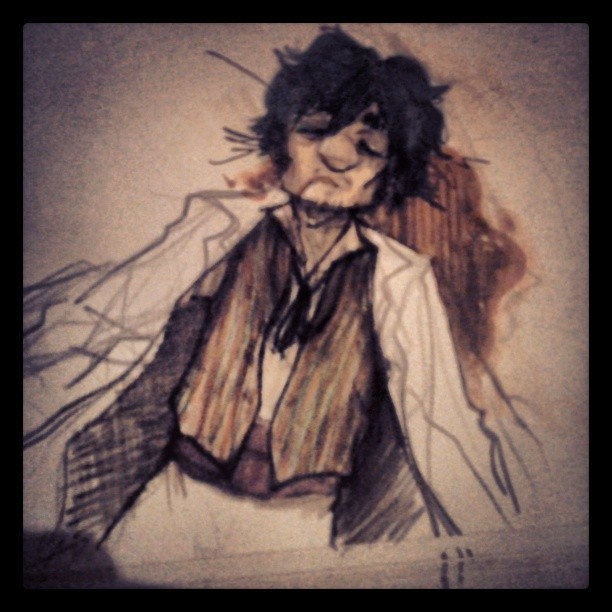
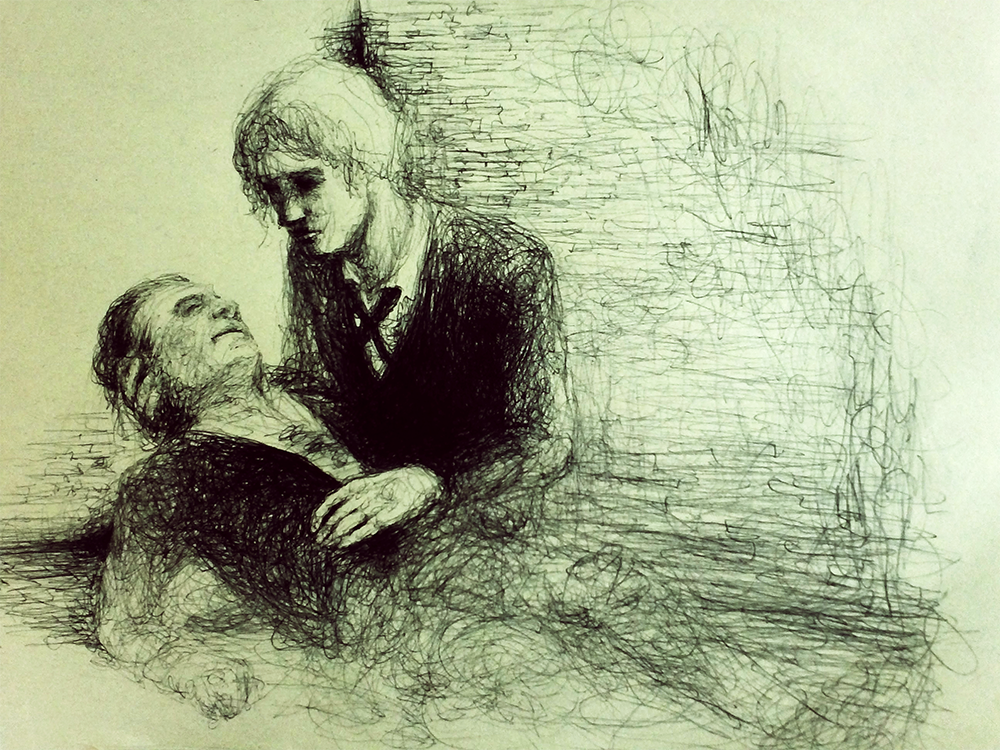
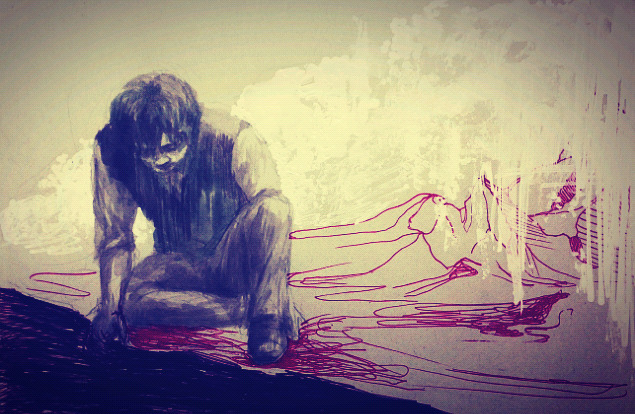
So, almost a full year after meeting Grantaire from Les Miserables, I met Sydney Carton from A Tale Of Two Cities, and oh god they would have gotten along so well.
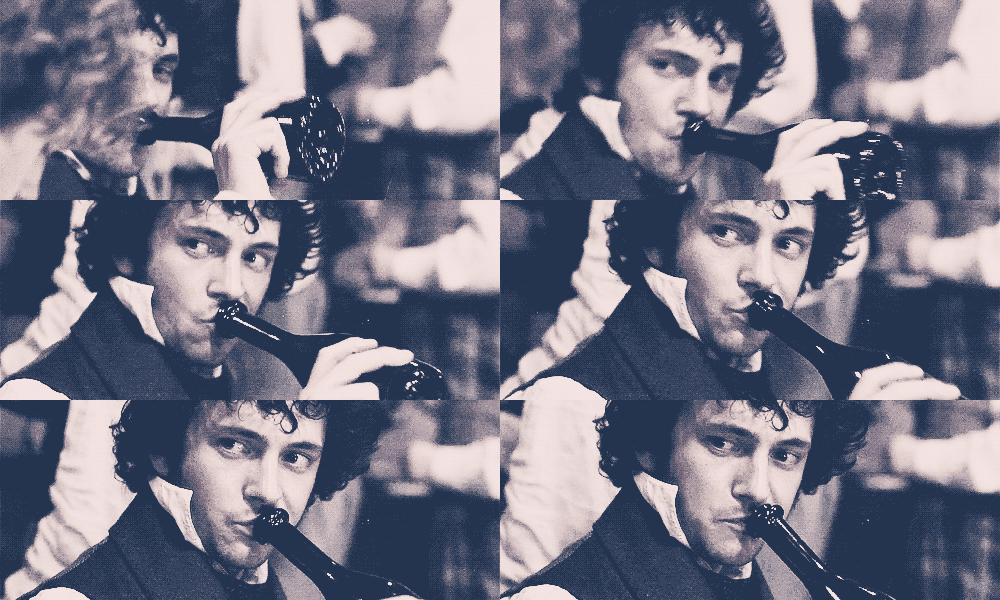
Grantaire: “I want a drink. I desire to forget life. Life is a hideous invention of I know not whom. It lasts no time at all, and is worth nothing.”
Carton: “As to me, the greatest desire I have, is to forget that I belong to it. It has no good in it for me—except wine like this—nor I for it.”
Grantaire: “I am tired to death, and I am stupid!”
Carton: “There is nothing in [me] to like; you know that.”
Hugo on Grantaire: “…humanity, civilization, religion, progress, came very near to signifying nothing whatever to Grantaire…He was, himself, moreover, composed of two elements, which were, to all appearance, incompatible. He was ironical and cordial. His indifference loved.”
Dickens on Carton: “…the cloud of caring for nothing, which overshadowed him with such a fatal darkness, was very rarely pierced by the light within him.”
Hugo on Grantaire: “He had need of Enjolras. That chaste, healthy, firm, upright, hard, candid nature charmed him, without his being clearly aware of it, and without the idea of explaining it to himself having occurred to him…Grantaire in the presence of Enjolras became some one once more.”
Carton to Lucie: “I have had unformed ideas of striving afresh, beginning anew, shaking off sloth and sensuality, and fighting out the abandoned fight. A dream, all a dream, that ends in nothing, and leaves the sleeper where he lay down, but I wish you to know that you inspired it.”
There’s more, loads more-
-both are cynical, both have very low self-esteem, both drink too much, and both almost certainly have clinical depression. They express it in different ways- Sydney goes sullen and moody while Grantaire talks on and on to anyone who’ll listen- but you can tell so easily. Sydney does seem a bit more actually functional than Grantaire (he’s holding down a job and everything) but perhaps that’s because we know him for longer, we don’t actually see that much of Grantaire outside the bars he frequents.
Possibly the root cause of Grantaire’s problems (I dunno how popular an opinion this is, but I’m sticking to it) is that, whether in an abstract way or not, he cares way too much about things he knows he can do nothing about. “There are a hundred deaths a year of hunger in the parish of Charing-Cross alone.” “Shall I admire Brother Jonathan? I have but little taste for that slave-holding brother.” “People strive, turn each other out, prostitute themselves, kill each other, and get used to it!” And so on. (I strongly suspect that’s one of the main reasons for his popularity, but that’s a whole ‘nother story.) He hates what he’s seen of the world, and you can’t really blame him, as even for a relatively financially secure student 19th century France seems a pretty crappy place to be- but he can’t hate the individual people that are his friends. One of my favourite ever lines from him (which- gasp- is one of the few R Lines I’ve never really seen discussed) is
“So much for myself; as for the rest of you, you are worth no more than I am. I scoff at your perfections, excellencies, and qualities.”
He literally just tried to insult his friends and ended up complimenting them instead. Oops.
Onwards to Sydney: the possible root of his depression might be his being orphaned at a young age, but whatever happened as he grew older it left him thinking “no man on earth cares for me.” I think he probably got stuck in a self-destructive cycle: after losing loved ones, he didn’t want to get close to anyone else and began pushing them away (much as Grantaire does with his friends, as you’ve just seen), and sinking deeper and deeper into himself as he did so. Come to think of it, you can see this in Book 3, where Sydney sincerely tells Mr Lorry he thinks of him as a father, then quickly slips back into self-deprecation once the situation has become too emotional.
Anyway. Apparently, once you’re a cynical alcoholic, you need to find a hot blonde to devote yourself to. Sydney has Lucie and Grantaire has Enjolras- even though Enjolras never became involved with anyone else, I can see Grantaire reacting to such a scenario just as Sydney did – “[I] would bring you to misery, bring you to sorrow and repentance, blight you, disgrace you, pull you down…I know very well that you can have no tenderness for me; I ask for none; I am even thankful that it cannot be.”
Both characters actually seem pretty grateful that their affections aren’t returned, because it confirms what they thought about themselves: that they’re unloveable.
And finally: both unrequited love stories end in death, but triumphant death. Sydney dies to save Lucie’s husband so that she can be happy; Grantaire dies declaring himself “one of them” out of love for his friends and Enjolras. But I think the most significant things about their respective endings, actually, is that they both go out doing even more than what they’re capable of. Sydney doesn’t have to comfort the young seamstress who’s riding with him, they’d both going to die in five minutes no matter what, but he does it anyway because he’s a good person. Grantaire doesn’t have to ask Enjolras’s permission to die with him, it’s not like it would have made that much difference really, but he does it anyway because Enjolras’s feelings are more important than his own. Not bad for people who thought themselves essentially worthless.