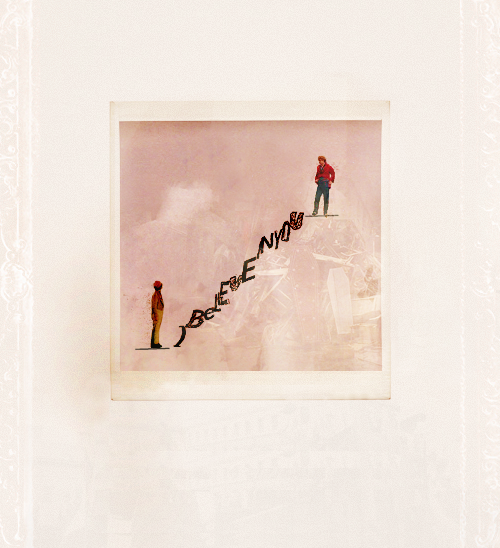
You’ll see.
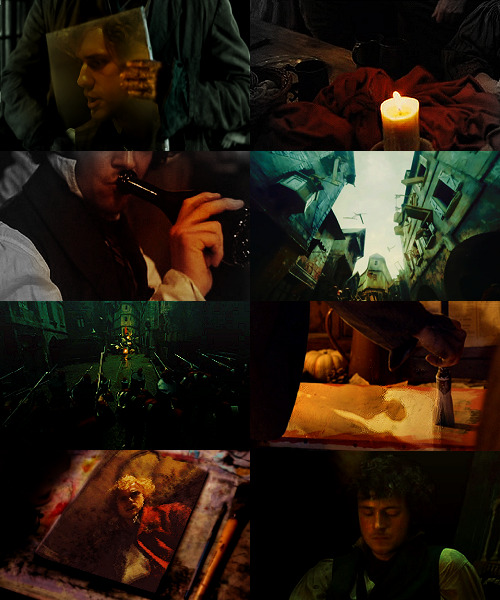
Les Miserables AU: Grantaire made Enjolras up
He knows the revolution will fail, he knows the world and his soul are both voids. He has nothing to believe in. He drinks.
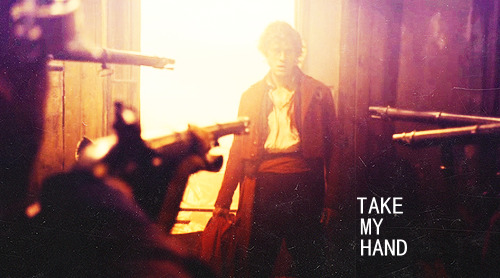
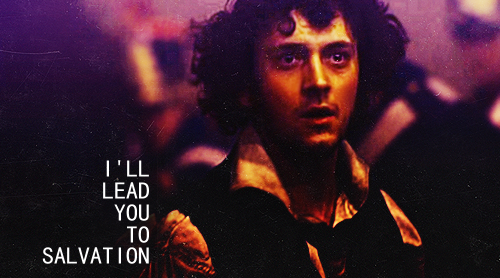
From his position in the dark in the corner of the bar, he paints them all a leader- part man, part angel, leading them into battle. But his imagination only stretches so far. He takes the hand of this being he created. He dies beside him with joy. There’s still a little light in the endless darkness, there’s still a little light in him. But he can’t imagine living, let alone living with love. He buys red paint.
The barricades fall. He still drinks. His angel stares from the canvas half-accusing and half-pitying. Before long, only the paintings remain.
Climbing to the light: Why Enjolras and Grantaire are like Orestes and Pylades
Wow. That actually improves the dynamic of their relationship. While fandom often interprets the Orestes/Pylades allegory as purely romantic, your interpretation of Pylades protecting Orestes sets Grantaire in a better light. He didn’t just raise himself up to be at Enjolras’s side, he assists him, and that certainly makes him no longer “unaccepted”.
(This is really good so I’m just throwing thoughts around, wheeee)
There’s also the bit after the execution of Le Cabuc, where Combeferre calls out to Enjolras, “We will share your fate.” He probably wasn’t even considering Grantaire when he said it, but poor old R got to be one of the ‘we’ in the end as well…
About Orestes Fasting And Pylades Drunk, I was wondering the other day, why didn’t Grantaire try to protect Enjolras more, stop the shooting- make up some lie, try and fight someone, any of that stuff. Because he probably could have stopped it, if he’d really tried, the National Guard were unsure anyway about what they were doing. Anyway, that’s what you’d expect a person to do if someone they loved was in grave danger, but that’s not what he does. He doesn’t even plead with Enjolras not to throw his life away so easily (and he’d certainly never dream of admonishing him…) he just…goes to him, because he knows Enjolras would rather die for his cause in the manner he chose than whatever other options were available at that point. He’d rather watch ‘the bird in flight’ soar right on away from him than do anything to clip its wings.
Which may be the moment Enjolras realises that even though Grantaire doesn’t subscribe to his ideals, he respects them, he respects them a lot– places them way above his own desires, even. To the point of asking Enjolras if he doesn’t mind dying beside a cynic! That, combined with the realisation that Grantaire would rather die with him than live in a world without him, is what I think made him take his hand and smile…
So, as has been abundantly clear over the past few weeks, my life has been consumed by Les Miserables. Again. This story, in both book and musical forms, has occupied a huge space in my heart since I was 10 years old. For reference, I’m turning 24 in two days. I’ve spent a lot of time with this story.
A lot (read: all) of the characters are extremely important to me, and I’ll probably wind up writing about many of them. But I wanted to talk about Grantaire (she said to the surprise of literally no one in the world). The earliest memory I have of neglecting the rest of my life to think thinky thoughts about Grantaire is of zoning out completely in eighth grade English class, so when I was 13 or 14. So I’ve had a decade to sort out my feelings, and this is what I’ve come up with.
The thing that has always captured me about this character, who is so vastly different from basically any other favorite character I have, is the way Hugo uses him to portray cynicism as a trap. It’s extremely easy to fall into (because let’s face it, there are a lot of horribly messed up things in this world), and desperately difficult to climb out of. After all, once you convince yourself that the world sucks – that people suck – how can you ever believe anything else? You’ll always be able to talk yourself out of whatever hope may arise. The cynic hurls himself to the bottom of the well, and then convinces himself that any ladder lowered down to him is bound to give way.
But that’s no way to live, and we can’t help but resist it – even if we find ourselves at the bottom of the well. Hugo beautifully outlines the contradiction of Grantaire: he has given up on humanity, but he cares for his friends. He can’t believe in anything – except Enjolras. By virtue of being human, the very thing he detests, he proves himself wrong. We’re never as bad as we think we are.
As a philosophy, “we’re never as bad as we think we are” doesn’t seem too inspiring at face value. But sometimes, that’s what you need to hold onto. My brain chemistry didn’t start causing real problems for me until quite a few years after my first intense ruminations on Grantaire. But when it did, my thoughts latched onto very serious real world problems. It was – and sometimes still is – very, very difficult to separate which fears were rational and which weren’t. Though I didn’t choose to be there, I found myself at the bottom of the well, convinced that people would not be able to make the world better.
But I knew that wasn’t me. I knew I wasn’t Hugo’s cynic. Hugo’s cynic wasn’t even that person, not in the end. I couldn’t always feel my real self, but I knew she was somewhere in the shadows of the well, waiting with an unbroken ladder and a heartfelt cry of “Long live the Republic!” I found conviction in affection, just like Hugo said. I have so many people to love in my life, and from that, I have held onto loving – and believing in – the world. Everyone is someone’s Enjolras, and I believe we can act like it. Essentially, I believe in what Grantaire believed in, but I’m just trying to apply it on a broader scale than he was able to.
I can’t be Enjolras all the time. Not many people can. I also don’t think I’d want to. But what I can try to be is the grasped hands, the permission, the smile. The meeting of fiery passion and tender devotion. You can’t separate The People from individual persons. By fighting for and loving both, I believe in change. I believe in anything.
I believe in you.
Reblogging this again because it’s perfect, so perfect it almost made me cry. Just…the power of this thing, of characters and literature- “everyone is someone’s Enjolras.” Damn, I would frame this if I could. I love it to pieces.


wherein I wanted to casually draw hipster French kids and then accidentally cared too much
like making a lookbook and listening to French indie music on 8tracks for inspiration
so I guess this is a community college AU where Enjy protests budget cuts and campaigns for educational reform, and R totally unironically owns a YOLO flask cuz he is actually the opposite of a hipster, and Ep prolly takes accounting cuz she totes does the books for her folks’ bar, and Marius tries to pay his own way through college and Cosette’s that classy dame that dresses too damn well for an academic institution
lookbook refs in case anybody cared: Enjolras, Grantaire, Eponine, two for Marius and surprisingly none for Cosette
music: French indie playlist on 8tracks
I wanna draw the other barricade boys but I don’t even know them well enough yet to differentiate them from each other weh
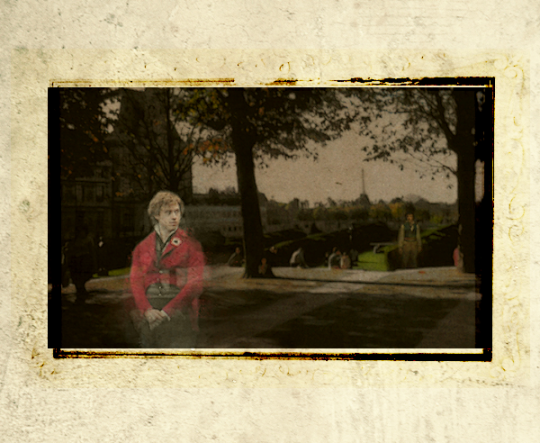
From George Blagden’s Twitter: “Would ghost R follow around ghost E?” “Yes, but without him ever catching sight of him.”
Which is such a tragic idea to throw out there that I had to make something, so I did. Here’s Enjolras wandering around modern-day Paris. Sometimes people see him out of the corner of their eye, or as a red blur in photographs. Tourists sometimes feel a slight chill in the air when eating at the burger place where the Cafe Musain once stood.
Very few people ever see the other man, but he’s there all right. He followed the one he loved into death and he’ll keep following. But on a summer’s day in the year 2005- an unremarkable day by all accounts- Enjolras finally, finally catches sight of him. This is the moment before he turns around. No-one apart from Grantaire sees his smile…but I bet it was something to see.