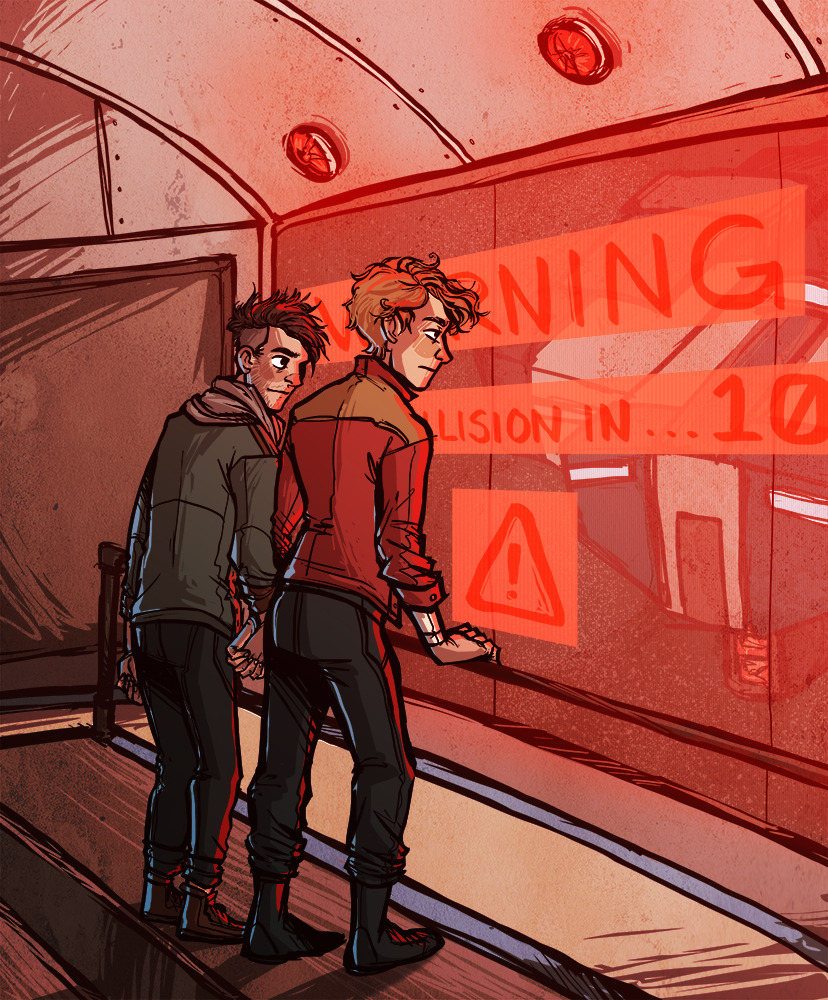
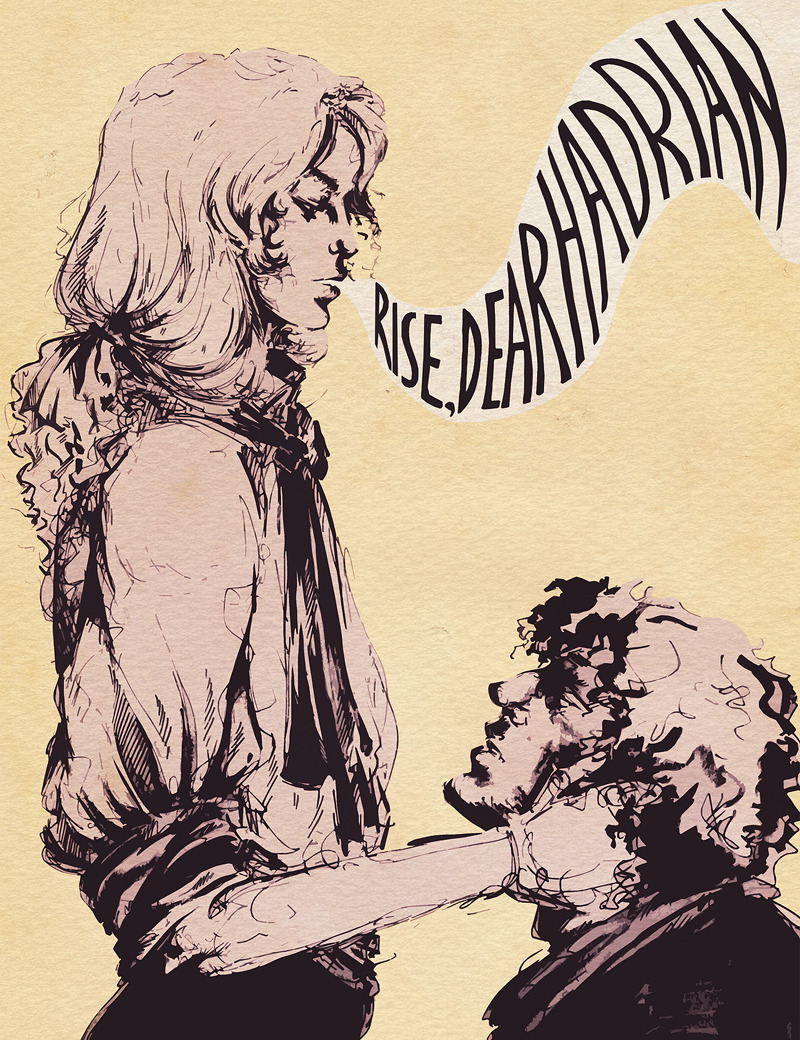
You know what bit of Les Mis fanart I’d really like to see, but no-one (as far as I know) has done yet?
Orestes Fasting And Pylades Drunk but with all the other Amis standing behind them, waiting to catch them in the afterlife. Combeferre with his hand on Enjolras’s shoulder- someone taking Grantaire’s other hand- Bahorel and Jehan being more transparent than the others because they died first-
well well well that sounds like a cue to make it even worse
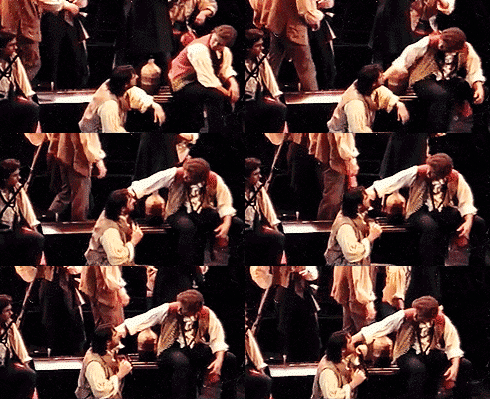
To begin on a slightly happier note, Marius starts singing about Cosette and Grantaire touches his knee as if to say, “yep, been there, sucks doesn’t it.”
Then he picks up his bottle and heads off after Enjolras (no idea if he catches up with him or not, I couldn’t see it on the video, woe)
AND THEN (at the final battle) THINGS GET AWFUL
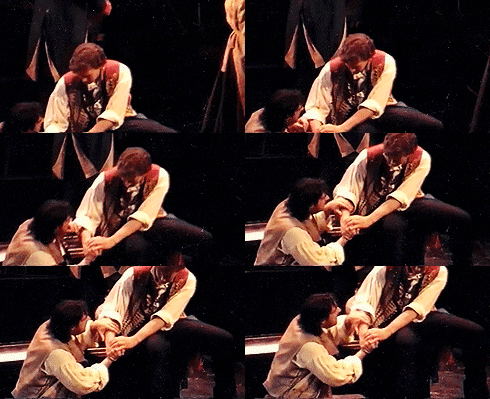
Grantaire gets rather roughly shoved away when Marius does his near-death-experience thing
Enjolras seems rather busy trying to save Marius, but Grantaire grabs his sleeve like he’s trying to stop him going
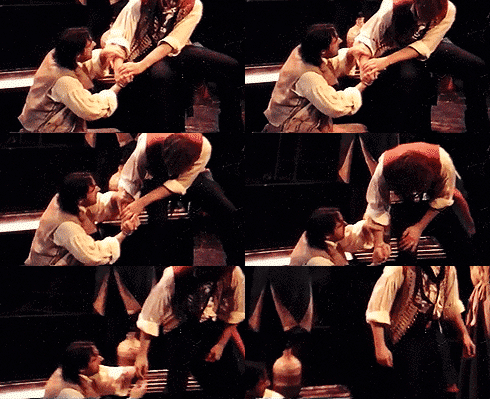
All to no avail, alas. (Why, look, you can just about see Grantaire’s hand leave his sleeve. And him crumple into darkness. What fun.)
Thentheydietheend. BUT THE REVERENT HAND-HOLDING BROKE ME, argh.
well I’m awake at one in the morning anyway so I MIGHT AS WELL TALK ABOUT MY E/R FEELS WITHIN THE CONTEXT OF THE BOOK AND MUSICAL.
The musical is, obviously, not exactly the same as the book, and their deaths represent different things in both. In the book, the major theme of the story is society’s ills and how these ills prevent people from attaining a good or happy life. A subthread of the book is how pure, hardline ideals can’t be sustained because they can’t function in the world as it exists. In this sense, Javert and Enjolras serve as mirrors to each other: both are unable to resign their beliefs to the world they live in, and both die because they try to uphold them anyway. The big difference is, of course, that Javert dies at his own hand; his sense of purpose is so utterly shaken by Valjean’s existence that he can no longer bear to live. Enjolras dies at the hands of the National Guard, but he dies smiling; he dies at peace. Why?
Well, because of Grantaire. In a book that’s all about people being held up as archetypical examples, Grantaire is the hopelessness to Enjolras’ faith. He loves Enjolras ardently because he wants to be able to believe, but he also lives in the world as it exists; he drinks, he gambles, he jokes. Enjolras is disgusted by him because Grantaire represents to him the worst thing in the world- cynicism. But that’s not entirely true. Grantaire wants to believe, but also lives in the world and sees what it is. Enjolras is emphasized over and over as being chaste and pure and untouched. He lifts himself above it.
But at the end- when they die hand in hand- their worldviews meet, and instead of driving either one to destruction, it saves them in their moment of death. They smile. Enjolras lets himself touch the world; he touches Grantaire. And Grantaire, who believed in nothing, dies for something. This is what the revolution lacked- this combination of high-flown belief and earthy knowledge- and what they two represent together. When they die, they die together, and their mingled blood gives hope for the future.
In the musical, it’s a bit different. The musical- although it does have a strong social justice message- focuses more on the question of love and its power of redemption. Valjean is saved because the Bishop offers him God’s love. Marius and Cosette are the survivors who love each other. Fantine dies for the love of her daughter. Eponine dies for the love of Marius. And what do Enjolras and Grantaire die for?
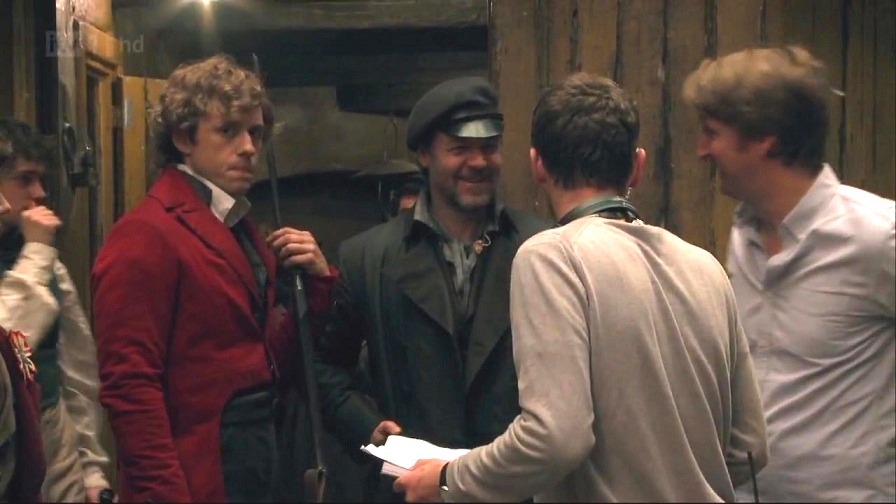
Obviously the choice on Tom Hooper’s part to include the bookverse’s death scene isn’t one that’s replicated on stage often, if at all. But as always, there is a purpose to their existence, and their brief shared moment during “Drink With Me.” Love is redemption. Love is the face of God. And love, in this musical, is the most powerful force, the one force that transcends even death- as we see when Fantine and Eponine appear to carry Valjean to heaven. Love is a force for good. Love is the revolution. (I’m going to set aside my feelings about queer relationships and their existence as a political act because god this is getting too long and it’s not explicit in the musical BUT REST ASSURED I HAVE FEELINGS) Enjolras and Grantaire love each other, the Amis love each other, and that is what makes the revolution worth something. Enjolras scoffs at Marius’s “lonely soul,” but as in the book, love is a transforming force that carries weight even in the face of death. Love is what will bring tomorrow.
I want to put a reaction gif in here, but I don’t think there is one to properly convey HOW GOOD THIS IS
guys, you know how in the brick grantaire falls at enjolras’s feet?
grantaire is standing next to him; they’re facing the guns, though enjolras, at the moment the report resounds, has his face turned to grantaire and is smiling.
grantaire would have to fall across and in front of enjolras to be ‘at his feet.’
when someone is shot, they either go straight down, fall straight forwards, or straight to the side. enjolras himself is pinned to the wall, after all.
guys
guys
i think grantaire may have made one last desperate effort to save enjolras’s life, even subconsciously, by falling across him instead, trying to block the bullets.
The other night, instead of doing any of the 24601 things I was meant to be doing, I made this instead. Not to be used as a substitute for reading the book! Unless of course you want it to be.
Tumblr is a dick and probably won’t let you see the actually readable version, so click here to see it. Please feel free to point out any massive inaccuracies but be gentle
Friendly reminder that Enjolras’ last words to Grantaire in the book were: “Grantaire, you are incapable of believing, of thinking, of willing, of living, and of dying.”