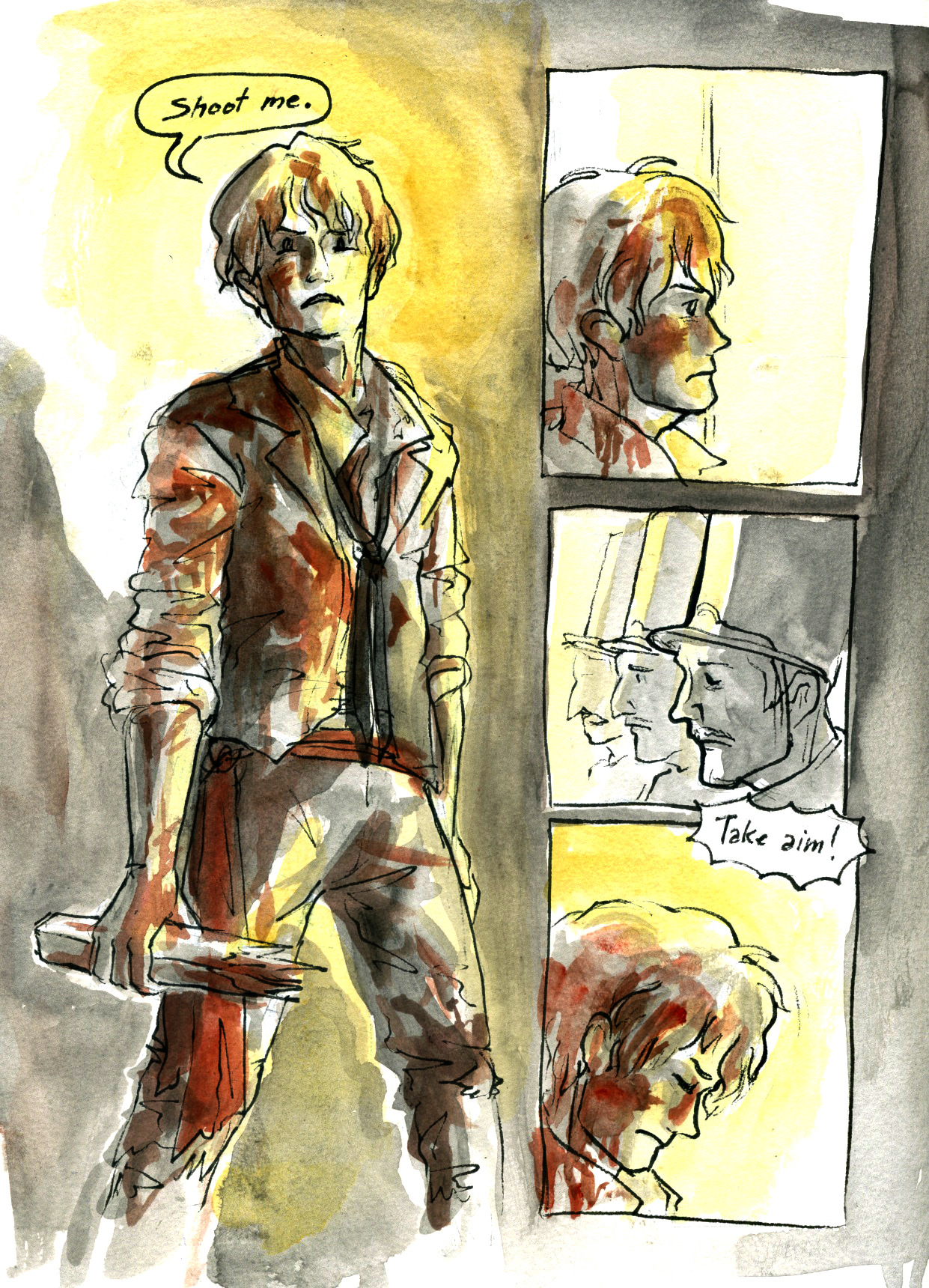
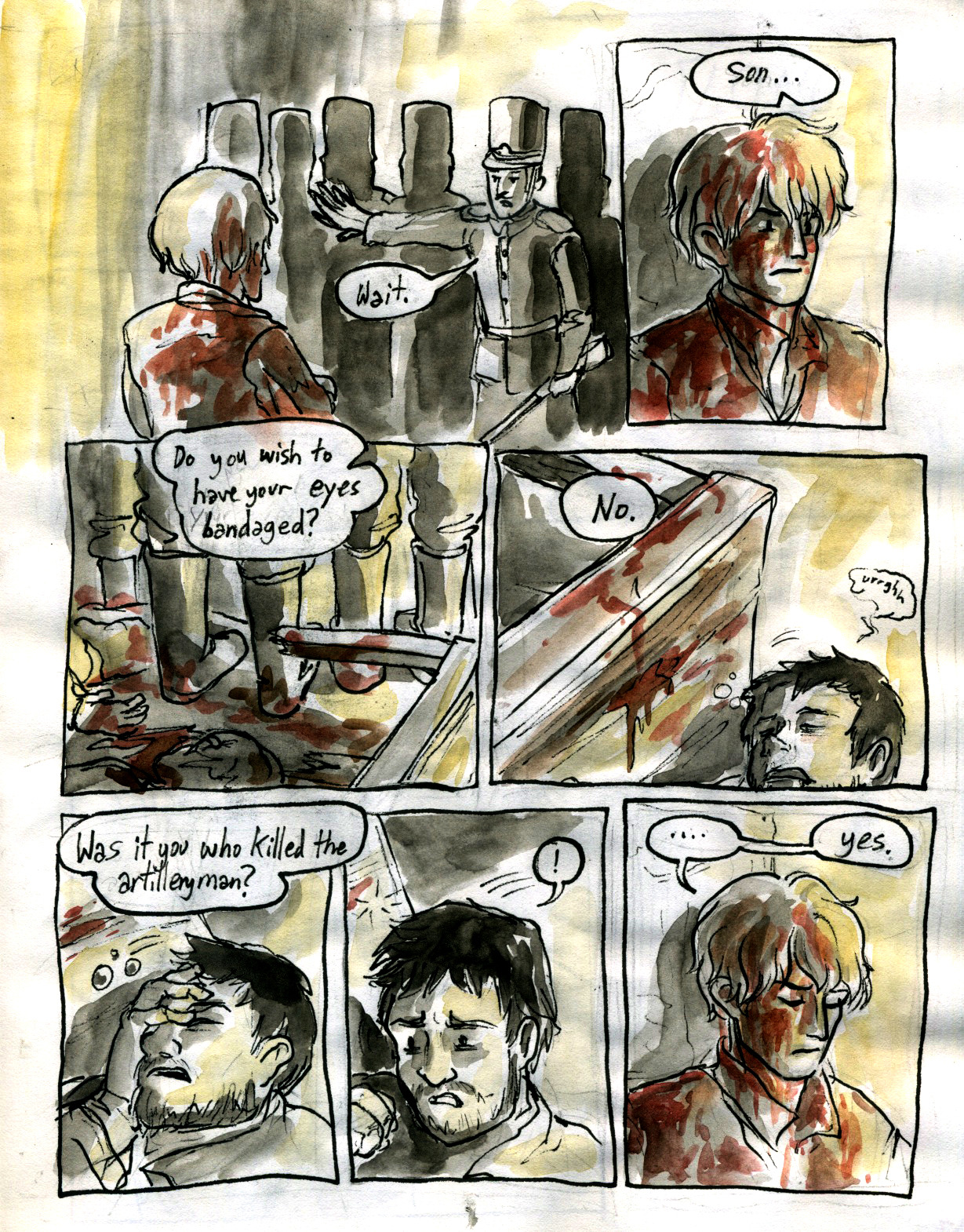
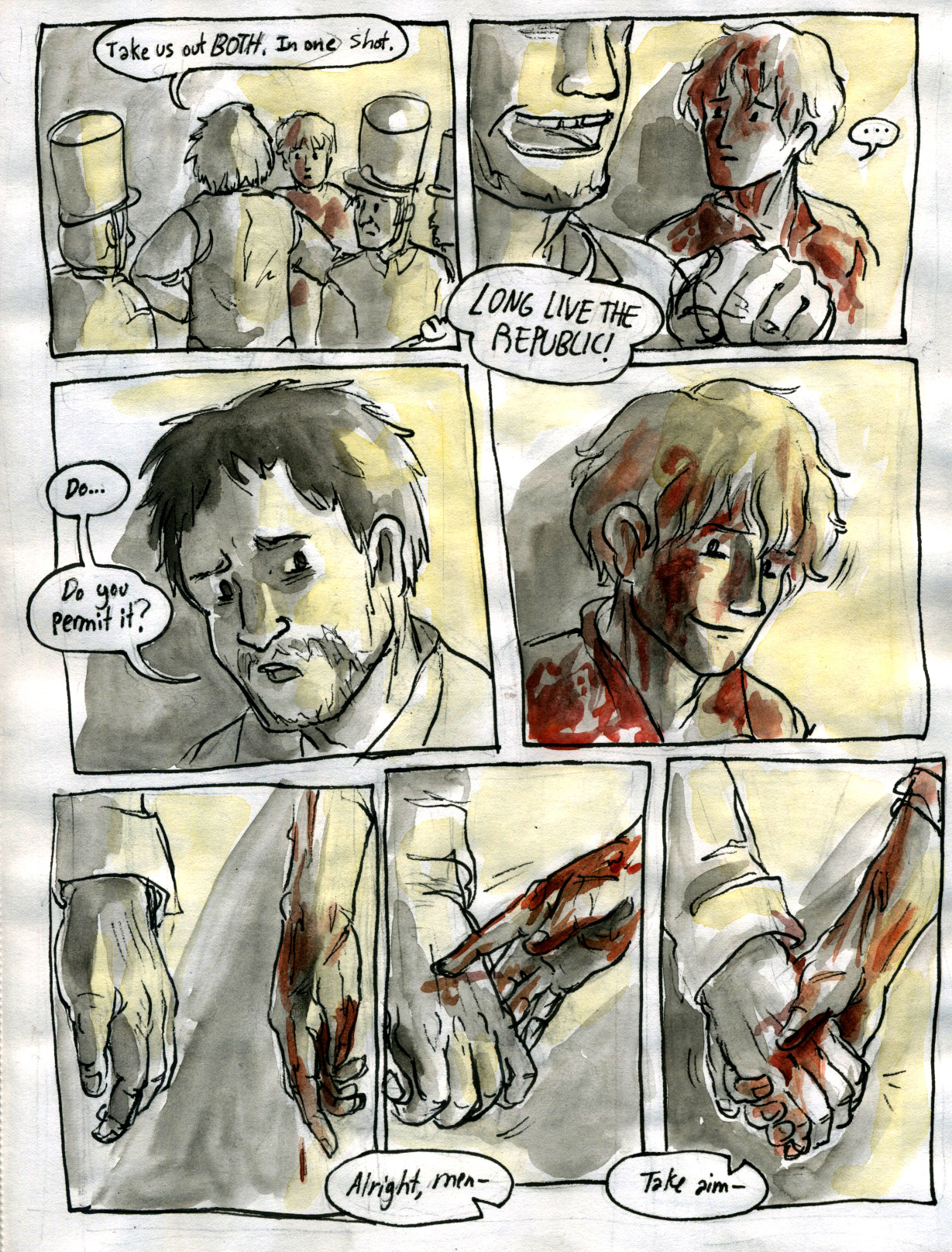
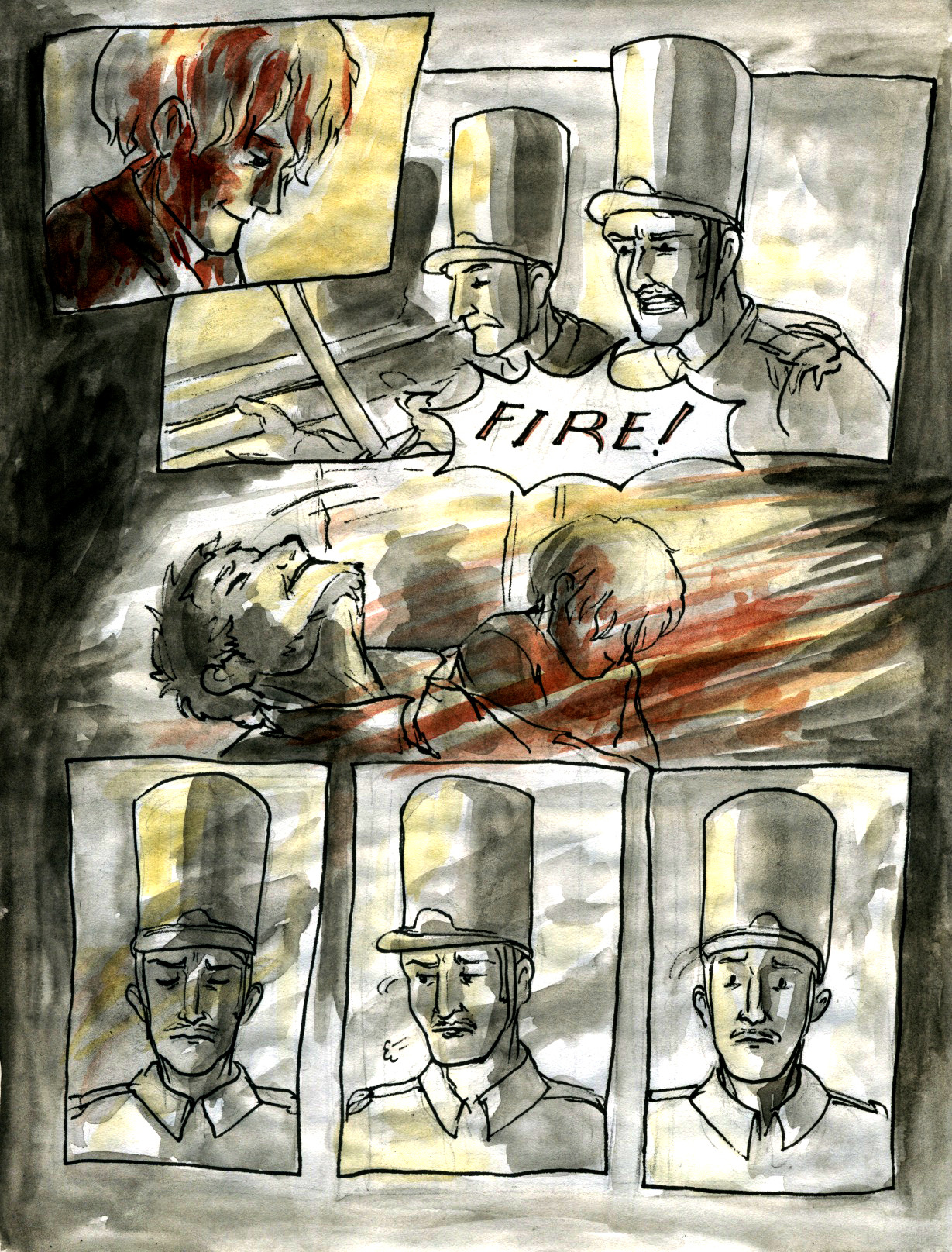
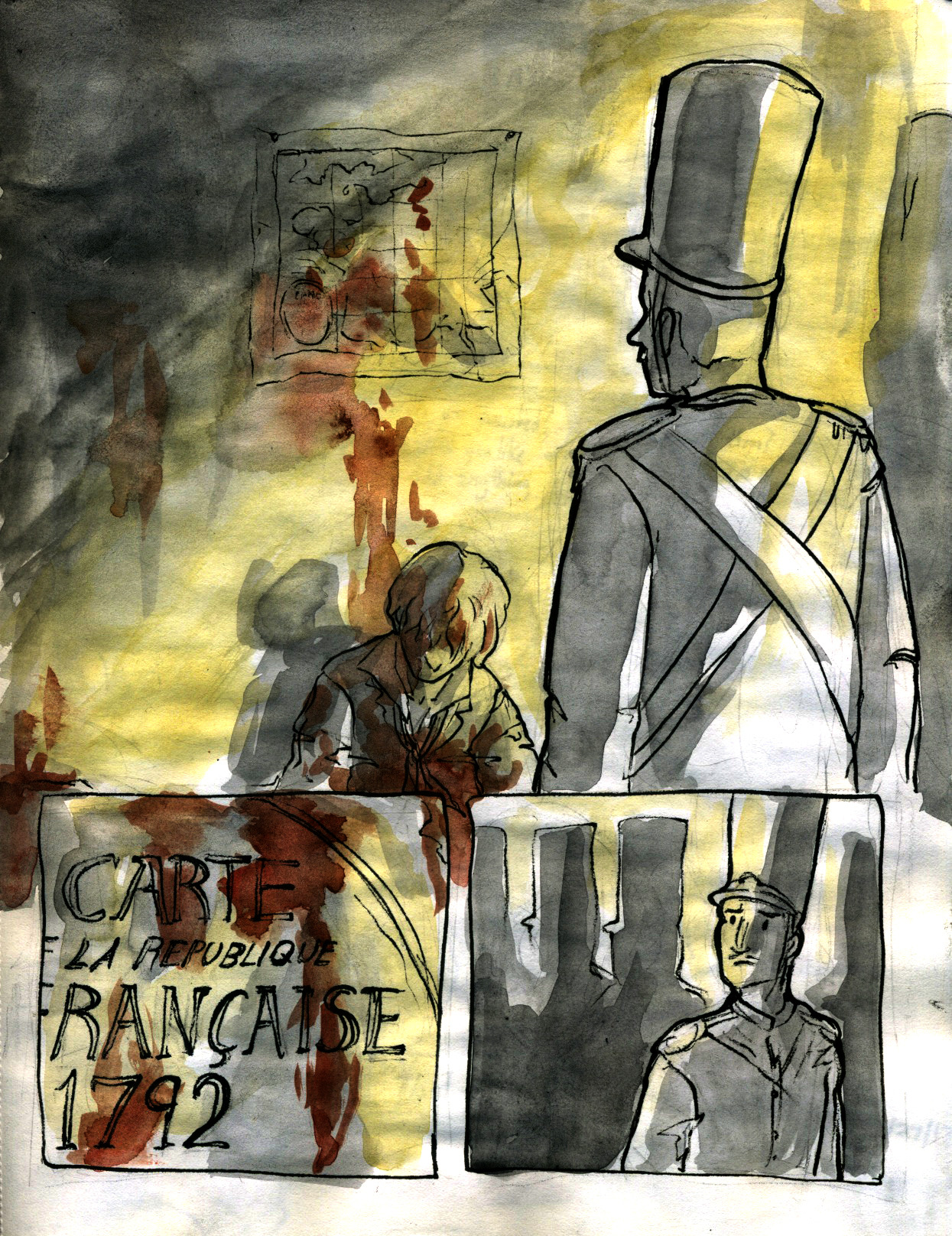
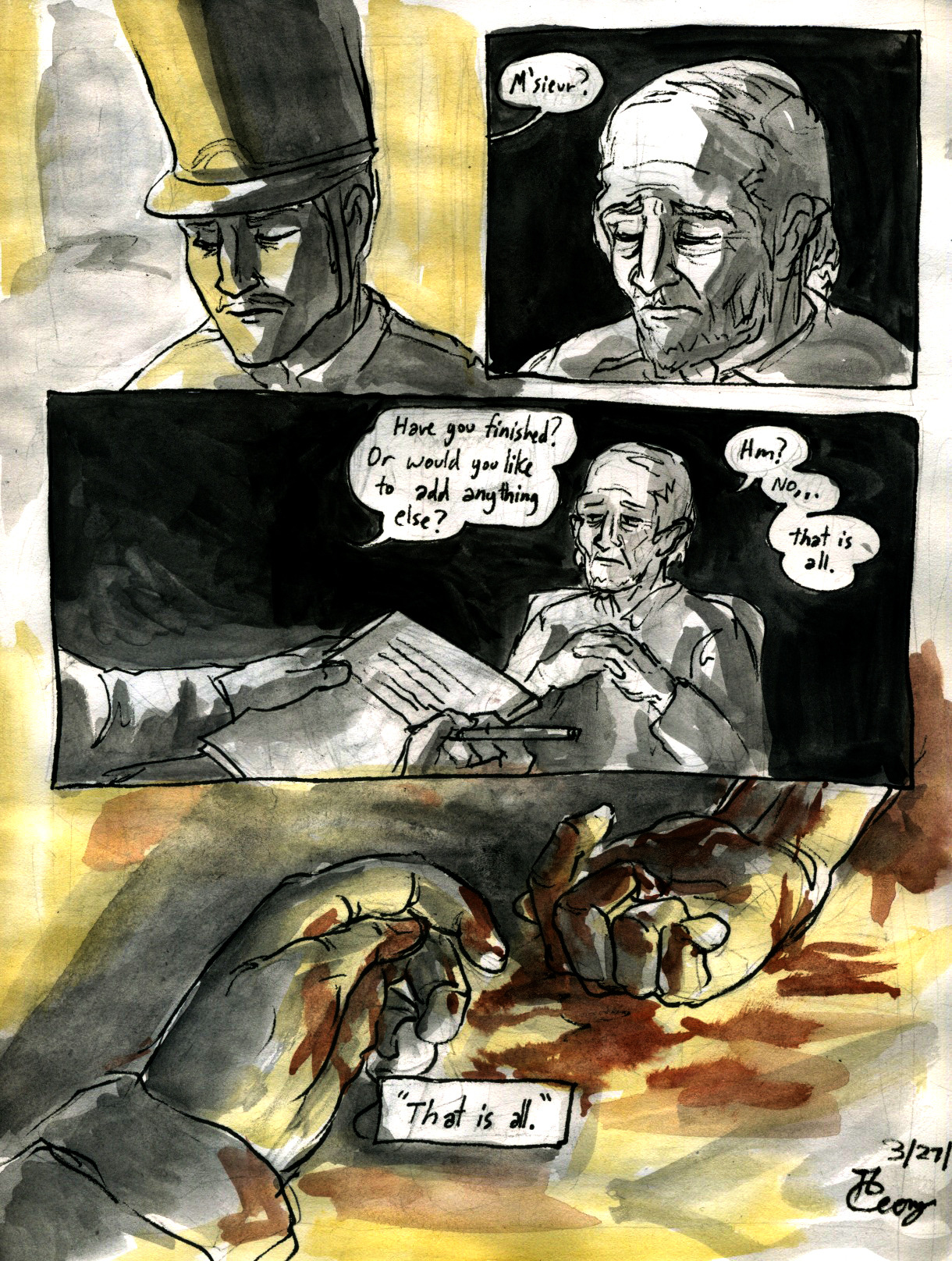
Les Miserables- Orestes Fasting and Pylades Drunk
This. Took. Too. Long.
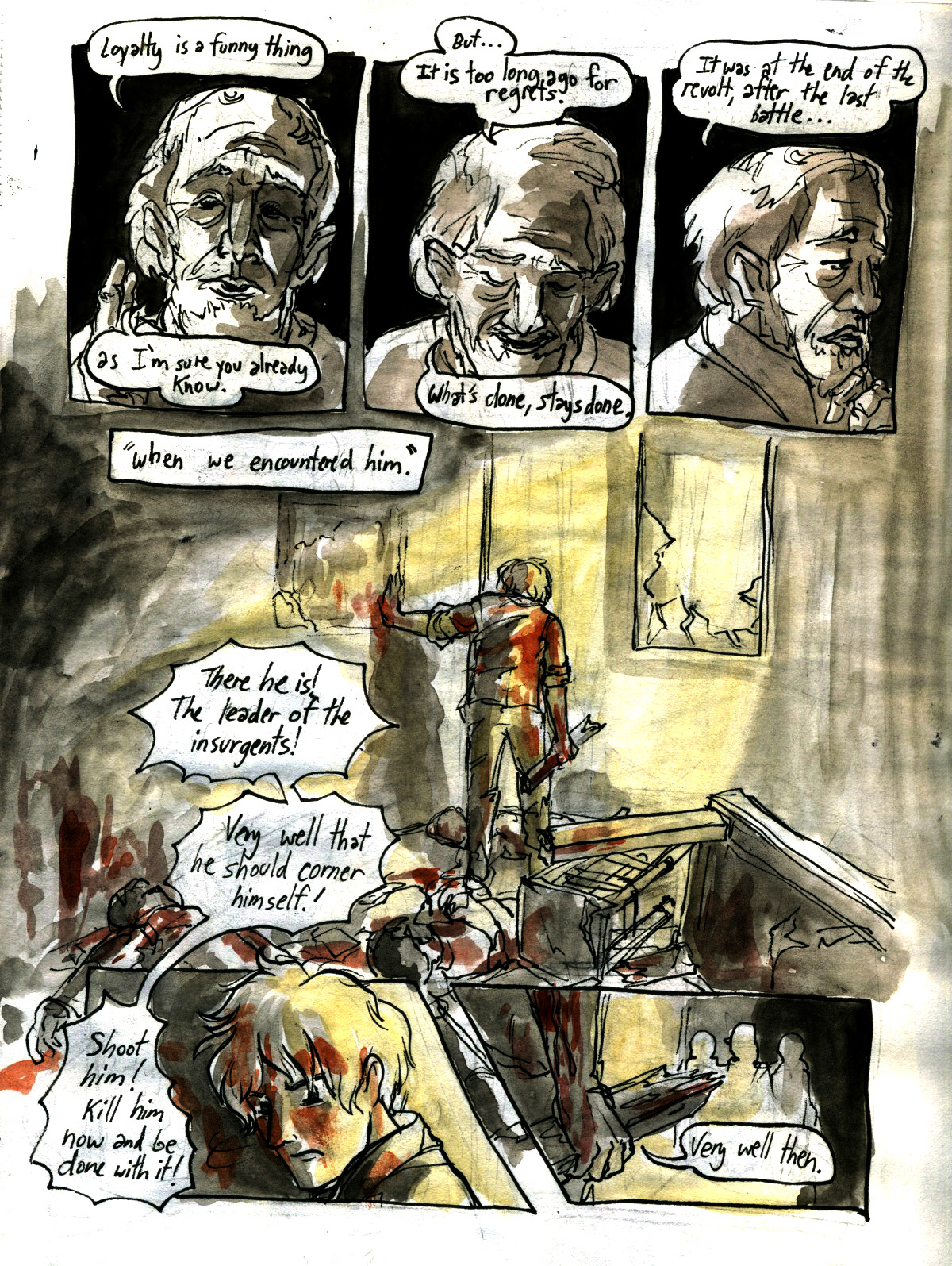
It’s finally heeeeerre! I can’t believe I completely skipped this chapter when I first read the Brick, and now…*cries*. This was supposed to be a “short” comic, but now, two months later, it’s finally done…the second page took forever because I kept changing it, and I did the inking and watercolor separate via lightbox and put them together in Photoshop.“Permets-tu?”
(posting to my regular blog because of all the work I put into it)
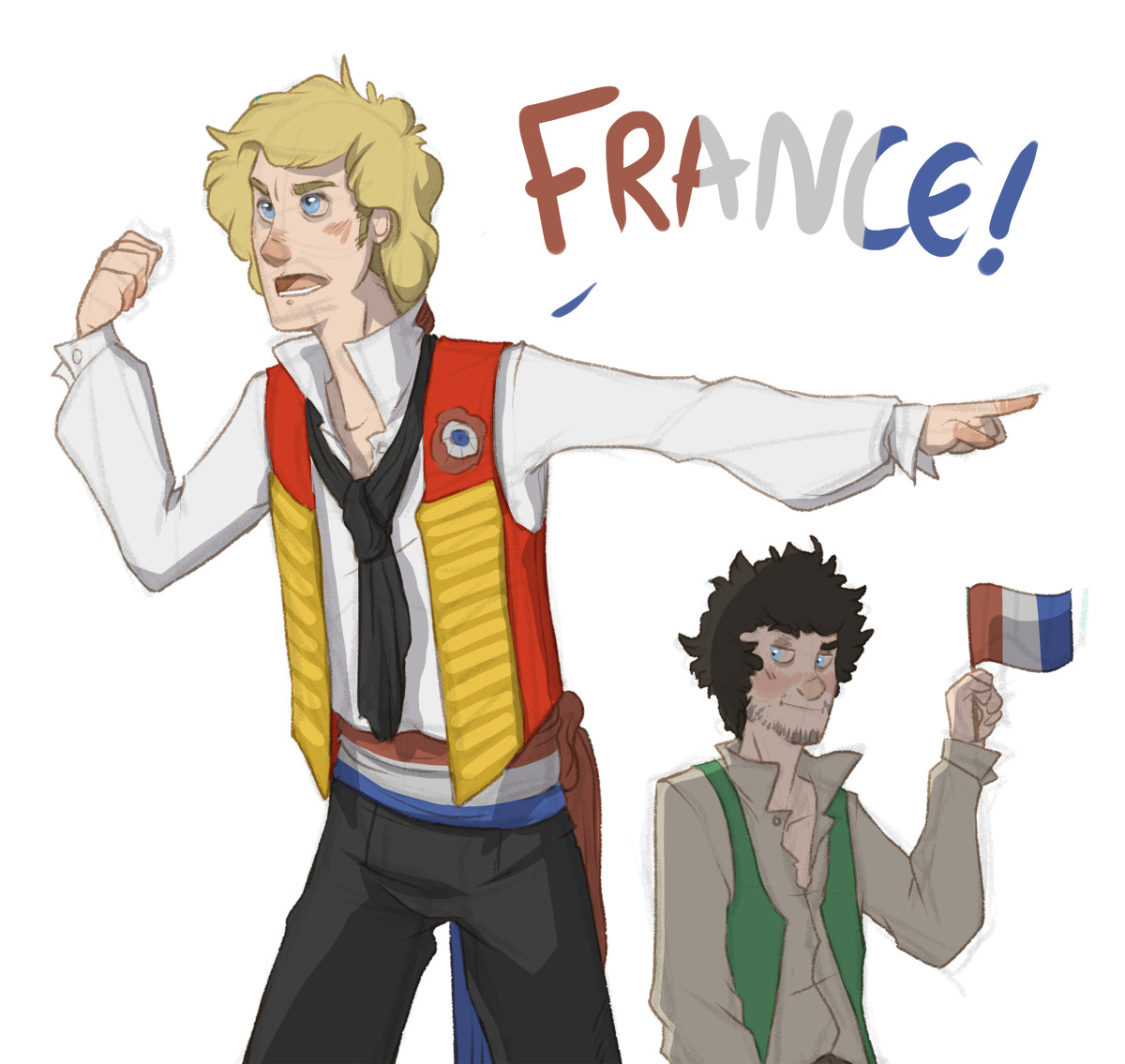
enjolras


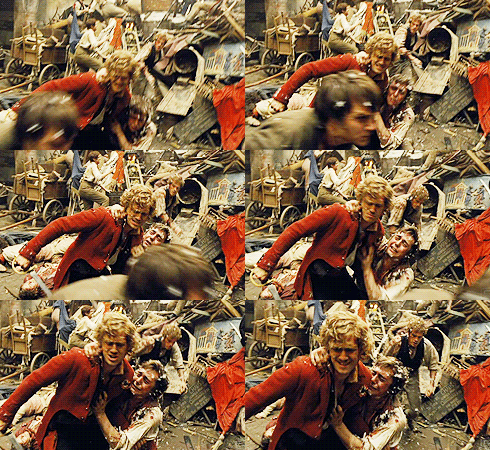
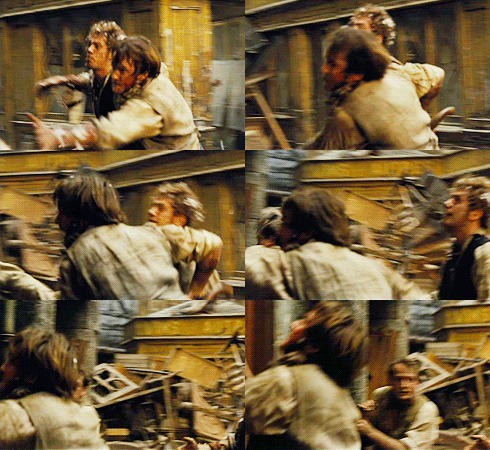
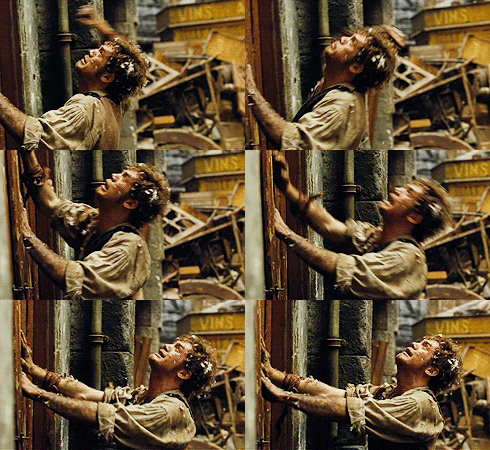
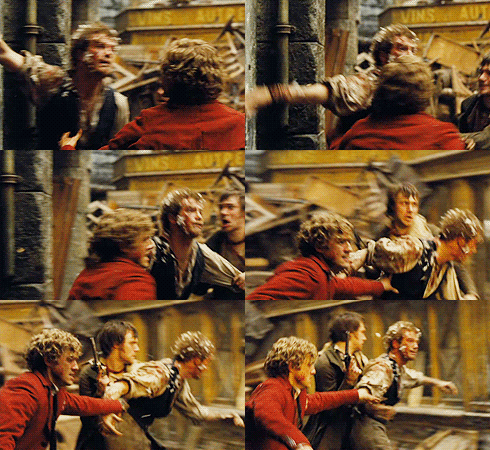

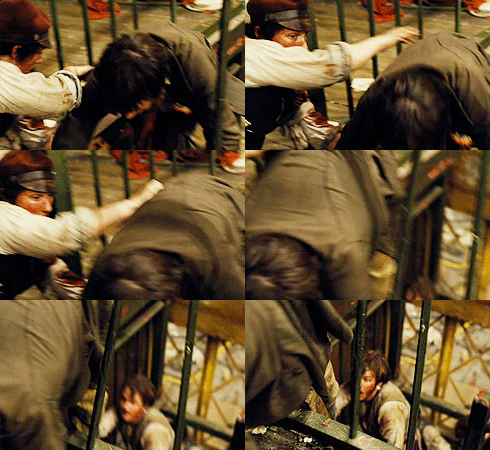
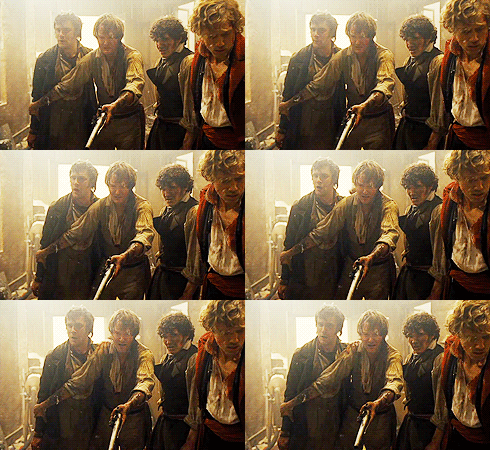
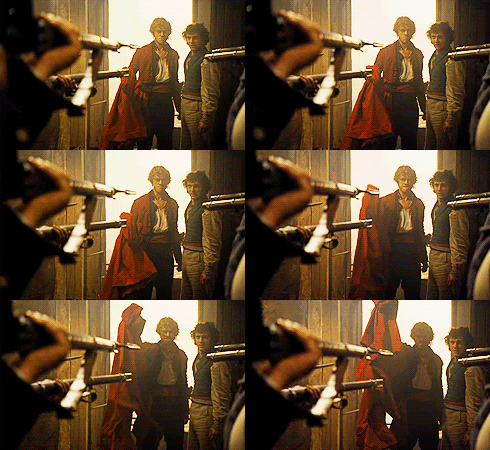
in their last moments, people show you who they really are.
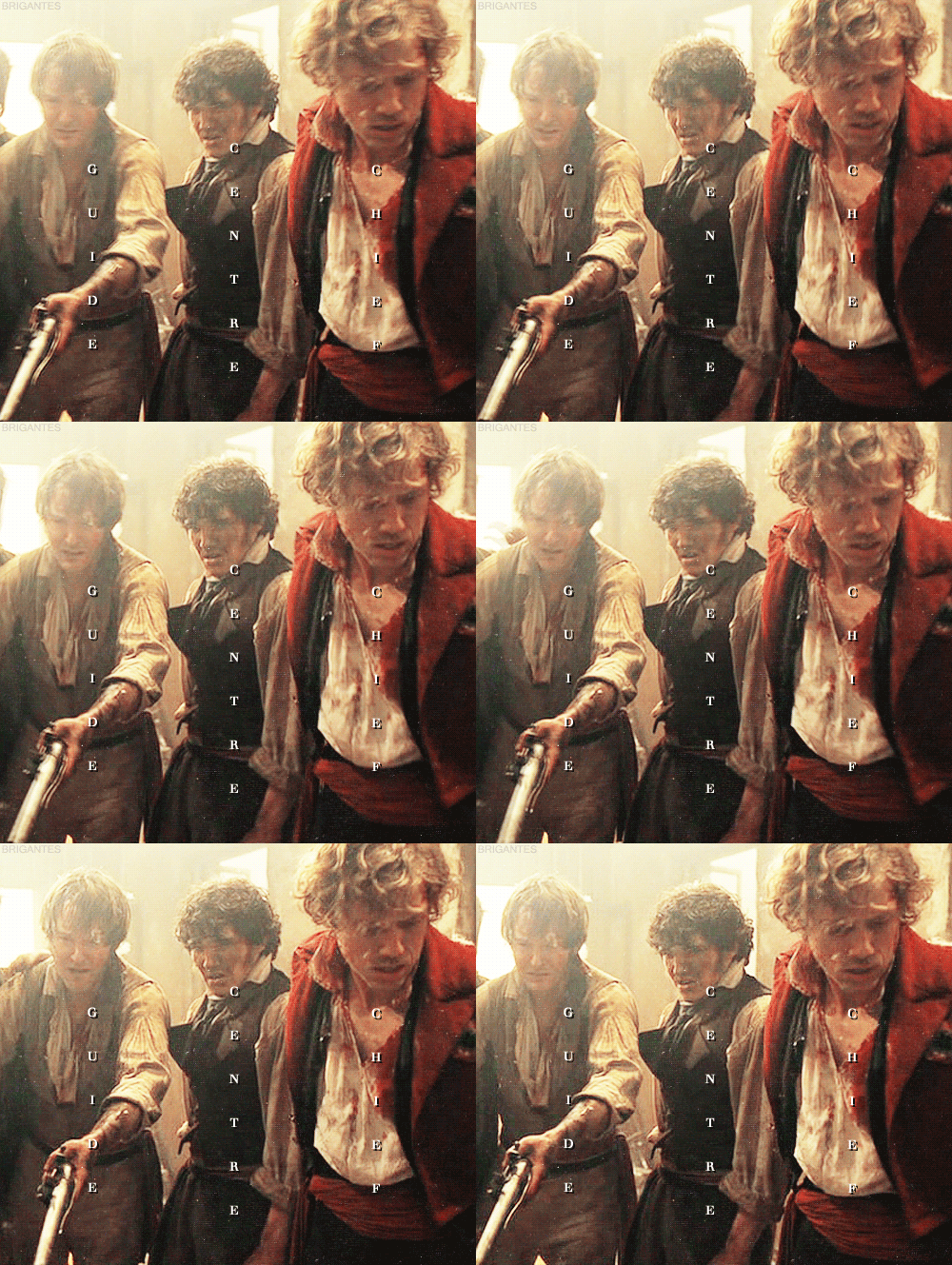
#can I just cry #because they do okay #But Combeferre! #Killian didn’t get a whole lot of screen time but what there was was just painfully on point #and it was so heartbreaking here #he tries to barricade the door #he’s one of the last up the stairs #and then he holds on to Joly at the end like he can still protect him a little bit #and it’s so freaking upsetting #HE TAKES CARE OF THEM #HE’S THE GUIDE #(and Joly doesn’t even have a gun and he looks so tired and THE HAND ON THE SHOULDER)
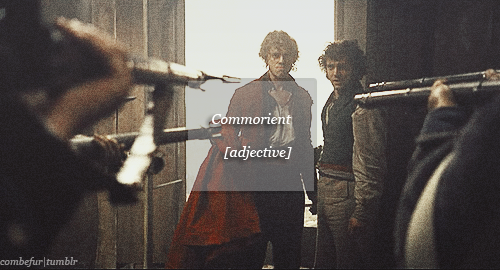
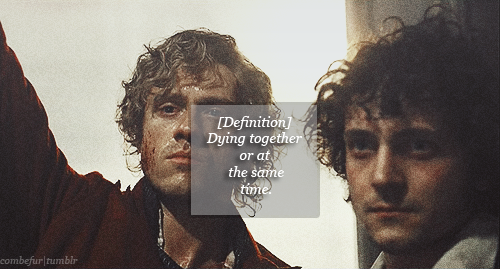
I want to jump into all this meta’ing about Grantaire and redemption! There’s a whole lotta things I noticed in the novel but never got round to actually making a note of here, and one of them is-
-when we first meet Grantaire his introduction goes like this (bolding mine):
His soft, yielding, dislocated, sickly, shapeless ideas attached themselves to Enjolras as to a spinal column. His moral backbone leaned on that firmness. Grantaire in the presence of Enjolras became some one once more.
But when he opts to die with Enjolras:
…the sergeant was preparing to repeat his order: “Take aim!” when all at once, they heard a strong voice shout beside them:
“Long live the Republic! I’m one of them.”
Grantaire had risen. The immense gleam of the whole combat which he had missed, and in which he had had no part, appeared in the brilliant glance of the transfigured drunken man.
He repeated: “Long live the Republic!” crossed the room with a firm stride and placed himself in front of the guns beside Enjolras.
Soft becomes strong, yielding becomes firm, he finally gets a bit of that brilliance he sought. His mindset’s totally different in his last few seconds of life than it was at the beginning of his story…
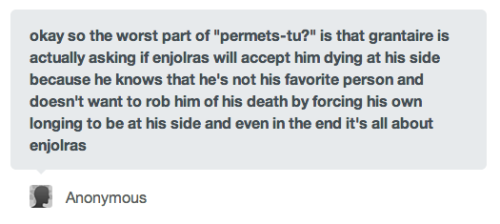
Then there’s the ‘do you permit it’ line, and Grantaire’s general reaction to seeing Enjolras about to die. Because I always wondered a bit why he didn’t try and stop the soldiers, he probably could have done, they weren’t particularly enthusiastic about having to shoot Enjolras in the first place. But he doesn’t, he doesn’t fight, he doesn’t plead, he certainly doesn’t try and argue with Enjolras- he may have never been able to believe in his ideals, but he respects them enough to know that Enjolras would rather die with them. So he goes and stands with him- partly because he wouldn’t want to live in a world without him, and partly because he wants to live in the light of belief for just a few seconds before he dies. And he asks permission because (as others have mentioned) Enjolras always comes first, and he handed his whole existence over to him a while back.
(Also! I think Enjolras probably wouldn’t have refused Grantaire even if he had risen with nothing but cynical words and anger- he wouldn’t have taken his hand, but I don’t think he’d have let him die alone. Even with Le Cabuc, who was a cold-blooded murderer, Enjolras let him have a minute to make peace with God.)
casually points out that enjolras undergoes a metamorphosis in the book
and grantaire does not
#idk people are always talking about how grantaire ‘redeems himself’ in orestes fasting and pylades drunk #but he literally does exactly the same thing he’s been doing the whole book #it’s enjolras who changes here #combeferre has influenced enjolras so much he’s started to see shades of grey #and then he starts to see grantaire
But…what about the following:
“Long live the Republic! I’m one of them.”
Grantaire had risen. The immense gleam of the whole combat which he had missed, and in which he had had no part, appeared in the brilliant glance of the transfigured drunken man.
He repeated: “Long live the Republic!” crossed the room with a firm stride and placed himself in front of the guns beside Enjolras.”
Hugo specifically tells us that Grantaire is “l’ivrogne transfiguré” – he is the transfigured drunk. To transfigure is to alter – to change or exult. What has changed or exulted Grantaire here? “the immense gleam of the whole combat which he had missed”. Grantaire, although having no part, rises to his feet and embodies the struggle for his friends have fought and died, and issues the proclamation of belief – “Long live the Republic! I’m one of them.”
That is indeed a metamorphoses – Grantaire declaring his belief in the republic.
Enjolras is never shown as being as narrow as Hugo tells us he is – we see him tolerate Grantaire’s presence from the start (he does nothing to stop him when he is ranting in the early scenes in the Musain), he allows R to attend their secret councils, he offers Grantaire a chance to prove himself when Grantaire asks for it, even though after years of Grantaire offering nothing to their cause he has no reason to believe him….
Frankly, while Enjolras is absolutely in the right to tell Grantaire to go away at the barricade, one reason I think he sounds so personalised in his invective when he finally snaps at R and tells him he is incapable of basically everything but love (notice he doesn’t say that) is because he has wanted so very much for Grantaire to prove himself capable of more than empty, knee jerk cynicism and hollow declarations that he “believed” in Enjolras.
And in this scene, Grantaire does that. He marries words to actions and is transfigured by embracing the cause of a better future and a dawn beyond that present day – we are explicitly told by the omniscient narrator that it is this that changes and exults him, the battle that he did not partake in but which he embraces.
No wonder Enjolras smiles and reaches out a hand – Enjolras, who never loses hope in humanity, and whom the textual evidence indicates so badly wanted to Grantaire to achieve the potential he saw in him, sees the transfiguration and embraces it.
Enjolras does not change here. He has not compromised – he sees in Grantaire the belief he always hoped for.