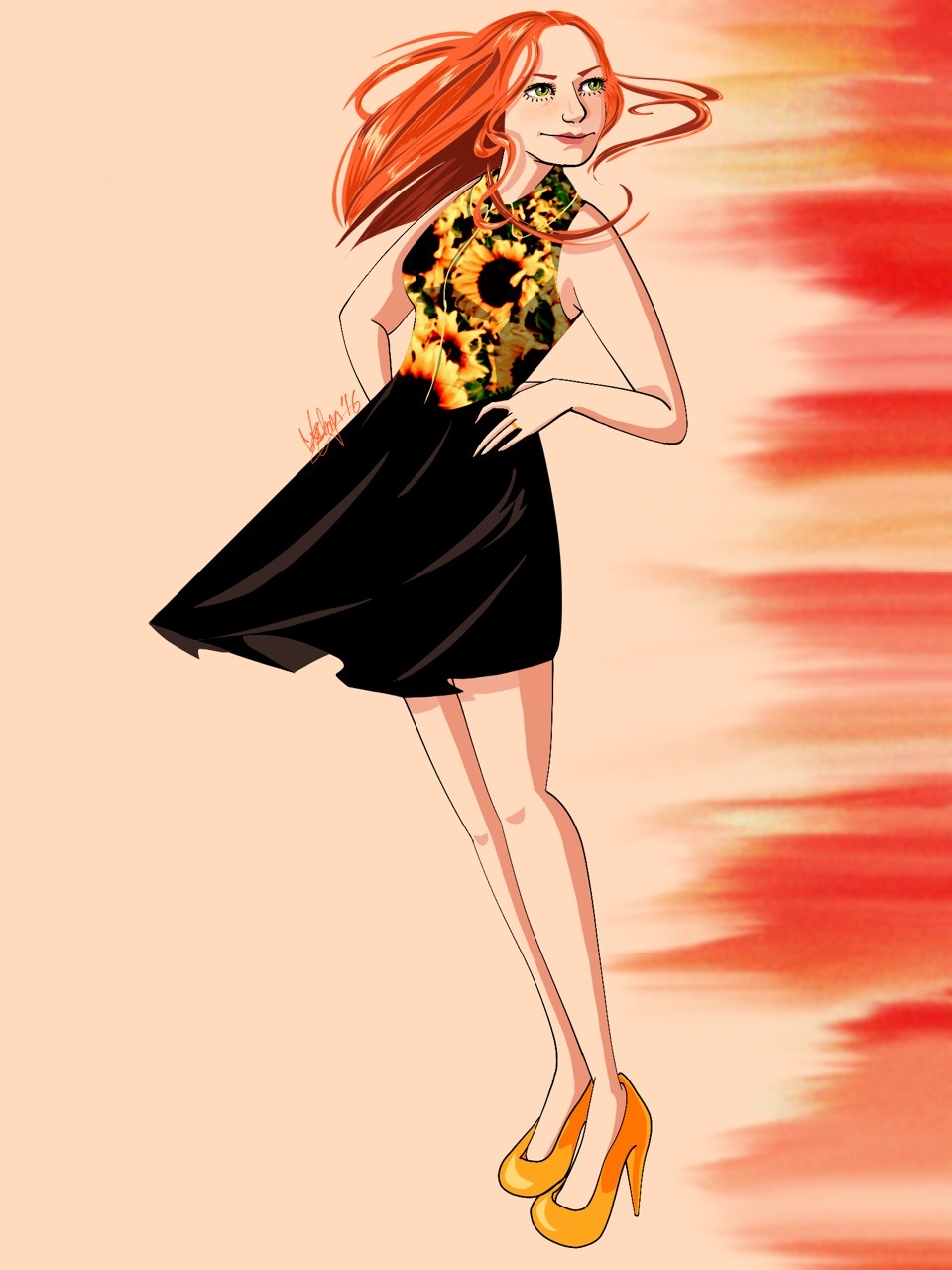
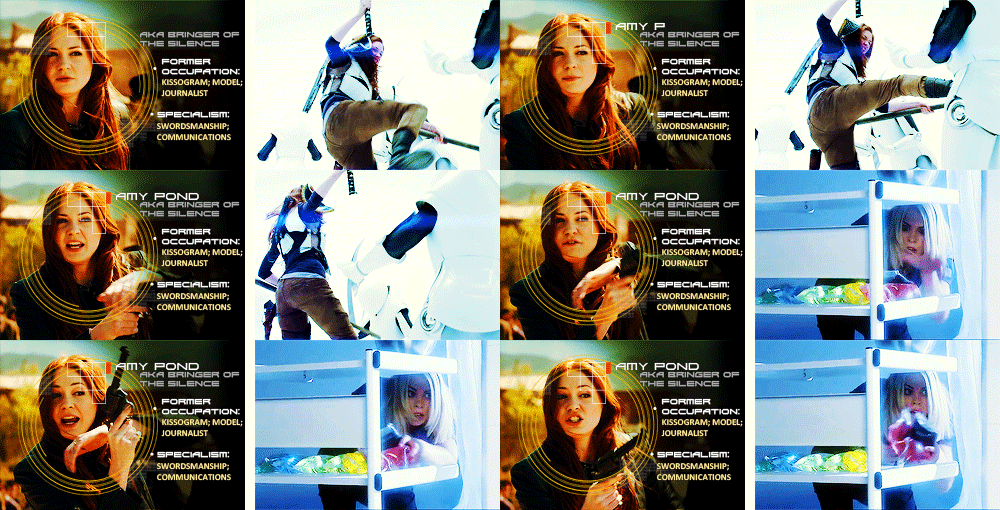
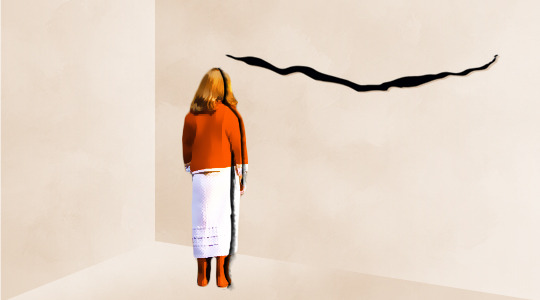
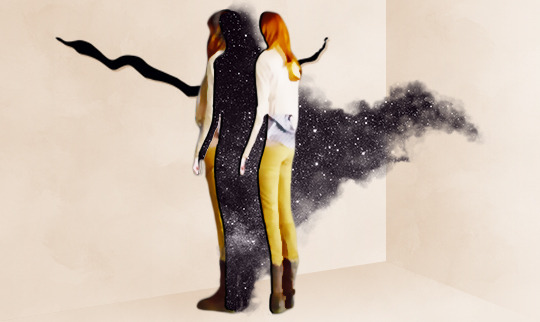
There’s a crack in time in the wall of your bedroom. And it’s been eating away at your life for a long time now. Amy Pond. All alone. The Girl Who Didn’t Make Sense. How could I resist?
It can’t just be people’s hatred for Moffat rubbing off on Amy, surely. It took two series of Who, two series of Sherlock and a hamfisted pregnancy arc for Moffat to really build up a hatedom – coming into Doctor Who series 5, people actually generally quite liked him. He’d given us Sally Sparrow and Nancy, for a start, and goodwill for Russell T Davies had really, thoroughly run out after the resolution of Donna’s story and quotes like “nine hysterical women [were the ones upset at Ianto’s death in Torchwood]”.
Amy was Moffat’s creation, we all know that – but back then people hated her even whilst quite liking her writer, way back in 2010. Complaints were plenty: why does she get to save the day two episodes in a row (The Beast Below and Victory of the Daleks), why is she so stroppy, why is she so sulky? SFX Magazine had an ‘Amywatch: A log of (mostly) infuriating Pond moments’ for their reviews of Series Five, with comments like “There’s a rare instance of Amy looking cheerful here. Pause and savour” and criticism about her “defensive barrier of irony”. Posters on Gallifreybase etc complained a lot about how immature she was, or how spoilt she was (???) or how there was just something off about her.
…..Which was her mental health! The same thing that’s off about me!
Anyway. Literally one of the first things we learned about adult Amy Pond is that the various bad things that have happened to her throughout her life have given her some deep-seated mental health issues. “Four psychiatrists!” she spits at the Doctor in her very first episode. She shows symptoms of PTSD right from the beginning, she even does some hugely unsympathetic things in her first few episodes that hint at her state of mind.
And yet, no matter what, “Amy was just Moffat’s hot redhead wank fantasy” is pretty much the preferred narrative now. Which is discouraging, to say the least, because there’s a lot to her. All those complaints about her up there? Those are my favourite things about her – her immaturity and grouchiness and defensiveness. Not to mention her fearfulness, her self-esteem issues, her love of history, her love of art…
So I still can’t work about where this idea that she’s a Nothing or worse came from. Because her personality and trauma and relatable-ness is there! It’s all there, it doesn’t even take much looking to find! So, well-
I’m at the point now where I wanna know why Amy doesn’t get the divorce from her author that so many other characters do get, I guess. No-one comments on gifsets of Princess Leia in her slave outfit with anything like ‘lol, Leia was such a sexist wank fantasy", they call the outfit itself – and the men who put her in it – sexist. S’like, Buffy’s generally thought of as being a separate entity from Joss Whedon, even after people started to call him out on his sexism. Martha Jones is likewise quite rightly considered a separate entity from Russell T Davies even though he’s made racist jokes (often involving his own characters) more than once. So I don’t get why Amy doesn’t get that, I guess. She gets to be an offshoot of the guy who made her and no-one’s really cared enough to look for more.
But why? Why didn’t people care enough? Okay, so lots of people dislike Amy as a character because of Steven Moffat, we’ve established that pretty thoroughly. What I really want to know is why people dislike her as a person. Because she hasn’t really done anything to be so written off except –
(you knew this would probably come around to this eventually)
– show a lot of the symptoms of mental illness. Like, a lot. (This is the woman who puts herself into a potentially fatal situation after Rory dies because “if this is real life, I don’t want it”; who responds to someone else holding a gun to their head with “I understand. Really, I do”; who has sobbing breakdowns a lot. Like, even if you really do feel she’s too unwritten to have a mental illness, you can see how she’d be quite valued to people with mental illnesses, right?)
So, uh, I guess what this comes down to is: what is it? What’s making Amy so unrelatable, such a blank slate, so unworthy of further exploration?Someone’s bound to jump in here with a “Maybe she should try being better written”-type comment, but we’ve already covered that.
So I’m home sick and caught Turn Left on repeat and it just made me miss the earlier days of Who, when the risk was real, when the characters and their hopes and their dreams and their wonder and awe at being companions and seeing the whole of time and space laid out before them was all so much more real and true.
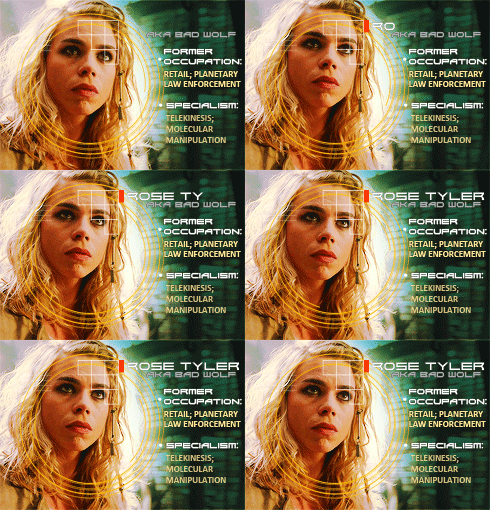
Who hasn’t felt like Rose, stuck in a rut with a dead end job? Or like Martha, too smart for her own good? Or Donna, precious Donna, a failure as an adult, stuck on the ‘wrong’ side of 30, too loud, too unmotivated, still living at home? Compare with Amy or Clara, two young, pretty girls, whose characters were practically blank slates with ‘cool’ approved snark and wardrobes. Women who could’ve been brilliant – who could’ve been real. Even River, who begins as a woman who sacrifices herself for love careens wildly from states of cartoonish behavior to a heartbreaking portrayal of a woman aging in society.
These were real people with real fears and real hopes, and real joys and loves and goals and ambitions. The character and the world were specific – which allowed them to be universal because in these characters and in these worlds we could see our own, our own wardrobes, our own insecurities, our own fish and chip shops and department stores. The effects were cheesy and low budget, but it felt more real than the new series, with all the money and none of the heart. We can’t go back, but I hope with Steven Moffat’s departure, they’ll be a return to Russell T Davies’ sense of heart, empathy and compassion. He loved his characters, he loved their flaws and their quirks and their neuroses and their half-empty cups of cold coffee and their leftover sandwich wrappers and the dirty laundry on the floor.
And so did I.
Because in loving them, it showed me that it’s ok to be stuck in a dead end retail job, because it’s a job and you are not your job. And that it was ok to be too smart for your own good, because you can use that to pull yourself out of whatever it is you’re stuck in. It’s ok to be living at home with your family, to be a disappointment, to be loud and obnoxious because you can still be loved. You can still be valued. You can look outside of yourself, outside of your pain, your selfishness, your ego and become something more. You don’t become worthy of love You have and will always be worthy of love. You just become aware of the fact that you deserve love.
You know, there’s a lot of great sentiment in your post. But I take issue with your claim that the RTD era was somehow more “real” or had more “heart” than the Moffat era, because I identify more with the Moffat era. I see more aspects of myself and my life reflected in his characters and his stories than I did with the RTD era. And I know I’m not alone in that.
Moffat’s stories and characters are not less real or less risky, and their wonder, awe, empathy, and compassion are not less true or beautiful. Remember that time Amy gave hope to Vincent Van Gogh, and every viewer who struggles with trauma, loss, or mental illness? Remember how heartbreaking it was when Amy realized that they ultimately didn’t save Van Gogh’s life, but the Doctor helped her to see that what they did was still a good thing and it mattered? Remember that time Moffat made you feel pity for Davros, and Missy, and you thought, wow, yes, compassion is that important, even for your worst enemy? Remember how many different ways Moffat illustrated that relationships, both romantic and friendly, are hard and we screw them up all the time but they’re still worth fighting and dying for? Remember how he spent two whole seasons exploring what heroism means–that it’s not about being good, because we’re all just idiots, but that when we try to be good, we can make the whole universe better? Remember the time he gave us one of the most compelling speeches ever recorded about war, which spoke directly to real events happening in the real world? Remember when Clara taught you that an ordinary schoolteacher, not by being inherently special but by being a teacher and choosing to be brave and kind and never giving up, and teaching others to do so as well, can profoundly affect another person, and another, and another, and maybe also the whole universe–even though she also still screws up a lot? Maybe you don’t; maybe those messages didn’t resonate with you like they did with me.
You’ve said some beautiful things about the power of RTD’s stories. I
adore “Turn Left” and I love Donna and Martha and Rose and I really
enjoy a lot of the RTD era and I love the man forever for bringing
Doctor Who back. It’s fine that the RTD era resonates more with you, and that the Moffat era resonates more with me. We’re different people and we have different lives and different tastes. And I’d be happy to talk more about the creative merits and failings of RTD’s soap-opera take on Doctor Who vs. Moffat’s dark fairy-tale approach. But we’d have to agree to talk about it in other terms, because don’t tell me that my life, and my heroes, and my stories, are less “real” or valuable than yours.
Who hasn’t felt like Rose, stuck in a rut with a dead end job? […] Compare with Amy or Clara, two young, pretty girls, whose characters were practically blank slates with ‘cool’ approved snark and wardrobes. Women who could’ve been brilliant – who could’ve been real.
I seriously resent being told I identify with Rose Tyler having a dead end job more than Amy, Clara, or River. It’s BS. Amy Pond, Clara Oswald, and River Song are some of the most complex–and wildly different–female characters and I am very proud to find myself to some degree in them. But if I was forced to choose just one, there’s no doubt I’m Clara. It’s almost mind boggling how accurately Clara Oswald represents me as a woman, as an English/book nerd who idolizes the power of stories, as a dress/skirt lover, as a 20-something in the 21st century who sucks at hooking their laptop up to the Internet, as someone who enjoys recognizing social conventions so I can use them or subvert them to my own ends, as … you get the idea.
I am not a “blank slate” and neither are of my friends who are Clara Oswalds, Amy Ponds, River Songs, or any combinations thereof. Let’s not pretend otherwise.
Who hasn’t felt like Amy Pond, disbelieved by the world for so long that you’re not entirely sure you believe yourself, full of emotions that you don’t know what to do with, struggling with the suicidal moments, desperate not to be abandoned—
Well, actually, not everybody. Me, I relate to her in part because I have an invisible disability, a chronic pain condition, and I really, really get being disbelieved. And then there’s the depression angle. I mean, it’s very possible that Amy Pond is much more relatable to people with mental or physical conditions than she ever will be to people who are able-bodied and mentally healthy.
But that doesn’t mean that she’s impossible to empathize with. People can understand and connect to all sorts of characters that aren’t like them. And honestly, if you take a look at a character, see that they’re not like you, and declare them an empty shell—well, please think about what that says to people who do relate to that character. When you say that Amy is not “real” and that nobody can relate to her, what are you saying to disabled people? When you object to River having a fun and funny side in addition to her struggles, what are you saying to abuse victims, or older women? When you say that Clara is a blank slate, what are you saying about women who invent masks to deal with family, or society, or their own sexuality?
You don’t have to like characters, or relate to them, or even empathize with them, but don’t tell us that we don’t exist. Personally, I’ve had a lifetime of being told that I’m not experiencing what I’m experiencing, and I can do without that.
The moment in which I related to Amy possibly more than I’ve ever related to a fictional character is that bit at her wedding when she stands up and starts shouting out for the Doctor, sounding like she’s having a mental breakdown (and for all she knows, she is.) And you see her family members react: her aunt Sharon puts her face in her hands, her mother winces “The psychiatrists we sent her to!…”
Something I appreciate about Amy’s storyline: she gets married and continues to travel on the TARDIS as a companion.
This was pretty new to Doctor Who, because in the classic series, “companion meets someone and stays behind to get married” was one of the most common reasons for a companion departure, starting right away with the first one: Susan, the Doctor’s granddaughter. There, it was a clear signifier that she had grown up (despite supposedly being, like, 15), and needed to move on. But then it happens again, with Vicki, Jo, and Leela; meanwhile, Peri is revealed to have actually married someone, and Mel runs off with a lover. These storylines were never afforded to male companions: Steven helps restore peace in a society,Jamie’s (and Zoe’s) memory is wiped, Harry decides to stay behind, Adric dies, Turlough goes home. Sure, female companions did leave for other reasons, and I don’t want to overlook that. But clearly, marriage was something not compatible for the TARDIS life. The adventure’s over, girls.
As such, the ending of “The Big Bang,” with Amy in her wedding dress waving goodbye from the TARDIS, is an important step forward in Doctor Who’s history. You can be married, have adventures, and wear miniskirts while you’re at it. This is consistent with Amy’s personality and not something for everyone, of course, but it’s a change. (It’s Rory, a nurse who years for domesticity, who sometimes represents the traditional feminine.)
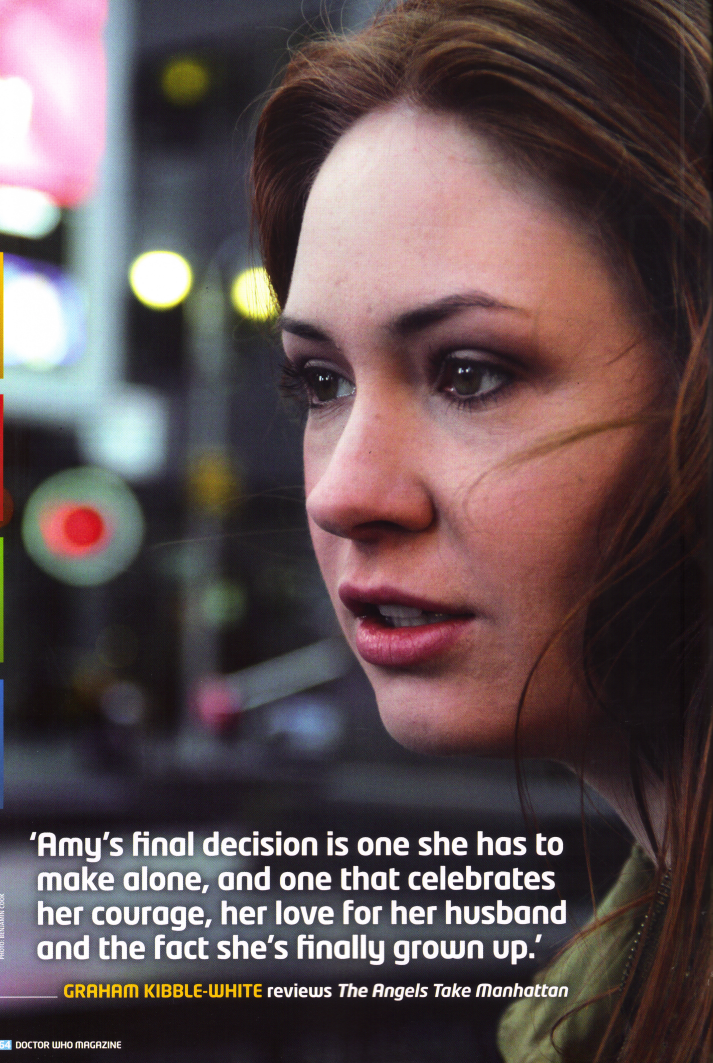
Yes, the TARDIS life does end up interfering with their own lives as they move forward, but it’s not simply because they are married. It became too dangerous to risk…Rory died many times, their baby was stolen and Amy traumatized. The Doctor, who couldn’t leave them alone out of love (and they couldn’t leave him, either), was causing more harm than good and that was taxing for that point in their relationship. And that’s what culminates in “The Angels Take Manhattan,” where even if the Doctor could find some way to retrieve them, he probably shouldn’t and just let them carry on with some stability. And, well, that’s what happens with relationships (including friendships) sometimes, regardless if there are time travel shenanigans, and regardless if there is a marriage.
“Never cruel or cowardly. Never give up. Never give in.”
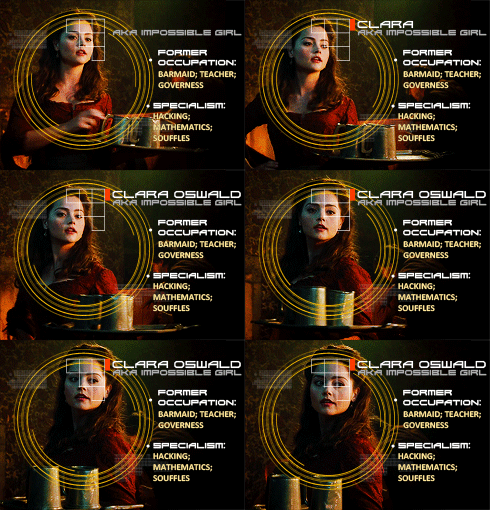
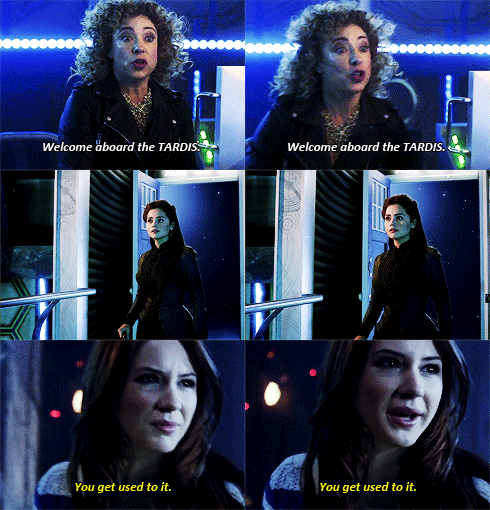
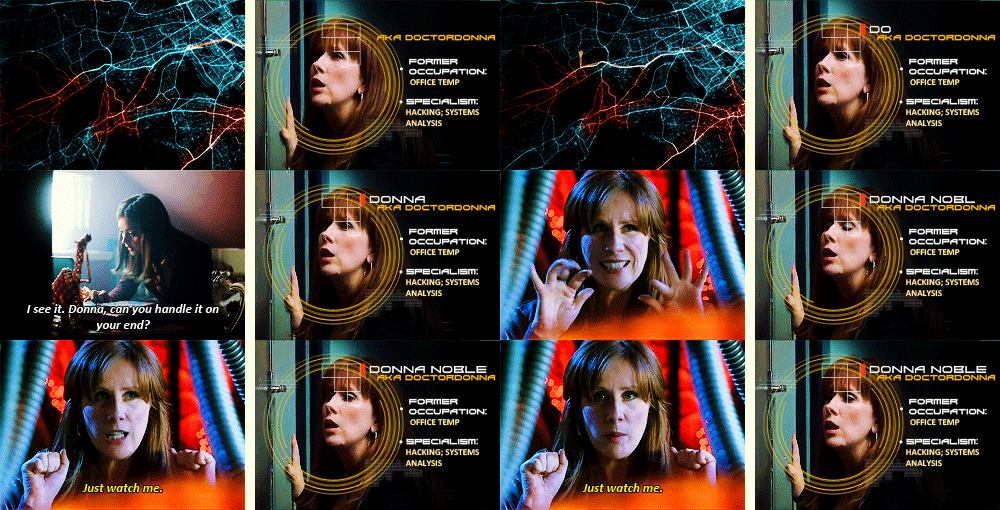
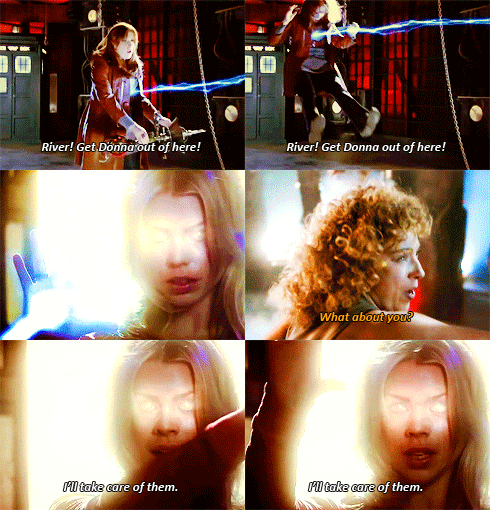
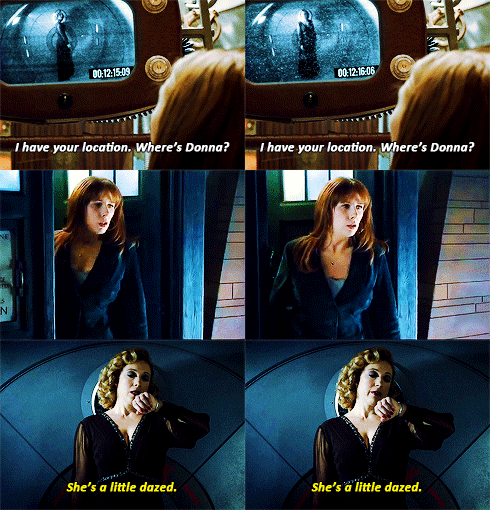
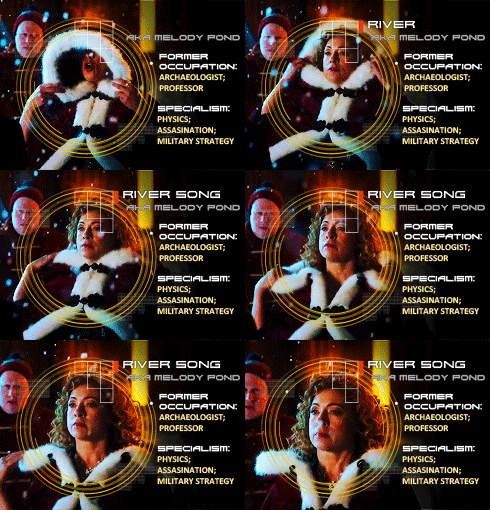
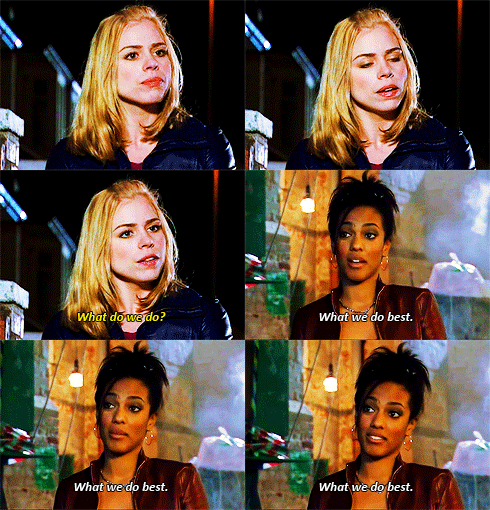
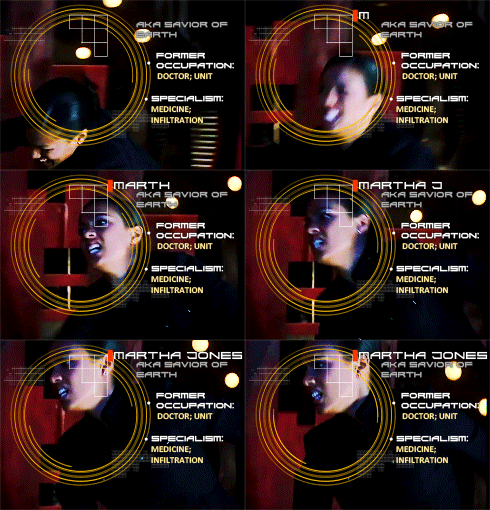
In the 61st century, the Shadow Proclamation recruits a group of women from different periods to form an elite squad: the Department of Objective and Covert Temporal Oversight through Respondent and Warranted Humanitary Operations, also known as D.O.C.T.O.R.W.H.O.