My mental health has been all over the place the past few weeks. Stuff that wouldn’t affect me normally suddenly does and I have no idea why. The OCD isn’t worse but I suppose the depression bit is. Maybe the bad weather is also not helping? Man.
my mental health

no offense but this is literally the most neurotypical thing i have ever seen
Uhhhh… no.
This is what they teach you in therapy to deal with BPD and general depression.
When I got out of the hospital after hurting myself a second time, I got put into intensive outpatient program for people being released from mental hospitals as a way to monitor and help transition them into getting them efficient long-term care.
This is something they stressed, especially for people with general depression. When you want to stay at home and hide in your bed, forcing yourself to do the opposite is what is helpful. For me, who struggles with self harm- “I want to really slice my arm up. The opposite would be to put lotion on my skin (or whatever would be better, like drawing on my skin) the opposite is the better decision.” It doesn’t always work because of course mental health isn’t that easy, but this is part of what’s called mindfulness (they say this all the time in therapy)Being mindful of these is what puts you on the path to recovery. If you’re mindful, you are able to live in that moment and try your best to remember these better options.
I swear to god, I don’t get why some people on this website straight up reject good recovery help like this because either they a)have never been in therapy so don’t understand in context how to use these coping tactics. Or b)want to insist that all therapists and psych doctors are neurotypical and have zero idea what they are talking about. (Just so ya know, they teach this in DBT, the therapy used to help BPD. The psychologist who came up with DBT actually had BPD, so….a neurotypical women didn’t come up with this.)
I have clinical OCD and for me, exposure therapy–a version of “do the opposite”–has been fundamental. I’ve had huge improvement in the last year, but I’m 100% clear that if I hadn’t done my best to follow this protocol I’d be fucked. I have a lot of empathy for that moment when you’re just too tired to fight and you check the stove or you wash your hands or go back to the office at midnight to make sure the door is locked. But the kind of therapeutic approach outlined above has been crucial for me.
It’s hard to do. I’ve weathered panic attacks trying to follow this protocol. But I’ve gotten remarkable results. I was afraid to touch the surfaces in my house, okay? I was afraid to touch my own feet, afraid to touch my parrot–deliberately exposing myself to “contamination” has helped me heal. I can’t speak for people with other issues, but this has helped my anxiety and OCD.
I feel that tumblr, in an effort to be accepting of mental illness, has become anti-recovery. Having a mental illness does not make you a bad person. There is nothing morally wrong with having a mental illness anymore than more than there’s something morally wrong with having the flu. However, if you’re “ill” physically or mentally, something is wrong in the sense that you are unwell and to alleviate that you should try to get better. While there is not “cure” for mental illness, there are ways to get better.
There was a post on tumblr where someone with ADHD posted about how much you can get done when you focus and was attacked for posting about being “nuerotypical” – when she was posting about the relief she got from being on an medication to treat her illness.
I saw another post going around tumblr that said something along the line of “you control your thoughts, why not choose to have happy thoughts” which again was shot down as “nuerotypical” but while you don’t have control over what thoughts come into your mind, you absolutely can and should choose to have happy thoughts. In DBT we call this “positive self talk”.
I’m in DBT to help treat PTSD stemming from child abuse. The abuse and abandonment I experienced destroyed my self esteem and created a lot of anxiety over upsetting other people. DBT has taught me to recognize when my thoughts are distorting realty ‘no one likes you’ and answer back ‘plenty of people like you, you don’t need everyone to like you, especially if the relationship doesn’t make you happy’, to respond to the thought ‘I’m so worthless’ with ‘you’re really great and have accomplished something’
And it’s not easy to challenge your thoughts, it’s a skill that’s learned and it’s hard to force yourself to think something that doesn’t seem authentic or even seems wrong to think – it’s hard to be encouraging towards yourself when you hate yourself – but you force yourself to be aware of your thoughts and push back when you fall into unhealthy patterns
That isn’t “so neurotypical” that’s recovery.
Not shaming mental illness doesn’t mean shaming RECOVERY.
Pro-Recovery isn’t anti-disability.
Do not shame healthy behaviors as “neurotypical”.
Learning healthy behaviors and taking steps to treat mental illness and disorders including taking medication if that’s what works for you is important. You shouldn’t be ashamed if you have mental illness, but you shouldn’t say ‘well I’m not neurotypical therefor I can’t do anything to get better’ – while there is no cure for mental illness, there is a lot you can do to get better, to function better, to manage your mental illness and be safer, happier, and healthier for it.
DO NOT SHAME HEALTHY BEHAVIORS AS “NEUROTYPICAL”.
I have social anxiety, among other things. I was terrified to talk to anyone new for years. So I started going to cons and staying too busy to notice that I was nervous af. Immersion one one’s own terms is invaluable as a tool.
I think the assumption some people make about therapy is that recovery is to make us easier to deal with, and no, it’s more like adjusting your diet if you have diabetes.
I am trying to get better because my illnesses are fatal if left untreated.
My therapist: gives me advice on how to cope with something
Me: what kind of neurotypical bullshit!!!Also worth reiterating, again, that the creator of DBT herself had BPD–she was not coming from a “neurotypical” point of view.
I do exposure therapy for my OCD. It can be absolutely, thoroughly horrible. But it does help.
Having intrusive thoughts about, e.g., murder, does not inherently actually make one a murderer.
Accusing someone of actual murder, when they only admitted to intrusive
thoughts about murder, does literally no good to anybody.There is literally no good outcome of conflating thinking about some horrible act and actually doing the thing. That way lies Orwellian thought-crime-policing absurdity.
Why the hell are people acting on the opposite assumption?
(Ironically, many of the people throwing around claims like this will then go and throw around actual death and violence threats / wishes, among other things – which seriously undermines their credibility, to say the least.)
As someone who’s had a literal lifetime of absolutely horrific intrusive thoughts (anyone can ask me about ‘em, I’m an open book, it’s for the better) I find this site’s attitudes towards them……………um. Disappointing.
To the lady who gave me £1 to buy a cookie today
My OCD affects my eating a lot. (It’s a lot better than it used to be. There was one horrible time when I barely ate at all.) The most difficult part of my new therapy, by far, has been teaching myself to eat whatever I want instead of letting my brain just go ahead and say to me “If you eat X food, Y will die, even though that makes no sense whatsoever.” OCD is like that (i.e. horrible)
Anyway today there was a food market in Leicester and everything smelled DELICIOUS. It really sucks to be around food you know you can’t eat, but I wanted to try and break this OCD cycle (I’d just come out a therapy session) and have a shot at actually eating something when I wanted to eat something. So, encouraged by my boyfriend, I went to get a chocolate chip cookie. But it turned out that between us, we didn’t actually have enough change for one. Which was fine, in a sense, because we could’ve just gone to the cash machine and gotten more (after a long, long period of having no money, we’re now back on our feet, which is really great) but honestly I’d have probably lost my nerve by then.
It takes a LOT of nerve to break an OCD thing, honestly. It sucks. But – you were behind us in the queue and you gave me a pound. Which might well have been a tiny thing to you, but – I bought the cookie, and I ate it, and I was incredibly nervous for ages, but no-one died. Wow, it sounds completely ridiculous when you put it like that, but OCD is completely ridiculous I guess.
So thank you for giving me that pound coin. It really meant one hell of a lot to me.
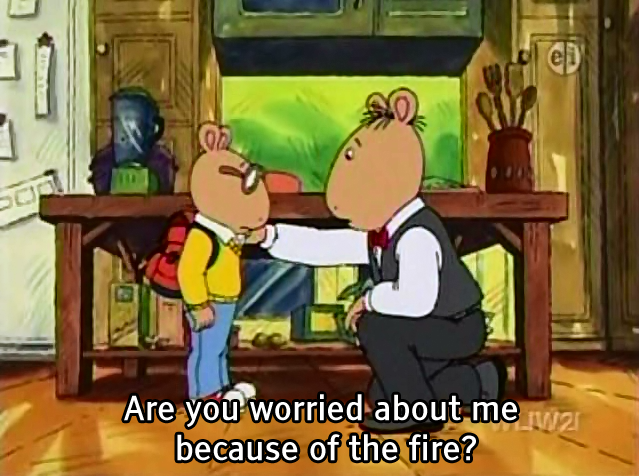
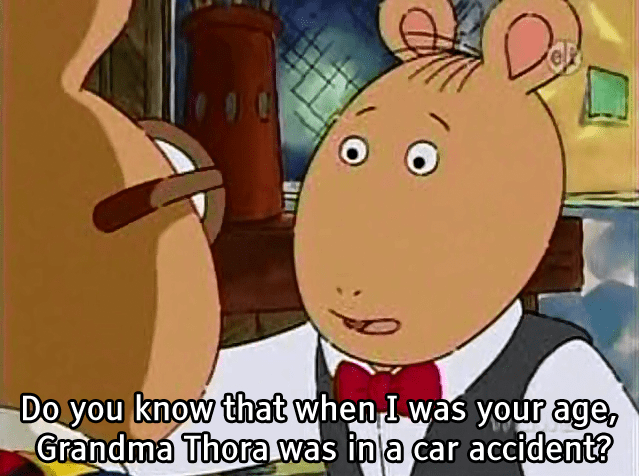
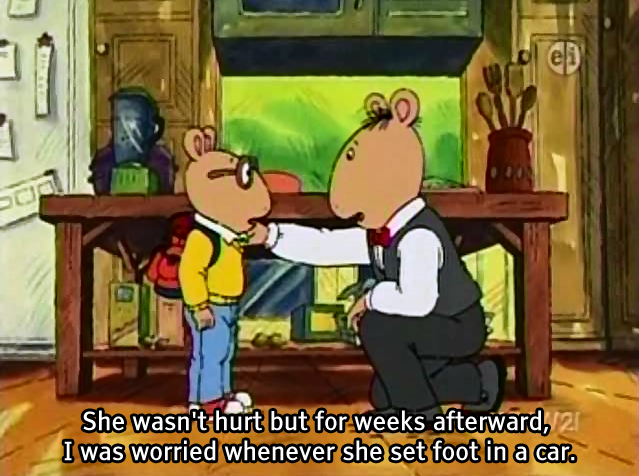
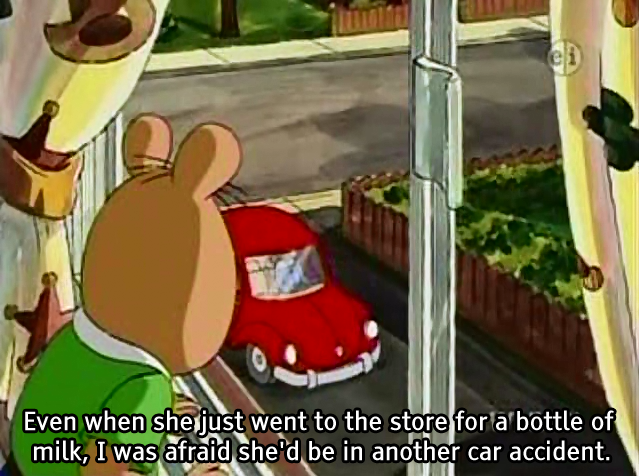
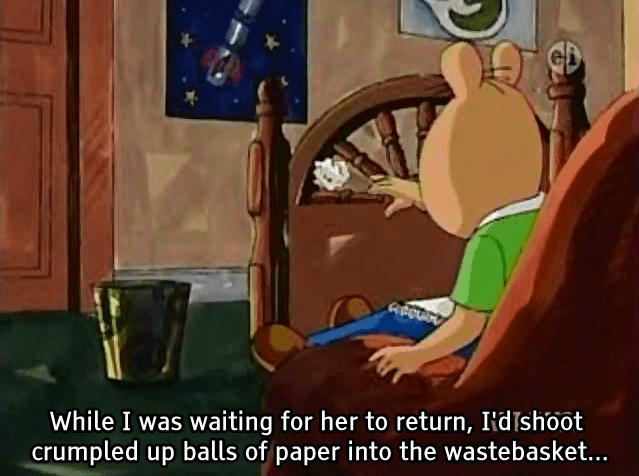
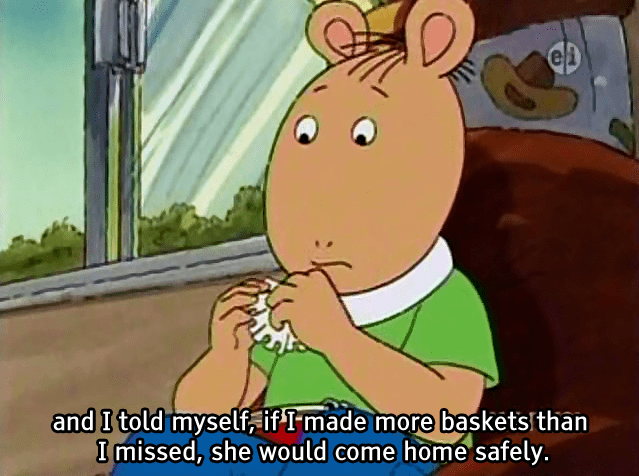
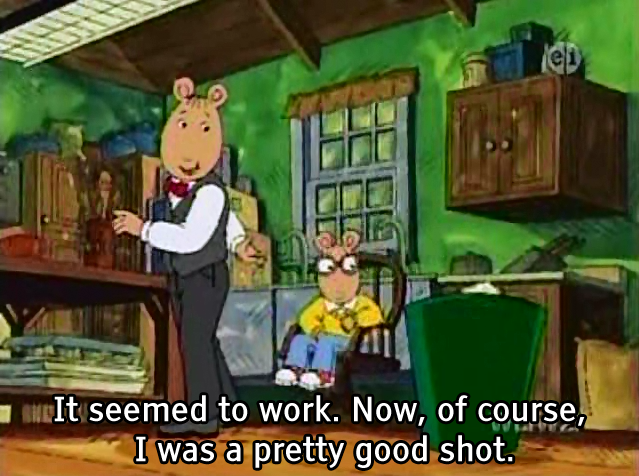
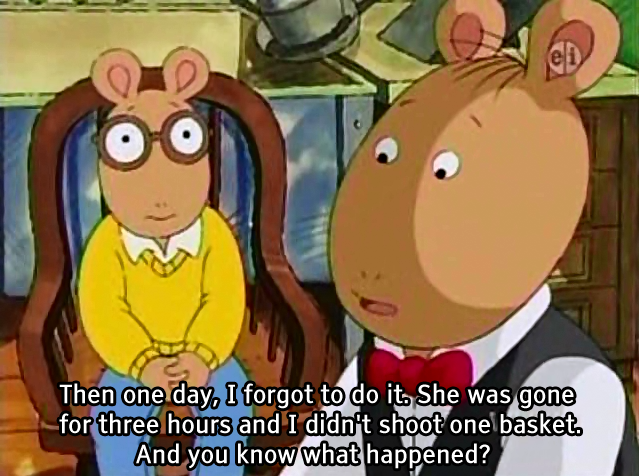
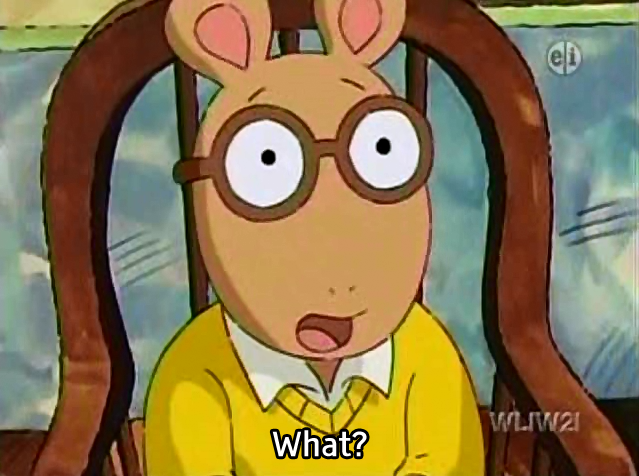
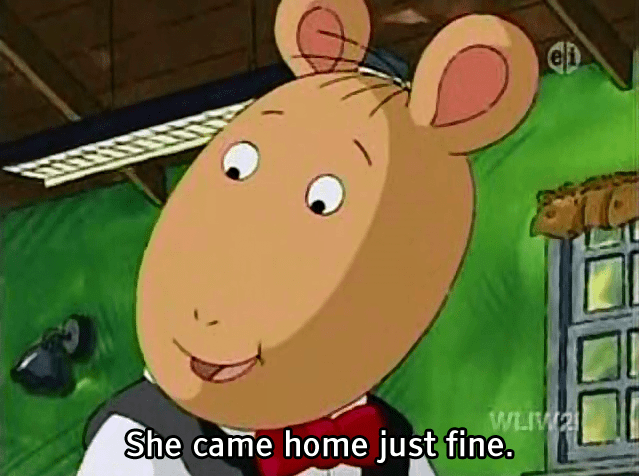
can we talk about how this fucking pbs show aimed at little kids easily talked about how anxiety is stressful but normal
Ok no but can we talk about this entire episode?
It was called April 9th, and it was actually a response to the 9/11 attacks. It didn’t talk about the attacks themselves, but rather focused on teaching kids to deal with the all of the emotions that they might be feeling as a result. They set up a situation that might evoke similar emotions in children: a massive fire at the school.
Arthur’s dad was in the fire, so (as you can see above), Arthur is constantly worried about his dad’s safety.
Sue Ellen is grieving because her journal, which contained a huge amount of precious memories, was destroyed in the fire. Muffy is confused why she can’t just cheer Sue Ellen up by giving her a new journal.
Buster wasn’t at school that day, and feels confused and guilty that he isn’t sad about the fire like the other kids. He then befriends the school janitor, who has to retire due to an injury that, at his age, is pretty serious.
Binky actually saw the flames, and is constantly traumatized by the event. He doesn’t tell anyone because he feels like he would lose his tough-guy reputation if he admitted that he was scared.
The episode teaches kids that all of these emotions are perfectly normal and natural, that there’s not one right way to feel, and that even if it takes a while, things are going to be okay.
The thing that makes this show so great, in my opinion, is that it knows that kids are intellegent and strong enough to deal with these things if you present them in the right way. It doesn’t hide them, it doesn’t sugar coat them, it just presents them in a way that children can understand and shows them how to deal with them.

Ah, this was one of the things that helped me realise what my OCD/anxiety was when I was younger.
trauma is not defined by the traumatizing thing that happened.
trauma is defined by the reaction of the person who experiences it.
if you are traumatized by something, then the thing that happened was traumatic.
if you are severely traumatized by something, then the thing that happened was very traumatic.
it does not matter if other people experienced the same thing and were less or not at all traumatized by it. because the only thing relevant for judging the severety of trauma is your reaction to it.