
The world is indeed full of peril, and in it there are many dark places; but still there is much that is fair, and though in all lands love is now mingled with grief, it grows perhaps the greater.
middle earth
Anonymous asked: yes talk about eowyn and antifeminism
Okay, so this might be a little lengthy.
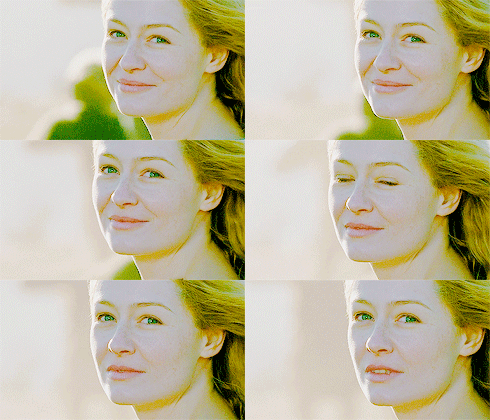
I will admit, when I first read The Return of the King (I was ten) and I realized that Éowyn had “given up” fighting and warfare for healing, I was offended. I was hurt. Éowyn was a lot like me – fiery, headstrong, determined – and suddenly I was faced with this realization that I was expected to settle down and be quiet and be nice and just not do what she did. I hated it. She was still my favorite character, but I really resented Tolkien for doing what I thought was something horribly sexist.
And then? Well… then I grew up. Oddly enough I sort of became Éowyn. I grew depressed. I fought not to protect others but because somewhere in the corners of my heart I sought death. I fell in love with the idea of someone rather than the true person, and it turned me hard and cold. And suddenly it made sense. Suddenly I understood that she didn’t fight for any healthy reason. She went to war to die, both because she felt trapped by society and because she felt she had no other choice. She wanted the glory of battle, not the joy of knowing that she was protecting her homeland. This I think is best evidenced in her argument with Aragorn – he’s pointing out (very wisely) that she’s not being left behind with the women and children, she’s being charged with the defense of Edoras. Somebody has to stay behind and rule and do queenly things, somebody has to protect those who cannot fight. And she doesn’t want to do that. She wants to fight for herself and her own reasons, she wants the glory. Aragorn calls her on it, tells her that soon she could be called to fight, “valor without renown”, and she hates that. So she suits up, goes off to battle, and seeks to die because she thinks that being left with the responsibilities is somehow lessening her value as a person.
It takes a stint in the Houses of Healing to show her that she’s wrong.
I almost think that it was her relationship with Faramir that brought her around. Not in a “love transforms you” sort of way, though. Because Faramir is the opposite. He doesn’t seek out war and valor. He wants to fight to protect his people, but his true joy is in peacetime. I’d say that being exposed to that mindset helped her see how wrong she was, which is why in the end she chooses to lay down her sword.
Personally I don’t think she stopped fighting, but I think in the future she fought to protect her people rather than for her own gratification.
I see a lot of myself in Éowyn. Always have. And so it’s hard for me, looking at Tolkien’s work eleven years later, to see this very natural character growth as antifeminist. Especially when we’ve got women like Lúthien, Aredhel, Nessa, Nienna, Varda, Galadriel, Míriel, and Haleth to show that Tolkien did in fact respect women, did believe that they could be valiant and could be whatever they wanted. I think his message with Éowyn was not “women shouldn’t fight”, but “if you fight, fight for the right reasons”. It doesn’t help that he was very opposed to war and to bloodshed for its own sake.
This is the only Meta Fridays post I’m probably going to reblog here, but it’s because I’ve gotten a lot of questions/comments about Éowyn from readers and it pretty much sums up my thoughts in one post.
Faramir is a writing sort, but he’s not the type to waste words. Boromir, less of a scholar, less fond of writing, but more the sort to relate details and stories which may be less than relevant. Which I think has interesting implications on the correspondence between them.
so in my headcanon, Boromir’s the long-letter writer (his fellow soldiers are always like ARE YOU WRITING TO A GIRL WHO ARE YOU IN LOVE WITH and he just rolls his eyes because he’s writing to his kid brother) with the occasional short missives that are either military correspondence or completely irrelevant nonsense that he thinks will make Faramir laugh (and because they MIGHT be military correspondence, Faramir is obliged to open them as soon as he receives them. this leads to him making a lot of strange faces in front of his men.)
and Faramir is the one who can get across everything he wants to say in three sentences or so (like, short enough that Boromir has the whole thing memorized by the time he reads it twice) but sometimes he will sit down and write PAGES UPON PAGES, just to get out his thoughts, and when Boromir gets those he knows something is happening in Faramir’s head.
so when Faramir goes through Boromir’s room after his death, he finds all the letters in a drawer and so he brings out all of the old ones he’s kept and sits on his brother’s bed and reads them. he manages to keep from weeping until he comes across one of the short ones Boromir sent a few years ago, which contains a particularly stupid joke and came by the hand of a messenger who was under the impression that the letter was urgent. and he can hardly bear to think that the one who considered laughter so urgent is dead, and will never send him absurd letters again.

Can you tell me why Frodo is so important in lotr? Why can’t someone else, anyone else, carry the ring to mordor? – Anonymous
but someone else could.
that’s the whole point of frodo—there is nothing special about him, he’s a hobbit, he’s short and likes stories, smokes pipeweed and makes mischief, he’s a young man like other young men, except for the singularly important fact that he is the one who volunteers. there is this terrible thing that must be done, the magnitude of which no one fully understands and can never understand before it is done, but frodo says me and frodo says I will.
(when boromir is thinking of how he can use the ring to defend gondor, when aragorn is thinking of how it brought down proud isildur, when elrond is holding council and gandalf is thinking of how twisted he would become, if he ever dared—)
but then there’s frodo, who desires nothing except what he has already left behind him, and says, I will take the Ring.
it is an offer made out of absolute innocence, utter sincerity. It is made without knowing what it will make of him—and frodo loses everything to the ring, he loses peace and himself and the shire, he loses the ability to be in the world. It’s cruel, the ring is cruel, it searches out every weakness you have and feeds on it, drinks you dry and fills you with its poison instead, the ring is so cruel.
and frodo picks it up willingly. for no other reason except that it has to be done.
(the ring warps boromir into a hopeless grasping dead thing, the power of the palantir turns denethor into an old man, jealous and suspicious, it bends even saruman, once the proudest of the istari, into a mechanised warlord, sitting in his fortress and bent over his perverse creations—all the best of intentions, laid waste)
but there’s a reason gollum exists in the narrative, which is to show—well, to show what frodo might have been. because even as frodo grows mistrustful and wearied, as the burden of this ring grows heavier and heavier, he is never gollum. he is gentle to gollum. he is afraid—god frodo is so afraid for 2/3 of these books he is so tired and afraid, but he keeps moving, he walks though it would pull him into the ground, because he asked for this, he said he would.
someone else could have carried the ring to mordor, I suppose. the idea of a martyr is not dependent on the particular flesh and blood person dying for some greater purpose. but such a thing has to be chosen, lifted onto your shoulders for the right reason, the truest reasons, and followed into the dark, though it would see you burnt through and bled out.
I will take the Ring, though I do not know the way.
i like to think that the last hobbit film will end with us returning to old bilbo sitting in his chair telling us the last sentences of his story and just when he finishes there’s a knock on the door and he shouts ”No thank you! We don’t want any more visitors, well-wishers or distant relations!” and just as he looks down in his book and returns to writing we hear a familiar voice say “And what about very old friends?” and then the credits come up

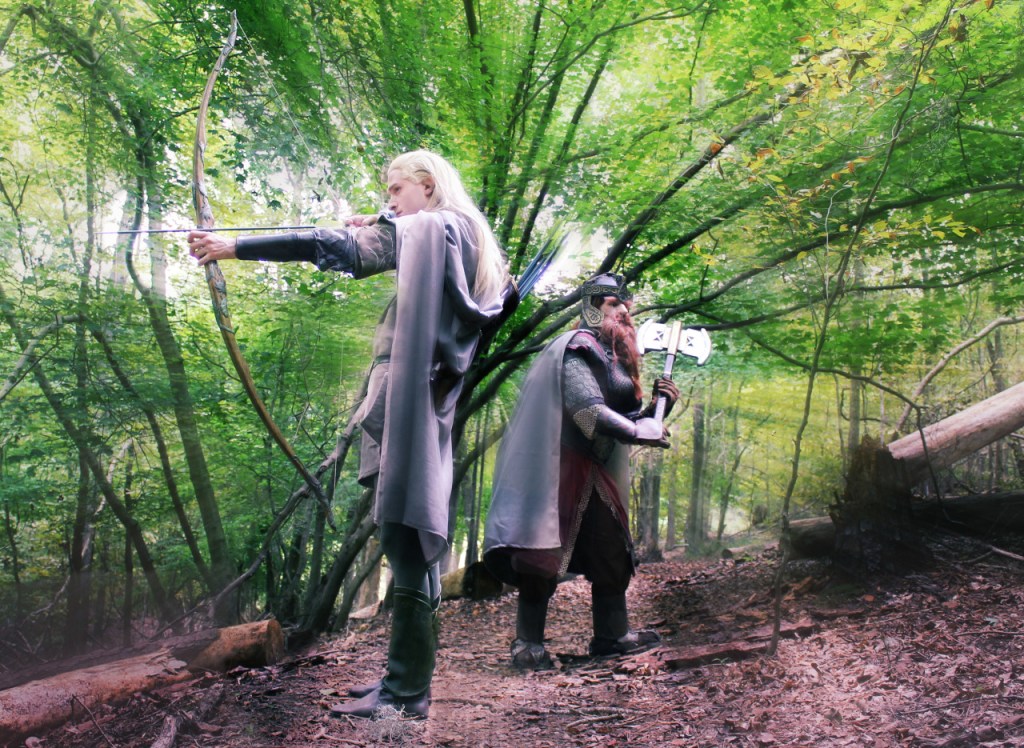

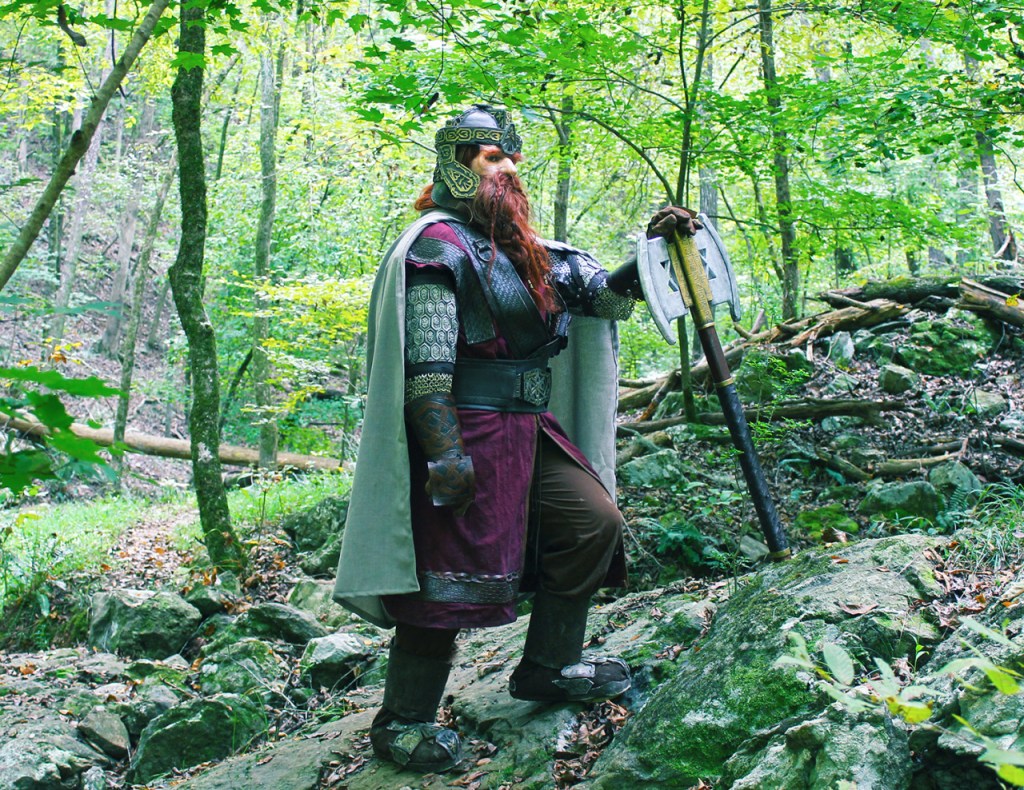
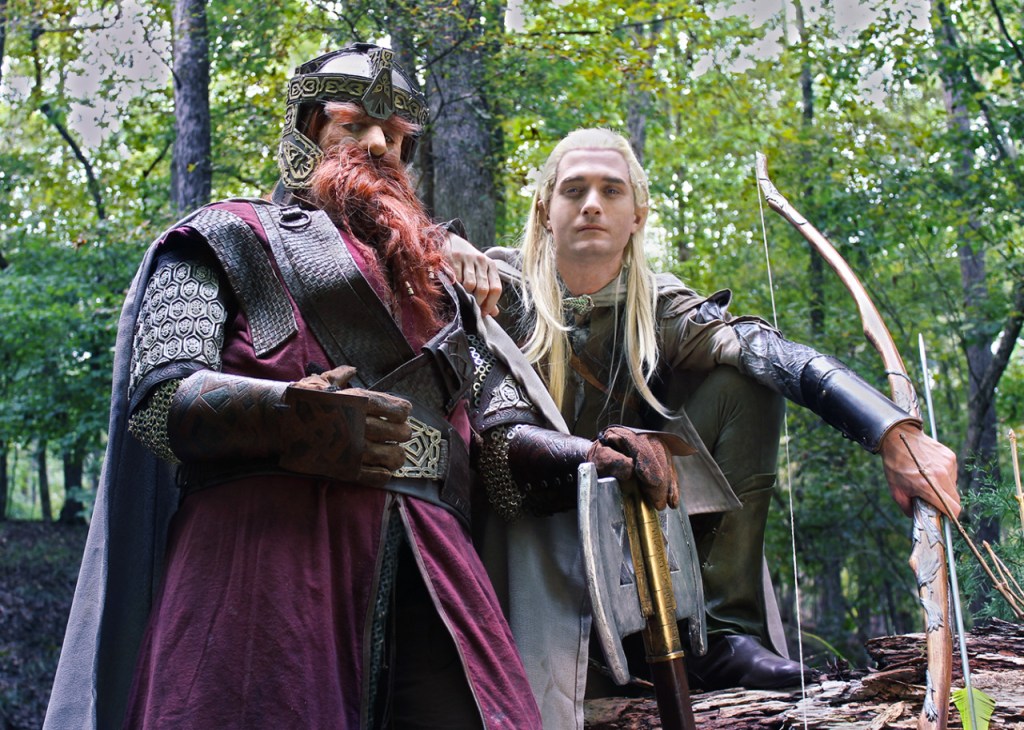
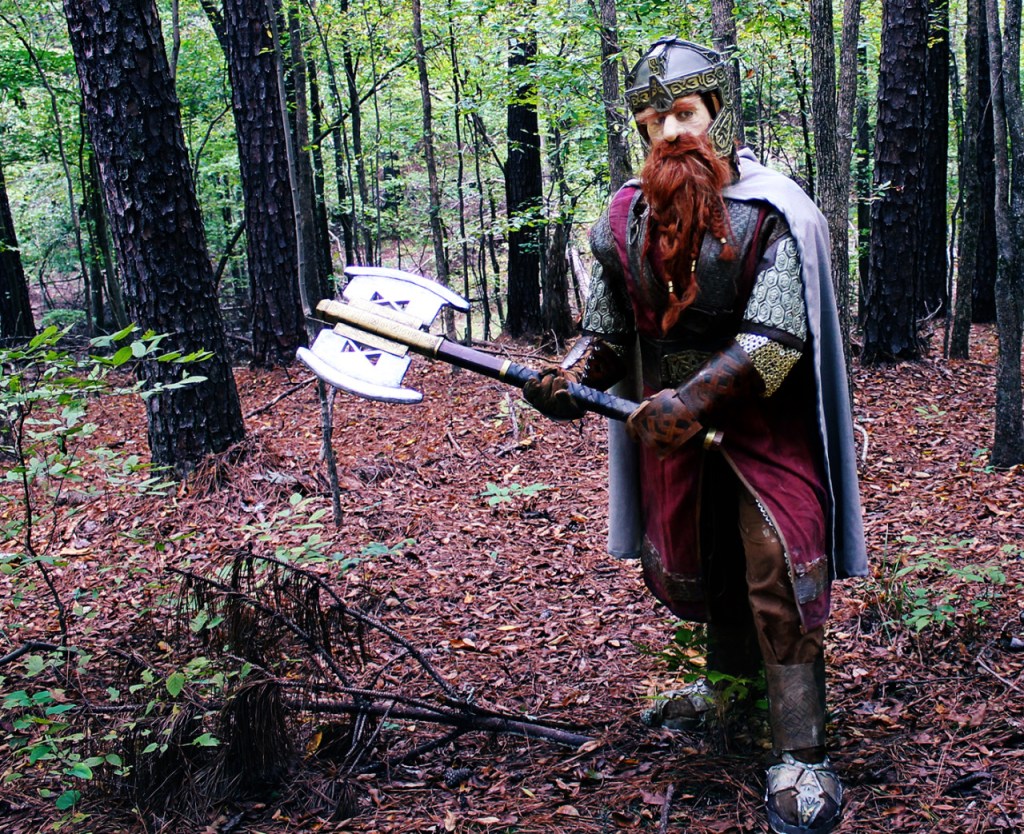
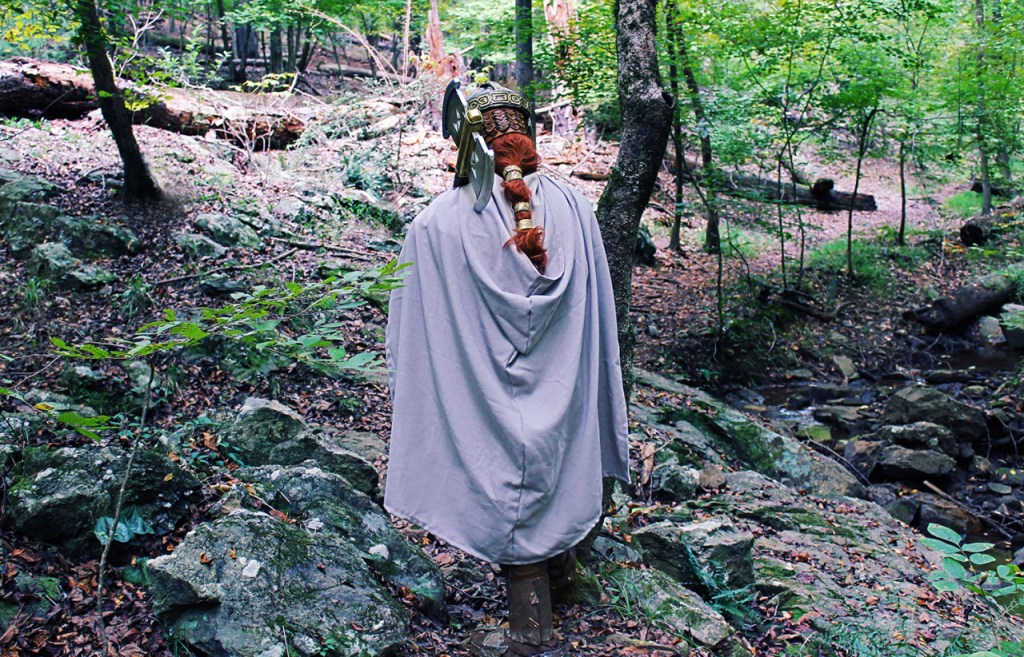
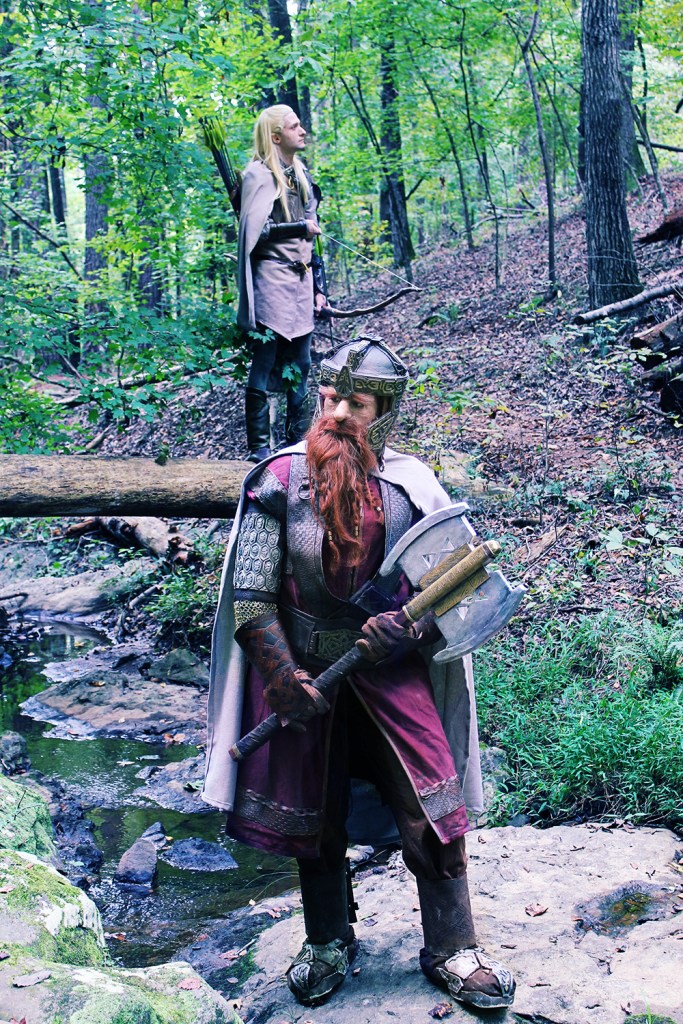
We celebrated the last day of Tolkien week, with a Legolas/Gimli romp in the woods!
Legolas and Gimli costumes by me
Gimli prosthetics, hair work and props by me
Our awesome friend Howie helped us set up these shots and manned the camera for us! We have great friends, indeed.
Wanna see more of my work? Visit my FB page and give it a like if you feel so inclined: https://www.facebook.com/CelticRuinsCostumes