As for “Write what you know,” I was regularly told this as a beginner. I think it’s a very good rule and have always obeyed it. I write about imaginary countries, alien societies on other planets, dragons, wizards, the Napa Valley in 22002. I know these things. I know them better than anybody else possibly could, so it’s my duty to testify about them.
Here’s what fanfiction understands that the Puppies don’t: inversion and subversion don’t ruin the story – they just give you new ways to tell it, and new tools to tell it with. Take a platonic relationship and make it romantic; there’s a story in that. Take a romantic relationship and make it platonic; there’s a story in that, too. Take a human and make her a werewolf; take a werewolf and make him human. Don’t try and sidle up on hurt/comfort like it’s something you’re ashamed to be indulging in; embrace the tropes until you have their mastery. Take a gang of broken souls surviving the apocalypse and make them happy in high school; take a bunch of funny, loving high school kids and shove them in the apocalypse. Like Archimedes, fanfic writers find the soul, the essence of what makes the characters real, and use it as a fulcrum on which to pivot entire worlds, with inversion/subversion as their lever of infinite length.
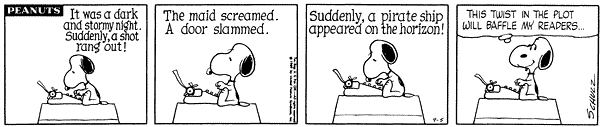
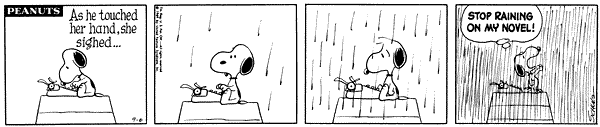
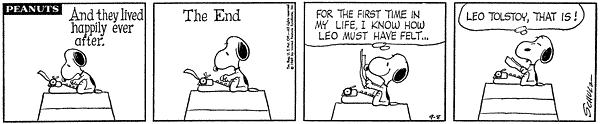
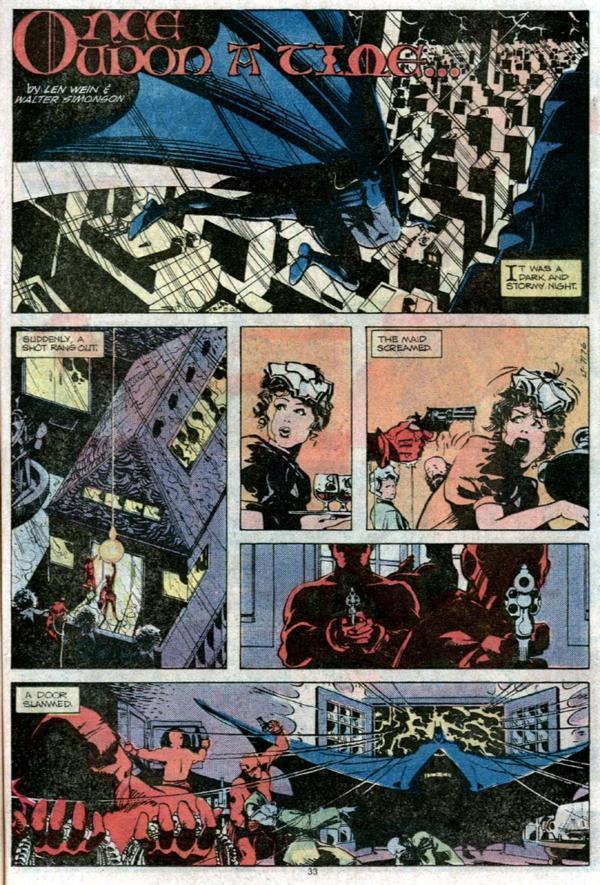
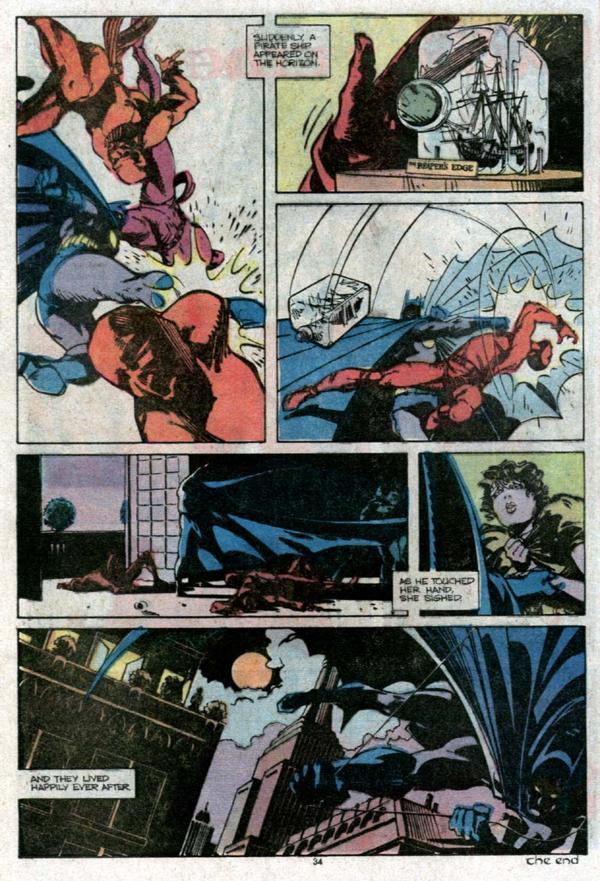
The meaning of context and style in comics. The one and only Peanuts by Charles M Schulz and then Batman with knowing homage by Len Wein and Walter Simonson.
Religious curses are so interesting because they reflect world-building more accurately that the other types of swears do.
So when Patrick Rothfuss’s character says “Shit in God’s beard,” you know beards are important to the culture of the guy who is swearing, and when N.K. Jemisin has one of her characters, a god, say “gods,” in a moment of frustration, a reader learns something about this world: there is more than one god, for example, and this particular god probably prays to a god higher than herself.
Swearing is about taking the name of something important in vain. You can learn a lot about a culture’s values by looking at the things it considers to be obscene.
That’s the best kind of (expletive deleted) world-building there is.
“…Always seeing patterns in things that aren’t there.
ok but HONESTLY one definition of intelligence is that it’s pattern recognition and humans are ridiculous at it
at least half a dozen cultures from all over the world (babylonians, maori, chinese, aztecs, native australians, chinook) independently looked up at the sky and went “yeah that clump of dots, that looks like a significant clump of dots, we’re gonna give it a name”
like constellations are such a strange thing, we not only had to look up at the stars, but we had to find significance in them, and their positioning, and decide to play connect-the-dots with them, and then either make up stories to go with our drawings or make up drawings to go with our stories
we see patterns in literally everything, that’s where conspiracy theories come from, that’s where superstition comes from, one argument (that i don’t hold to, but it has some validity) is that that’s where religion comes from
we like patterns and we like stories, if there’s one thing that even more cultures have than constellations, it’s stories, there’s an argument to be made that it’s storytelling that differentiates us from chimpanzees and bonobos
“we are Pan narrans, the storytelling chimpanzee” thank u pterry
and what’s a better story than “we spent decades and billions of dollars trying to send a probe to this tiny space rock and when we get there it’s so happy to see us it has our symbol of love and affection on it”
When you’re absolutely stuck in a scene, write one of the characters in it yelling: “Makin’ pancakes! Makin’ bacon pancakes!” Then give yourself just a few minutes to write all the other characters reacting appropriately, as though that had genuinely just happened in their reality.
—–
“Why are you so unfriendly?’ said Boromir. ‘I am a true man, neither
thief nor tracker. I need your Ring: that you know now; but I give you
my word that I do not desire to keep it. Will you not at least let me
make trial of my plan? Lend me the Ring!“
“It is by our own folly that the Enemy will defeat us,” cried Boromir. “This is no time to take bacon and put it in a pancake! How it angers me! Fool! Obstinate fool!”
—–
And then erase the goofy stuff and go back to where you were, hopefully slightly refreshed.
This is a shorter variation on Steven Brust’s trick for when he’s stuck on a major plot point. He writes a scene in which all the characters get together and have a meal, at which they bitch about their situation, about possible solutions, and about what a jerk their author is. When the characters have agreed upon a course of action, Steve deletes the meal scene and has them enact whatever decisions were made in it.
It occurs to me that failure to properly worldbuild an SFFnal story is – sometimes, though not always – less reflective of a writer’s creative ability than it is a consequence of their real-world privilege. The concept of culture as something with multiple facets, that can be experienced from different perspectives and which – crucially – has consequences beyond the obvious is learned rather than innate, and if, in your own life, you’ve never stopped to consider (for instance) how class differences impact access to basic necessities, or the problem of social mobility, then that’s going to influence how you craft, or fail to craft, those elements in your narratives. Because while, in stories set in the present day, you can either compensate with research or write wholly within familiar contexts, in an invented setting, it’s going to be harder to hide the gaps in your knowledge.
And so we get stories whose cultures are founded on stereotypes: Noble Elves vs the Barbarian Orcs, an endless parade of faux-medieval Europes, and dystopias built around a single, reductive premise with no effort made to explore its wider consequences. This last seems especially troublesome to me, given that dystopias are, generally speaking, meant to be the sort of stories that understand class and subversion – but when written by someone who’s never considered that their own society operates on more than one level, that nuance may well be lost. The point of worldbuilding is to create new worlds, but they’re always going to be influenced by how we view our own.
I also think about these fantasy and science-fiction worlds. These authors – usually American – trying to describe some ~*~exotic market~*~ or ~*~bustling spaceship port~*~ with words they’ve read in other people’s books. Think about how they falteringly describe those markets: “They had lots of spices and some colorful rugs.”
(But is it bright turmeric and cumin, cut with flour, glowing yellow in glass jars to attract the tourists? Is it the cinnamon and star anise of the Christmas market, the paper cup of mulled cider? Where are we supposed to be, again?)
But these authors copy-paste the rising and falling call of the muezzin and the air heavy with foreign spices and the hungry children with flies in their eyes – maybe even take a beautiful woman with her face veiled out of the box, or some exotic songbirds – and think “Nailed it.” Check out this exotic worldbuilding – we’ve really traveled here! Look: colorful silks and barbarians. Is this a good story, or what!
And it’s splendidly, laughingly obvious that they’ve never seen a street sign in Arabic, never walked through a North African market at nightfall, couldn’t tell silk from satin if their life depended on it, and that they don’t even know their own local songbirds, let alone how to identify an exotic one. Armchair tourists, copying and pasting the TripAdvisor reviews of other tourists, coloring half the people green, and calling it worldbuilding: oh deary me.
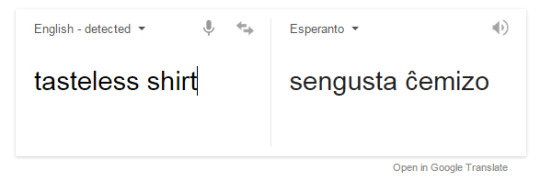
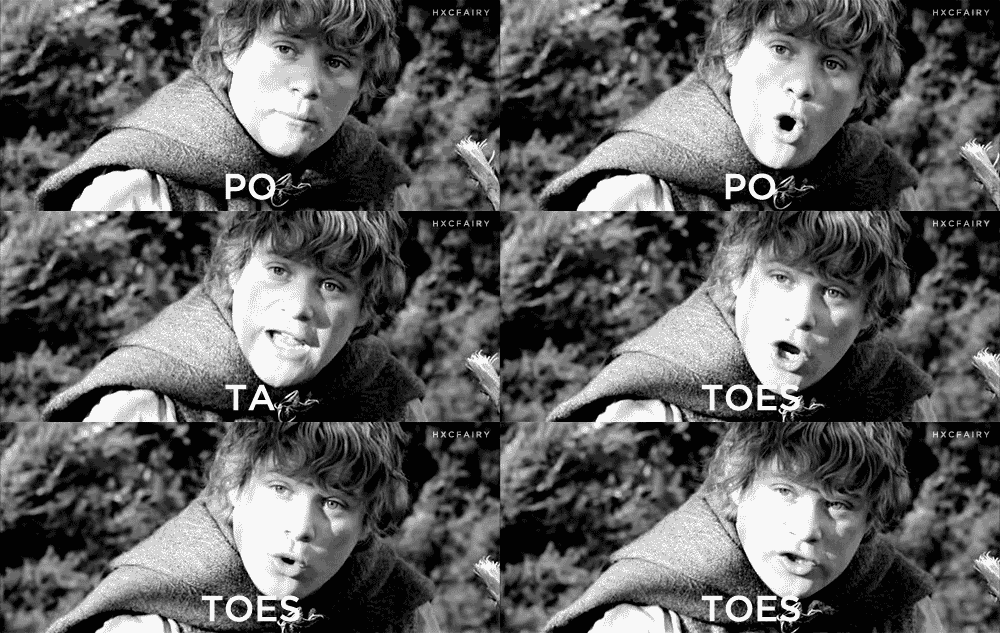
Then there’s the realism of research. Knowing where goods and products and knowledge came from. If your elves are eating chocolate they’d better have contact with the Aztecs. Don’t put poison ivy in England. Your medieval faux-European story had better justify itself if people are wearing cotton and eating potatoes and tomatoes.
(Pictured: someone whose civilization has apparently had contact with the indigenous peoples of the Americas. So THAT’s what all of that “into the west” stuff is about… elves seeking out new sources of carbohydrates!)
Don’t even get me started on science realism in science fiction; I am personally plagued by every written fictional description of viruses AND I’M JUST LIKE
So the Western SF/F canon swallows itself endlessly, a snake chasing its tail. It’s fun, but the tiresome bits get recycled, because people think that’s what forests and markets and ships are really like.
“That’s not realistic in this setting,” we scoff when someone wants a disabled princess or a lady king or – gasp! – a black woman in their literature.
But most of this shit is so unrealistic, say people like me, rolling their eyes politely: “What spices were they, precisely? They’re wearing silk, are they? Are you sure of that? Are you absolutely sure? And then the virus killed everybody, did it? In seven minutes? much wow.”
So it sounds like I’m going “don’t write about markets unless you’ve been to a market” or “don’t write unless you have a really expensive education” or “don’t write.
But of course – this isn’t fair. Who am I to demand that people be well-traveled? Most people cannot afford to. And those who do travel rarely pay attention. They are expecting foreign spices and children with flies in their eyes, and they come back and regurgitate them.
(The spices were cardamom and cinnamon, you silly fool, and the children in your hometown are hungrier. The songbird was a woodlark, and the only exotic thing there was you.)
You don’t have to actually travel. You just have to care. As you type that someone is eating a potato you have to ask “where did they get the potato?” and as you type that someone is ugly you have to ask “why are they ugly?” and if you’re going to write about a prairie, look it up on Google Maps and sit with it for a while until you’ve got your own words for it.
People know the difference between waving your hands dismissively, using other people’s words because you don’t think it’s important, and when genuinely caring, especially when you’re touching something they love. You’ll fuck up, but people will usually forgive fuck-ups if you were being honest and wondering and respectful.
It’s the difference between the standard Western method of travel – showing up sneeringly in someone else’s house and expecting to be hailed as a savior, to be served by the unimportant natives – and the kind of travel where OH MY GOD WAS THAT ONE OF YOUR MAGPIES? THAT’S WHAT YOUR MAGPIES LOOK LIKE? ARE YOU KIDDING ME RIGHT NOW? OH MY GOD THIS CHANGES EVERYTHING. GUYS. HAVE YOU HEARD ABOUT THEIR MAGPIES?
Because wherever you go in this universe, you are going to somebody’s home. Tread lightly, because you tread as a guest. If you fail to lovingly respect your beggar woman and lowly engineer because they’re more “boring” than your hero – well, you’ve just described what kind of person you are, and it’s not the sort that comes to my dinner parties.
Whether you are learning, or traveling, or writing, you have to care and you have to care about getting it right. You can be tongue-tied and broken-hearted and fundamentally lost. My favorite people usually are. But you have to care about the magpies and the trade routes and the cardamom. You’ll have to bring me with you, or you’ll lose me. (Believe me, I have so many wonderful places to be.)
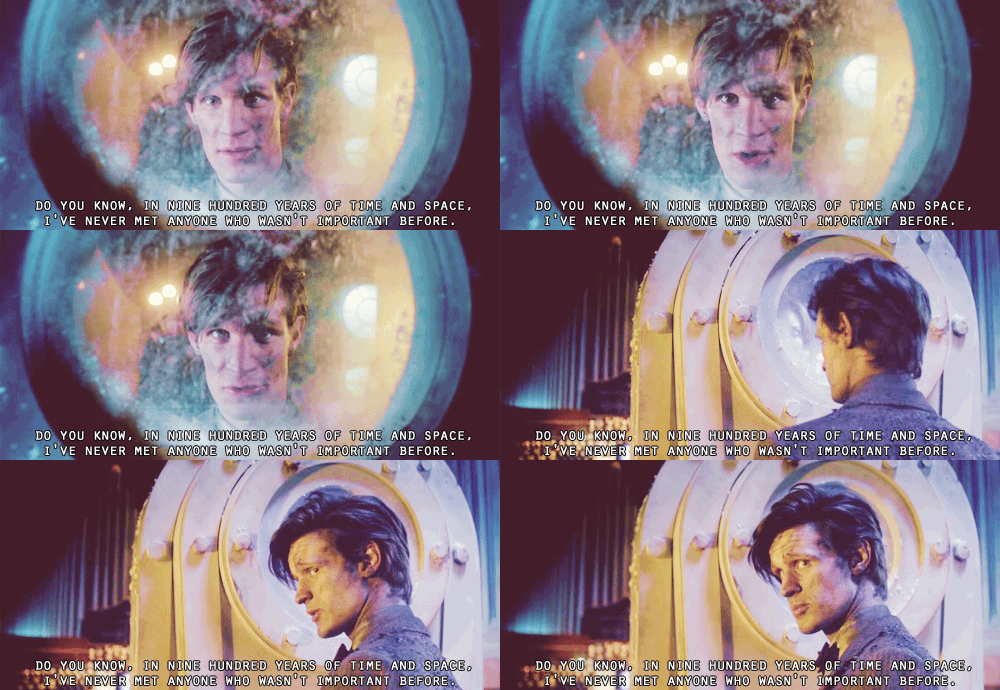
So I don’t ask that authors be perfect in their worldbuilding. I only ask that they try, and take my hand, and believe that this place they have created is important and worthy and full of the most interesting things, and worthy of thought and care, because all places are.