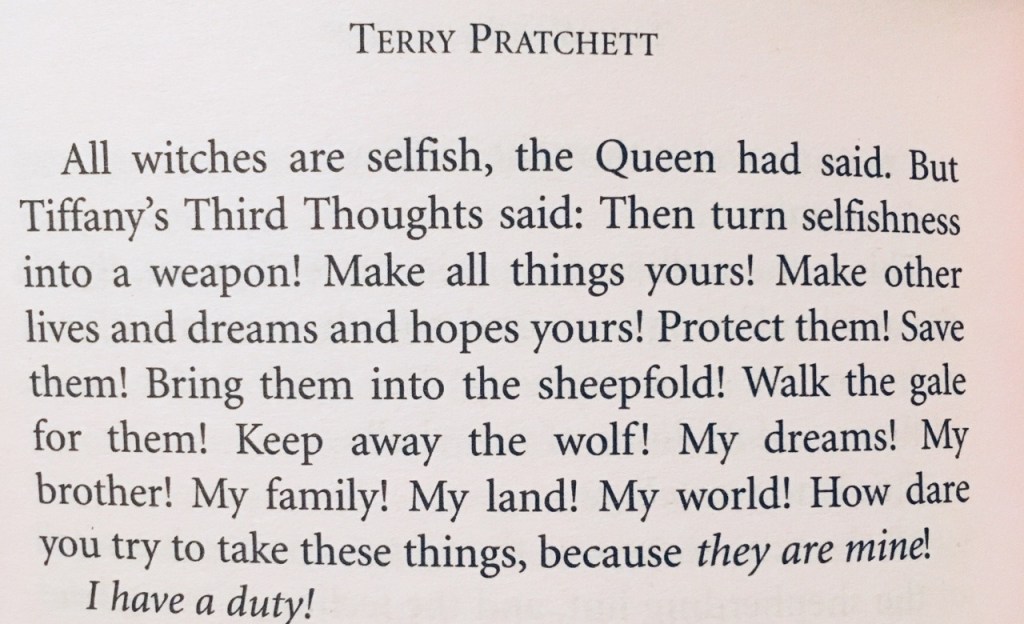
Has to be one of the best passages of a book I’ve read in a long time
it’s not an understatement to say I think about this all the time
The morality of fantasy and horror is, by and large, the strict morality of the fairy tale. The vampire is slain, the alien is blown out of the airlock, the Dark Lord is vanquished, and, perhaps at some loss, the good triumph – not because they are better armed but because Providence is on their side.
Why does the third of the three brothers, who shares his food with the old woman in the wood, go on to become king of the country? Why does Bond manage to disarm the nuclear bomb a few seconds before it goes off rather than, as it were, a few seconds afterwards? Because a universe where that did not happen would be a dark and hostile place. Let there be goblin hordes, let there be terrible environmental threats, let there be giant mutated slugs if you really must, but let there also be hope. It may be a grim, thin hope, an Arthurian sword at sunset, but let us know that we do not live in vain.
“Let There Be Dragons” (1993), Terry Pratchett.
(via serkershit)
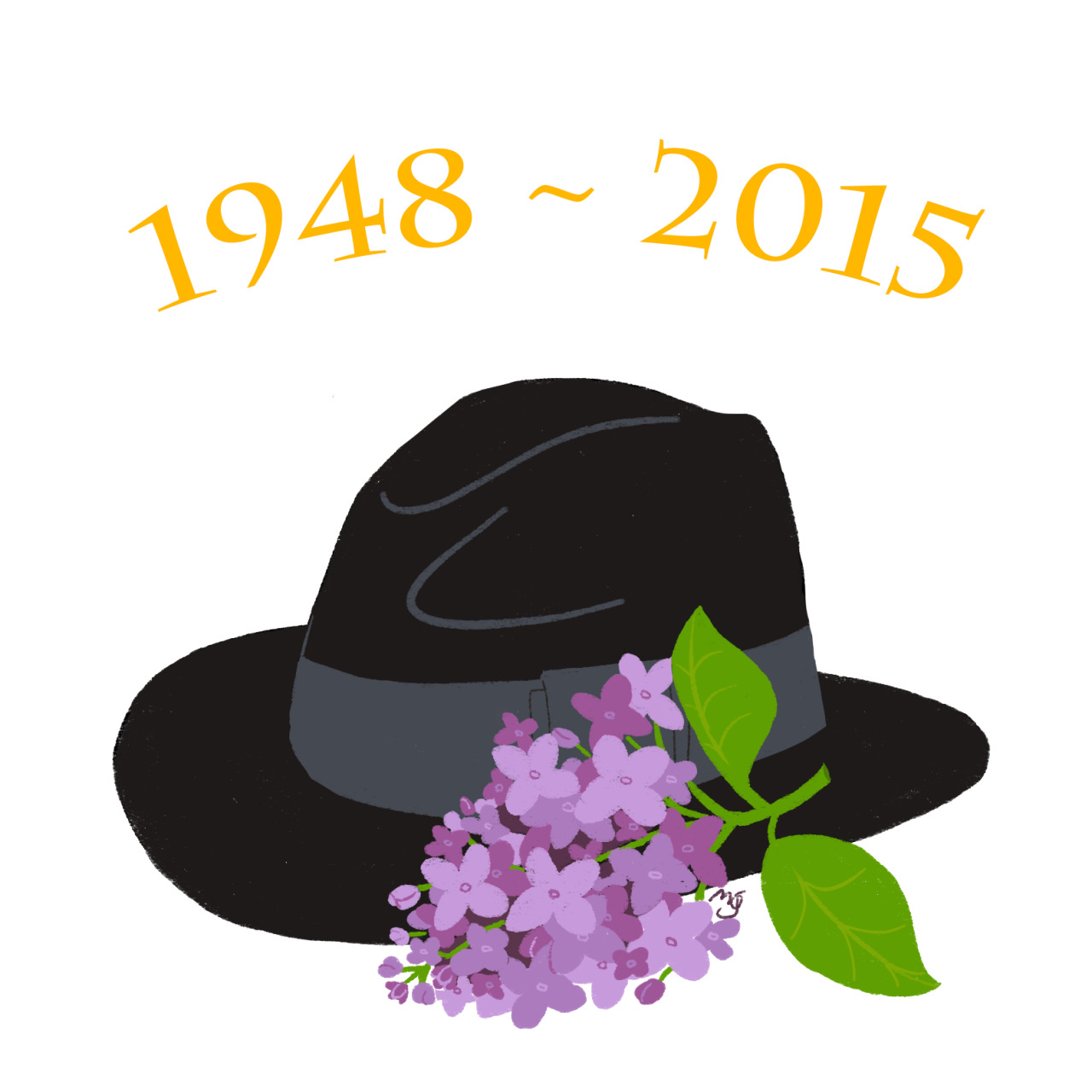
“No one is finally dead until the ripples they cause in the world die away—until
the clock wound up winds down, until the wine she made has finished
its ferment, until the crop they planted is harvested. The span of
someone’s life is only the core of their actual existence.”
Terry
Pratchett – Reaper ManIts been a year already, but the ripples have yet to fade.
It was much better to imagine men in some smoky room somewhere, made mad and cynical by privilege and power, plotting over the brandy. You had to cling to this sort of image, because if you didn’t then you might have to face the fact that bad things happened because ordinary people, the kind who brushed the dog and told their children bedtime stories, were capable of then going out and doing horrible things to other ordinary people. It was so much easier to blame it on Them. It was bleakly depressing to think that They were Us. If it was Them, then nothing was anyone’s fault. If it was Us, what did that make Me? After all, I’m one of Us. I must be. I’ve certainly never thought of myself as one of Them. No-one ever thinks of themselves as one of Them. We’re always one of Us. It’s Them that do the bad things.
It’s wrong to think that the past is something that’s just gone. It’s still there. It’s just that you’ve gone past. If you drive through a town, it’s still there in the rearview mirror. Time is a road, but it doesn’t roll up behind you. Things aren’t over just because they’re past.
The presence of those seeking the truth is infinitely to be preferred to the presence of those who think they’ve found it.
‘You can’t arrest the commander of an army!’
‘Actually, Mr. Vimes, I think we could,’ said Carrot. ‘And the army, too. I mean, I don’t see why we can’t. We could charge them with behavior likely to cause a breach of the peace, sir. I mean, that’s what warfare IS.’
Vimes’s face split in a manic grin. ‘I LIKE it.’
‘But in fairness our–that is, the Ankh-Morpork army–are also–’
‘Then you’d better arrest them, too,’ said Vimes. ‘Arrest the lot of ’em. Conspiracy to cause an affray,’ he started to count on his fingers, ‘going equipped to commit a crime, obstruction, threatening behavior, loitering with intent, loitering WITHIN tent, hah, traveling for the purposes of committing a crime, malicious lingering and carrying concealed weapons.’