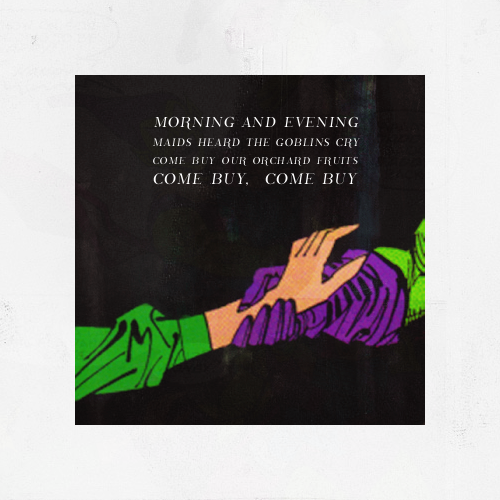
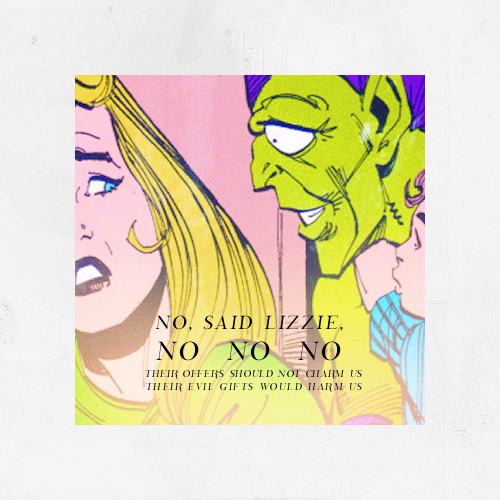
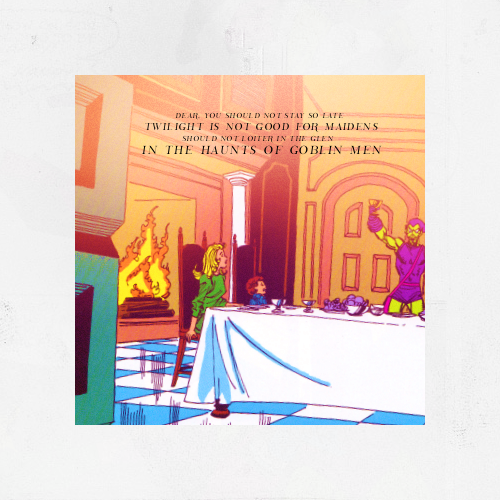
Harry recieves a new bicycle from Norman, but it’s stolen by some neighbourhood kids. Norman chases the kids down, takes back the bike, and smashes it up in front of Harry to teach him “what happens to your nice things if you don’t take care of them”. Many years later, Harry relates that story at an AA meeting. [Amazing Spider-Man Extra #3 – “Nice Things”]
Okay, I’d been holding this post back til The Amazing Spider-Man 2 was released worldwide, but it’s out now (and hell, this post is as spoiler-free as I could get it, anyway.)
Let’s talk about Harry Osborn! Or, more specifically, let’s talk about what the new film (and most adaptations in fact) leave out: his schizophrenia.
[trigger warning for mental health and child abuse discussion]
In the comics, Harry’s schizophrenia was brought on from a LSD overdose, although it was also probably partly down to genetics. Harry’s father, Norman, (who, while up against some pretty stiff competition, probably takes the crown for Worst Father In The Marvelverse) subjected Harry to various forms of abuse as he grew up. Neglect, violence, belittlement, it was all in there – Norman’s father had done the same thing to him. And Norman (as even casual Marvel readers know, I think) is schizophrenic himself – he’s also the Green Goblin, and also generally incredibly powerful and rich. His schizophrenia’s been a plot point in many interesting stories, but Norman’s pretty much out-and-out power-mad, cruel and violent. He’s a fascinating character, but – yeah, this is where this veers sideways into representation discussion – he’s not really good representation for mentally ill folk.
But – to me, at least – Harry is. While Harry grew up wanting for nothing material-goods wise – this is what most people use as the jumping-off point for his character, sigh – he also grew up, you know, abused. As is the case in many, many parent-child abuse cases, he still loved his father, but he also dearly loved Peter, and MJ, and Gwen, and Liz, and his own son. He became the second Green Goblin after a hallucination of his father goaded him to, but he wasn’t really very good at it at all. In fact, he went his whole run without killing anybody – don’t get me wrong, he hurt people, he was a supervillain – but he really didn’t have it in him to kill anyone, let alone his best friend or anyone close to him. (This is where I give a very, very dirty look to Marc Webb and co.) Peter himself even pointed it out once or twice: Harry wasn’t evil, he was ill.
Comic books and mental health issues really don’t go together- I think everyone’s aware of that to some extent. Heroes are heroes: villains are ‘lunatics’. DC’s even been called out on it; I dunno if Marvel has. But people with mental health issues deserve to be represented as something other than the bad guy. If you’re a teenage girl holed up in your parent’s house, avoiding your cat because you think there’s a chance it’s actually a demon and fighting off awful intrusive thoughts (yo) you’re probably going to cling like mad to anything telling you might be okay after all. It was 2007, Spider-Man 3 had just come out so there were Spidey comics available everywhere- I was lucky to get Harry. He was a big help. He had mental health problems, he lashed out, alienated people, scared his own son, and even though it all took place in a heightened comic-book universe it seemed to work. People in that universe even seemed to like him. (One of my favourite, favourite moments of the Parker-Osborn friendship comes in Amazing Spider-Man Extra #1, when Peter hears some jerks Harry’s doing business with mocking his mental stability – “Maybe I can get nutjob insurance! Then it might even pay for him to turn into a blithering psychopath!” – and promptly overturns a punch bowl on their heads.)
Anyway, while browsing comic book message boards and the like, I’ve heard more than one person say, “Wait, are you telling me that almost all supervillains have a mental illness of some sort – yet none of them ever seem to respond well to treatment, go to therapy, and settle down quietly with their loved ones?” Well – I don’t read that many comics, so I don’t know if there are others (I hope so) but Harry was definitely one who did, and that was a big relief. Which is why I wish TASM2 hadn’t done what they did to him: introducing him as a ‘trust fund baby hipster kid’ when he was a much, much deeper character than that – abuse victim, drug addict – and then turning him into a generic supervillain who cares absolutely nothing for innocent victims. (This is the guy who couldn’t kill Peter when he was lying unarmed in front of him!) By essentially making him just a younger version of Norman who was kindasorta Peter’s friend once, they’ve taken away what became, as the comics went on, the important thing about the Osborns, at least to me: yes, undoubtably there are mentally ill people out there who are Normans. There’d have to be. But more of them – like me, like most – are Harrys.
This isn’t to say that The Amazing Spider-Man 2 is a bad movie, or that Dane Dehaan didn’t do very well with what he was given or yadda yadda yadda. But, since Marvel’s been able to showcase issues like addiction, anxiety and PTSD, I was really hoping they’d show Harry for what he really was – absolutely having a severe, stigmatised mental illness and still being a good, loving person. It makes me so disappointed that they didn’t.
Spider-Man 3 is an all-over-the-place campy glorious wild mess of a movie, but in the middle of it all they managed to pull off something remarkably progressive:
Everything about Gwen.
As you probably know (there’s been a lot of talk about it since the most recent Spider-movie) Gwen Stacy isn’t just a fridged female character: she’s the fridged female character. She’s iconic as the beautiful dead girl in Peter Parker’s arms, murdered partly by Norman Osborn and partly by writers and editors who didn’t know what to do with her. People know her far better as a corpse than a character. I’m not saying that her death and the fallout from it isn’t deservedly known as one of the best stories in comics, but dying young both canonised her and warped her – for literally decades she was a perfect, pure, idealised image of What Could Have Been, rather than a person in her own right. (Which she was!) Fandom often used her as a stick to beat MJ – flirty short-skirt-wearing party girl MJ – with, using disturbingly misogynist rhetoric. When Sins Past – the story where it was revealed Gwen had slept with Norman Osborn – came out, people were furious with Gwen for ‘tainting’ herself, rather than furious at Norman for sleeping with a woman young enough to be his daughter. (There was anger at the writers too, but it was mostly in the same vein.)
Anyway! Once I’d spent enough time in Spider-Man fandom to get to know both Gwen and what she became, I was watching Spider-Man 3 one night and it hit me. Okay, I knew perfectly well that she didn’t die in this one, but this Gwen, far from being perfect or pure, was everything people aren’t meant to like in a female character. She’s a model. (Shallow!) She’s only an average science student. (Stupid!) She’s – through no fault of her own – a very real threat to Peter and MJ’s relationship. (Bitch!) She’s still friendly and even flirty to Eddie Brock, even though she has no romantic interest in him. (Cocktease!) She turns down Eddie’s advances, even though he’s obsessed with her, and goes on a date with another man. (Friendzoner!) She’s quite happy to literally wrap her legs around that other man. (Slut!) She’s also a sweet, polite, nice person, but come on! The very archetype of the Woman In The Refrigerator, Gwen, just friendzoned the supervillan and sexy-danced with the superhero: really, she’s gonna survive?
But not only does she survive, absolutely nothing bad happens to her (beyond the inital accident that brought her into the story). When she realises Peter’s using her to make MJ jealous, she apologises to the other woman and walks away. Eddie becomes Venom, but (though motivated by ‘losing’ Gwen) he doesn’t actually go after her. MJ doesn’t seem overly fond of the girl her boyfriend’s been flirting with, but after Gwen apologises that subplot’s forgotten. Gwen’s father, who dies in the comics, doesn’t die this time around. MJ doesn’t die either – someone is killed to inspire Peter to be a better person, but that’s Harry, another man. Oh, and creepy Eddie is toast. (Literally.)
So yes.
Who knows if any of that was intentional? If Sam Raimi had gotten to make a Spider-Man 4, maybe he’d have killed Gwen Stacy off then, I don’t know. But I’ve always been pretty pleased with this movie because, whether by accident or design, the only Gwen who gets to be overtly sexual is also the only Gwen who gets to live.
“I still miss Gwen. So much. There are times…even after all these years…when I just can’t believe it. ‘It can’t be true,’ I think. ‘She can’t really be dead.’”
Literally the very existence of this teeny ficlet is a spoiler, to the extent I wasn’t even sure if it was worth posting, but I really wanted to write it. It might get expanded on a little later, I guess.
Spoilers for The Amazing Spider-Man 2! Spoilers and some sadness.