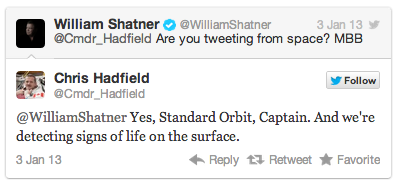
I love how they respond to him, as if he is actually a captain, even more.
Nasa confirmed for huge fucking nerds
This is awesome and priceless and people that work on space stuff are the best people of all time.
Honestly this just about brings me to tears.
Roddenberry, Shatner, Nimoy, Nichols and all the rest of the original Star Trek cast and crew had no small role in making the moon landing as important as it was. A few years before they set that lunar module down, this little TV show came along and fanned the dream into wildfire with an image of what humanity in space could actually look like—not only peaceful on our own world, endlessly curious, and prosperous enough to pursue it, but an active force for good in the greater universe. Carrying not what’s most toxic about us, but what’s best about us out to the stars.
Everybody who has worked at NASA or any other space agency for the past 50 years is waiting for the day when that unmanned probe doing a flyby on a comet can be controlled from the bridge of a space-faring vessel. When we’re not just looking at that comet through a color-coded sonar map, but we can look out a porthole and see it tumbling by with our own eyes. When as a species we can finally outgrow hate and fear and violence, and turn our faces with joy toward all the beauties and wonders that lie waiting to be discovered.
And every time he does this, Shatner is reminding them of what that hope feels like.
It’s also unlike any other asteroid we’ve seen before. Astronomers have trained a flurry of telescopes on the object discovered last month, and now we’re being rewarded with super-exciting details.
Newly named ‘Oumuamua, the asteroid is up to 400 metres (0.25 miles) long, and is distinctly cigar-shaped. It could be up to 10 times as long as it is wide – a shape never before seen in an asteroid.
For bonus context, the actual quote they’re citing for this protest comes from Edgar Mitchell (1930-2016), who flew in Apollo 14 and was the sixth person to walk on the Moon.
The full quotation, referring to the experience of observing Earth from the Moon surface, is thus:
You develop an instant global consciousness, a people orientation, an intense dissatisfaction with the state of the world, and a compulsion to do something about it. From out there on the moon, international politics look so petty. You want to grab a politician by the scruff of the neck and drag him a quarter of a million miles out and say, ‘Look at that, you son of a bitch.’
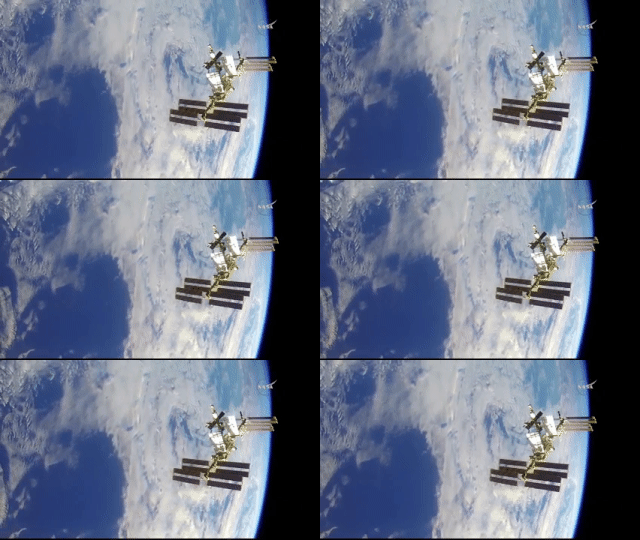
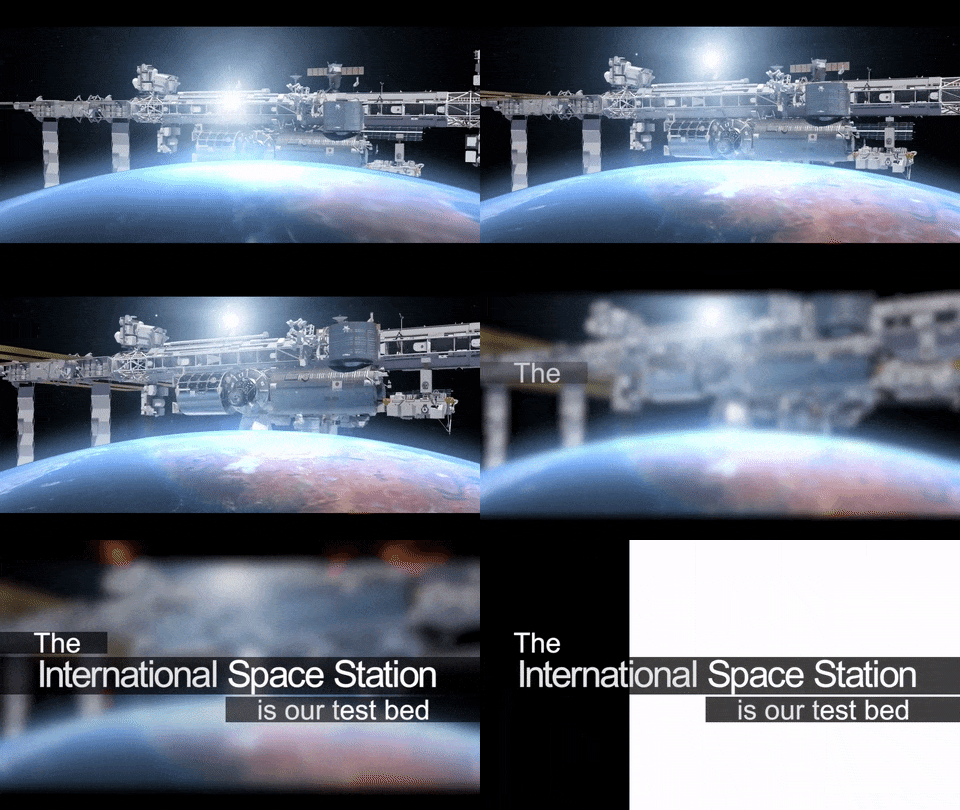
Since 2000, the International Space Station has been continuously occupied by humans. There, crew members live and work while conducting important research that benefits life on Earth and will even help us eventually travel to deep space destinations, like Mars.
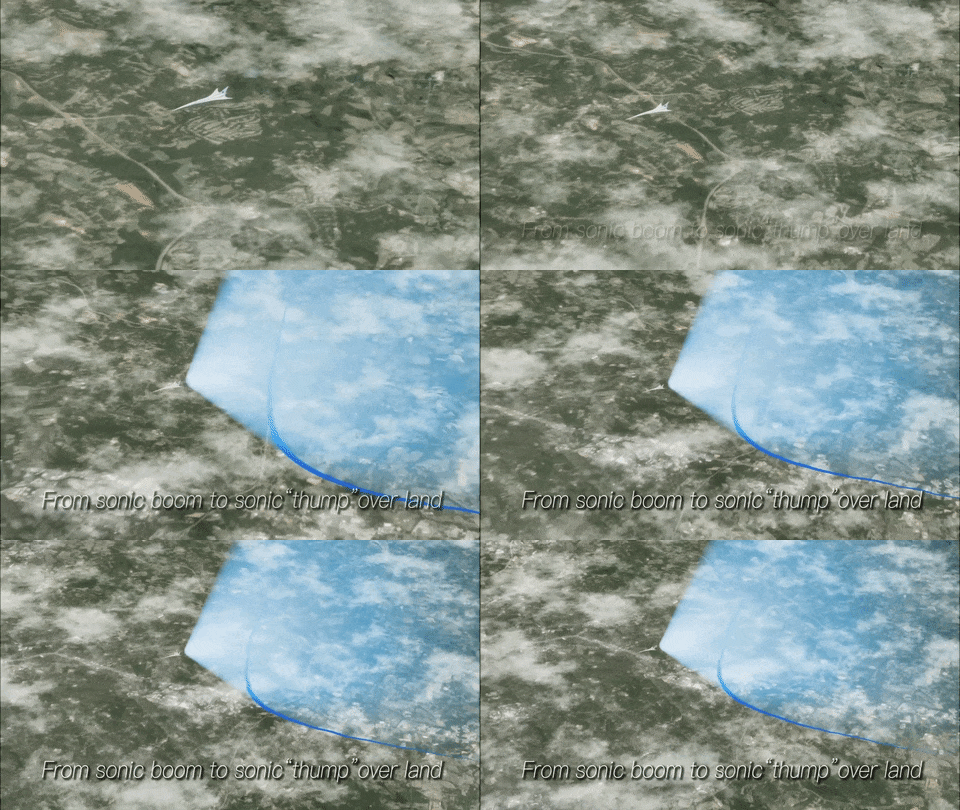
2. We’re working to develop quieter supersonic aircraft that would allow you to travel from New York to Los Angeles in 2 hours
We are working hard to make flight greener, safer and quieter – all while developing aircraft that travel faster, and building an aviation system that operates more efficiently. Seventy years after Chuck Yeager broke the sound barrier in the Bell X-1 aircraft, we’re continuing that supersonic X-plane legacy by working to create a quieter supersonic jet with an aim toward passenger flight.
3. The spacecraft, rockets and systems developed to send astronauts to low-Earth orbit as part of our Commercial Crew Program is also helping us get to Mars
Changes to the human body during long-duration spaceflight are significant challenges to solve ahead of a mission to Mars and back. The space station allows us to perform long duration missions without leaving Earth’s orbit.
Although they are orbiting Earth, space station astronauts spend months at a time in near-zero gravity, which allows scientists to study several physiological changes and test potential solutions. The more time they spend in space, the more helpful the station crew members can be to those on Earth assembling the plans to go to Mars.
4. We’re launching a spacecraft in 2018 that will go “touch the Sun”
In the summer of 2018, we’re launching Parker Solar Probe, a spacecraft that will get closer to the Sun than any other in human history. Parker Solar Probe will fly directly through the Sun’s atmosphere, called the corona. Getting better measurements of this region is key to understanding our Sun.
For instance, the Sun releases a constant outflow of solar material, called the solar wind. We think the corona is where this solar wind is accelerated out into the solar system, and Parker Solar Probe’s measurements should help us pinpoint how that happens.
5. You can digitally fly along with spacecraft…that are actually in space…in real-time!
NASA’s Eyes are immersive, 3D simulations of real events, spacecraft locations and trajectories. Through this interactive app, you can experience Earth and our solar system, the universe and the spacecraft exploring them. Want to watch as our Juno spacecraft makes its next orbit around Juno? You can! Or relive all of the Voyager mission highlights in real-time? You can do that too! Download the free app HERE to start exploring.
6. When you feel far away from home, you can think of the New Horizons spacecraft as it heads toward the Kuiper Belt, and the Voyager spacecraft are beyond the influence of our sun…billions of miles away
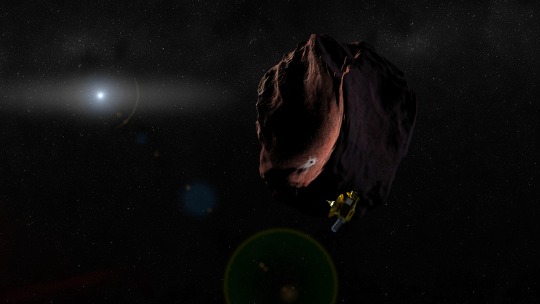
Our New Horizons spacecraft completed its Pluto flyby in July 2015 and has continued on its way toward the Kuiper Belt. The spacecraft continues to send back important data as it travels toward deeper space at more than 32,000 miles per hour, and is ~3.2 billion miles from Earth.
In addition to New Horizons, our twin Voyager 1 and 2 spacecraft are exploring where nothing from Earth has flown before. Continuing on their more-than-37-year journey since their 1977 launches, they are each much farther away from Earth and the sun than Pluto. In August 2012, Voyager 1 made the historic entry into interstellar space, the region between the stars, filled with material ejected by the death of nearby stars millions of years ago.
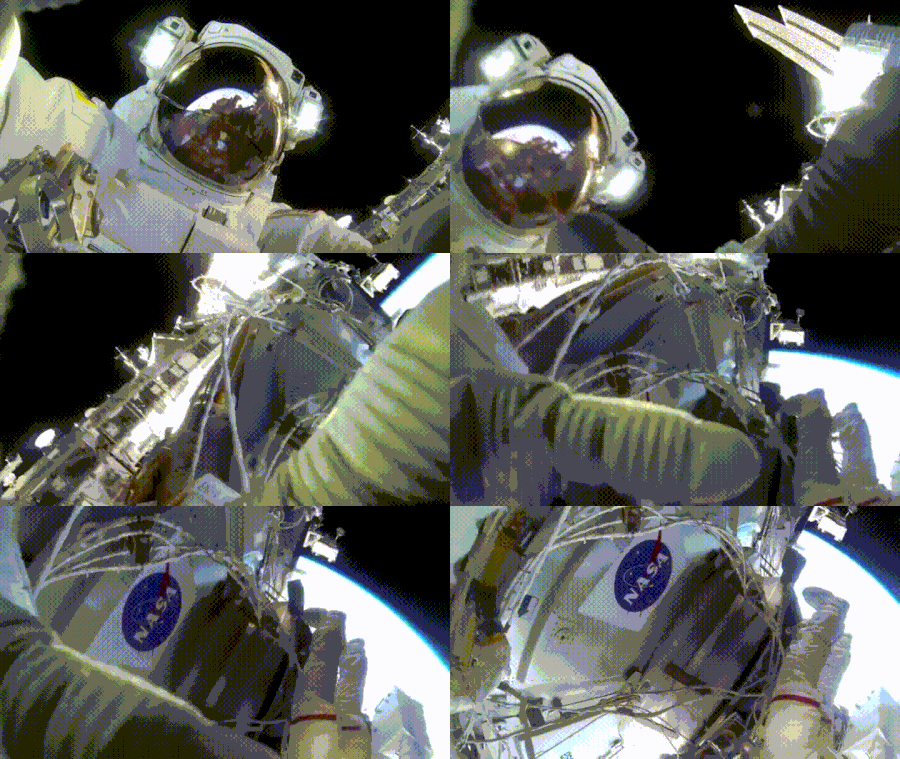
7. There are humans brave enough to not only travel in space, but venture outside space station to perform important repairs and updates during spacewalks
Just this month (October 2017) we’ve already had two spacewalks on the International Space Station…with another scheduled on Oct. 18.
Spacewalks are important events where crew members repair, maintain and upgrade parts of the International Space Station. These activities can also be referred to as EVAs – Extravehicular Activities. Not only do spacewalks require an enormous amount of work to prepare for, but they are physically demanding on the astronauts. They are working in the vacuum of space in only their spacewalking suit.
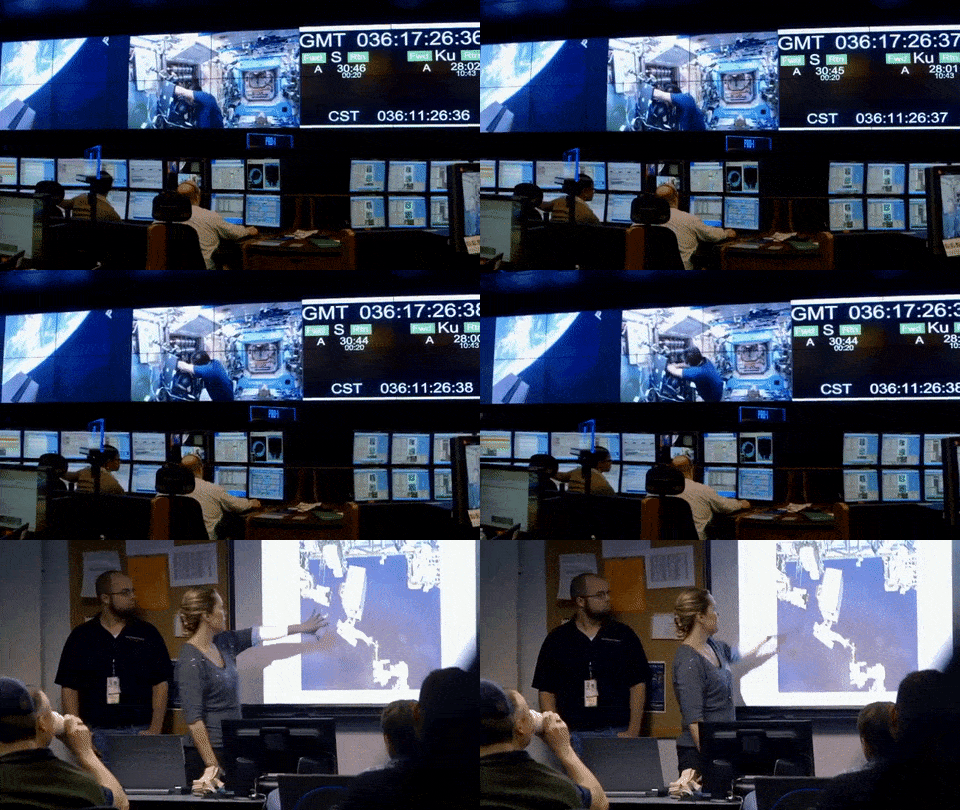
8. Smart people are up all night working in control rooms all over NASA to ensure that data keeps flowing from our satellites and spacecraft
Our satellites and spacecraft help scientists study Earth and space. Missions looking toward Earth provide information about clouds, oceans, land and ice. They also measure gases in the atmosphere, such as ozone and carbon dioxide and the amount of energy that Earth absorbs and emits. And satellites monitor wildfires, volcanoes and their smoke.
9. A lot of NASA-developed tech has been transferred for use to the public
Our Technology Transfer Program highlights technologies that were originally designed for our mission needs, but have since been introduced to the public market. HERE are a few spinoff technologies that you might not know about.
10. We have a spacecraft currently traveling to an asteroid to collect a sample and bring it back to Earth
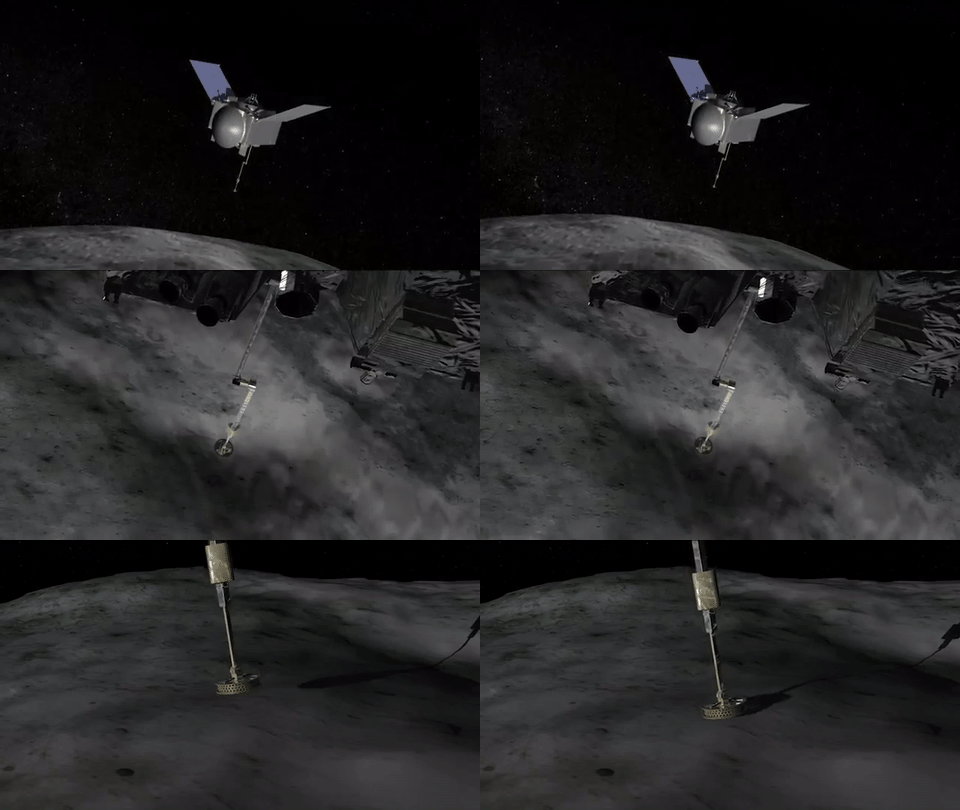
OSIRIS-REx is our first-ever mission that will travel to an asteroid and bring a sample of it back to Earth. Currently, the spacecraft is on its way to asteroid Bennu where it will survey and map the object before it “high-fives” the asteroid with its robotic arm to collect a sample, which it will send to Earth.
If everything goes according to plan, on Sept. 24, 2023, the capsule containing the asteroid sample will make a soft landing in the Utah desert.
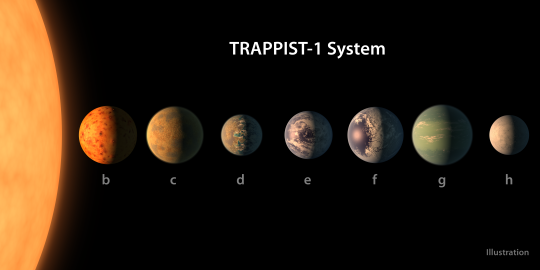
11. There are Earth-sized planets outside our solar system that may be habitable
To date, we have confirmed 3,000+ exoplanets, which are planets outside our solar system that orbit a Sun-like star. Of these 3,000, some are in the habitable zone – where the temperature is just right for liquid water to exist on the surface.
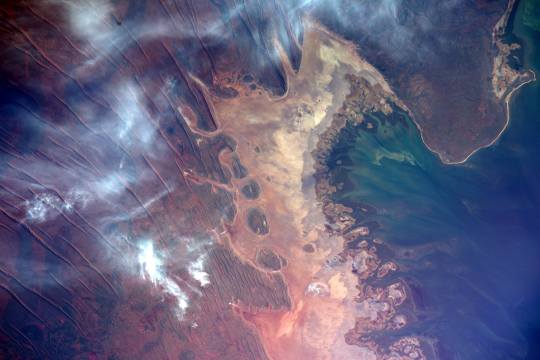
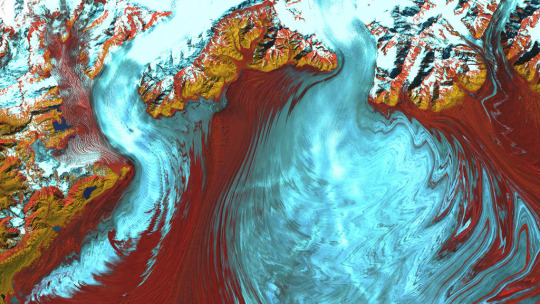
In 1960, the United States put its first Earth-observing environmental satellite into orbit around the planet. Over the decades, these satellites have provided invaluable information, and the vantage point of space has provided new perspectives on Earth.
The beauty of Earth is clear, and the artistry ranges from the surreal to the sublime.
13. We’re building a telescope that will be able to see the first stars ever formed in the universe
Wouldn’t it be neat to see a period of the universe’s history that we’ve never seen before? That’s exactly what the James Webb Space Telescope (JWST) will be able to do…plus more!
Specifically, Webb will see the first objects that formed as the universe cooled down after the Big Bang. We don’t know exactly when the universe made the first stars and galaxies – or how for that matter. That is what we are building Webb to help answer.
Happy Friday the 13th! We hope it’s out-of-this-world!
Make sure to follow us on Tumblr for your regular dose of space: http://nasa.tumblr.com.
This one is technically not yet history, because at the time of posting, the little craft has about half an hour left to go. That said, let’s proceed.
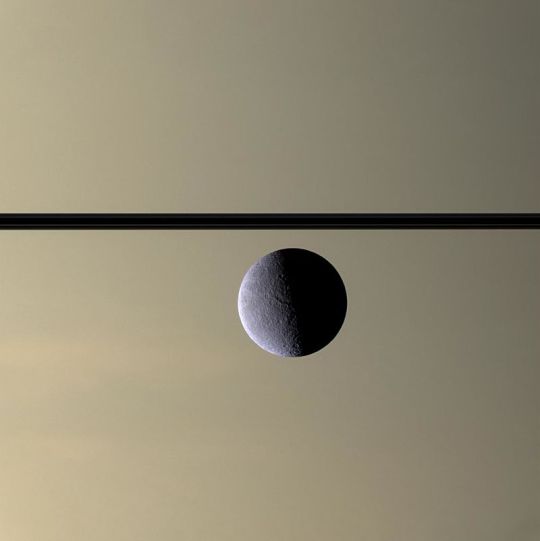
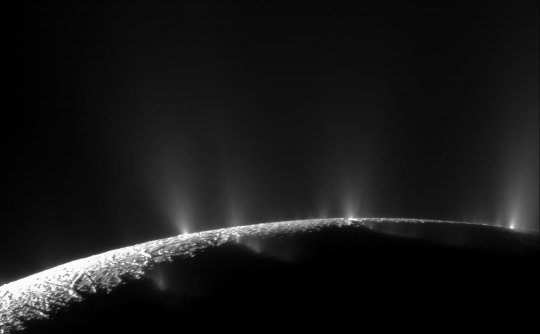
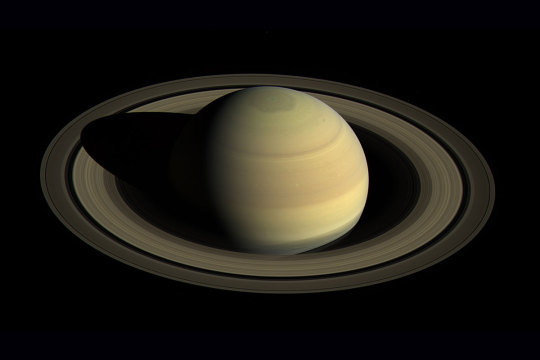
In 2017, NASA’s Cassini space probe ended its twenty-year mission at Saturn. After a nearly-seven-year-long journey there, it orbited the ringed planet for 13 years and just over two months, gathering copious amounts of information about the planet, said rings, and many of its moons. It landed an ESA probe called Huygens on Titan, the first-ever soft landing in the outer Solar System. It discovered lakes, seas, and rivers of methane on Titan, geysers of water erupting from Enceladus (and passed within 50 miles of that moon’s surface), and found gigantic, raging hurricanes at both of Saturn’s poles.
And the images it returned are beautiful enough to make you weep.
On this day in 2017, with the fuel for Cassini’s directional thrusters running low, the probe was de-orbited into the Saturnian atmosphere to prevent any possibility of any contamination of possible biotic environments on Titan or Enceladus. The remaining thruster fuel was used to keep the radio dish pointed towards Earth so the probe could transmit information about the upper atmosphere of Saturn while it was burning up due to atmospheric friction.
This is us at our best. We spent no small amount of money on a nuclear-powered robot, launched it into space, sent it a billion miles away, and worked with it for two decades just to learn about another planet. And when the repeatedly-extended missions were through, we made the little craft sacrifice itself like a samurai, performing its duty as long as it could while it became a shooting star in the Saturnian sky.
Rhea occulting Saturn
Water geysers on Enceladus
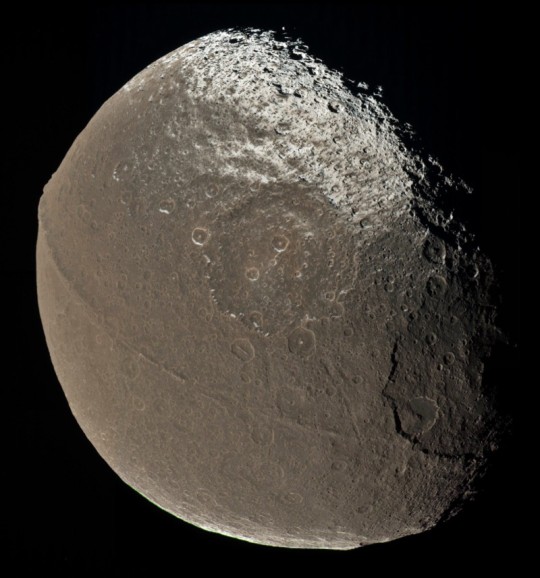
Strange Iapetus
Look at this gorgeousness
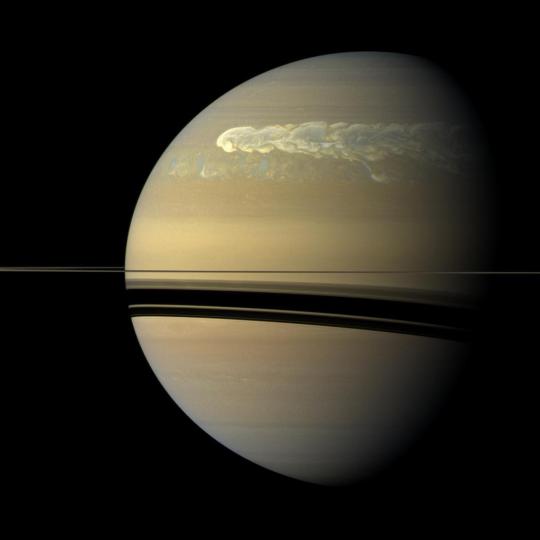
A gigantic motherfucking storm in Saturn’s northern hemisphere
Tethys
This image is from the surface of a moon of a planet at least 746 million miles away. Sweet lord
Mimas
Vertical structures in the rings. Holy shit
Titan and Dione occulting Saturn, rings visible
Little Daphnis making gravitational ripples in the rings
That’s here. That’s home. That’s all of us that ever lived.
Saturn, backlit
A polar vortex on the gas giant
Icy Enceladus
(All images from NASA/JPL)
Thank you, NASA.
Thank you, Cassini.
Thank you, Saturn. We greatly enjoyed our visit. You were a wonderful host. And we hope to be back some day. You have a beautiful family.
Get the fuck out of my face this is the coolest shit i’ve ever seen, do you realize how lucky we are to bask in the scientific capabilities of NASA? Holy fucking hell I love science
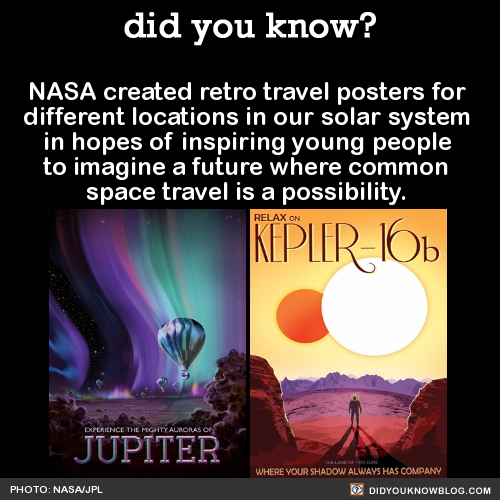
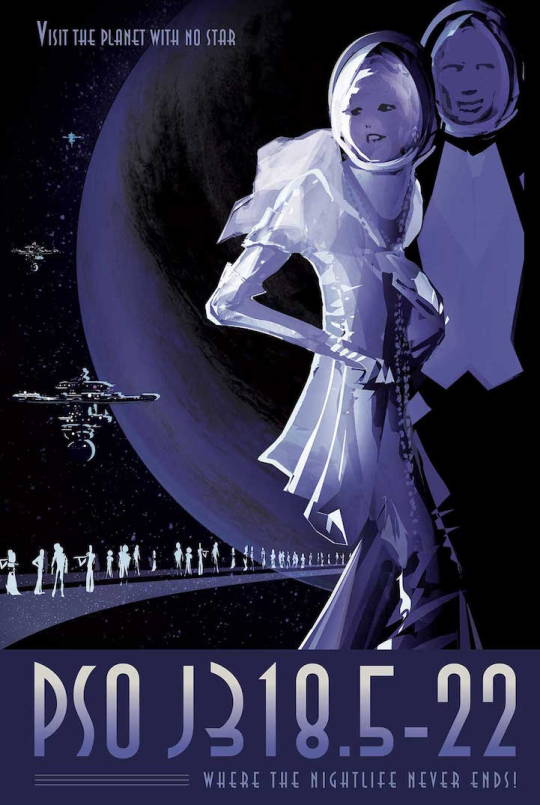
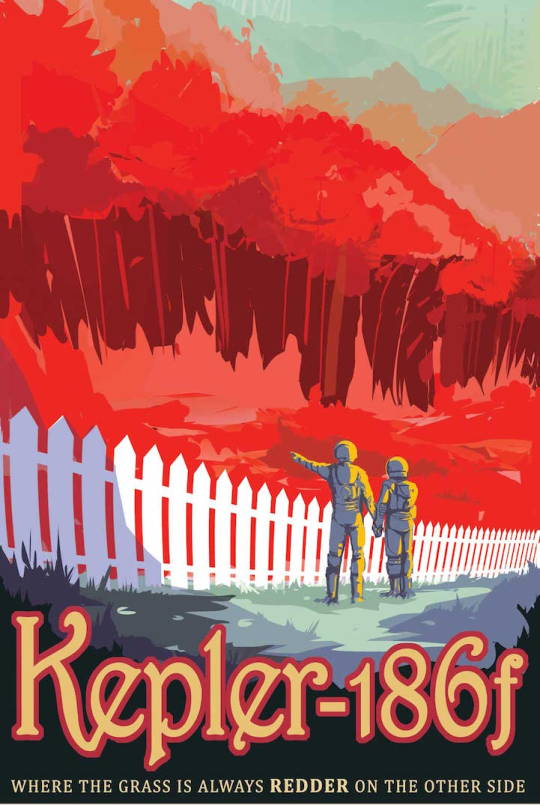
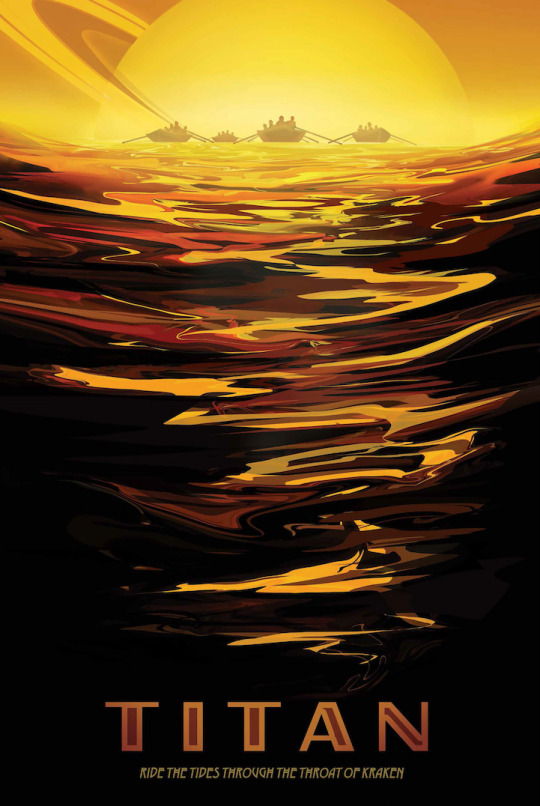
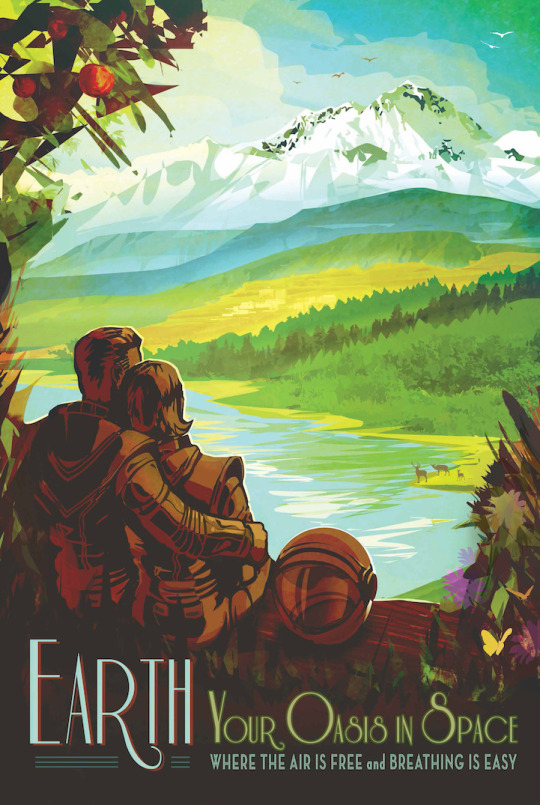
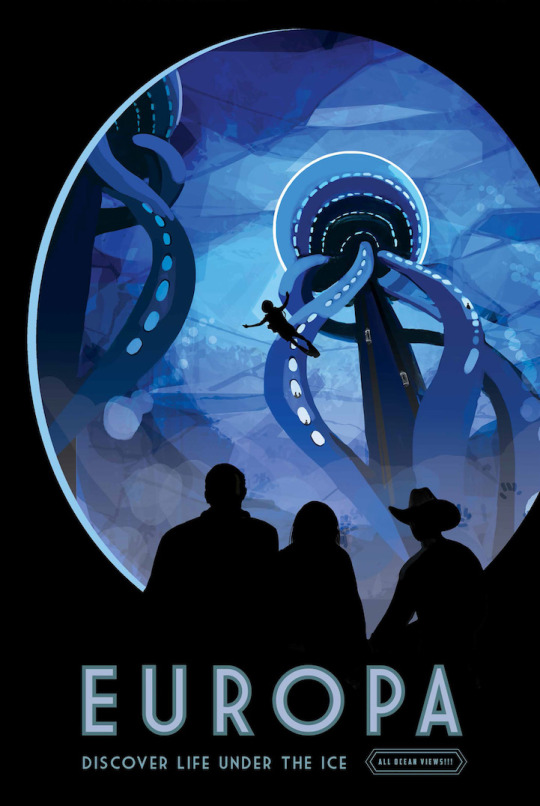
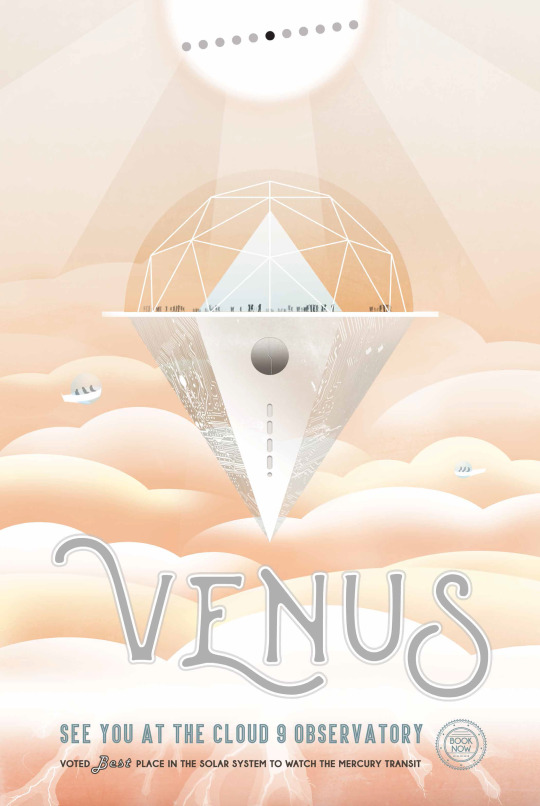
NASA created retro travel posters for different locations in our solar system in hopes of inspiring young people to imagine a future where common space travel is a possibility.