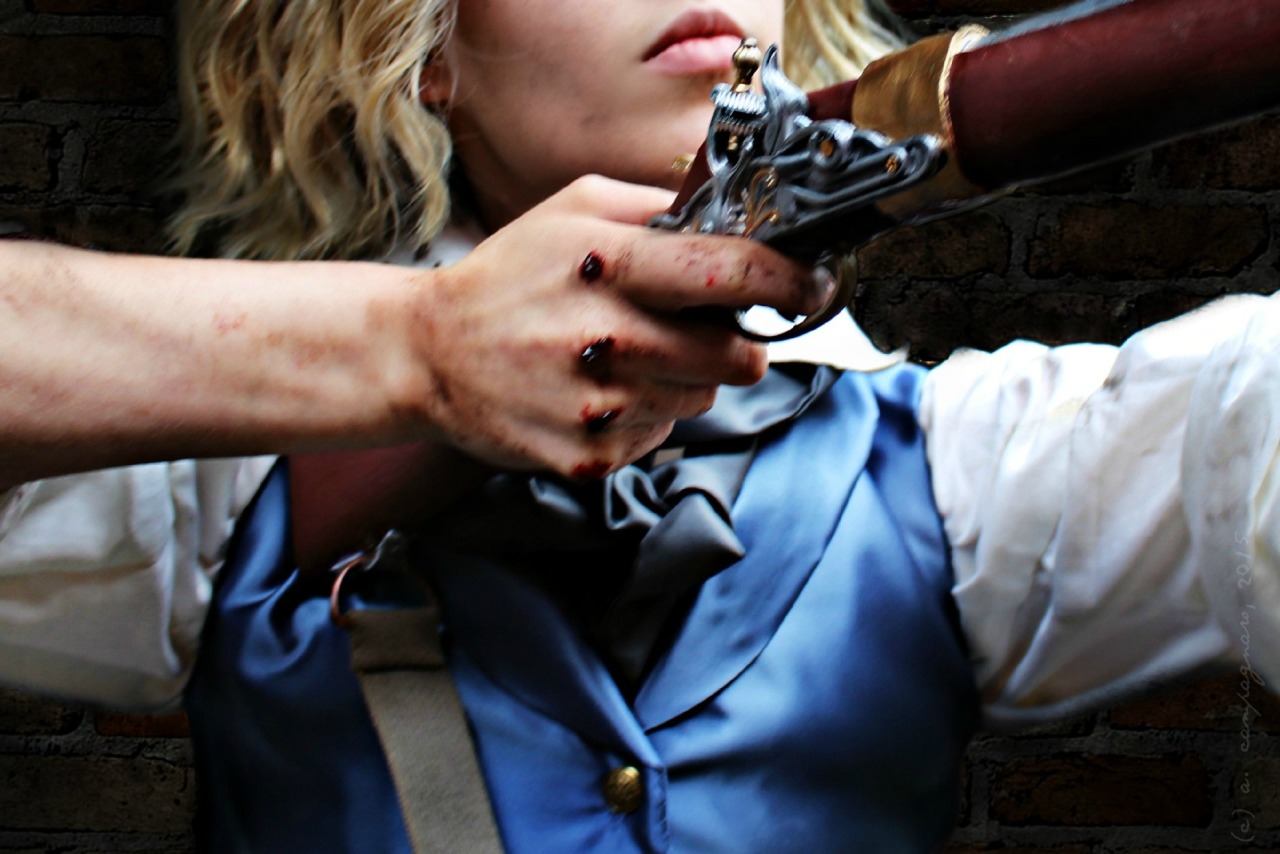
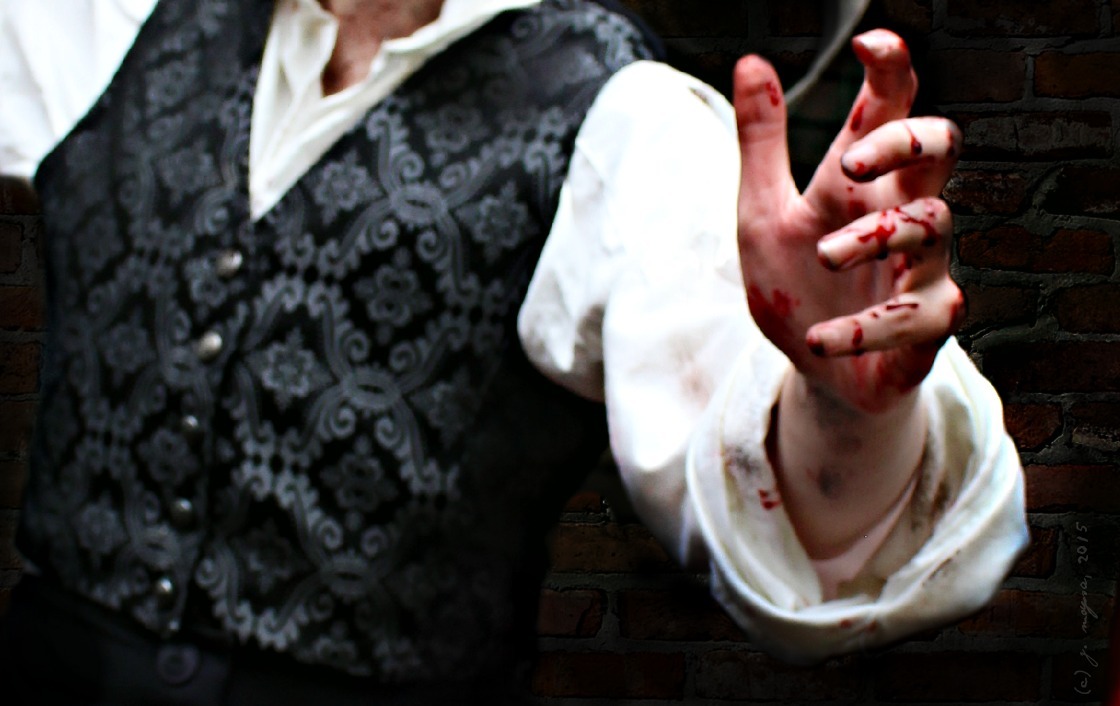

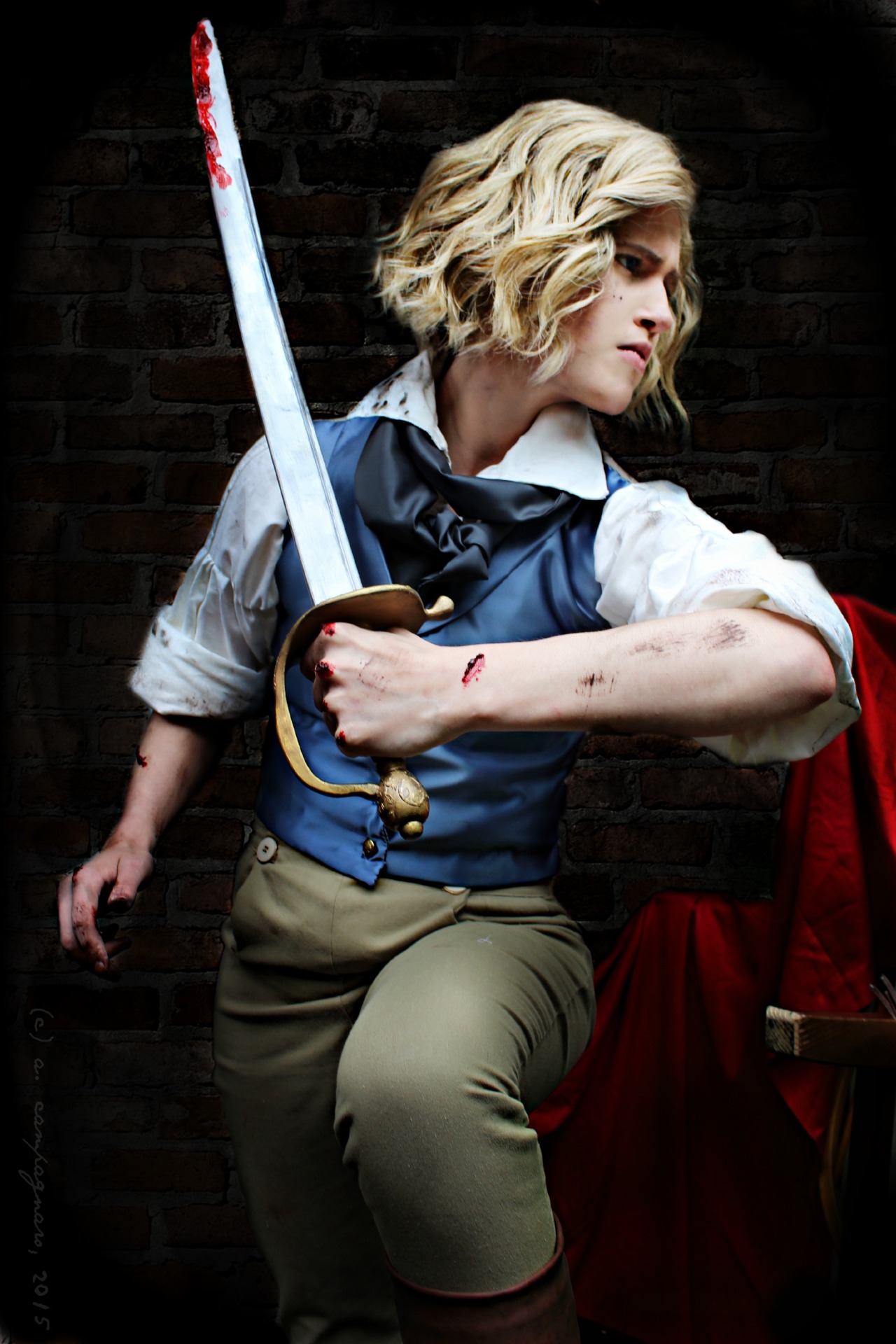
“They fought hand to hand, foot to foot, with pistol shots, with blows of the sword, with their fists, at a distance, close at hand, from above, from below, from everywhere, from the roofs of the houses, from the windows of the wine-shop, from the cellar windows, whither some had crawled. They were one against sixty.
[…]
Marius, still fighting, was so riddled with wounds, particularly in the head, that his countenance disappeared beneath the blood, and one would have said that his face was covered with a red kerchief. Enjolras alone was not struck.” – Les Miserables–
Marius | Enjolras
The Barricade Project, Part V ~ FIN.
[Part I] [Part II] [Part III] [Part IV]
les miserables


Can I talk about why only some of the Les Amis have first names?
Okay, so in the 18th and 19th centuries, calling men by their last name was a show of respect. The groups who got called by their first names include:
- most women
- children
- childish/foolish/immature adult men
- people who you were affectionate and close with (e.g. a spouse, sibling, a child-hood friend, etc.)
Now let’s take the two of the Amis that we know their first names: Jean Prouvaire, and Marius.
Marius is obvious, it’s his child-like nature. But for Jehan, I think it has something to do with him being a Romantic, and choosing to be called something affectionate, for the sake of philosophy. It would be the most Jehan thing ever to declare that he is close and affectionate with all things in this world. And Hugo, himself says the name Jehan was “owing to [a] petty momentary freak”.
i forgot two things:
Firstly, this could contribute to the nb Jehan thing, because they choose not to go solely by last name or first name, because both could be perceived as attempts to misgender them.
Secondly, the great thing about how people use first names in the 18th and 19th centuries is great for portraying relationships in fanfiction like:
- trying to show that a woman is considered an intellectual equal in a time where this wasn’t considered the default: have people call her by her last name
- trying to show a character is an asshole to female character: call her by her first name, when everyone else uses her last name
- trying to show a male character is immature or childish: call him by his first name
- allude to a romantic/sexual relationship between characters: have them call each other by their first names (bonus points if everyone else thinks they’re just calling each other immature)
i just wanna make one thing clear and that’s that no matter how old i am and what i’ve done and how i’ve changed in life les mis will ALWAYS own my ass i’m gonna be 84 years old and not listened to it in years and the minute i hear that intro go “duh duh DUH DUH DUH” i’m gonna be sobbing over how rain makes the flowers grow and how to love another person is to see the face of god okay les mis will ALWAYS own me

Untold Stories of Les Mis: what the heck was going on in the life of the guy who switched clothes with Eponine before the barricade? Like, he wasn’t just trading his clothes for women’s clothes, he was trading them for rags of women’s clothes. How was that a good idea to him, where did he go. what the heck was happening in his life that he needed a filthy, torn chemise and tattered skirt??
Acting-on-pining recs
Are there… stories one can read out there, about a character with low self-esteem who’s been pining for an unreasonable length of time, who finally acts on the pining, indicates sexual/romantic attraction to the person they’ve been pining for, and initiates a happy relationship thereby? Is that a thing anybody’s written?
Asking for, you know. A friend.
this is amazing because literally 75% of responses are “hello and welcome to enjolrasgrantaire” we have what you are looking for
Heck, even the original Les Amis parts of the novel Les Miserables are almost that.
……..Almost.
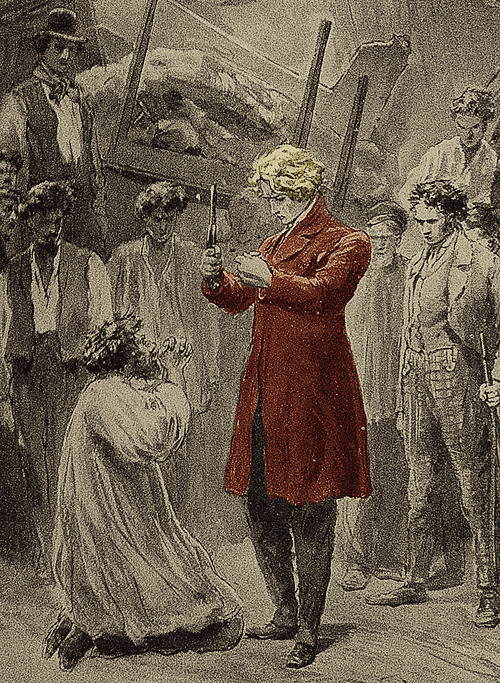
historymaker-inprocessofmoving:
Enjolras, pale, with bare neck and dishevelled hair, and his woman’s face, had about him at that moment something of the antique Themis. His dilated nostrils, his downcast eyes, gave to his implacable Greek profile that expression of wrath and that expression of Chastity which, as the ancient world viewed the matter, befit Justice.