ER
Oh wow, I love the colors on this! And the way everything interlocks and overlaps?? (and is Grantaire’s stubble actually writing? I can’t quite tell!) What a cool take on the characters!
If you’re a fan of the songs, then you can at least take comfort in the fact that there’s going to be more sex than Victor Hugo put in.
this is an actual line that someone thought actually made sense and I’m still not over it
Sex between who??!?!?
The real tragedy about the barricade is that we don’t know how much is true. Victor Hugo was there at the June Rebellion, so what is fact and what is fiction? That question gives me chills because we’ll never know.
Charles Jeanne (who I think is probably actual real life Enjolras) wrote an in-detail account of the ACTUAL barricades in a letter to his sister after the fact
you can read it, tenlittlebullets translated it into English :)
it’s really graphic, he leaves no gory details out, just FYI if you’re gonna read it, keep TW: VIOLENCE in mind
#how is he real-life enjolras if he survived (via metellus-cimber)
I’m so glad somebody asked this, because the answer is: when they finally ran out of ammunition, Charles Jeanne rounded up everyone who was still standing, went, “look, if we’re going to die, we might as well die fighting,” and led a suicidal ten-man charge against an entire flippin’ infantry column, armed with nothing but bayonets. The first few ranks of soldiers were so unprepared for such a spectacularly insane attack that they were too surprised to shoot. They crossed bayonets and tried to hold the insurgents off in hand-to-hand combat, but Jeanne’s swordsmanship was apparently aces, because he held off a bunch of them at once and covered his friends as they tried to breach the ranks. And once they were in, nobody could shoot them for fear of taking out their own guys.
So the last stand that the insurgents had intended as a noble suicide ended in them breaking through the ranks entirely and winding up in the next street over, outside the combat zone, going “well shit, what do we do now?” (I’m guessing the infantry column wasn’t very deep; central Paris at that point was a rabbit warren of narrow twisty streets, and assembling troops en masse for an organized attack was a logistical nightmare.) Unlike the National Guard, the army weren’t total chumps and got themselves turned around to give chase and start shooting once they weren’t at risk of friendly fire any longer… and that’s when all the civilians holed up in their houses went “no way, you’re not getting your hands on these crazy bastards” and started hurling furniture and crockery down on the soldiers’ heads. Jeanne was understandably distracted at the time, but afterwards somebody informed him that the barrage of unlikely projectiles included a piano. A piano. That is some straight-up Looney Tunes slapstick right there. No wonder Hugo went for the heroic death scene instead; if he’d stuck to real life, he probably would’ve gotten complaints that he’d wrecked his readers’ suspension of disbelief.
Anyway, someone opened an alley gate for them to shelter in and take stock of the casualties–most of them survived(!!!), but a few were pretty nastily wounded. Their host then had to lock Charles Jeanne in to keep him from charging right back out and taking on the whole goddamn army singlehanded. He probably would’ve broken down the door if the poor man hadn’t pointed out that going back out would give away his wounded comrades’ hiding place and the identities of the people sheltering them. They sat there listening to the gunfire gradually slow and go silent, and then in the middle of the night the ones who could still walk were allowed to slip away one by one at long intervals from each other. Charles Jeanne went straight home, slept like the dead for a few hours, was woken up at five in the morning with a warning that he’d been denounced and the building was surrounded, and then slipped out in disguise and managed to evade the police for four months before a former comrade ratted him out and he was arrested.
And this, ladies and gentlemen, is why Charles Jeanne’s letter is an absolute treasure that deserves to be available to anyone in Les Mis fandom who wants to read it. Incidentally, “how Actual Historical Enjolras survived the barricades by being too good at his suicide mission” is also one of the stories I tell when anyone asks me what the hell is so interesting about researching people nobody’s ever heard of from an obscure chapter of French history.
i’ve said this before but….more stories where being gay is what saves and heals a character. more stories where a girl meets a nice girl and develops feelings for her and these feelings are the source of her happiness, her freedom, her escape, rather than her suffering. more stories where a guy’s boyfriend is the reason he is able to leave an abusive home and why he doesn’t self-harm anymore.
gayness not as a curse, but as a blessing. gay characters’ partners as heroes. a character’s gayness as perhaps the one and only thing that even ties them to reality. more stories like this. please.

Inktober Day 12
At the Barricade.
So, I read “Les Miserables”. Cried my eyes out. It was the ending that got me the most, but I also felt sorry for those poor boys (and Eponine) at the barricade…
I love everything about this–the style, the concept, the way the two “sides” of the picture are completely entwined but going in different ways, and how the light in the top half seems to be almost obscuring the figures. What a great image!


I watched Les Mis in the Queen’s Theatre and I’m still crying.
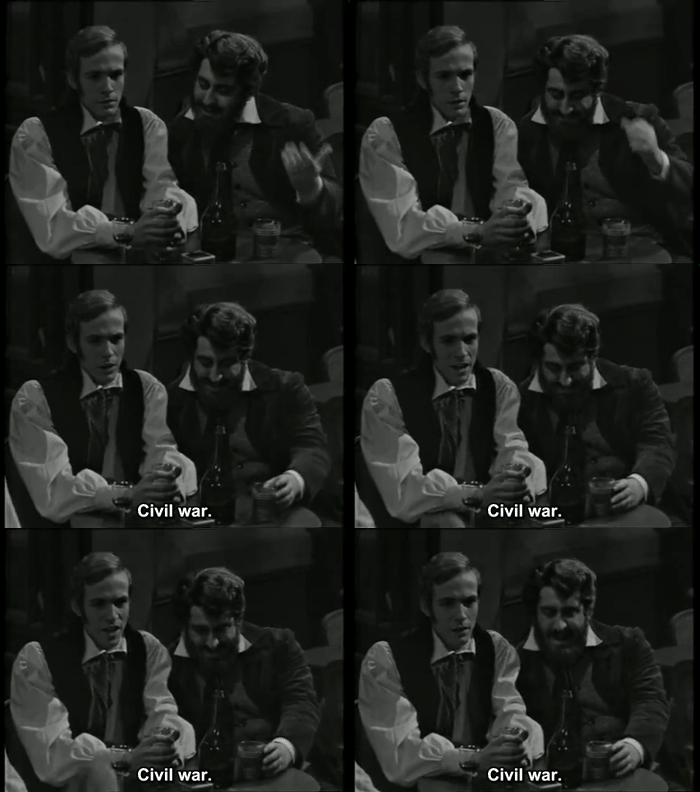
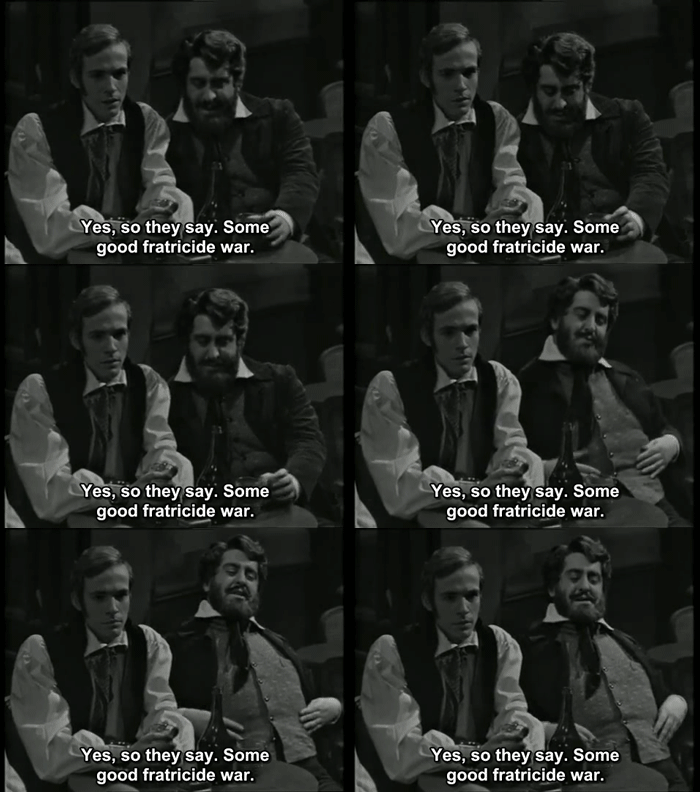
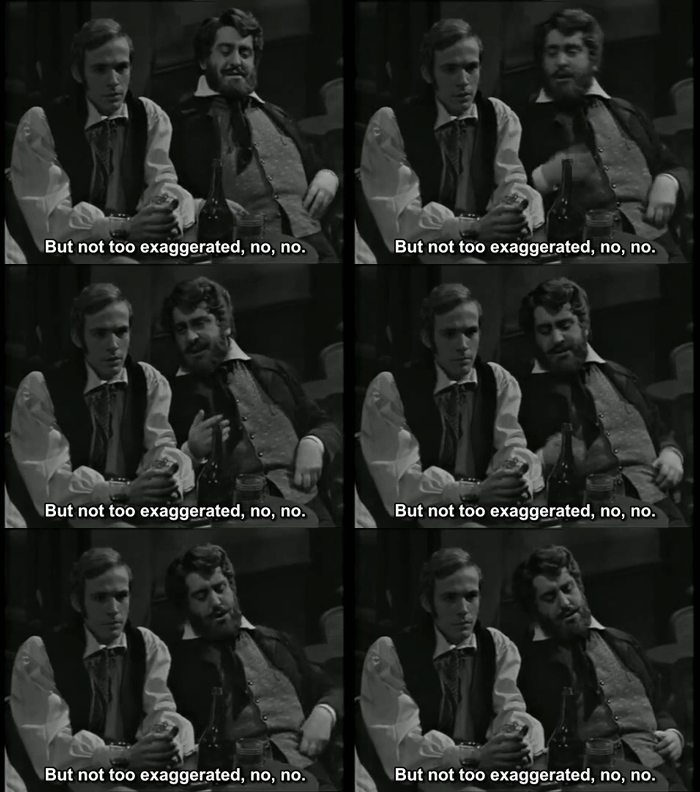
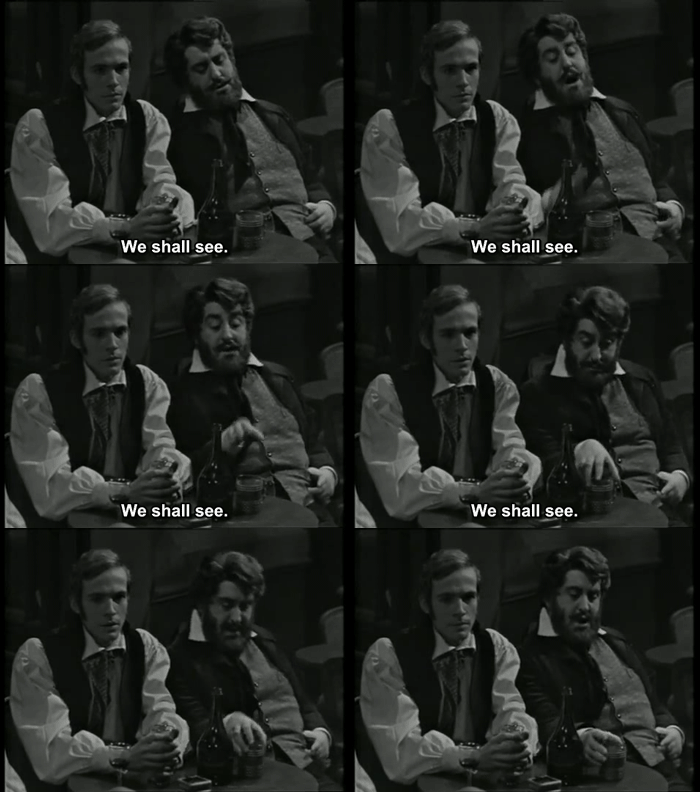
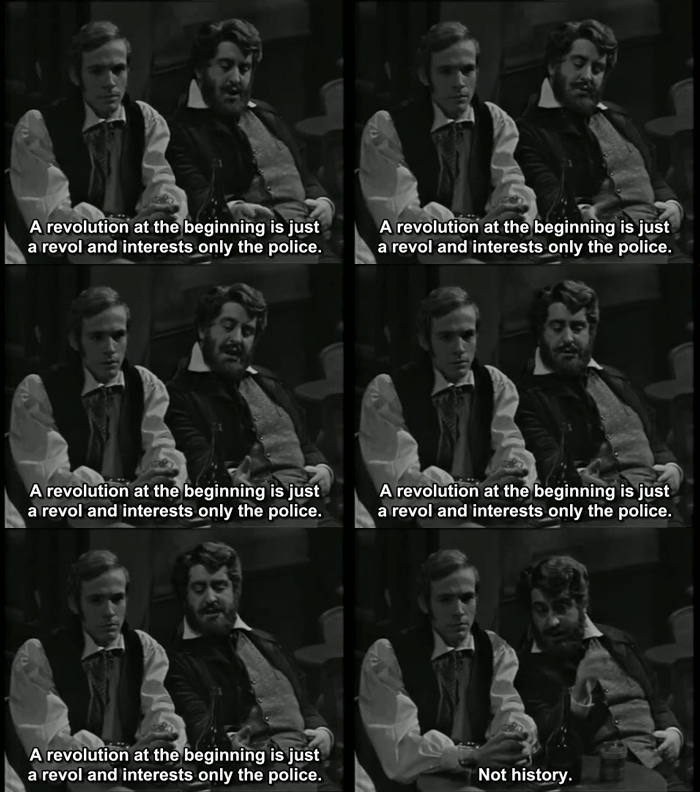
When they sang “here’s to pretty girls who went to our heads”, Grantaire snorted and looked at Enjolras.
Enjolras touches Grantaire more than any other character (mostly trying to derail him, but still).
This Grantaire stood his ground repeatedly, it was lovely. Like, dirty looks when Enjolras is winding up Gavroche. Not letting him get to Marius when he needed a moment. Constantly trying to lighten the mood. Arguing with Bahorel to the point Enjolras has to mediate (which mostly consists on the derailing mentioned above but I’m not complaining).
Before Enjolras climbed the barricade for the last time, they held hands and as they were letting go, Grantaire kissed Enjolras wrist, desperately.
They don’t hold hands as they die though. Grantaire sees Enjolras fall. I can’t get over that. Not getting over that. Ever.
what she says: i’m fine
what she means: Aaron Tveit and George Blagden both read passages of the brick to enrich their interpretations in Les Misérables, and where George Blagden noticed Grantaire’s adoration for Enjolras, Aaron Tveit mainly picked up on Enjolras’ charisma, fervor and faith in the rebellion. That’s very flavour of meta and i don’t know how to deal with it please send help
[via ]
I’ve seen that ‘modern LM film set in NYC’ post a bunch, and while it’s definitely an A+ post, something about the portrayal of Javert strikes me as just a bit off. I could be looking at things completely wrong, but for me one of the really big things about Javert, one of his crucial points, is that he is not from a more privileged societal position than JVJ or even necessarily Fantine. Like, Javert was born in prison to, IIRC, a single woman of uncertain racial heritage who had been arrested for fortune telling. He is, arguably, starting from a position of less societal privilege than Jean Valjean, who, before his arrest, was a bog standard poor peasant type. The point of Javert’s story, I think, is to directly respond to a very standard criticism of the book’s main argument, i.e. that Jean Valjean brought his misfortune upon himself by stealing/Fantine did the same by becoming a prostitute/having a kid out of wedlock/whatever people want to say about Fantine, and that if they had just Followed The Rules and Kept Their Heads Down they’d have been better off. Javert did exactly that. Javert’s entire character arc is grounded in the fact that he is a man who epitomized Following The Rules. He is the system (complete with having internalized its hierarchies completely). And in the end he too is destroyed by it. The point of Javert (or, one of the points; this is LM after all) is that the system will crush you even if you cooperate with it. The amis and their fellow revolutionaries are trying to destroy it because it hurts everyone, no matter how hard they try to stay within the lines and follow all the rules.
So, getting back to the modern AU, I feel like Javert would work better if he was more like Jean Valjean and Fantine. I’m kind of leery of saying that straight up, since setting the story in modern day USA brings up a whole boatload of racial politics that I am absolutely 100% not in a position to address. But I feel like making Javert obviously different from people like JVJ and Fantine, like making them black and making him white, loses a little bit of that piece of the story. Javert isn’t just a representation of the system and an authority figure, Javert is a symbol of how following the system can fuck you over just as hard as not following it.
The point of Javert (or, one of the points; this is LM after all) is that the system will crush you even if you cooperate with it.
^^^^^Yes yes yes EXACTLY!
And it’s not like he’s *only* crushed at the end, either. He lives his entire life fairly poor and incredibly isolated; the price of not being treated like a criminal by the legal system is that he basically turns his own life into a prison.
–And as someone else (sorry, I can’t find the post atm!) recently pointed out, Javert is described in a way that makes it clear he *looks* exactly like the sort of person law enforcement of the day would have expected to be a criminal–like, there were guidebooks with lists of “criminal features” and Javert has those features, pretty much all of them. So there’s that for the visual side of things.
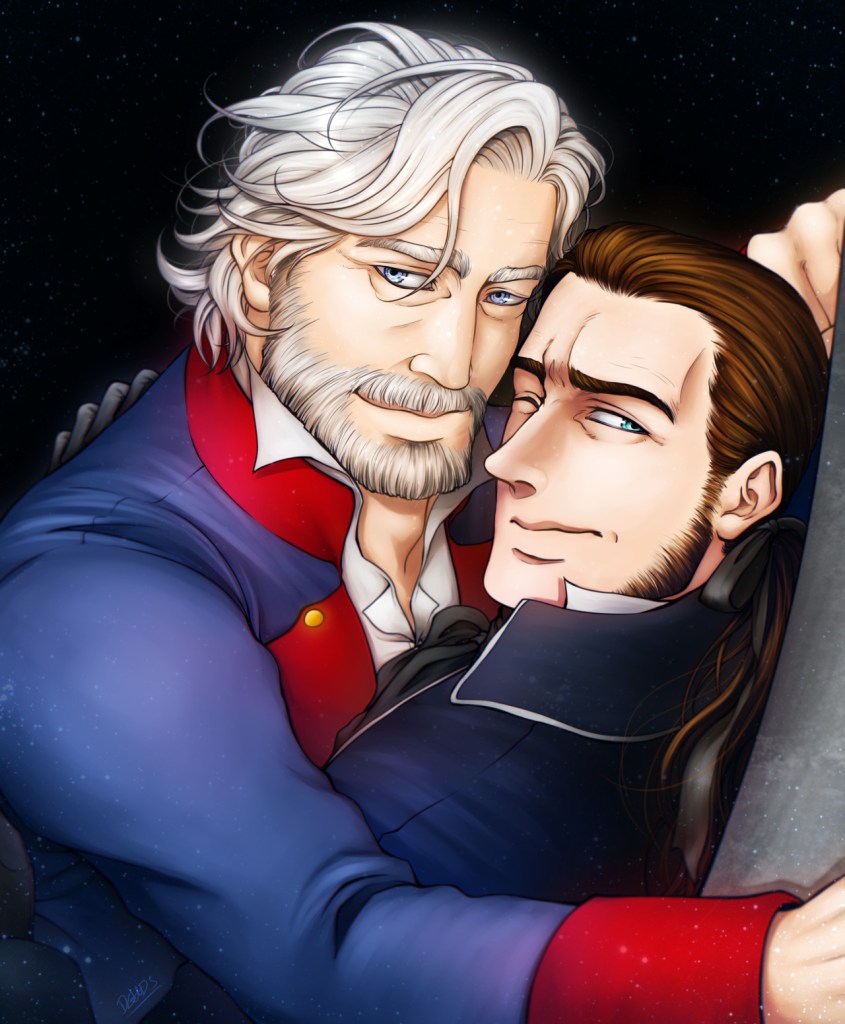
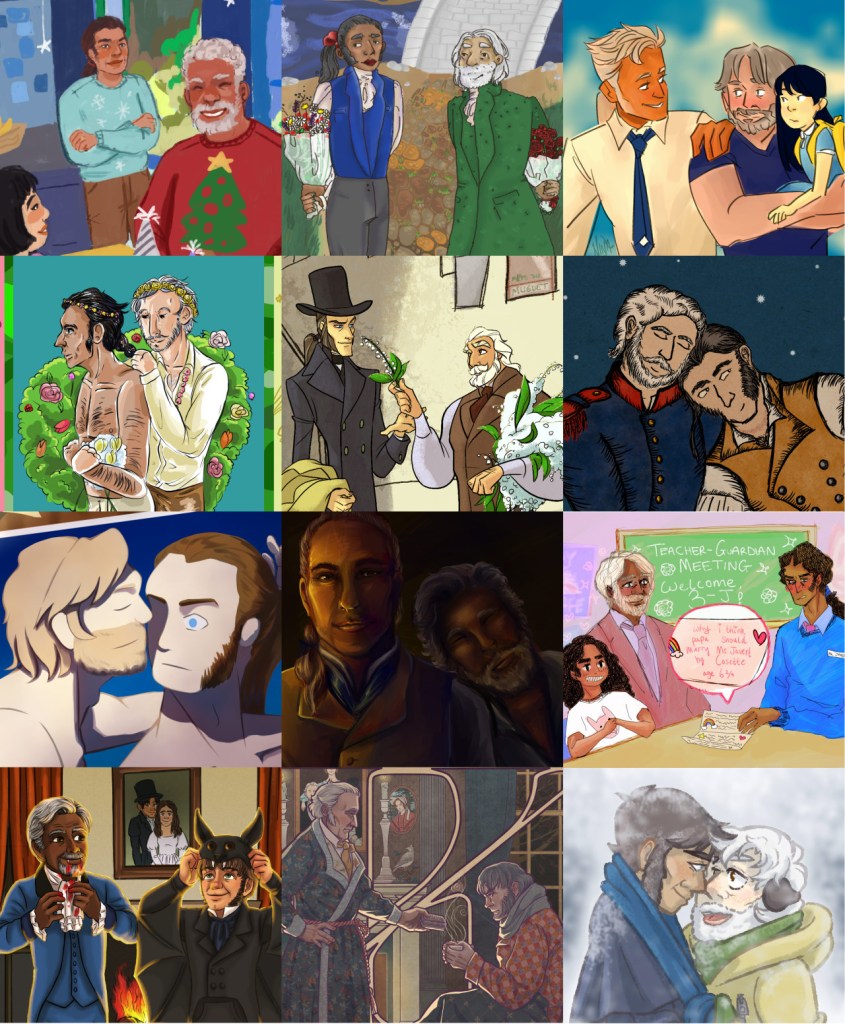
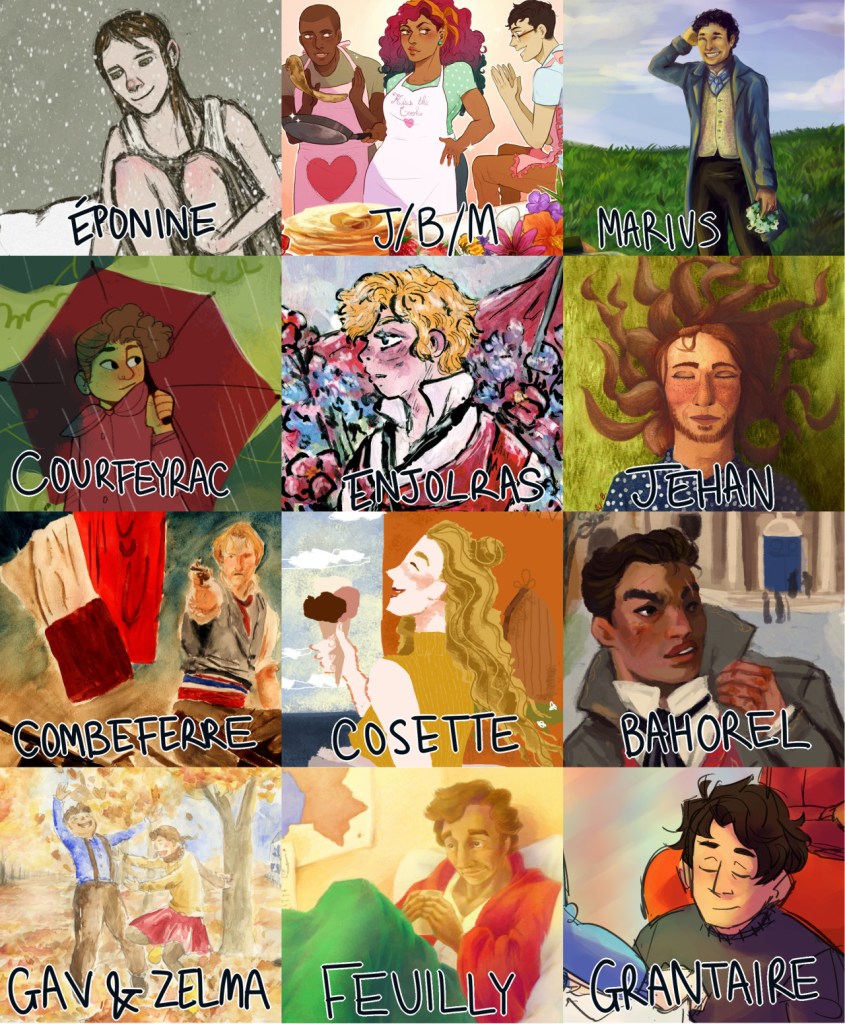
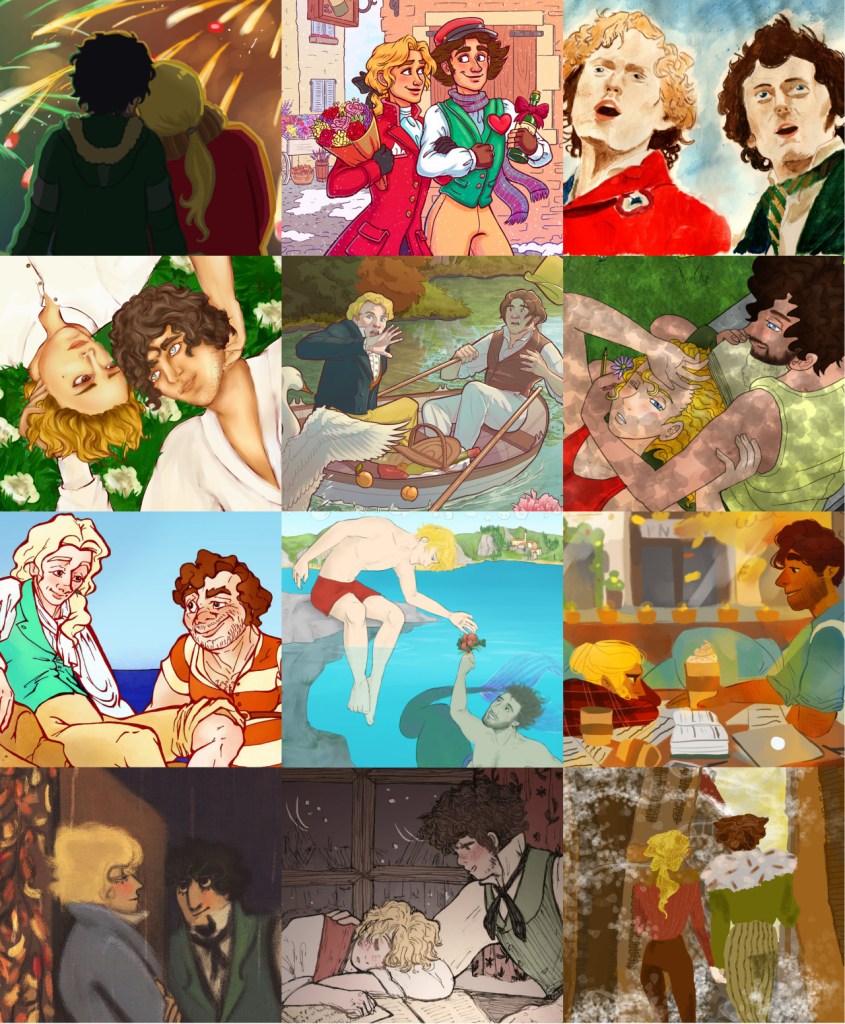
LES MIS CALENDARS NOW OPEN!
ALL profits (10% of the price of the calendar) will be going to charity. From now until the 10th of January, the charity will be https://www.refugees-welcome.org.uk/ After that, I will be switching between the two next charities the artists voted for: genderedintelligence.co.uk and unlock.org.uk.
VALVERT
AMIS
ER
The calendars feature the artwork of the following artists, please go and send them your love and appreciation!!
AMIS Calendar:
Jan/Éponine: @shellcollector
Feb/JBM: @puckboumsportfolio
Mar/Marius: @seraphs-art
Apr/Courfeyrac: @pherre
May/Enjolras: @sofazzio
Jun/Jehan: @lunar-rabbit-5
Jul/Combeferre: @elfiethewicked
Aug/Cosette: @marcellin-e
Sep/Bahorel: @unhooking-the-stars
Oct/Gav&’Zelma: @made-of-coffee
Nov/Feuilly: @fixaidea
Dec/Grantaire: @songsaboutsaladVALVERT calendar:
Cover: @damiengrimmthedevilsson
Jan: @unhooking-the-stars
Feb: @allthestarsinthefirmament
Mar: @songsaboutsalad
Apr: @avatoh
May: @vejiicakes
Jun: @the-end-of-the-chase
Jul: @wanliangzhen
Aug: @seraphs-art
Sep: @ninjaninaiii
Oct: @bootsssss
Nov: @darthfar
Dec: @nikoletoE/R calendar:
Jan: @cuddlyvulcan
Feb: @juanjoltaire
Mar: @elfiethewicked
Apr: @sassytimemachine
May: @darthfar
Jun: @christine-enjolras
Jul: @fixaidea
Aug: @ginogollum
Sep: @pherre
Oct: @clenster
Nov: @sofazzio
Dec: @marcellin-eAnd finally, with great thanks to @withinadream27 for volunteering to help me with this, because I definitely bit off more than I could chew!
VALVERT
AMIS
ER