history

The Windermere Children

For Holocaust Memorial Day the BBC aired a movie called The Windermere Children, the story of how over 300 child Holocaust survivors were sent to the Lake District to recover and restart their lives. I only got to see it today and I’m so, so glad I did. I never knew anything about this.
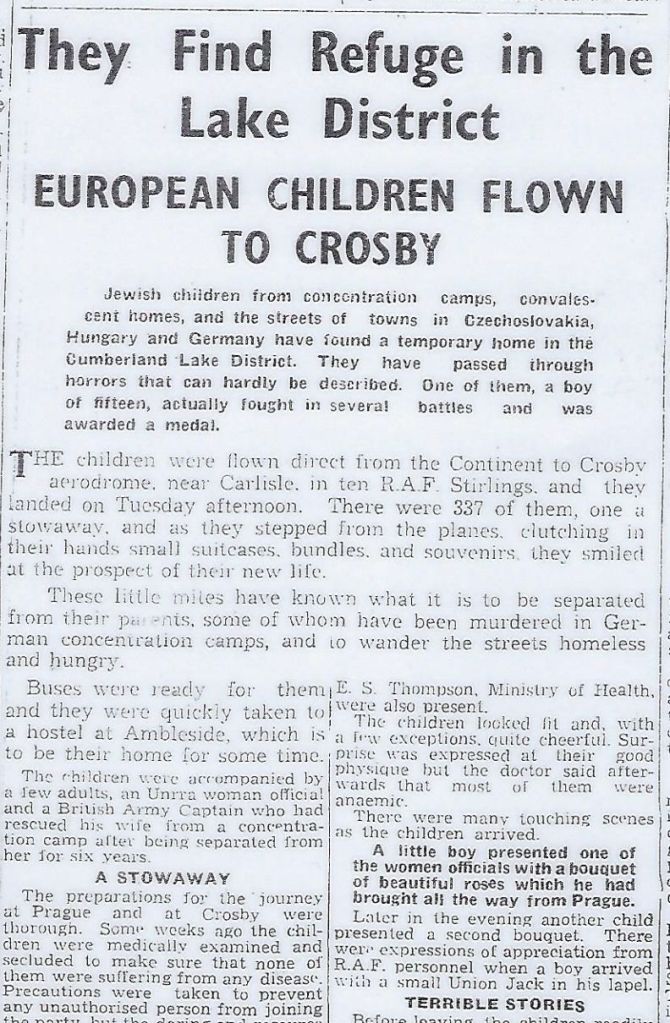
So at the time a newspaper reported that the children were “quite cheerful” and that’s the standout thing. What? Definitely this movie doesn’t shy away from showing the scars of the Holocaust. When the children are given bread they immediately run away to hide it somewhere safe, like they would have done in the camps. When a dog barks at the younger kids they flee into the woods in terror. One boy waits by the gate every day in hope his brother survived and will come for him*. All of them are utterly, utterly traumatized and most are completely alone in the world.

And yet the kids are so… normal in most respects. That’s the thing that really got me about this film. The older boys have been through terrible things but they still banter among each other, steal bikes from the local bullies, flirt with girls and so on. One of the most affecting scenes for me is where they realise that three of them were on the same concentration camp train and would have undoubtedly ended up in the same mass grave if things had been different. It broke my heart that there were jokes in that conversation. I was so, so relieved that these boys who’d been through such terrible things all went on to have happy lives.
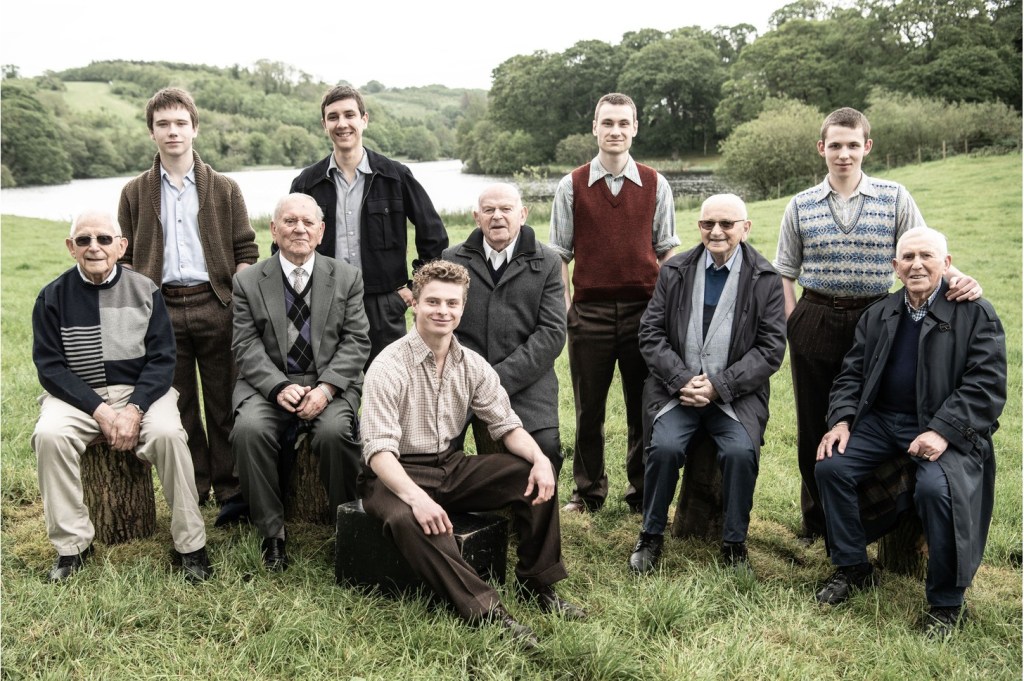
Right at the end of the film you meet the real-life counterparts of the teenagers at the center of the story. (The actors playing them, by the way, are complete unknowns who were totally, utterly brilliant.) They tell their stories for the camera. You can read them here. They all survived and were happy, one of them went on to become a champion weightlifter and a Knight even.

Just an utterly beautiful movie. But a pointed one, too. I heard a quote once saying that it won’t be all that long before the last Holocaust survivors pass away, so we’d better make damn sure we listen to their stories while they’re alive to tell them. Hopefully this film will be able to help on that account. I’m damn grateful they made it.


*=He does, and apparently that was not a movie invention but something that really happened. Wow.

1968: People protesting planned cancellation of ‘Star Trek’ — Making Histolines

1968: People protesting planned cancellation of ‘Star Trek’ || https://ift.tt/2Nngth7 act1989

1968: People protesting planned cancellation of ‘Star Trek’ — Making Histolines

I was not alive at this point, and I have never seen the original Star Trek, but I love that these people went out there with their silly signs and homemade t-shirts and made this happen.

Paddington: The Man Behind The Bear + history

After Paddington 2 aired on BBC1 tonight (and was a total delight as always) BBC2 aired a documentary about Paddington, his origins and his author. I’d never seen it before and it was unexpectedly sad and powerful, especially when going into Michael Bond’s experiences in World War II. Here’s some stories from the past, featured in the doc, which are still (very, very) relevant today.

Michael Bond’s own words regarding his family’s sheltering of refugees (from a 2010 letter:)

“We took in some Jewish children who often sat in front of a fire of an evening, quietly crying because they had no idea what had happened to their parents, and neither did we at the time. It’s the reason why Paddington arrived with the label around his neck.”

A reminiscence from Peter Joseph, of the Windrush generation:

“Paddington Bear came here [London] in 1958. I arrived the 3rd of November 1956, and I’m sure that he had a better reception than I did, because I had a hell of a lot of fuss. We were seen as a subspecies, and that’s how it remained for a very long time.”

And a passage from Bond’s autobiography:

“In October, I made my final journey back to the UK. In Gibraltar, where we stopped for a few hours, there was a small open ship moored a little way apart from all the others. It was packed to suffocation with Jewish refugees, men, women and children making their way to Palestine. And for the first time, as I gazed down at them, I felt ashamed to be British.”

It’s funny to think of a cute little teddy bear being a political symbol, but…

There’s in a line in the first movie, “People in England sent their children by train with labels around their necks, so they could be taken care of by complete strangers in the country side where it was safe. They will not have forgotten how to treat strangers.” But of course, those particular strangers were English: it’s those other ones we don’t like.

Do watch The Man Behind The Bear if you can. It should be on the BBC iplayer. (I don’t know how you get into it outside Britain unfortunately, but I can try putting some clips from it on YouTube at some point maybe?)

In the meantime, don’t forget to utilize your Long, Hard Stare appropriately.

The Crown “Aberfan”

I consider watching The Crown to be a guilty pleasure more than anything else. I know these people generally aren’t good people, and the institution that protects them is even worse. (Please someone put Prince Andrew in prison already.) So I don’t really watch it to feel emotion, just to marvel at the costumes and cinematography and occasionally learn something new about recent history.

“Aberfan” was different, though. I already knew the basics about the Aberfan disaster, how it could easily have been prevented and how most of the victims were young children. But that didn’t prepare me for how it’s all portrayed in this episode. You get to know the kids and their parents a little bit before the opening credits and then fifteen minutes later the adults are frantically digging through rubble with their bare hands to find their children. Most don’t succeed.

116 children altogether died at Aberfan. It wasn’t that long ago, 1966, and there are still survivors alive. Some of them consulted with Netflix on this episode, which was absolutely the right thing for Netflix to do when releasing an episode about something like this. There’s an article about it from the Radio Times here which has some words from the survivors and it also mentions how Netflix provided a psychologist for them. That’s good too.

This is a stunning episode of television. It’s beautifully shot. All through it you feel like an outsider observing terrible grief from a safe distance, which is exactly what the Queen does in this episode.

The bosses who allowed the accident to happen are given no sympathy here, none whatsoever. The episode also kept in the most famous quote regarding the tragedy –

The brave front of the people of Aberfan cracked on Monday at an inquest on 30 of the children.

There were shouts of “murderers” as the Coroner of Merthyr, Mr. Ben Hamilton, began reading out the names of the dead children.

As one name was read out and the cause of death given as asphyxia and multiple injuries, the father of the child said “No, sir, buried alive by the National Coal Board”.

from here

I don’t know the name of the person who said that either in real life or in the show, but it’s in there.

All in all this feels like a respectful treatment of a terrible event, but at the same time… I wish it hadn’t all been squished around a plot about the Queen trying to explore her emotions. In terms of The Crown itself it’s good character development and all but I kinda feel like something like Aberfan is bigger than one episode of a TV show. It’s good in terms of getting the story out there, because I’m pretty sure the disaster is completely unknown of outside the UK, but I wish it hadn’t taken a million-dollar high-profile show like The Crown to get to tell the story, you know? We should have talked about the tragedy more without having to drag the Queen, who was barely involved, into things to make it more interesting/marketable/what have you.

I have really mixed feelings about all of this, you can probably tell. But I was sad watching it, and I did cry. Partly because I feel like, you know, a few more seasons to go and The Crown can do an episode about Grenfell, and by the time that happens there’ll probably have been at least one more preventable disaster caused by faceless corporations, and then there’ll be another one after that and after that and after that, long after the Queen is dead and The Crown is done.

Untitled (World War I Scene) , c. 1918 by Henry J. Soulen (1888 – 1965).

https://ift.tt/2QdJMVP via /r/BattlePaintings https://ift.tt/36W19QO

Untitled (World War I Scene) , c. 1918 by Henry J. Soulen (1888 – 1965). From the collections of the Brandywine River Museum of Art. [1500 × 1124] — Making Histolines

When I came across this I realised, I’ve never seen World War I-era art with this much colour before. I can’t stop looking at it.