
fictional characters who shaped my life

Fictional characters who shaped my life (not in any order): Mickey Smith

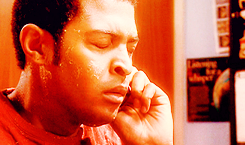
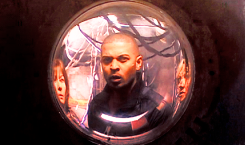
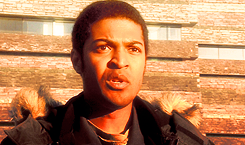
I never had much interest in Doctor Who, but I watched the premiere of Rose in March 2005 anyway. There had been so much advertising about it, it was impossible to miss. (Doctor Who is big business in Britain). One of the adverts featured Rose talking to us, the audience, about her life. “Should I stay here with my mum, my job, my boyfriend, or should I go off with the Doctor and have adventures?” The answer was obvious. But when I actually watched the show, I saw Mickey and thought, “Oh, that must be the boyfriend. He seems nice. I hope he doesn’t get hurt too much.”

Well-

I’ll be the first to admit that Mickey wasn’t a good boyfriend in Rose, not at all. He was self-centered and unmotivated and cowardly – but he wasn’t a bad person, I could tell, so I worried rather more about his wellbeing than I suspect I was supposed to. As Rose and Nine ran gleefully past Big Ben with Mickey still in mortal danger, I remember turning to my dad and asking, “Wait, don’t they care about Ricky or Nicky or whatever his name is?” Heh.

I still don’t know if we were particularly meant to care about Mickey in Series One, or at least the first half of Series One, but I cared about him terribly. I think I wrote the first ever fanfiction with him as the main character (I posted it just before Aliens of London, but I could be wrong on that.) and after that I kept writing, story after story after story. Something about the idea of being the one left behind, the one who totally fucked up their Call To Adventure, massively appealed to me. It still does, in fact. Mickey grew into his Hero’s Journey, but I appreciated that it took him so much time, and that he had so many very human fuck-ups along the way.

Almost ten years on and Mickey’s almost forgotten, even among Doctor Who fans. I don’t think he deserves that, I think he was geniunely one of the best people, companions or not, we ever saw on the show. Think about it- Jackie Tyler spends a year harassing him: Mickey risks his life to save hers, then becomes her best friend. The Doctor spends a good long time calling him ‘the idiot’: Mickey steadfastly ignores him and even becomes his friend too. (Which is more than I would have done, frankly.)

When people ask me who my first Doctor Who Companion was, I say Rose, because, well, the show I came to love opened with her episode. She was a very good and very worthwhile hero. But Mickey Smith, in all his non-heroic, human glory- he was my first companion.

Fictional characters who shaped my life (not in any order): Briony Tallis

I think people are scared of Briony, y’know. She failed to grasp the notion that other people were as real as her, that was her big mistake, and we’ve all been there. She thought she was doing right, or at least not doing wrong, but she messed up badly and we’ve all been there. She lived in a society where a man can rape a teenage girl and suffer no negative repercussions at all, and…

…we’ve all been there.

Anyway. James McAvoy thinks she’s rotting in hell, which causes me to wonder where exactly Paul Marshall is in that case. And also to wonder what Luc Cornet would have thought of that, because Briony was a good nurse and she lied to him when he was dying, the good comforting kind of lie. Briony went on to marry another Frenchman, actually, her marriage didn’t make it into the movie but got one sentence (one sentence!) in the book. I wonder how much her husband knew. I bet he loved her anyway. I hope he did.

Briony’s telling of Robbie and Cecilia’s story was also the good comforting kind of lie, and one that casts her (or did she cast herself?) as the architect of their destruction – but it wasn’t all her fault. Most of it is Paul Marshall’s fault, although he seems to get a pass for reasons Benedict Cumberbatch himself would be very disappointed in. Briony accused the wrong man, yes, but Cecilia and Robbie themselves came close to doing the same (“I suppose we owe an apology to Able Seaman Hardman”) and she was a child, thirteen years old, not even old enough to understand what she saw in the library.

Briony could have been anyone; could have been me. One fuzzy memory, one fear, one moment of ego and it’s all over. She was so busy being the hero of her own story she forgot she was also the supporting character of someone else’s. Scary, isn’t it?

She’s eventually punished in what must be the worst way imaginable for her: she’s a writer, a storyteller, but the dementia she’s been diagnosed with will cause her to lose all her stories- all her memories will fade away, and slowly. She was punished disproportionate to her crime, I think. She had a massive god complex- that was what caused her to try and give the characters Cecilia and Robbie a happy ending, while she could do nothing for the real people- but she tried to atone for it. To people like Luc and Fiona (do you know, I actually ship Briony/Fiona a little) she was a good person. And she never forgave herself for what she did, not even in her retelling of events, where she could have twisted the truth and didn’t.

She was arrogant and selfish and in many ways she wasn’t brave, but I don’t think she’s in hell. Or she’d better bloody not be.

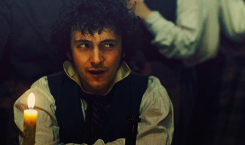
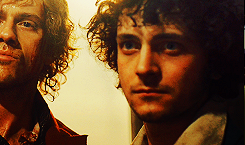
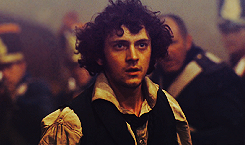
Fictional characters who shaped my life (not in any order): Grantaire

Lemme see, I read Les Miserables round about February time- February 2013, just after the movie- so I’ve known Grantaire maybe six months, even though it feels like I’ve known him all my life. All that stuff he talks about, all the depressing cynical stuff, I’ve thought a lot of that. That line he has about the sun not coming out all day, I’ve thought that one pretty much word-for-word, even.

So it was good to properly meet him. As you may already know, he was one of those characters who you only really got the full measure of via the little details- he seemed so harsh and uncaring a lot of the time, but in the course of his many drunken rambles he talked about poverty and street children and slavery and suffering, and it started to dawn that he is what he is not through arrogance or nastiness but because he’s just plain given up hope. It seems to be a collective fandom headcanon that he probably had clinical depression (before there was actually a name for it) and I agree totally.

Well, getting right down to it- and bearing all that in mind- Grantaire in the novel is an absolute mess. He rants at anyone who’ll listen, he insults people probably without even meaning to, he does his absolute best to drink out the world and he’s in love with a man who disdains him at best and harshly rejects him at worst. He wears his cynicism like a mask, calls himself stupid, lets slip that his own father apparently despised him, and sometimes seems to be practically trying to get his friends to despise him too…hasn’t almost everyone actually had a friend like that, come to think of it? I think I might have. It might even have been me sometimes, I don’t like myself most of the time either. And there are Grantaires everywhere, at parties and in bars and buried in early graves. I wish I could save them all.

Victor Hugo’s own words nicely sum up Grantaire’s whole story in just a couple of sentences: His mind could get along without belief, but his heart could not get along without friendship. A profound contradiction; for an affection is a conviction. Or, you know, love is power, and Grantaire gets one of the best selfless-love stories in a novel packed full of them- you might well know how it goes by now. Grantaire drinks himself into a coma before the big final battle and wakes up to find Enjolras about to be executed by the National Guard, alone. The firing squad don’t notice him, though, so he could have escaped with his life, he could have just slumped back down. But he doesn’t do that- he gets up, shouts “I’m one of them!“ and goes to stand with Enjolras in front of the guns. Then he turns to the person he loves and asks if he minds – oh Grantaire – sharing his last moments with him. Enjolras smiles and takes his hand, just before they die…you probably know that bit, too. And that’s it, that’s the end, although the very last mention of Grantaire in the novel comes when Marius remembers all the “dear, sorrowful, valiant, charming or tragic beings” he’s lost.

This is already quite a long ramble (Grantaire would be proud) and I still haven’t touched on a ton of interesting and important stuff: the Biblical allusions throughout his story, the way he’s described when he stands up and walks forward (it breaks my heart, in a good way), his love for his friends – or the fact that, during my half-year in fandom, I’ve realised that he means a hell of a lot to a lot of people. (Not bad, Hugo, not bad.) And me included, absolutely. You can be a mess, be alienating and miserable and depressive and harsh and still be dear, valiant and missed? Count me in. Les Mis is a novel full of wonderful people, there’s so many to choose from, but I think about Grantaire so often and what he represented in the story, and honestly, I want to be one of him.

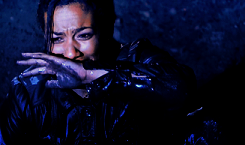
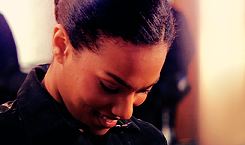
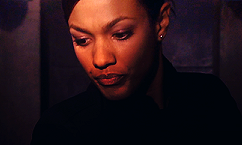
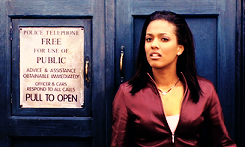
Fictional characters who shaped my life (not in any order): Martha Jones

There’s so much to admire about Martha, both before her TARDIS travels and after. She was brave, and she was compassionate (she sobbed, actually broke down, over that one little Hath who saved her), and she loved her family a lot.

And damn, but she had a near-superhuman endurance. She walked the Earth, all alone, in the cold and the danger. I can barely handle one week of camping in a field- she was out in the elements, uncomfortable and hungry, for a YEAR! I’ve never got over my admiration for that feat. It blows my mind.

Then there’s the other stuff. She (again, near-superhumanly) put up with several months of racist behaviour in an unfamiliar land, just to help the Doctor, and she didn’t hate either him or Joan by the end of it. (Then she had to do it again in the 1960s when the Angels took the TARDIS! Bloody hell.) She rose from her hiding place when the Master started shouting for her, unwilling to put her saviours in any more danger. She laughed in the face of the man who’d decimated the planet, the man about to murder her. And much later on, after being told she was going to hell for it, she bargained with the Daleks for the fate of humanity. Something that must surely have killed her inside…

So yes. She is very, very strong. But my favourite thing about her (as sad as I was when it actually happened) is that she left. Because as awesome as the Doctor’s world is, it can still change you, warp you, chew you up and spit you out, and Martha knew that. She’d seen so much good on her travels, but also so much bad- and not just the monsters either.

Anyway. Martha Jones was offered the entire universe, and she turned it down because she knew the cost. Because she wanted to stay and help her family, because she thought she could do good elsewhere. That’s some amazing, underrated heroism, the sort I think people should celebrate more. The sort I hope I have somewhere.

Fictional characters who shaped my life (not in any order): Harry Osborn

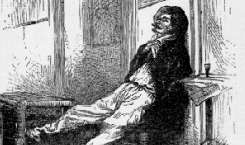
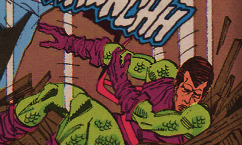
Bein’ all mental (accompanied by incredibly elaborate bouts of self-harm) is a pretty big part of my life, although it’s lessed a lot now. Anyway, it so happens that during the time all that was going on, I was working my way through the Spiderverse, and you know what, I pretty much felt like Harry looks in the fifth image up there.

Anyway, the ironic thing is, a guy made out of ink (and occasionally personified by James Franco) actually helped me a hell of a lot more than the people who were actually supposed to/being paid to. Turns out that no matter how freaky and horrible the voices in your head get, they can eventually be beaten back, especially if you have the right people around. Harry managed it, after all, albeit with several bumps along the way.

And, perhaps most important to me at least, you can be a dick and alienate everyone and you’re still worth saving. (Straight out of one of the many, many Spider-Man companion books: “Peter Parker always believes Harry Osborn is worth saving.”) Always a handy thing to remember.

A very handy thing. So thanks, Harry, sincerely, you and your creators did good. Now go help somebody else.