Silver Blaze is such an under rated banger. Holmes is at maximum silly.
Holmes drags the client into a random tent on race day (after convincing him to not tell the betting public that his horse is missing) to show him a horse that is NOT his horse.
The client justifiably freaks out and Holmes is like" PHSYC! it is your horse, let me wash it real quick so you can see its one distinctive feature again. “
The client is like "Thank god. Now I’m not gonna go to jail for defrauding the public. But you still haven’t found the murderer.”
So Holmes go “au contrare. The murderer is in the room with us right now.”
ITS THE HORSE. He waits till now to reveal that this good good, beautiful horse kicked a man to death.
fabulous read beginning to end.
I also appreciate that Holmes lets the client splutter in indignation for a few seconds before being all like, oho sir! I said the murderer is in the room with us but I don’t mean it’s YOU! It’s your horse
‘THE MUSHROOM GROTTO’ is a module for the award-winning tabletop RPG ‘Mausritter’ with art by Me! I’ve REALLY come to adore this game since discovering it this year, so much so that my friend and I felt compelled to publish our own lil’ adventure for it, and I am EXCEEDINGLY pleased with the result. It’s a moody little Dungeon scramble with a full chorus of anthropomorphic mice, annoyed ghosts, indolent knights, and Incomprehensible Psycedelic Entities
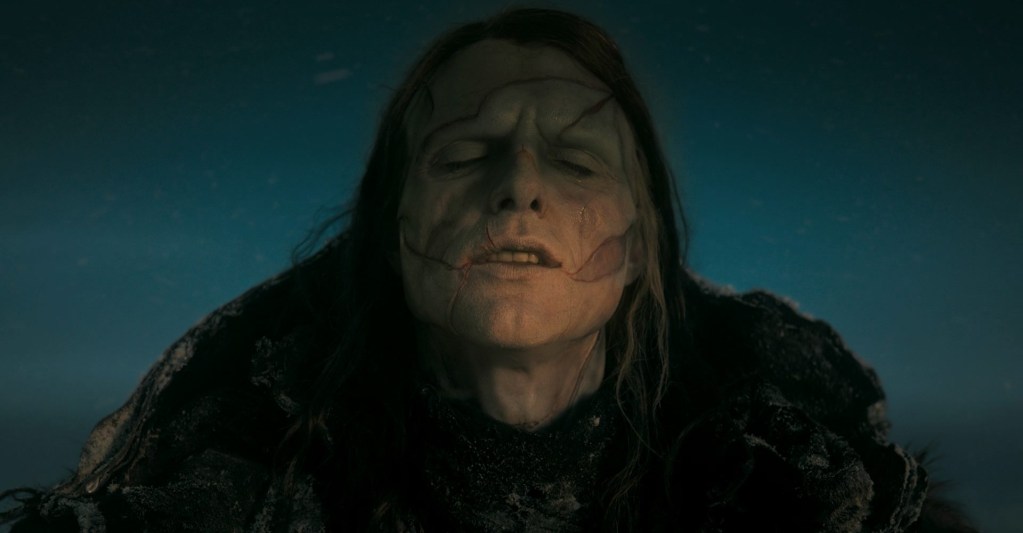
I saw Guillermo del Toro’s Frankenstein last week and I immediately became OBSESSED with it. Like many of del Toro’s wonderful films, it’s about life and death and love, but it hit me in a way no other GDT film has. Not even Pacific Rim!
A lot of that is down to Jacob Elordi’s absolutely Oscar-worthy performance as The Creature. I had the usual doubts that your standard teen heartthrob could actually act and I instantly got Robert Pattinson’ed. I’m so sorry Jacob, I was unfamiliar with your game.
“To you I am obscene, but to myself I simply am.” What a line! And unsurprisingly it REALLY resonates with the Tumblr crowd. Including me. I am the Tumblr crowd.
After watching the movie I almost immediately read the book and it was a fascinating experience. It’s very different from the film (in fact, it’s very different to most of the films based on it). The Creature isn’t as sympathetic, and soon turns to outright toddler-murder after being rejected by humans, but it’s clear what Mary Shelley wanted to say about humanity, society and the religion she followed. I remember seeing a great post on Tumblr or Facebook that read something along the lines of, “When you know Mary Shelley lost a child before writing Frankenstein, you won’t wonder why she wrote a story about someone abandoned by God.” Her letters after that loss (see Wikipedia) are truly devastating, by the way: “I am no longer a mother now” really hit me in the solar plexus.
Victor on the other hand is more sympathetic than he is in the movie, but still not exactly a paragon of virtue or good sense. After making the Creature he runs away in terror, but when he finally returns to his lodgings he offhandedly mentions how a servant brought him dinner. So he left the Creature in the house… with a servant? Who might have gotten mauled or eaten for all he knew?! I wonder if that was written into the novel deliberately to show how callous Victor is or if it was just a oversight in a world where everyone in the position to write a novel could only do so off the back of invisible labour from servants.
But on the other hand the rest of the novel does care about servants? A lot of page time is devoted to the awful fate of Justine. Justine is probably the most sympathetic character in the novel actually, and in her last speech it’s made clear she and the Creature share the same fate in a way:
“I had none to support me; all looked on me as a wretch doomed to ignominy and perdition.”
-but Justine, even though she’s likewise condemned to live as a ‘monster’ for her last day of life and probably be remembered that way by most people in death, doesn’t resort to revenge. Hashtag #JusticeForJustine. It does not escape my notice that all the women in this novel are much more morally decent than most of the men… ur, assuming the Creature counts as a man. (And of course, ‘does he count as a human’ and ‘does he count as a male’ are different questions. Oh look I’ve slipped into using he/him pronouns for him, which is interesting in of itself.)
There’s a line not long after Justine’s death, said by Elizabeth, that really struck me: “Before, I looked upon the accounts of vice and injustice that I read in books or heard from others as tales of ancient days or imaginary evils; at least they were remote and more familiar to reason than to the imagination; but now misery has come home, and men appear to me as monsters thirsting for each other’s blood.” I guess it just made me think of the times we’re all living in. Sorry, depressing.
Less depressing is that one line from the book that’s gone round social media so many times you’re probably seen it already: “Life, although it may only be an accumulation of anguish, is dear to me, and I will defend it.” There’s nothing I can really say about that one that hasn’t already been said, but I love it.
I’m having so much fun and feelings uncovering this new-to-me myth.
i think that the creature from Frankenstein should have met Bishop Myriel from Les mis. I feel this would have ended well. The creature would get a father figure/guy who is nice to him. Myriel would get someone who can get things from the top shelf for him
♪ But remember this, my brother Humankind is not that bad God has raised you out of darkness Now beat the shit out of your dad ♪
Love how pretty much everyone was blown away by Elordi’s performance and they’re finally giving him his flowers as an actor. He’s going down the Robert Pattinson route, I’m telling you.