‘Anyone can die’ won’t be a truthful sentence until ‘any kind of character can be at the very heart of the story’ and ‘anyone can run a TV show’ are factual statements as well.
FABULOUS. Also, can I just say that “made out with Jane Austen and made sure the entire cosmos knew it” is kind of my aesthetic? Also, Clara x Lady Me.
Yes. We decided that the new companion was going to be non-white, and that was an absolute decision, because we need to do better on that. We just have to. … I think I had this baffling idea that if we just threw open each part to everybody, it would work out in the end. I put my faith, inexplicably, in the free market. I don’t know why, I of all people would do that! It doesn’t work. You can only cast for talent – you’ve got to cast the best person, every single time – but you’ve got to gauge where you’re looking for that talent. … Sometimes the nature of a particular show – historical dramas, for instance – makes diversity more of a challenge, but Doctor Who has absolutely nowhere to hide on this. Young people watching have to know that they’ve a place in the future. That really matters. You have to care profoundly what children’s shows in particular say about where you’re going to be.
Steven Moffat on the casting of Pearl Mackie and Diversity in the BBC (Doctor Who Magazine #500)
hey baby! so, this is gonna be a huge huge spoiler, and this comes from a white girl living in south america, so what i’m telling you is repeating what other people have taught me:
there is only one named, visible character of color in the entire movie. if you squint, you might see a few brown faces in the background, but the only named, visible character of color is max dillon, a.k.a. electro.
max is, in the comics, and in every animated adaptation up to this moment, a white, mentally able man who really, really enjoys being bad. some gangster who got superpowers and couldn’t have been happier about it. a complete asshole, but not a problematic character. max, in the movie, is a mentally ill black man. not any mentally ill black man, but specifically a schizophrenic black man.
and, i didn’t know this until a while ago because, of course, racial politics change from country to country, but this is a movie written and produced in the united states, with a story happening in the united states; so we need to specially look into what is the relation between schizophrenia and black men in the states’ history. and what do we find when we look into this? that schizophrenia was specifically re-defined during the 60s to invalidate and institutionalize rebellious black men. [for a more extensive read: x] schizophrenia was re-defined to meanobsession (with their cause, with this idea of a rebellion, with the idea that they deserved more than they had), violence (so that black men who joined any militancy for their rights would be seen as ill and out of control) and paranoia (because these black men blamed the white man of their troubles and thought they had somehow been wronged, and that was obviously a delusion, right?).
max dillon starts the movie obsessed with being recognized for his work and obsessed with peter. then, when he gets in an accident and becomes electro, he becomes violent and tries to seek revenge in the (white) men who stole his work, and on spiderman for not recognizing him. he is institutionalized, and during the whole movie we can hear the ‘voices in his head’ telling him how he was wronged, and robbed, and needs to get his vendetta. he dies at the end of the movie, while the white villain continues to live.
this movie also lacks in female representation, and is terribly ableist not only towards mentally ill people, but towards physically ill people with chronic illnesses. it’s a giant pile of shit, and i really, really suggest you rewatch spider-man 3 and laugh at how terrible that one was instead of growing as bitter and angry as i did after tasm2.
I just wanted to add that there’s also that scene where Peter subdues Electro using a fire-hose, which should recall state violence committed against Black protestors during the Civil Rights era – and it’s played for laughs.
Spider-Man 3 isn’t fantastic for representation or anything, but it’s a hell of a lot better than ASM2. Damn.
[I did a lot of railing against that movie for its ableism when it first came out, but the intersection of racism-ableism re Electro never occured to me. My apologies, folks. :( ]
When I started watching the show, I was a year or two into hormone replacement therapy; I was taking pills to reduce the amount of testosterone in my body and raise the amount of estrogen. As anybody who’s in the midst of puberty can tell you, it’s a really messed up time. I wasn’t sure what (if anything) about me would change through this whole process. I knew that I was still the same person at heart, but I understood that some aspects of my personality may change—behold, the power of hormones.
Nichelle Nichols inspires Whoopi Goldberg to become an actress because she was the first black woman Whoopi’d ever seen on tv that wasn’t playing a maid.
Whoopi gets her career launched by starring in The Color Purple.
Lupita Nyong’o was inspired to become an actress after watching The Color Purple because she was finally watching a film with people who looked like her.
So just to be clear, An African communications officer (who Nichelle never would’ve played if not for MLKJ encouraging her about representation) inspired the lead actress in the best black film of all time (which was based off a book written by a black womanist) where the women carried the weight of the film, which led to an African actress to get the role in a high profile film, directed, written by and starring black folk before even graduating school and now has the most nominations I’ve ever seen from someone so inexperienced.
But by all means, keep making racist powerpoints about how representation has no affect on anyone just because you don’t see color.
I wanted my first-year film students to understand what happens to a story when actual human beings inhabit your characters, and the way they can inspire storytelling. And I wanted to teach them how to look at headshots and what you might be able to tell from a headshot. So for the past few years I’ve done a small experiment with them.
Some troubling shit always occurs.
It works like this: I bring in my giant file of head shots, which include actors of all races, sizes, shapes, ages, and experience levels. Each student picks a head shot from the stack and gets a few minutes to sit with the person’s face and then make up a little story about them.
Namely, for white men, they have no trouble coming up with an entire history, job, role, genre, time, place, and costume. They will often identify him without prompting as “the main character.” The only exception? “He would play the gay guy.” For white women, they mostly do not come up with a job (even though it was specifically asked for), and they will identify her by her relationships. “She would play the mom/wife/love interest/best friend.” I’ve heard “She would play the slut” or “She would play the hot girl.” A lot more than once.
For nonwhite men, it can be equally depressing. “He’s in a buddy cop movie, but he’s not the main guy, he’s the partner.” “He’d play a terrorist.” “He’d play a drug dealer.” “A thug.” “A hustler.” “Homeless guy.” One Asian actor was promoted to “villain.”
For nonwhite women (grab onto something sturdy, like a big glass of strong liquor), sometimes they are “lucky” enough to be classified as the girlfriend/love interest/mom, but I have also heard things like “Well, she’d be in a romantic comedy, but as the friend, you know?” “Maid.” “Prostitute.” “Drug addict.”
I should point out that the responses are similar whether the group is all or mostly-white or extremely racially mixed, and all the groups I’ve tried this with have been about equally balanced between men and women, though individual responses vary. Women do a little better with women, and people of color do a little better with people of color, but female students sometimes forget to come up with a job for female actors and black male students sometimes tell the class that their black male actor wouldn’t be the main guy.
Once the students have made their pitches, we interrogate their opinions. “You seem really sure that he’s not the main character – why? What made you automatically say that?” “You said she was a mom. Was she born a mom, or did she maybe do something else with her life before her magic womb opened up and gave her an identity? Who is she as a person?” In the case of the “thug“, it turns out that the student was just reading off his film resume. This brilliant African American actor who regularly brings houses down doing Shakespeare on the stage and more than once made me weep at the beauty and subtlety of his performances, had a list of film credits that just said “Thug #4.” “Gang member.” “Muscle.” Because that’s the film work he can get. Because it puts food on his table.
So, the first time I did this exercise, I didn’t know that it would turn into a lesson on racism, sexism, and every other kind of -ism. I thought it was just about casting. But now I know that casting is never just about casting, and this day is a real teachable opportunity. Because if we do this right, we get to the really awkward silence, where the (now mortified) students try to sink into their chairs. Because, hey, most of them are proud Obama voters! They have been raised by feminist moms! They don’t want to be or see themselves as being racist or sexist. But their own racism and sexism is running amok in the room, and it’s awkward.
This for every time someone criticizes how characters of color and female characters of color especially are treated in text and by subsequent fandoms. It’s never “just a television/movie/book”. It’s never been ”just”.
“…and by subsequent fandoms.“ <— bless this addition.
This one is always worth reblogging. When I say, “Representation matters,” it’s not just the presence of PoC, women, PwD, LGBTQIA, in narrative, it’s the roles are those characters are occupying.
The hall of mirrors that is the interplay between fiction and real life becomes a negative feedback loop with real consequences, because we internalize things and then we act them out.
Storytelling is a powerful thing. What stories are we telling, and why?
Like, Cassandra is ambiguously to probably intended to be trans, and she’s also built on the premise that people who have a lot of plastic surgery are vain, horrible people.
…
Like, I really do enjoy the episode, and I doubt Davies actually thought that particular implication through, but damn.
I remember back in 2005, reading on Gallifrey Base that exact complaint from a trans person. TEOTW is still one of my favourite episodes, but RTD really dropped the ball on that one, even if he did try and make Cassandra more sympathetic later.
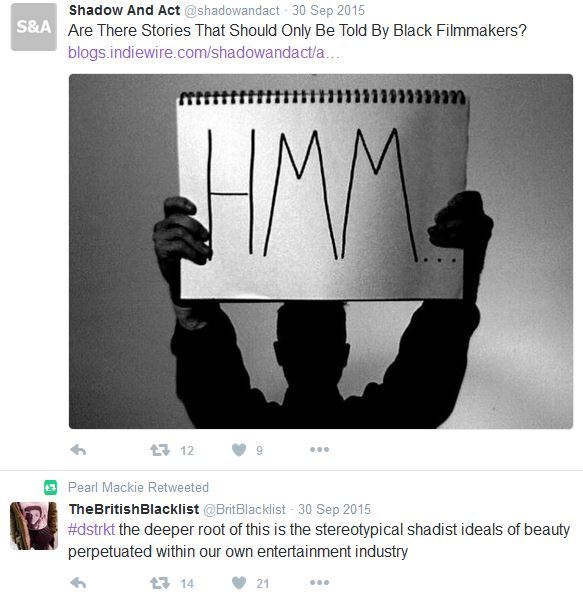
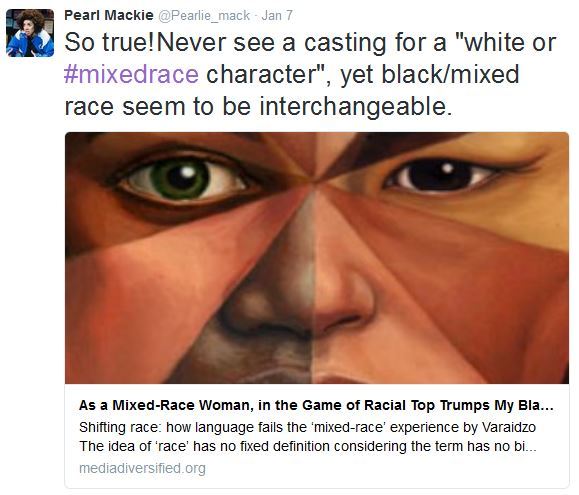
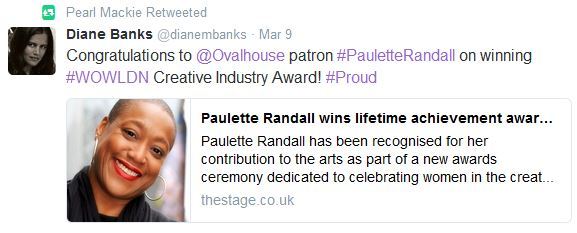
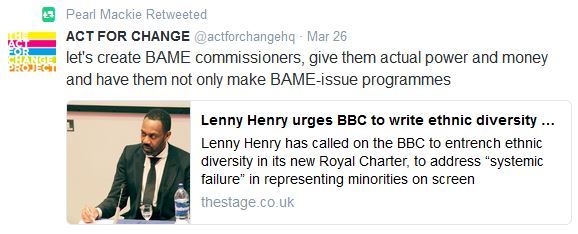
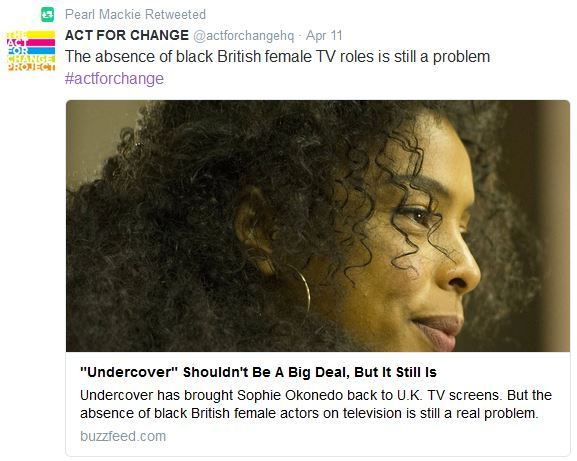
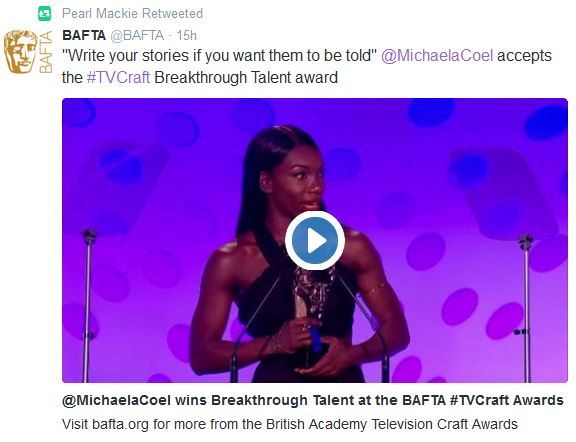
Not only is Pearl Mackie absolutely adorable on screen, but looking at her tweets, she isn’t afraid to raise her voice for representation.
This is great because landing the companion role always gives the actress/actor a huge media profile boost and that will enable her to get these messages to a much larger audience in the near future.
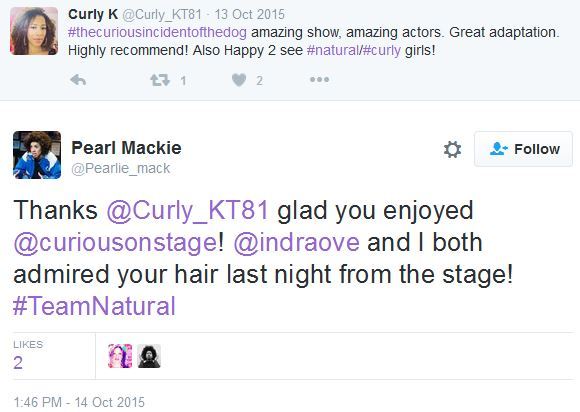
It will also inform the kinds of representation we see on Doctor Who. Like Karen Gillan and Jenna Coleman before her – who have both spoken about how they were involved in the styling choices for their characters – Pearl Mackie will have influence over Bill. Not to mention collaboration in other areas by virtue of being the second lead in the series. For instance, she strongly supports natural Black hair styles (note her exchange with Curly_KT81) and it’s come up twice now in the new companion promotion that she loves afros and Bill is a character who has afros.
I’m so happy and I can’t wait to see the wonderful things Pearl Mackie helps bring to us during her run as companion!