This is a jar full of major characters
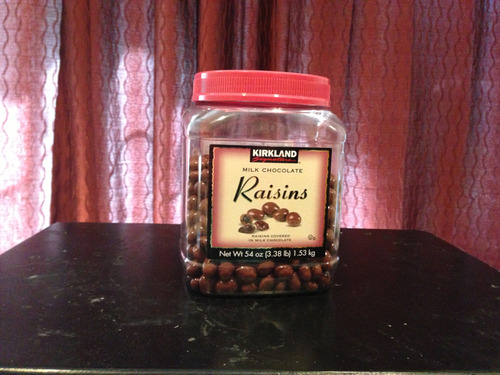
Actually it is a jar full of chocolate covered raisins on top of a dirty TV tray. But pretend the raisins are interesting and well rounded fictional characters with significant roles in their stories.
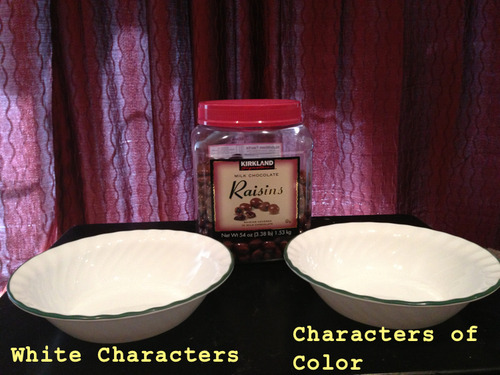
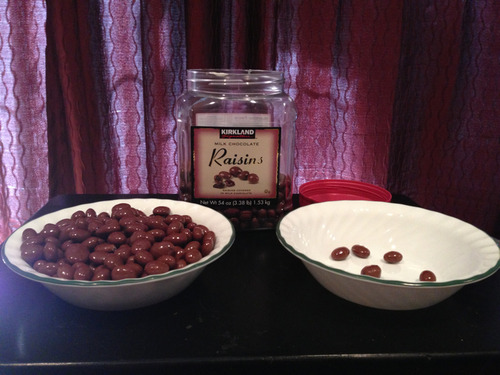
We’re sharing these raisins at a party for Western Storytelling, so we get out two bowls.
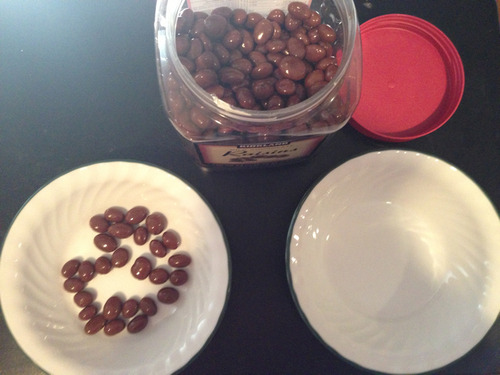
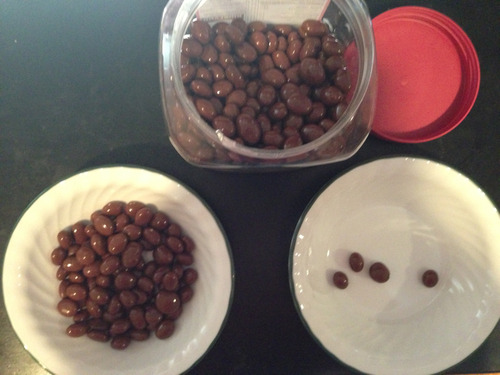
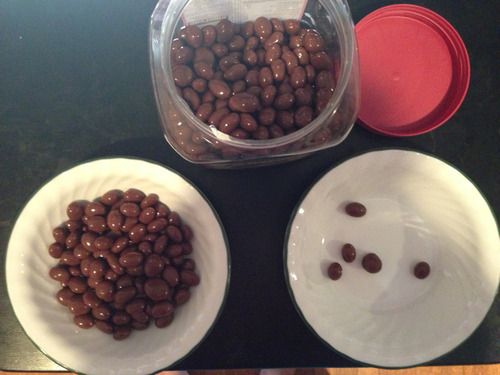
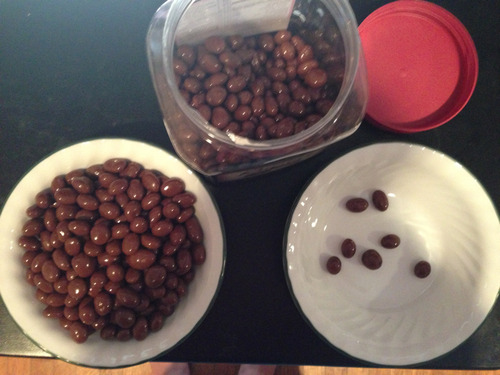
Then we start filling the bowls. And at first we only fill the one on the left.
This doesn’t last forever though. Eventually we do start putting raisins in the bowl on the right. But for every raisin we put in the bowl on the right, we just keep adding to the bowl on the left.
And the thing about these bowls is, they don’t ever reset. We don’t get to empty them and start over. While we might lose some raisins to lost records or the stories becoming unpopular, but we never get to just restart. So even when we start putting raisins in the bowl on the right, we’re still way behind from the bowl on the left.
And time goes on and the bowl on the left gets raisins much faster than the bowl on the right.
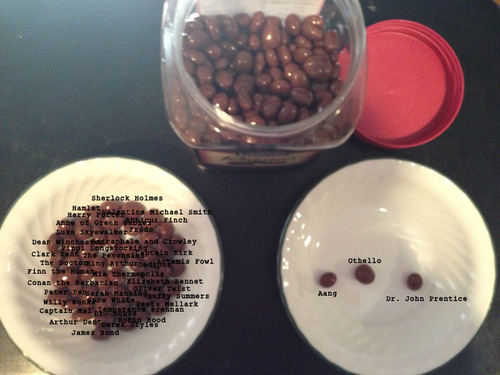
Until these are the bowls.
Now you get to move and distribute more raisins. You can add raisins or take away raisins entirely, or you can move them from one bowl to the other.
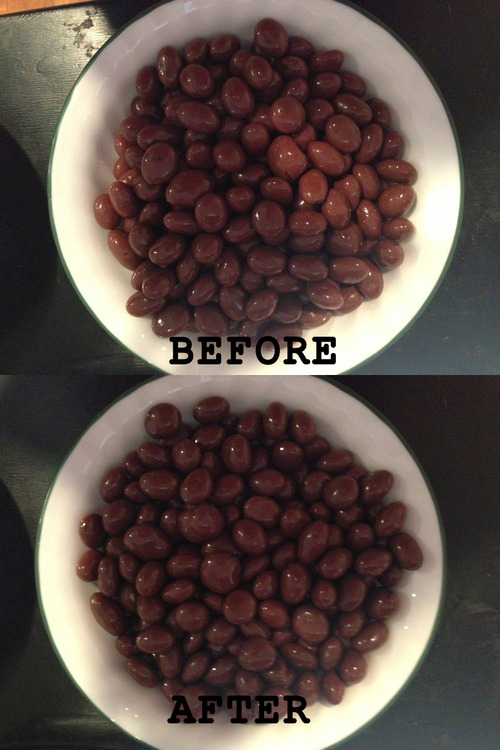
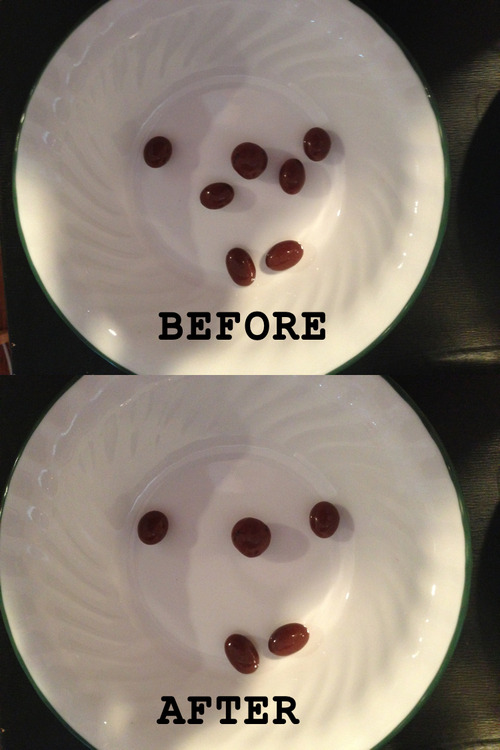
This is the bowl on the left. I might have changed the number of raisins from one picture to the next. Can you tell me, did I add or remove raisins? How many? Did I leave the number the same?
You can’t tell for certain, can you? Adding or removing a raisin over here doesn’t seem to make much of a change to this bowl.
This is the bowl on the right. I might have changed the number of raisins from one picture to the next. Can you tell me, did I add or remove raisins? How many? Did I leave the number the same?
When there are so few raisins to start, any change made is really easy to spot, and makes a really significant difference.
This is why it is bad, even despicable, to take a character who was originally a character of color and make them white. But why it can be positive to take a character who was originally white and make them a character of color.
The white characters bowl is already so full that any change in number is almost meaningless (and is bound to be undone in mere minutes anyway, with the amount of new story creation going on), while the characters of color bowl changes hugely with each addition or subtraction, and any subtraction is a major loss.
This is also something to take in consideration when creating new characters. When you create a white character you have already, by the context of the larger culture, created a character with at least one feature that is not going to make a difference to the narratives at large. But every time you create a new character of color, you are changing something in our world.
I mean, imagine your party guests arrive
Oh my god they are adorable!
And they see their bowls
But before you hand them out you look right into the little black girls’s eyes and take two of her seven raisins and put them in the little white girl’s bowl.
I think she’d be totally justified in crying or leaving and yelling at you. Because how could you do that to a little girl? You were already giving the white girl so much more, and her so little, why would you do that? How could you justify yourself?
But on the other hand if you took two raisins from the white girl’s bowl and moved them over to the black girl’s bowl and the white girl looked at her bowl still full to the brim and decided your moving those raisins was unfair and she stomped and cried and yelled, well then she is a spoiled and entitled brat.
And if you are adding new raisins, it seems more important to add them to the bowl on the right. I mean, even if we added the both bowls at the same speed from now on (and we don’t) it would still take a long time before the numbers got big enough to make the difference we’ve already established insignificant.
And that’s the difference between whitewashing POC characters and making previously white characters POC. And that’s why every time a character’s race is ambiguous and we make them white, we’ve lost an opportunity.
*goes off to eat her chocolate covered raisins, which are no longer metaphors just snacks*
representation

Right now, the most common plot in Hollywood is White Male Finds His Inner Strength. That umbrella covers every movie from The Imitation Game to Taken 3 to, yes, The Interview.
We need a range of faces behind desks, behind cameras, and (as Chris Rock suggests) even behind sound-mixing boards … [Hollywood is] very much a white, male, friend-of-a-friend business. I’m not trying to bash white males. Some of my favorite movies were directed by white males! (Er, how could they not be?) Sure, I want to see more movies like Amma Asante’s mixed-race period piece Belle. But I also I wonder if the true test of diversity would be the inverse: say, when Ava DuVernay gets hired to direct Taken 4. Of course, why would she want to?
I’ve thought a lot about this from a few angles. Earlier this year I tried to figure out why there wasn’t a single hit romantic comedy in 2013. Not one cracked the top 100—because no major studio released one. No one likes to stick up for the middlebrow romantic comedy where a goofy blonde finds her handsome, dull prince. But that they’re not even getting made feels like the canary in the studio’s conformist, cartoon-superhero coal mine. It shows that Big Hollywood has placed all its chips on the young white male audience, and somehow still sees female-driven hits like Maleficent and Lucy and even The Hunger Games as outliers. (And The Hunger Games movies are made by Lionsgate—no major studio was smart enough to buy the rights, even though they’ve made so much cash that Lionsgate has leveled up.)
Sure, The 400 Blows belongs in the canon of the most important films of all time—Boyhood might, too—but watching both films, I felt exhausted in the exact same way. Why must I always care about a boy’s coming-of-age story, when there are so few movies similarly tracking and mythologizing the growth of a girl?
Amy Nicholson, “Why I’m Just About the Only Critic Who Found Boyhood Less than Fascinating.” (via oscarisaaacs)
What I hate the most about Superwholock fandom bloggers: they flip out when ½ of their creepy fetishised gay ship has a relationship with a woman. “No! John/Castiel/The Doctor can’t be with Mary/Meg/Rose! He loves Sherlock/Dean/Captain Jack!!” Well, mewling infants, I have some news for you. A. bisexuality exists. It’s bi erasure and plain ol’ misogyny to say that your character could never ever be bi even though he’s had relationships with women and then to shit talk any woman he’s been with. B. ship whatever you want but your ship is not canon and never will be. Ever. Yeah there was that time captain jack kissed the doctor and we were all overjoyed but tbh that was the punchline of a bad joke. And all that shitty queerbaiting in Sherlock is going to remain just that: queerbaiting. So get over it.
((C. All three of these shows are misogynistic, have absolutely no representation, and are just poorly written. Moffat can eat a bag of dicks.))
Except…Captain Jack’s kissing the Doctor wasn’t the punchline of a bad joke?! Not remotely? I mean – this was a scene written by a gay man of a bi/pansexual man played by a gay man kissing another man. It was the first gay kiss in Doctor Who’s history (and remains still only one of two, sadly). It was one of very few gay kisses on British TV to be broadcast before the watershed and on a then explicitly ‘family’ show, and was written and acted specifically to undermine the concept of bisexuality being a joke:
“I thought that’s it, however I kiss Rose, I have to kiss him [the Doctor] in exactly the same way…I kiss them basically with the same tenderness. So it wasn’t like a kiss of ‘I finally get to kiss them’, it was a kiss of ‘I really care for you, I love you deeply and I have to say goodbye.” [John Barrowman, Doctor Who Confidential 1×13]
I won’t think too hard about your motivations for labelling that ‘the punchline to a bad joke’ – it’ll break my brain – but on the subject of whether Doctor/Jack was canon (as opposed to ‘a creepy fetishised gay ship’), it was, albeit one-sidedly: Jack flirts with the Doctor [Boomtown], speaks to him tenderly, cups his face and kisses him on the lips [The Parting Of The Ways; see above], and sympathetizes with Martha’s unrequited love for the Doctor with a ‘you too, huh?’ [The Sound Of Drums]. No, they weren’t in a official romantic relationship, but it certainly wasn’t a platonic relationship either. All those episodes were written by Russell T Davies, who is gay, as I mentioned before. His motivation for creating Jack was:
‘It’s time you introduce bisexuals properly into mainstream television” [source]
And Jack’s reactions to the Doctor – the flirting, the kiss – were a big part of that. So –
-I have no idea why everyone’s so up for erasing his importance these days. There are negative aspects to his portrayal, negative aspects to his creators and negative aspects to his fans – but, er…
…even if you accept the premise that a disproportionate amount of Doctor Who fandom is pushing Rose aside in favour of Doctor/Jack, otherwise erasing his bi/pansexuality, or treating Rose as a threat or an irritant (ten pages into the Doctor x Jack tag and I’ve still got nothing) – this post still doesn’t make any sense with regards to actual representation and fandom’s reactions to it! Bloody hell, the Doctor/Jack kiss wasn’t that long ago! How the hell are people finding it ‘a joke’ already?!