

If you were made of air, if you were air,
if you were made of water, if you were water,
if you were made of fire, if you were fire,
if you were made of stone, if you were stone,
or if you were none of these, but really death,
the answer is yes, yes.
Generally when I say ‘I ship E/R’ I mean ‘it was a sad, ambiguous little unrequited love story about the power of placing another person above yourself, and it makes me cry, and I love it’ rather than…
…well, than anything else really. I sort of like the ambiguity- was Grantaire more in love with Enjolras the man or Enjolras the idea, did it really matter since they were practically one and the same, would they have ever been able to have a healthy relationship under other circumstances (probably not, but you never know), what did Enjolras think of him in their last moments…
So half the time it’s not even a requited love when I read or write about it, but that’s okay, because I always figured the…well, the point of that whole tiny little subplot was basically ‘even if you’re about as lost and low as a person can get, if you love someone enough to die for them that’s all you need’. (You sentimental old bastard, Hugo, you pulled that trick a lot…)
I think for me, the ‘count me in’, the last request, the handgrasp and the smile is all I need, I like it best as a love-as-redemption story rather than a they-lived-happily-ever-after story. Although that’s nice too of course…
There’s always been this fandom-wide headcanon that Grantaire’s good with kids, and he generally gets assigned the role of Gavroche’s protector in the musical. (Although Courfeyrac got it in the movie.) And he knows about different types of Paris gamins, and he offers Gavroche’s friend Navet breakfast and refers to him by name when he’s left. And then I ran across this, in the middle of one of his epic rants (bolding mine as always…):
It’s like children, those who want them have none, and those who don’t want them have them.
Which I think is translated differently in other editions, so for all I know that might not even be what he’s saying. And of course he may not be referring to himself (although I like to think the second part is a reference to the Thenardiers), and oh god no he wouldn’t be a good father unless he cleaned himself up. But hmmm…food for thought.
Okay, so today has definitely been a day for talking about writing rather than getting any actual writing done, but after listening (for the first time in almost- gasp! – a week!) to ‘My Eyes’ from the Dr Horrible soundtrack, suddenly I DESPERATELY WANT a completely off-the-wall Les Mis AU with Grantaire as a hopeless, unenthusiastic, very ineffective supervillain falling utterly in love with Actual Superhero Enjolras.
Extra Les Miserables meta very quickly but this has been on my mind and I had to share it – I don’t think anyone else has commented on it. So, Grantaire’s introduction – the first thing he mocks:
“This was his axiom: “There is but one certainty, my full glass.” He sneered at all devotion in all parties, the father as well as the brother, Robespierre junior as well as Loizerolles. “They are greatly in advance to be dead,” he exclaimed.”
and yet he cares for his friends “A profound contradiction; for an affection is a conviction”
How profound? Well, let’s take a quick look at Robespierre Junior and Loizerolles:
“someone cried, ‘The blood of Danton chokes you!’ For the last time Maximilien’s voice was heard in the Convention. ‘So it’s Danton you’re avenging?’ he asked. This reminded them all of their cowardice when Danton was arrested and this doubled their rage. A deputy cried, ‘I demand the arrest of Robespierre’.
There was a second’s hesitation and then immense applause. Augustin struggled down to the floor of the Convention where his brother stood alone looking up at the tiers. He took Maximilien’s arm and shouted out, ‘I am as guilty as my brother; I share his virtues, I will share his fate. I demand a decree of accusation against me’. Maximilien tried to speak for his brother and force him back, but he still could not make himself heard.”
And the eyewitness report of Arnault, on the execution of the Robespierrists:‘Before the head of Robespierre many heads fell, the proud Saint-Just, the ignoble Hanriot and also that of Robespierre the Younger, the accomplice of his brother’s revolt but not of his tyranny. The public exasperation was so great in the day of vengeance and so odious had been the object that this generous devotion did not obtain pity.’
Historiographical views are actually mixed on this, and Young argues that the younger Robespierre had enough political enemies to be executed either way – as a deputy/military commander he just wasn’t as closely involved as his brother with events in Paris.
Meanwhile, Loizerolles was the father of a lawyer held at St Lazare and sentenced to death, who presented himself in his place, and was guillotined on the 8th Thermidor in place of his own son, just one day before the fall of the Committee of Public Safety. There are two versions of the story – this, as told by his son himself, is almost certainly the accurate version, but the story seems to be then simplified. A Jadin opera of 1795, Loizerolles ou L’Héroïsme paternel, honoured his touching devotion and self-sacrifice, and his son Francois-Simon Aved de Loizerolles, who wrote poetry and survived thanks to the fall of Robespierre mentioned above, published a poem in 1813 memorialising his father’s devotion in three cantos.
Loizerolles was imprisoned with Andre Chenier in St Lazare, who was executed on 7th Thermidor, two days before the fall of Robespierre; Chenier is the poet whose death is lamented both by Jean Prouvaire and M. Gillenormand within the text of Les Miserables. According to Wikipedia (open source!): “In 1828, Charles Augustin Sainte-Beuve praised Chénier as an heroic forerunner of the Romantic movement and a precursor of Victor Hugo. Chénier, he said, had “inspired and determined” Romanticism.”
That’s 7, 8, 9 Thermidor 1794, from “Andre Chenier” to “the father” to “the brother”, in terms of the French Revolutionary references to Enjolras’ friends from Jean Prouvaire onwards.
AND EXTRA EDIT TO SAY: the other comparison we get is Enjolras confining himself to Robespierre while Combeferre is into Condorcet and Danton, which is in very obvious contrast to actual Saint-Just & Robespierre’s dealings with Danton and Condorcet. Les Amis are shown in happy dissent and discussion with one another for good reason! It’s important to be able to deal with political disagreements non-fatally!
Uh, and the opening scene of Andromaque is indeed pretty appropriate and very sadly ironic for two people about to be executed:
ORESTES: “Yes, reunited with so true a friend
I think my destiny will soon amend
Harsh fortune seems already less severe
Because she’s brought about our meeting here
How strange that, landing on this bitter shore
Orestes should find Pylades once more”
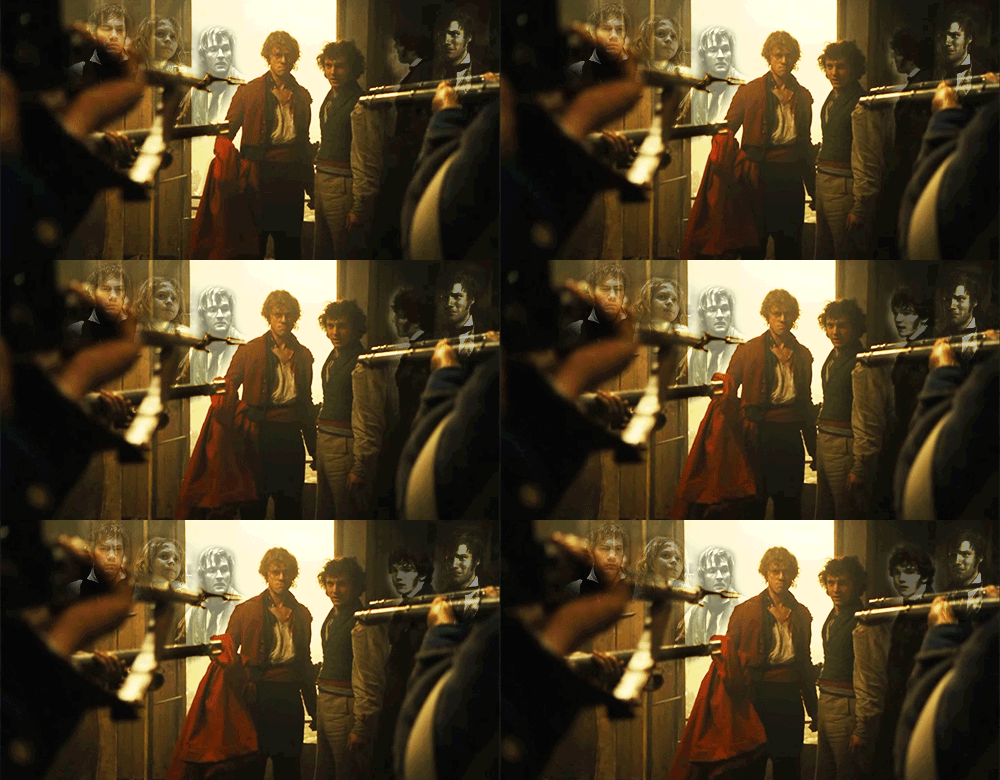
Phantom faces at the windows
Inspired by this amazing drawing and this post. This took way too long to make and it’s still shit. Well whatever.
*flails madly* No it isn’t shit it’s brilliant I can’t believe how much good has come out of that one tiny post *dies*


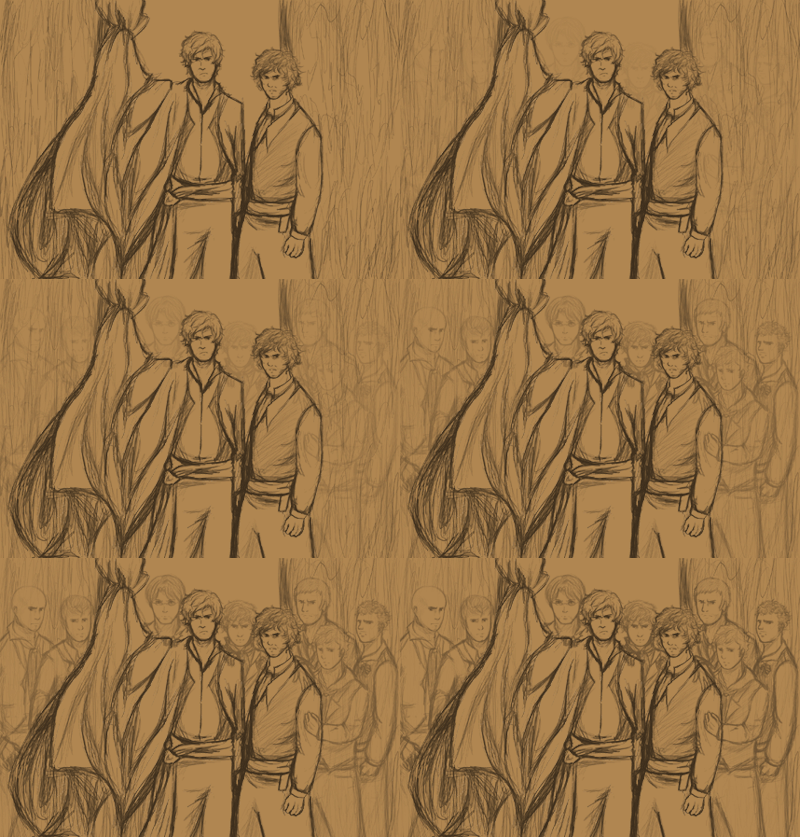
This was based on this post… and I died doing this because, ugh, feels *creys*
OH MY GOD
OH MY GOD
SOMEONE DID IT
AND IT’S BEAUTIFUL
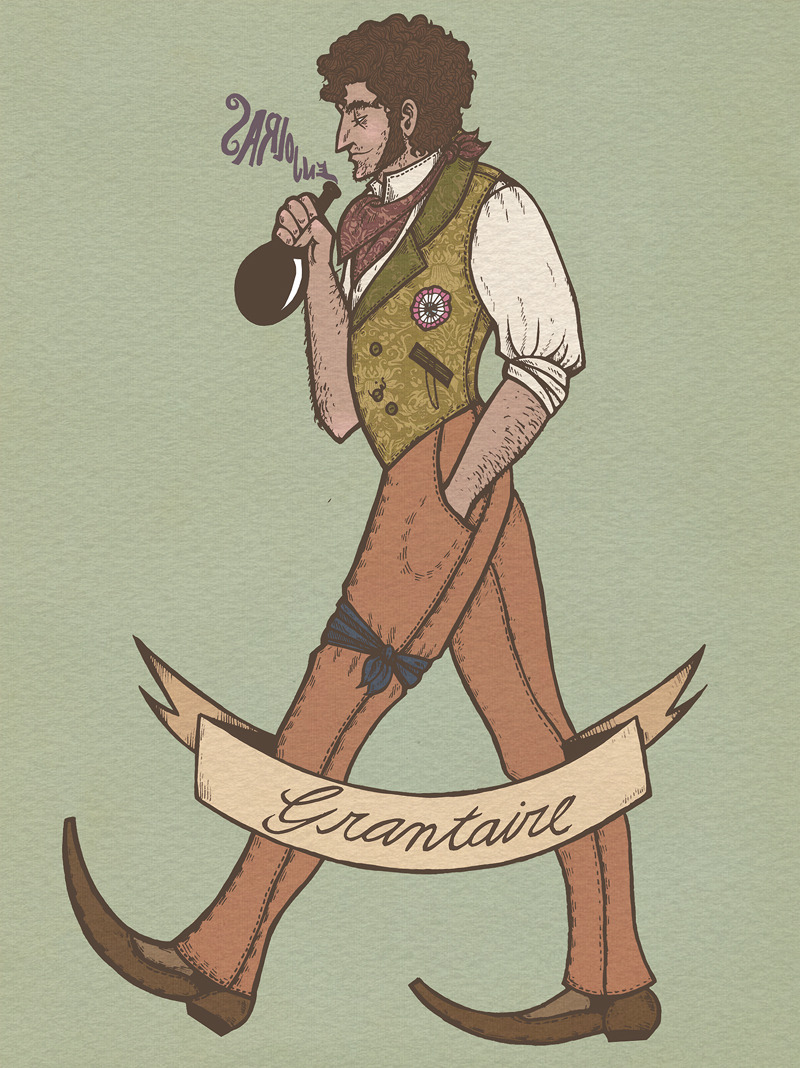
The Friends of the ABC
A Group Which Barely Missed Becoming Historic
- Grantaire
“A rover, a gambler, a libertine, often drunk, he displeased these young dreamers by humming incessantly: “J’aimons les filles, et j’aimons le bon vin.” Air: Vive Henri IV. However, this sceptic had one fanaticism…”


