Have you seen our new exhibit in the Ellis Library Colonnade? It’s called Libraries at War, and it features selections from the Poster Collection dealing with libraries in World War I and World War II.
The Library War Service was created in 1917. It was directed by Herbert Putnam, then Librarian of Congress, and administered by the American Library Association.
In an enormous effort to send books and other
reading material to the American forces, the ALA distributed about ten million
books and magazines; collected five million dollars from public donations;
supplied library collections to more than 500 locations, including military
hospitals; and with the financial help of Carnegie Corporation, established 36
camp and military base libraries.
During the Second World War more than seventeen
million books were collected through the National Defense Book Campaign
launched in 1941 and better known as the Victory Book Campaign.
Books were frequently
regarded as powerful ideological tools. President Roosevelt wrote: “No man and
no force can take from the world the books that embody man’s eternal fight
against tyranny. In this war, we know,
books are weapons.”
It was very hard to take good photos through glass AND mylar, but be assured – in person, these posters are quite striking. If you’re in Columbia, stop by and take a look.
February is Black History Month and, although I myself am not Black, I believe there is importance in knowing history.
The tweet above is, in my opinion, a prime example of why Black History Month is important and why Black History matters, especially Black History that is rarely discussed. In a world where mainstream history tends to overlook the stories of Black individuals it is easy to make assumptions that People of Color were not there to witness events such as the sinking of the Titanic, and due to the ignored presence of said individuals, it is easy to dismiss tragedies that seemingly did not affect one’s own people. Despite Hollywood depictions of centuries past, Black people are everywhere. From the eruption of Vesuvius to Elizabethan England, Black people have been present in history. (On a side note, in the 2015 movie ‘Pompeii’, Adewale Akinnuoye-Agbaje portrays the role of a slave/gladiator but I remember while watching a documentary on the eruption of Vesuvius, a historian pointed out that there is evidence that one of the wealthiest families in Herculaneum, Pompeii’s often overlooked and much more interesting neighbor, was a Black family. Why couldn’t we get a movie about them instead?)
The finely dressed gentleman above is Joseph Philippe Lemercier Laroche (b. May 26, 1886, d. April 15, 1912) along with his french wife Juliette (1889-1980) and their two daughters, Simonne (1909-1973) and Louise (1910-1998).
Joseph was born in Haiti and had traveled to France at the age of fifteen to study engineering, while in France he met Juliette Lafargue and they were married in March of 1908.
After Louise’s birth, the couple decided to move their growing family to Haiti in order to escape discrimination and provide for their children, especially Louise who had been born prematurely and needed constant care.
In 1912, Juliette discovered she was pregnant once more and the couple decided to bring forward their journey by a year. Joseph’s mother purchased first-class tickets on Le France for them but because of the ship’s strict policies regarding children (they were to be kept separate from their parents, in the nursery, even during dinner), they transferred their tickets for second-class accommodations on board RMS Titanic.
The family boarded RMS Titanic through the Nomadic in Cherbourg on the evening of April 10.
It is believed that Joseph and his family kept to themselves throughout the voyage, he was no doubt a loving father and most likely spent his final days enjoying the company of his wife and two daughters. Any other information about their time on board has been lost to history; due to uninterested historians, no doubt.
On the evening of April 14, the RMS Titanic sideswiped an iceberg approximately 400 miles from shore, and after two hours and forty minutes, sank beneath the surface of the North Atlantic, descending, in pieces, two and a half miles to the ocean floor.
As the lifeboats were being lowered, Joseph made sure his family were safely taken off the ship before dying a heroic death.
When the Carpathia arrived on the scene early the next morning, Simonne and Louise were raised onto the ship in burlap sacks for they were too small to climb the swinging rope ladder that was lowered on the side of the ship.
Upon arriving in New York, alone and with no one to meet her at the dock, Juliette decided to take her daughters back to France. On December 17, 1912, she gave birth to a boy whom she named Joseph Philippe Lemercier Laroche, Jr.
Years later, in 1918, Juliette successfully sued the White Star Line for 150,000 francs and used the money to set up a business in order to provide for her three children.
In March of 1995, Louise Laroche, now an old woman, stepped on board the Nomadic; the last place where her father Joseph had been before boarding Titanic; for the first time in eighty-five years. She was also present in the unveiling of a plaque dedicated to the passengers that departed from Cherbourg.
History is important, especially history that is not regularly discussed or covered by mainstream media, and in this month it is especially important to remember the many Individuals of Color that, without proper research, we would not know about. Black Lives Matter and Black History Matters. It is everywhere yet it is usually, unfortunately, overlooked. I believe we should all look for the obscure and hidden stories in Black History, especially in this time (not just because its February), and share these stories with others and celebrate the heroic People of Color that are no longer with us.
Hamilton was not content to write [under the pseudonym] Camillus alone. Two days after his second essay appeared, he began to publish, in the same paper, a parallel series as ‘Philo Camillus.’ For several weeks, Philo Camillus indulged in extravagant praise of Camillus and kept up a running attack on their republican adversaries. The prolific Hamilton was now writing pseudonymous commentaries on his own pseudonymous essays. He also tossed in two trenchant essays under the name ‘Horatius’ in which he accused Jeffersonians of ‘a servile and criminal subserviency to the views of France.’
Ron Chernow, Alexander Hamilton
alexander hamilton joined a forum and created multiple accounts so he could agree with himself in a political discussion thread
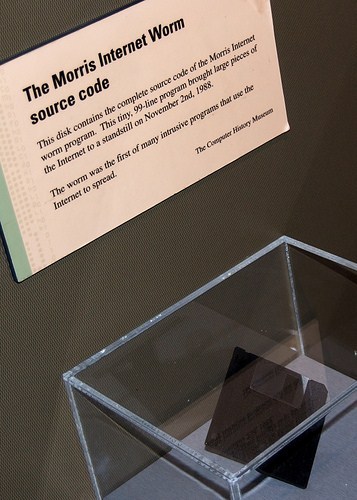
The Morris worm or Internet worm of November 2, 1988 was one of the first computer worms distributed via the Internet. It was written by a student at Cornell University, Robert Tappan Morris, and launched on November 2, 1988 from MIT.
It’s trapped on a floppy tho this is some dark shit it has been denied its purpose forever bound to this obsolete storage
am i glad it’s in there and we’re out here
people reading fantasy novels ask “why did the ancient ones seal the evil away for ten thousand years instead of just killing it” but then we go ahead and do this shit
We have learned nothing from every fantasy novel ever O.O
The best part, from the wiki article: “According to its creator, the Morris worm was not written to cause damage, but to gauge the size of the Internet.”
It was intended to do good, but the programmer made a mistake and it got out of hand, becoming viral.
I have been writing with a vile old pen the whole week, which is excessively ungallant. The fault is in the Quill. I have mended it and still it is very much inclin’d to make blind e’s. However these last lines are in a much better style of penmanship though a little disfigured by the smear of black currant jelly, which has made a little mark on one of the Pages of Brown’s Ben Jonson, the very best book he has. I have lick’d it but it remains very purple. I did not know whether to say purple or blue, so in the mixture of the thought wrote purplue which may be an excellent name for a colour made up of those two, and would suit well to start next spring.
– John Keats
This is like the funniest thing in the world to me for so many reasons
noted Romantic poet complaining about his pen being leaky like a petulant two year old
also spilling jelly on his friends book
and immediately trying to cover it up by LICKING IT #relatable
Let’s not forget to acknowledge Alexandre Dumas this Black History Month
The writer of two of the most well known stories worldwide, The Three Musketeers and The Count of Monte Cristo was a black man.
That’s excellence.
Let’s not forget that he was played on screen by a white man. And the fact that he was black is barely ever mentioned or the book he wrote inspired by his experiences.
Other things not to forget about Alexandre Dumas:
chose to take on his slave grandmother’s last name, Dumas, like his father did before him.
grew up too poor for formal education, so was largely self-taught, including becoming a prolific reader, multilingual, well-travelled, and a foodie, resulting in his writing both a combination encyclopedia/cookbook (which just— is fucking outrageous to me) AND the adaptation of The Nutcracker on which Tchaikovsky based his ballet
he also wrote a LOOOOT of nonfiction and fiction about history, politics, and revolution, bc he was pro-monarchy, but a radical cuss, and that got him in a lot of hot water at home and abroad.
even beyond that, he generally put up with a lot of racist bullshit in France, so he went and wrote a novel about colonialism and a BLATANTLY self-insert anti-slavery vigilante hero (which he then cribbed from to write the Count of Monte Cristo, the main character of which, Edmond Dantés, Dumas also based on himself).
(…a novel which also features a LOAD of PoC beyond the Count, and at LEAST one queer character, btw, bc EVERY MOVIE ADAPTATION OF ANYTHING BY DUMAS IS A LIE; seriously, at LEAST one of the four Musketeers is Black, y’all.)
famously, when some fuckshit or other wanted to come at Dumas with some anti-Black foolishness, Dumas replied, “My father was a mulatto, my grandfather was a Negro, and my great-grandfather a monkey. You see, Sir, my family starts where yours ends.”
for the bicentennial of his birthday, Pres. Jacques Cirac was like, “…sorry about the hella racism,” and had Dumas’s ashes reinterred at the Panthéon of Paris, bc if you’re gonna keep the corpses of the cream of the crop all together, Dumas’s more widely read and translated than literally everybody else.
and they are still finding stuff old dude wrote, seriously; like discovering “lost” works as recently as 2002, publishing stuff for the first time as recently as 2005.
ALSO IMPORTANT:
SWAG
I am absolutely ashamed to admit I had NO idea Dumas was black.
daddy general dumas was an immense fierce french warrior who was a 6 foot plus, stunningly gorgeous and charismatic Black gentleman
he invaded egypt
the native egyptians said “is this napoleon? this must be napoleon. we for one welcome our majestic new overlord”
then napoleon showed up
napoleon has all the presence of yesterday’s plain Tesco hummus
the native egyptians were like “… no… no, we’ve thought very hard and we’ll have General Dumas actually”
this did not make napoleon happy
in fact it made him jealous
napoleon felt so emasculated that he launched a campaign of revenge against General Dumas, including taking away his pension, that probably inspired a lot of Alexandre’s rather satisfying scenes in which fathers are nobly avenged and the money-grubbing villains are rubbed in the mud
Imagine how pissed you have to be to engrave a rock
Ok but there was this guy called Ea-nasir who was a total crook and would actually cheat people ought of good copper and sell them shit instead. The amount of correspondences complaining to and about this guy are HILARIOUS.
Are you telling me we know about a specific guy who lived 5000 years ago, by name, because he was a huge asshole
More like 4000 years ago but yes. Ea-nasir and his dodgy business deals.
And we haven’t even touched on the true hilarity of the situation yet. Consider two additional facts:
He wasn’t just into copper trading. There are letters complaining about Ea-nasir’s business practices with respect to everything from kitchenwares to real estate speculation to second-hand clothing. The guy was everywhere.
The majority of the surviving correspondences regarding Ea-nasir were recovered from one particular room in a building that is believed to have been Ea-nasir’s own house.
Like, these are clay tablets. They’re bulky, fragile, and difficult to store. They typically weren’t kept long-term unless they contained financial records or other vital information (which is why we have huge reams of financial data about ancient Babylon in spite of how little we know about the actual culture: most of the surviving tablets are commercial inventories, bills of sale, etc.).
But this guy, this Ea-nasir, he kept all of his angry letters – hundreds of them – and meticulously filed and preserved them in a dedicated room in his house. What kind of guy does that?
Fun fact: According to Greek legend there was a famous prostitute who managed to avoid a death sentence by showing the judges her boobs and arguing that it would be a crime against the Gods to destroy something so beautiful.
Before you ask, yes there are paintings of this. And yes, they’re amazing.
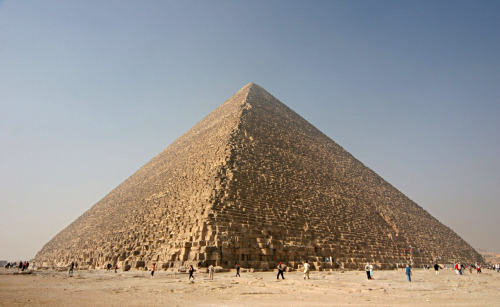
This is the Great Pyramid of King Khufu. Everybody knows the Great Pyramid of King Khufu, but you probably don’t know about the Shit Pyramids of his father, King Sneferu. This is a shame, because they are amazing.
When King Sneferu came to the throne of Egypt, the cool thing that all the pharaohs had was a Step Pyramid, like the original one built by King Djoser and designed by Imhotep (not the mummy). King Sneferu could easily have had one one because his predecessor King Huni had died before his could be finished. All Sneferu had to do was step in and put the last few blocks on.
But King Sneferu had a vision. He didn’t want any old Step Pyramid. He was going to build Egypt’s first smooth-sided pyramid, and make King Huni’s pyramid way taller in the bargain. It didn’t work. The core of Huni’s pyramid couldn’t handle the modifications and nowadays the Step Pyramid at Meidum looks like this:
It’s not on a hill – that’s the outer layers of the pyramid that have fallen down all around it. The name of the structure in Arabic is Heram el-Kaddaab, which means something like The Sort-Of Pyramid.
Anyway, King Sneferu was understandably disappointed and made his pyramid-builders start over from scratch at a different site. Apparently having learned nothing about the Big Fat Nowhere that hubristic pyramid ambition was going to get him, this pyramid was designed to be even taller and pointier than the last effort! Too tall and pointy, in fact – the bedrock proved to be less stable than he might have hoped, and by the time the pyramid was half-finished stuff was already moving and cracking inside of it. There are ceilings in this pyramid that are to this day partially held up by wooden beams.
The builders seem to have panicked and decided that the only way to finish the pyramid without another disaster was to make the top half lighter than the bottom half. They did this by changing the angle of the slope, ending up with a pyramid that looks like this:
Egyptologists call this one the Bent Pyramid for fairly obvious reasons. Uniquely among Egyptian Pyramids, it has most of its smooth outer blocks intact, rather than having them all stolen to build other stuff (most of medieval Cairo is built from the skin of the Giza pyramids). I’m guessing this is because nobody dared touch the thing for fear the whole structure would come down like a giant limestone game of Jenga.
I’m sure the pyramid-builders were very proud of this solution. Sneferu appears to have been less so. He had them move over about half a mile and start over. Again. Why only half a mile when he had them move 34 miles between the Sort-of Pyramid and the Bent Pyramid is a mystery. I think he wanted to keep them in sight of the Bent Pyramid so they could look at it and feel ashamed every once in a while.
And there they built Sneferu’s third pyramid, which is called the Red Pyramid. As pyramids go, it’s a very cautious one – it’s got the shallowest slope rise of any Egyptian pyramid, and while it’s the same height as the Bent Pyramid it spreads its weight over a much greater base area, making it far more stable. Sneferu seems to have been happy with this one, because he was buried in it. Either that, or after a forty-eight-year reign he just finally died and that was the pyramid they used because it was the nicest of the three.
These three pyramids together actually contain substantially more stone than the Great Pyramid of Sneferu’s son Khufu. By the time Sneferu died, his workforce had honed themselves into a lean, mean pyramid-building machine. They had already made every possible pyramid mistake. So when Khufu announced that he didn’t just want a great pyramid, but The Great Pyramid, these guys built him a pyramid so fucking great that we now think aliens must have done it.
It was as true in Ancient Egypt as it is now.
This is why I get so angry when people repeat that stupid “aliens built the pyramids” bullshit. Because like no, there is a detailed record of them building practice pyramids and trying and failing to get it right before the good ones were churned out.