ableism

Hollywood’s Disfigured Villain Trope Does Major Harm to Disabled People

Hollywood’s Disfigured Villain Trope Does Major Harm to Disabled People

sabbatine-wills-it:

thefingerfuckingfemalefury:

femhype:

weneeddiversebooks:

The idea that to be beautiful means to be good and to be disfigured means to be evil is not new. It’s a really tired, unoriginal trend in the movie industry, and only perpetuates damaging beliefs about individuals with facial differences.

👆

We REALLY need more stories that have characters who are scarred in some way as heroes or even just regular people in the supporting cast, instead of always having anyone who looks different or has some kind of scarring be  the villain

“Basic narrative conventions based on the fact that severe disfigurement unnerves and discomforts people are EVIL AND OPPRESSIVE” 

… no-one is saying that, but okay:

This is an old, unoriginal and extremely tired trope which constantly calls back to either a) “disfigured people must have done something to deserve it” b) “being disfigured will warp someone’s soul to the extent they end up a villain” or c) “I the writer/director believe this person is disgusting to look at, allow me to elaborate on that.” The effect this trope has on the self-esteem of people who have any sort of disfigurement is huge, as a quick glance through the notes of this post will tell you. Your average burn or acid attack survivor, coming to terms with having to look in the mirror and see something they’re not used to, are going to be delighted that the only people they see looking like themselves in the media are either villains, objects of pity, or both. (Or Deadpool. Go, Deadpool.)

People with facial disfigurements and disabilities have been complaining, rightly, about this trope for a long time. There are whole charities, in fact, devoted to the idea that just maaaaaaybe we in the twenty-first century can do a little bit better than “severe disfigurement unnerves and discomforts people”.


Hollywood’s Disfigured Villain Trope Does Major Harm to Disabled People

Hollywood’s Disfigured Villain Trope Does Major Harm to Disabled People

palamate:

weneeddiversebooks:

The idea that to be beautiful means to be good and to be disfigured means to be evil is not new. It’s a really tired, unoriginal trend in the movie industry, and only perpetuates damaging beliefs about individuals with facial differences.

I know this is going to be dismissed as some fucking snowflake nonsense but I work in a paediatric burns unit and the effects of this trope are gut wrenching and so, so damaging.


tumblr_nqmfy1intL1rcio35o1_1280

qjusttheletter:

i-need-that-seat:

wymstr:

cakesexuality:

wheeliewifee:

i-need-that-seat:

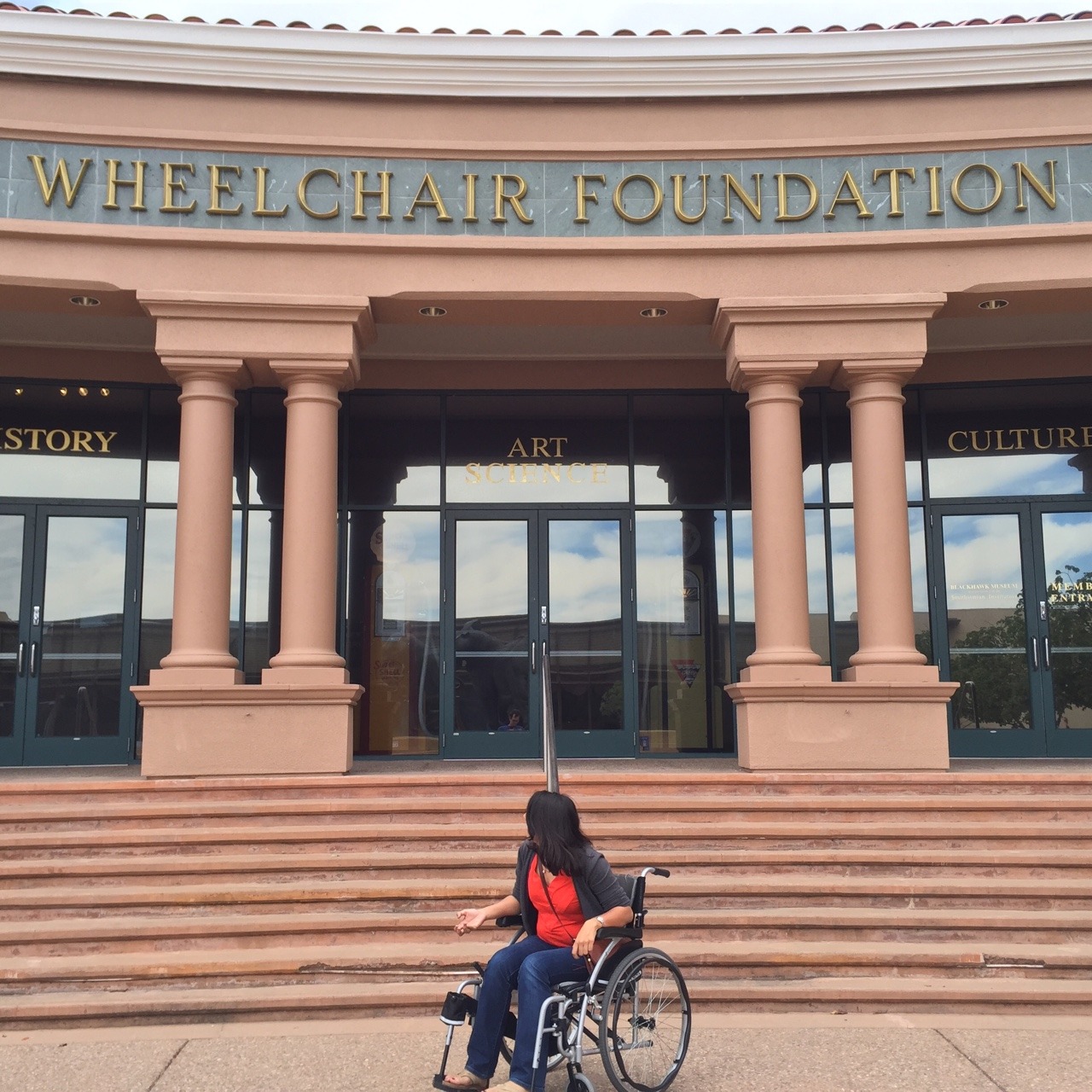
So…how do I get in??

#justcripplethings

I… I…

irony at its max

Honestly, I was cracking up when this photo was taken, because it’s just so ridiculous.

There was a ramp, but it was VERY well camouflaged. And when I did finally get in, there were these awful thick carpets that were next to impossible to wheel over.

Basically, no one thought this through.

[ID: photo of a wheelchair user at the bottom of a flight of steps with their back turned, looking up. the building behind them reads in large capital lettering, “wheelchair foundation”.] 

corinneduyvis:

buckysbears:

okay i havent seen anyone bring this up in regards to wonder woman and im disappointed in that so i figure i should talk about it a little bit 

now look, i really loved wonder woman. i did. i had some issues with it, like i will with any movie, but i did genuinely enjoy it. but i havent seen a single person talking about dr poison, and i think that needs to change 

namely the scar and accompanying prosthetic mask 

i was immediately saddened at her reveal, because here was another in a long tradition of movies to have disabled villains. namely superhero movies. i can really only speak to the marvel side of it, but this is a trend i’ve noticed a lot recently. (even guardians of the galaxy, which doesn’t feature a disabled villain as the main villain (though nebula does use prostheses) has a running gag about taking prostheses away from disabled people, like thats supposed to be funny) 

look at iron man 3. the whole movie was about people with physical disabilities being used for evil and doing evil things because of their disabilities. look at the disabled villains in logan, and how the main villain’s prosthesis was used to make him othered and intimidating (similarly to how the reveal of bucky’s prosthesis was meant to be intimidating in the winter soldier). and isn’t batman’s whole shtick is that all his villains are disabled?? 

when are we going to stop using disability as a code for evil?? 

i looked up the original character of dr poison in the comics, because i was SURE that the prosthetic was a design element they had (unfortunately) chosen to keep from there 

i was shocked to discover that the original character had no such thing. this was something they actually ADDED for the movie. and why? 

i read an interview where the director of wonder woman, patty jenkins, says that dr poison is “damaged” and thats why she wants to hurt people 

and i quote: “There is that way of being a damaged and dark person where you’re waiting for other people to face that wrath too.”

like how blatant can you be that you think disabled people are evil?? i was so completely disappointed when i read this, because though i was upset when i saw dr poison’s prosthetic in the movie, i thought SURELY it was coming from a place of ignorance, not malice. but i was proven wrong 

i know there’s a lot of creators on this site. a lot of artists, a lot of writers. can we just collectively agree now that we are going to STOP this trend?

of using prostheses to be intimidating.

of using disability to mark otherness and badness 

what kind of message is this sending to our disabled kids and teens? and us? 

what kind of message are we sending by continuing to support this trend without speaking out about it? 

we MUST DO BETTER. we absolutely must

for too long disabled people have had to absorb messages that their disabilities make them bad. this shit is vile. let it stop with us. let it stop now 

please feel free to discuss, especially if you’re a prosthesis user, which i’m not. we NEED to be talking about this and getting the idea that this is bad in our collective consciousness. i’ve seen discussion of the other worrisome elements in wonder woman but i’ve seen absolutely nothing about disability. let’s change that. speak up

ALL OF THIS.
ALL OF THIS. Her character bothered me immensely during the film, and especially during the climax.

There’s a way to do disabled villains right – and I think about this a lot since I want to get the balance right in my own writing – but this was nowhere close.

Gay culture is calling slight inconveniences homophobia

engineer-pearl0:

bisexualgambit:

Gay culture is calling slight inconveniences homophobia around your straight friends and watching them scramble to figure out if they should take you seriously or not

So you ask them to trust you, then play with their heads?

“Please don’t intentionally confuse people or refuse to explain the joke: you have no idea of their comprehension level and autistic people may feel horrible when you do it” lasted about as long as I thought it would.

theconcealedweapon:

If someone can lift 100 pounds, would you expect them to carry it with them everywhere they go?

If someone can sprint 20 miles per hour, would you expect them to be able to maintain that speed for a long distance?

Of course you wouldn’t. Being able to do something does not mean that you can do it for a long period of time.

So if a wheelchair user can stand to reach something or walk a short distance, why do you assume they don’t need the wheelchair?

tumblr_onpeg6VdFb1vyi8gio1_1280

andreashettle:

actuallyblind:

kimboosan:

actuallyblind:

[Image: tweet by Titanium Cranium (@FelicityTC) including three screenshots of a Harry potter book in three different formats on Amazon. Text:

“Harry Potter on Amazon –

Print: $6.39
Audio: $44.99
Braille: $100.00

#CripTax”]

So, let me explain this a bit.

The defenders of CripTax prices will say that those prices cover the cost of production. This is, without a doubt, true. I work at a university where we often have to take written materials and convert them into braille – it takes a LOT of people hours, special software, and a braille embosser.

But those defenders of higher prices are reversing the argument to justify fleecing disabled readers.

What do I mean by that?

Braille is not magic. It is done by taking plain text and feeding it through fairly affordable translation software, creating a document that can easily be printed in braille.

All that time and effort and special software? IS NOT FOR THE BRAILLE.

It is to take the document provided by the publisher (usually in PDF format, the same file they send to the printers) and turn it into plain, unadorned text, by hand. Text has to be “stripped” (OCR/text recognition); images have to be described; footnotes have to be embedded; special pullouts and other formatting shifted or removed. 

Printing in braille is cheap; reverse engineering a finished text to print it in braille IS NOT.

Same with those audio books. After a book is completed and, often, after it has already been published, the publisher arranges to have the book recorded by a professional voice actor/reader, which usually also involves a recording producer, if not a recording studio, which all stacks up to $$, no two ways about it.

However: that cost? IS RARELY FACTORED INTO THE BUDGET OF PRINTING A BOOK.

Oh, it might be, if the author is JK Rowling and it is well known that readers will want audio versions right away. But most of the time, nope, the audio book is produced only after the hard copy book has become a decent seller, and so it’s an extra cost which is claimed must be covered by making the audio version extra expensive to buy. (Even then it’s somewhat ridiculous, since honestly, creating an audio book is, in the end, cheaper than printing, factoring in the cost of paper.)

If publishers factored audio book production into the assumed costs of publishing a book, they would have very little reason to price it higher.

If publishers factored in creating a “plain text” file – including having editors/authors describe images – that could be used to print braille copies or to be used with refreshable braille readers (electronic pinboards, basically), then there would be zero reason to price those books higher.

tl;dr:
Yes, it’s a #criptax, and the excuse that “those formats are more expensive to produce so they have to be priced higher” is only true if you completely throw out the premise that publishers have an obligation to account for disabled readers when they are actually budgeting for and publishing the book.

I’m really glad you brought this up, because this is exactly the sort of argument thatpeople try to use to justify inaccessibility in all kinds of areas. When we tell a company that their website or appliance or piece of technology isn’t accessible, they frequently tell us that they are sorry to hear that but that the accessibility is too expensive and time-consuming to add in now. There is also a provision in the law that allows companies to not bother including accessibility in their products if the cost of building in the accessibility is more than 5% of the total cost to build the whole product in the US.

That seems reasonable on the surface, doesn’t it? Except here’s the thing—the accessibility should have been a part of the original plans to begin with and designed in from the very beginning and should have been considered a necessary element and just another ordinary part of the cost of producing the product, not some extra feature that can be opted out of if it’s too expensive. The problem is that these companies do not understand the fact that if you cannot afford to build the product with the accessibility included, then you cannot afford to build the product and that is that. It’s exactly the same as not being able to afford to make the product with all elements up to safety and health codes and standards. If you can’t afford to meet the legal standards, then you can’t afford to make the product, and it’s that simple. Accessibility is not an exception to this and it should not be considered as such. It should be just as much an ordinary required part of the design process as any other element, not an extra, shiny, fancy feature that you can just choose not to bother with if it costs a little bit of money.

Accessibility should be part of the standard design process just as much as safety codes and health standards and other legal regulations. The ADA has existed for 20 years so companies have had ample time to catch up and learn to plan for accessibility from the beginning as a part of the standard required design process. If you can’t afford to create the product fully up to code, standards, and accessibility laws, then you simply can’t afford to make the product. No excuses, no exceptions.
I have often said that, very often, the high cost of disability accessibility is not actually for the accessibility itself. The actual high cost is often due to the lack of foresight and planning for accessibility from the design stage onwards.

Let me explain what I mean with an example. Take accessibility in a building. Usually making a building accessible means you need things like braille signage, ramps to entrances, wide doorways that leave plenty of room for a wheelchair to pass through, and so forth. If you design a new building from scratch to incorporate all of these design elements from the beginning, literally before the building is a hole in the ground, then the total cost of integrating accessible features into the building is less than one percent of the total cost of constructing that building.

On the other hand, if you don’t bother to account for the need for disability access and just build the building first, and then go, “oops, we didn’t design for accessibility”, then you will need to literally tear down parts of the building and reconstruct it from scratch. If this is your primary approach to accessibility, then of course the cost of accessibility may seem expensive. But it’s not actually the ramp or the wide door ways that are expensive. What is expensive is all the extra cost and effort of completely undoing parts of what you had already created wrongly so that you can recreate it correctly. In other words, the actual expense is the lack of planning ahead for accessibility.

This is the first I learned how books could be more cheaply accessible if this was planned for ahead of time. But it’s the same principle at work. Unfortunately, most people don’t understand all this and blame disabled people for wanting accessibility instead of blaming designers, architects, inventors and book publishers, and so forth, as well as the people responsible for contracting them, for having failed to consider the needs of disabled people when there was still time to integrate accessibility during the design and initial construction phase, when it could have been done cheaply.

What we need is for more designers, architects, inventors, book publishers, policy makers, program managers, and so forth to learn about the principles of universal design.

tumblr: we support all people of any neurotype! autistic headcanons welcome! FUCK AUTISM SPEAKS!
tumblr: now if you’ll excuse me, I’m just gonna go publicly shame this 15-year-old who couldn’t understand what was going on when I purposely mocked a special interest of his. lol what a cringelord

antihero-complex:

Hey, can we stop making fun of people who don’t understand sarcasm/jokes? Like allistic people will say “yeah, I support autistic people! #notapuzzlepiece” but then turn around and be like “Ha ha HA! Look that fucking LOSER who doesn’t understand SARCASM AND JOKES! LET’S PUBLICLY SHAME THEM HERE ON TUMBLR DOT COM”

Like I get it, you think autistic people are fun to laugh at, I’m used to that shit, I’ve been here on this Earth as an autistic person for 21 years. Just don’t pull that shit and then say that you love and support autistic people, okay?

(I’d rly like if some allistic people reblogged this, so it didn’t just say inside the community)