fysw:
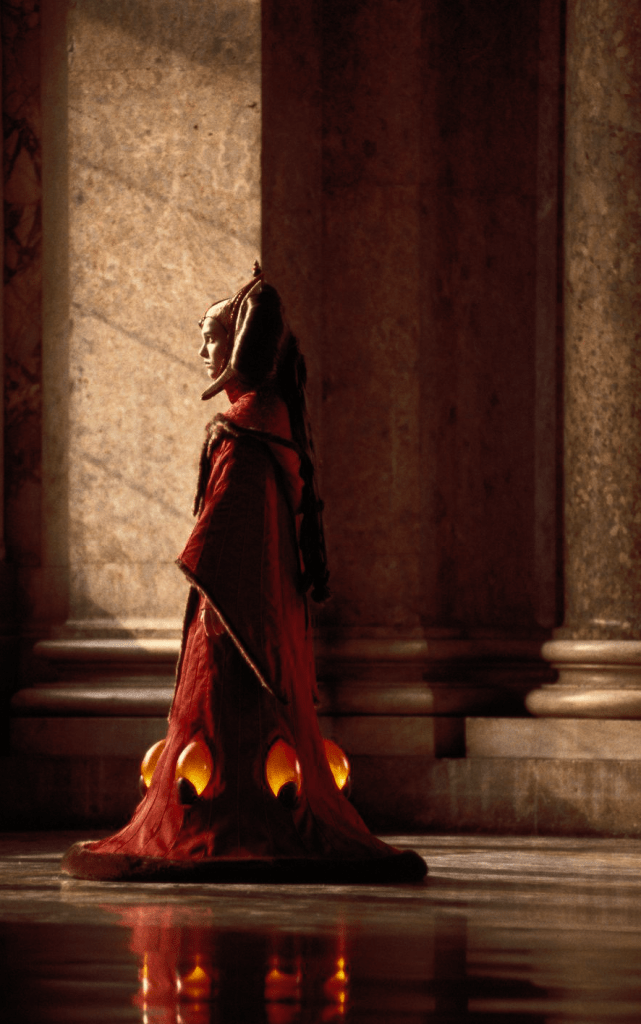
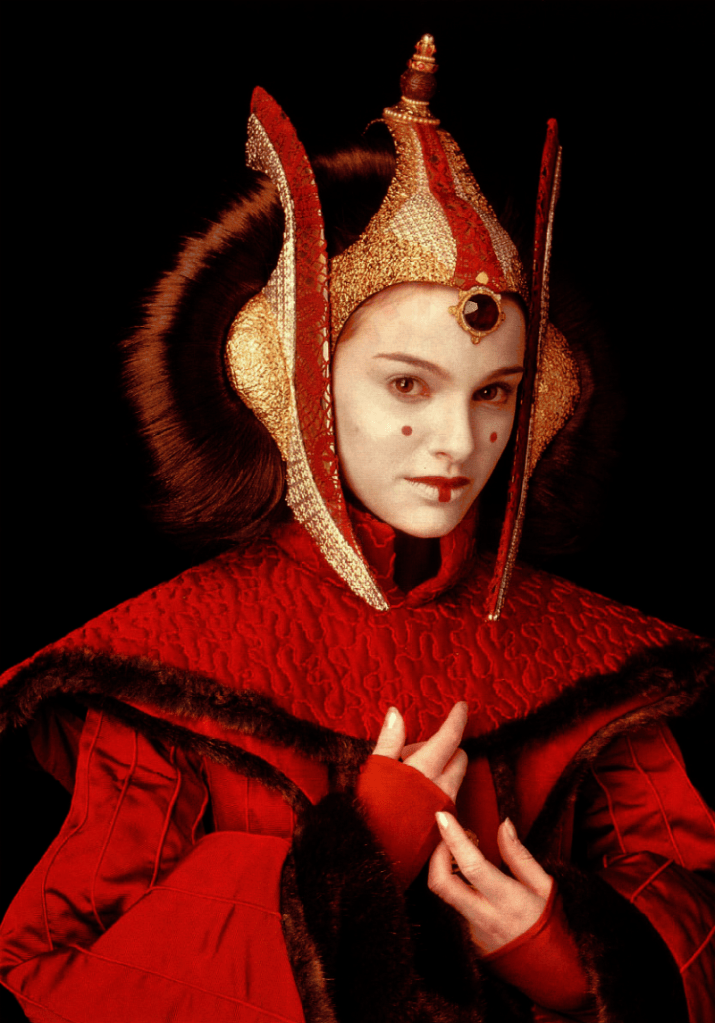
“George [Lucas] said that [The Phantom Menace] is definitely a costume drama,” recounted concept artist Iain McCaig. “Especially for the queen.” Indeed, Padmé Amidala wears a number of stylized dresses and exotic formal wear in The Phantom Menace, all of which required an incredible amount of design work, refinement, and craft for what was only a few minutes (or even seconds) of screen time. Yet the level of detail and the number of dresses the queen wears inThe Phantom Menace tell us about the tradition of Naboo, its culture, and its art, adding a significant layer to the Star Wars universe. And out of all those outfits, none are more impressive than Padmé’s iconic, regal gown. Inspiration for the design came from numerous countries and cultures, including Mongolia and Tibet, and much of the credit goes to McCaig and costume designer Trisha Biggar. Biggar created the costumes for the entire prequel trilogy, combining fabrics from all over the world and utilizing colors and tones that would work and excel with different lighting and movement, and say something about the character. Padmé’s throne room robe exemplifies this. It’s driven by a bold red, conveying the queen’s strong personality and willingness to fight, as would be seen in the film’s climax; it has strange details, like the large, oval jewels just above the hem, that somehow work, creating a symmetry with both the gown’s sleeves and accompanying three-pointed head piece; and it makes familiar Asian motifs seem completely Star Wars. It was an eye-opening costume when first seen in the trailer for The Phantom Menace, and it remains a stunning work of art. [x]
Trisha Biggar deserved an Oscar for Padme’s gowns.