space

There Is Water Flowing on Mars As We Speak

There Is Water Flowing on Mars As We Speak

mindblowingscience:

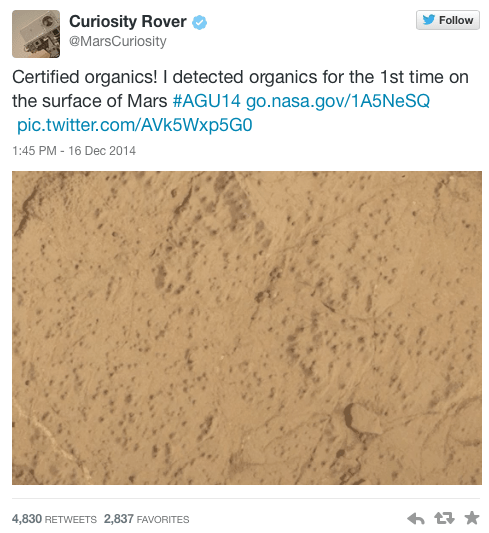
​We finally have a firm answer to one of the biggest mysteries of Mars. Not only did the Red Planet have water in the past, but it has it right now, flowing in a briny mix that keeps it from freezing. This confirms decades of observations.

In an article published in Nature Geoscience, a team lead by Lujendra Ojha of the Georgia Institute of Technology confirms that seasonal flows in mountainous regions of the planet correspond with the presence of briny water. The seasonal flows were first noticed in 2010, with water the strongest suspect. Spectral observations of season data from the Mars Reconnaissance Orbiter indicate the presence of hydrated salts on the surface, or water mixing with a thick brine of salts.


Continue Reading.

theverge:

Today’s Google Doodle celebrates the life of Sally Ride, who became the first American woman to travel into space on June 18th, 1983. As Doodle’s animator Olivia Huynh explains, Ride was breaking barriers her whole life: working at NASA as a physicist and later becoming an educator, reaching millions of children — especially girls and minority students — to give them the message that they too could have a career in science. 

Ride died on July 23rd, 2012 from pancreatic cancer, with today’s Doodle marking what would have been her 64th birthday.

otakukeith:

spaceplasma:

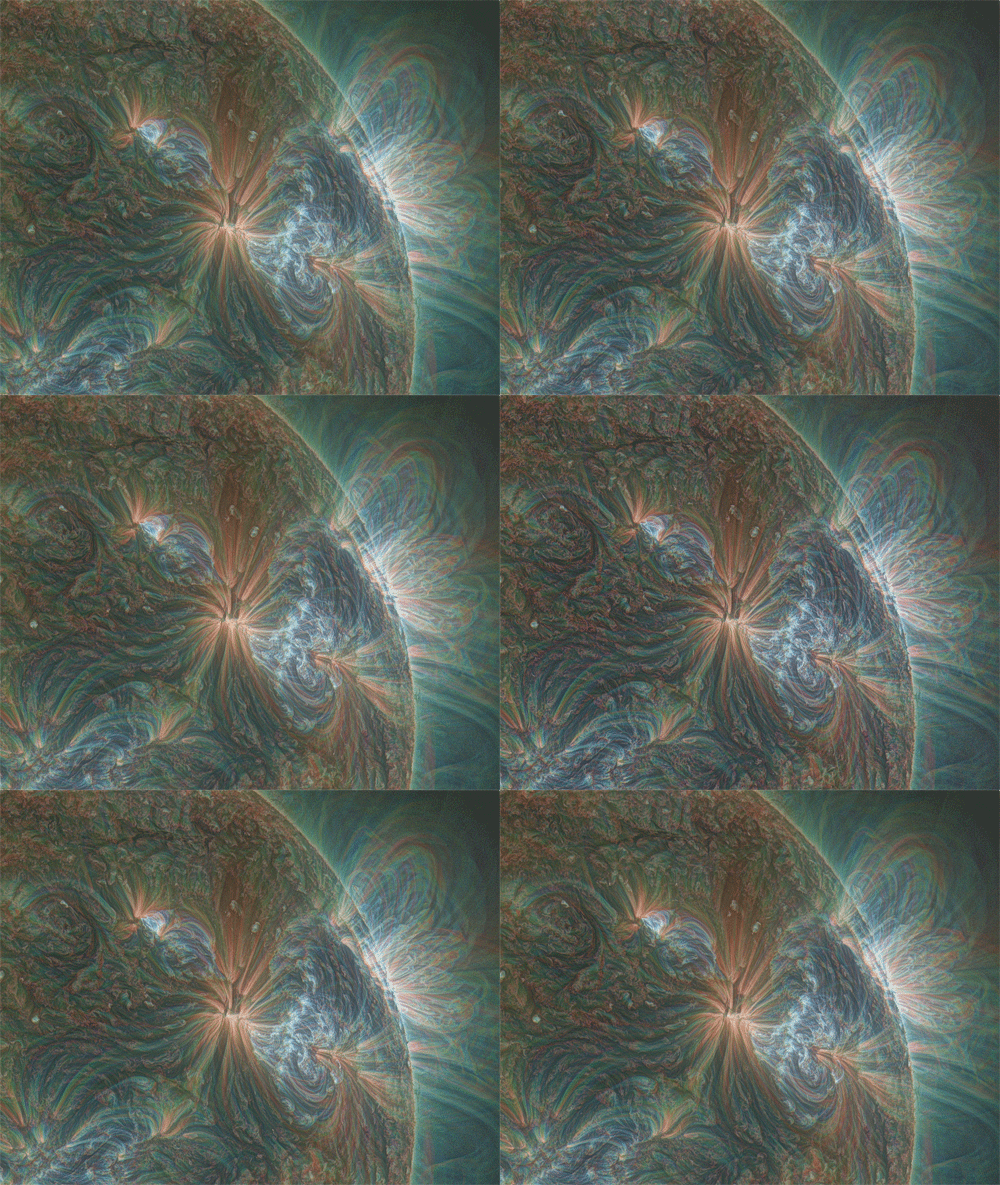
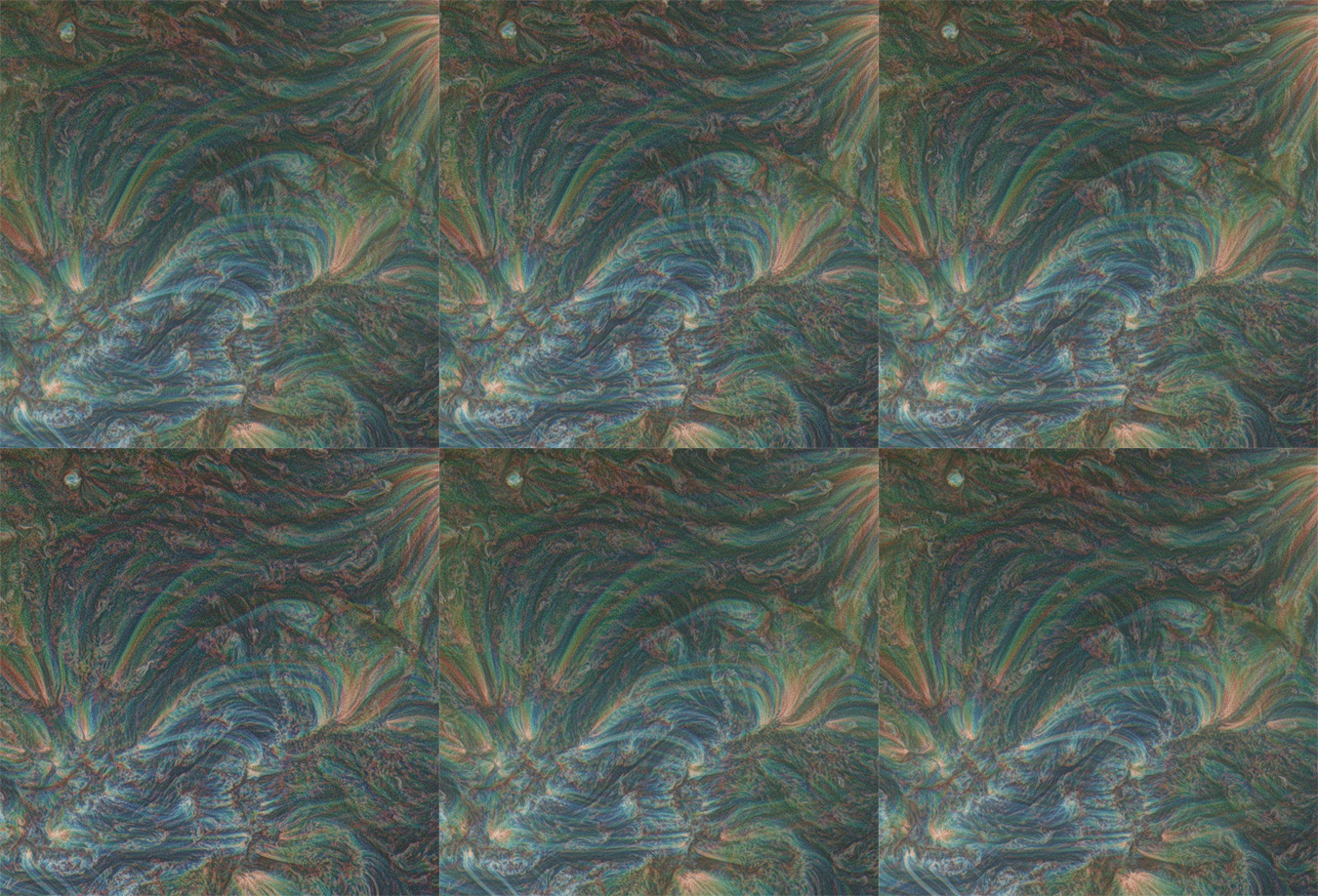
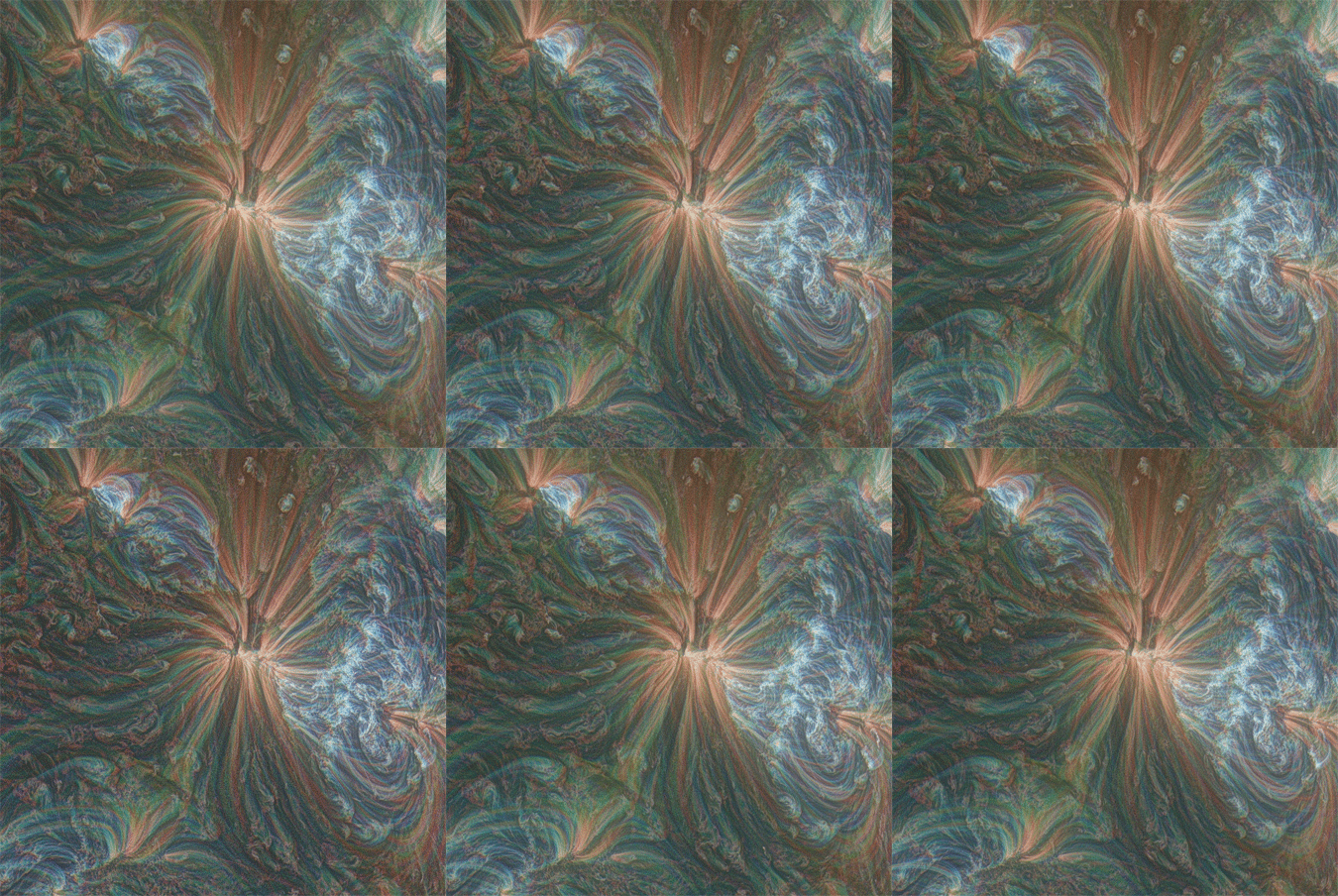
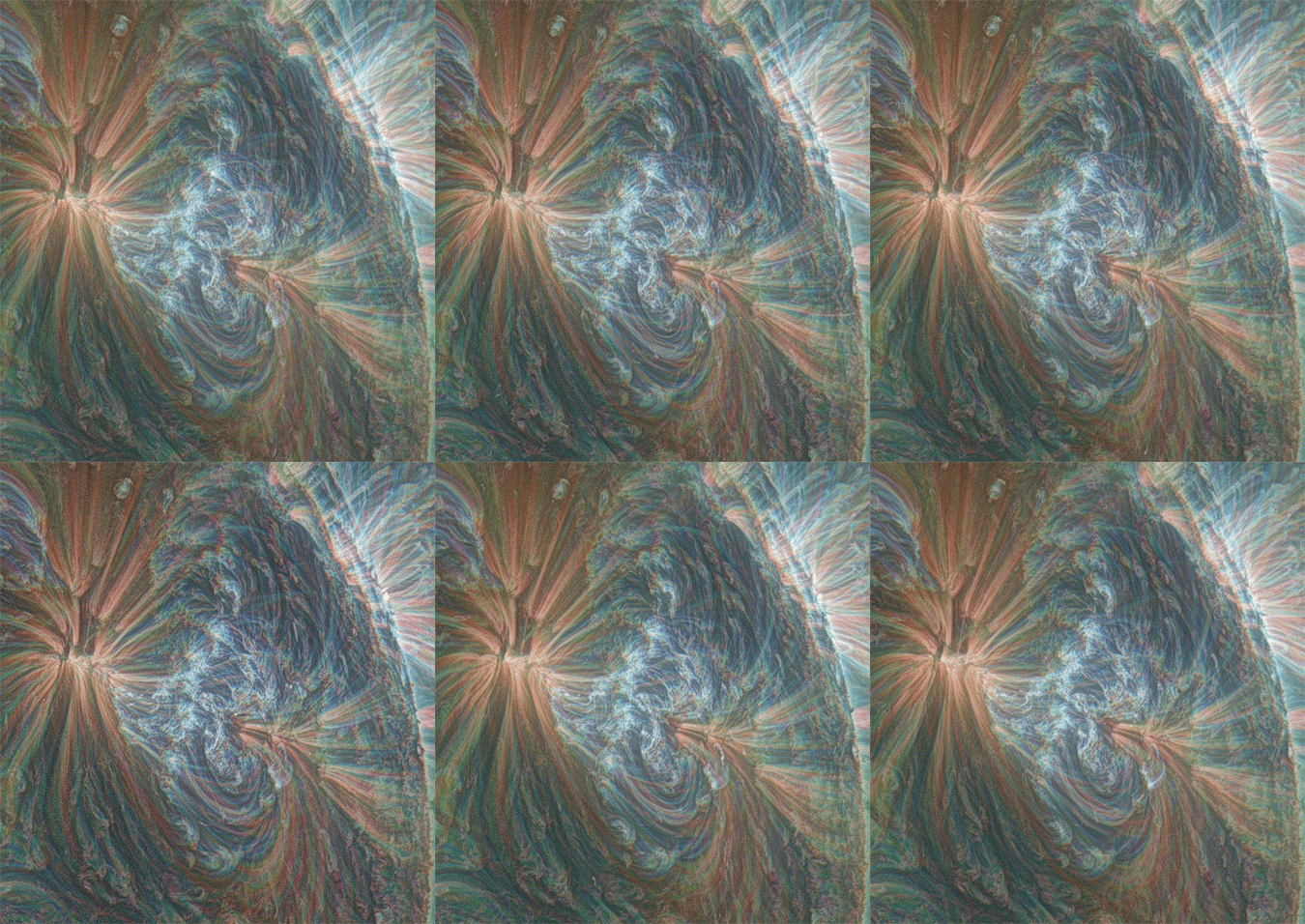
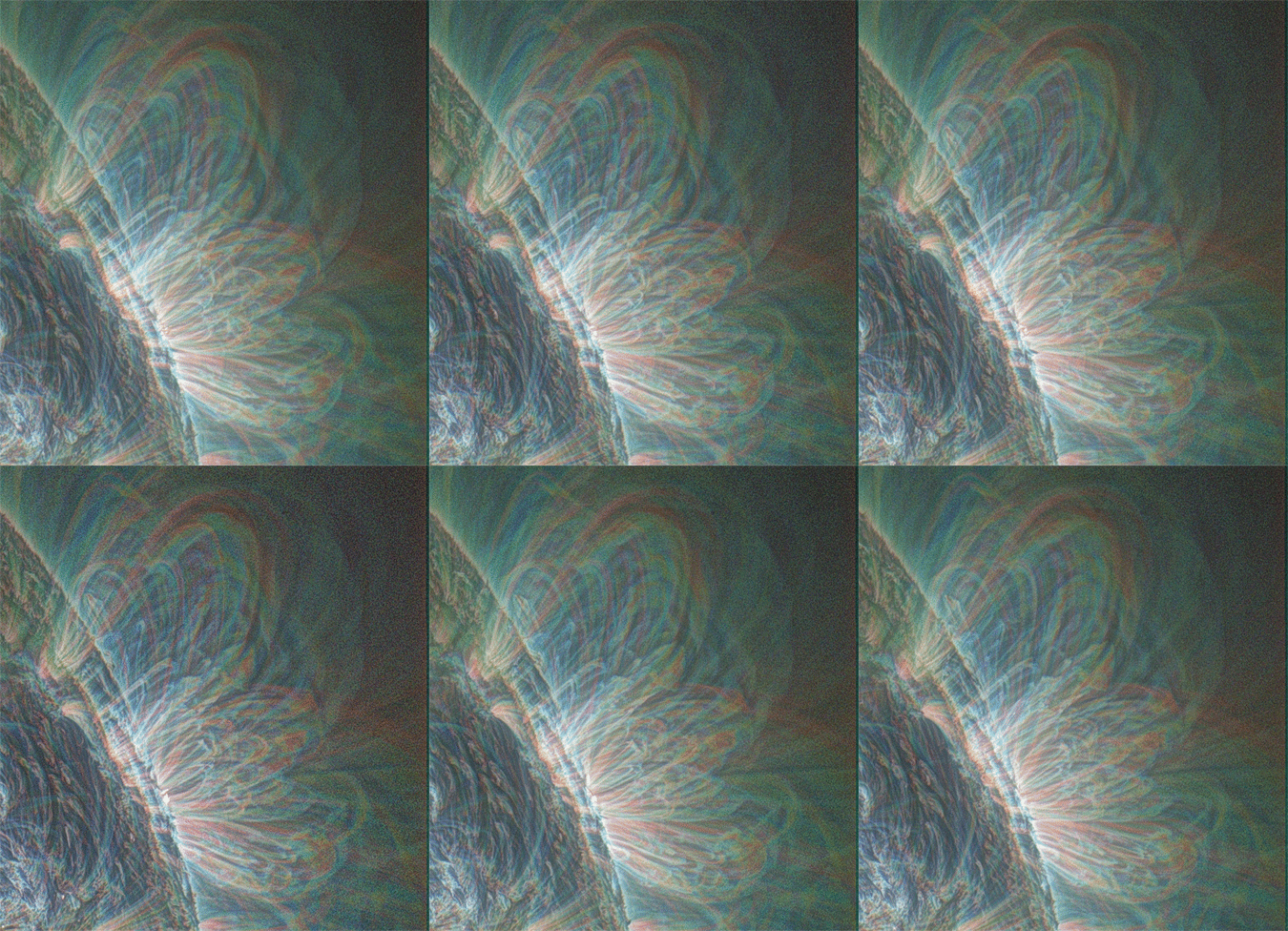
The upper atmosphere of the Sun is dominated by plasma filled magnetic loops (coronal loops) whose temperature and pressure vary over a wide range. The appearance of coronal loops follows the emergence of magnetic flux, which is generated by dynamo processes inside the Sun. Emerging flux regions (EFRs) appear when magnetic flux bundles emerge from the solar interior through the photosphere and into the upper atmosphere (chromosphere and the corona). The characteristic feature of EFR is the -shaped loops (created by the magnetic buoyancy/Parker instability), they appear as developing bipolar sunspots in magnetograms, and as arch filament systems in . EFRs interact with pre-existing magnetic fields in the corona and produce small flares (plasma heating) and collimated plasma jets. The GIFs above show multiple energetic jets in three different wavelengths. The light has been colorized in red,
green and blue, corresponding to three coronal temperature regimes ranging from ~0.8Mk to 2MK. 

Image Credit: SDO/U. Aberystwyth

*Also Sprach Zarathustra plays*