netflix

A story about teeth

Netflix have responded to the Dave Chappelle transphobia on their platform with the statement, “We have a strong belief that content on screen doesn’t directly translate to real-world harm.” So if I may, I would like to take a minute to talk about…sharks.

Peter Benchley wrote the novel Jaws in 1974 and helped write the film adaption. Jaws the movie is a FANTASTIC horror film, there’s a reason it went down in history. It made me so scared of sharks that as a child I avoided the deep end of swimming pools just in case there was a shark lurking down there. It made everyone scared of sharks.

And, because content on screen does in fact directly translate to real-world harm, people who had seen Jaws reacted by going out and killing sharks. The director of the Florida Program for Shark Research told the BBC in 2015,

“A collective testosterone rush certainly swept through the east coast of the US. Thousands of fishers set out to catch trophy sharks after seeing Jaws. It was good blue collar fishing. You didn’t have to have a fancy boat or gear – an average Joe could catch big fish, and there was no remorse, since there was this mindset that they were man-killers.”

Yep, the impact of Jaws was still being talked about in 2015! Because ya guessed it, content on screen does in fact directly translate to real-world harm.

The effect Jaws had on real-life sharks is still being discussed right now even! Conservation psychology researcher Brianna Le Busque told the Mercury News in July,

“Since Jaws, we’ve seen a proliferation of monster shark movies — ‘Open Water,’ ‘The Meg,’ ’47 Meters Down,’ ‘Sharknado’ — all of which overtly present sharks as terrifying creatures with an insatiable appetite for human flesh. This is just not true. Sharks are at much greater risk of harm from humans, than humans from sharks, with global shark populations in rapid decline, and many species at risk of extinction.”

“Exacerbating a fear of sharks that’s disproportionate to their actual threat damages conservation efforts, often influencing people to support potentially harmful mitigation strategies. There’s no doubt that the legacy of Jaws persists, but we must be mindful of how films portray sharks to capture movie-goers. This is an important step to debunk shark myths and build shark conservation.”

We don’t know how many sharks were killed by hunters who hated and feared them, but it was certainly enough. Shark populations, already in danger due to people killing them for food, plummeted. And Peter Benchley, who knew by this point that content on screen does in fact directly translate to real-world harm, was horrified. In fact, he spent a good portion of the rest of his life trying to make up for what he’d unwittingly unleashed. He became an ocean activist and once said that if he was to write the book again the shark, “would have to be written as the victim, for, worldwide, sharks are much more the oppressed than the oppressors.” He used his own money from Jaws to fund conversation efforts.

Sharks numbers are apparently growing now and generally humans have learned they’re just animals, not vengeful child-killing monsters. Yet still the amount of sharks killed because of that one movie is incalculable. So, forgive me, but Netflix’s response to what they’ve done here, promoting hate against groups who cannot defend themselves on their home turf nearly as well as sharks, it all seems extremely…

toothless.
Please watch Netflix’s “Unbelievable.”

Unbelievable feels like it could be a sister show to Chernobyl, the horrifying masterpiece which dropped earlier this year. On the surface of things they don’t seem terribly alike (no-one dies a horrible lingering death in Unbelievable, more’s the pity when it comes to the rapist at the center of the story) but both are essentially about how miscommunication, ignorance, and plain old human stupidity can lead to tragedy.

And like Chernobyl, Unbelievable is based on a true story. I’m gonna go ahead and reveal now that Unbelievable ends happily, or as happily as it could do under the circumstances. The girl whose testimony kicks off the story, Marie Adler, she’s alive and well right now, settled down with children of her own. I didn’t know that going into this show, and was terribly relieved to find out.

In the show Marie Adler is played by Kaitlyn Denver, an actress who looks like a cross between Shailene Woodley and Ellen Page and is just as talented as they are. She’s amazing. Everything Marie feels, Denver makes sure the audience feels it too. By the third episode of Unbelievable, as the clock ticked closer to 2am for me, my heart was pounding every time she appeared on screen. I was so desperate for her to get the justice she deserved.

Every episode brought a new horror, you see, a dull depressing kind of horror. Marie’s violently raped by a home intruder. She goes to the police. They decide they don’t believe her. They gaslight her – a vulnerable teenager who’s been abused before – into saying she lied. They charge her with filing a false report. They then send her court date to the wrong address. Honest to god, around that point I was about to hurl things at the screen. Even Marie’s lawyer, who considers her just one more case in his heavy workload, seems bewildered at how she’s been treated. This is not quite the same incompetence that led innocent men to be consumed from the inside out with radioactive poison in Russia, but it’s pretty damn close.

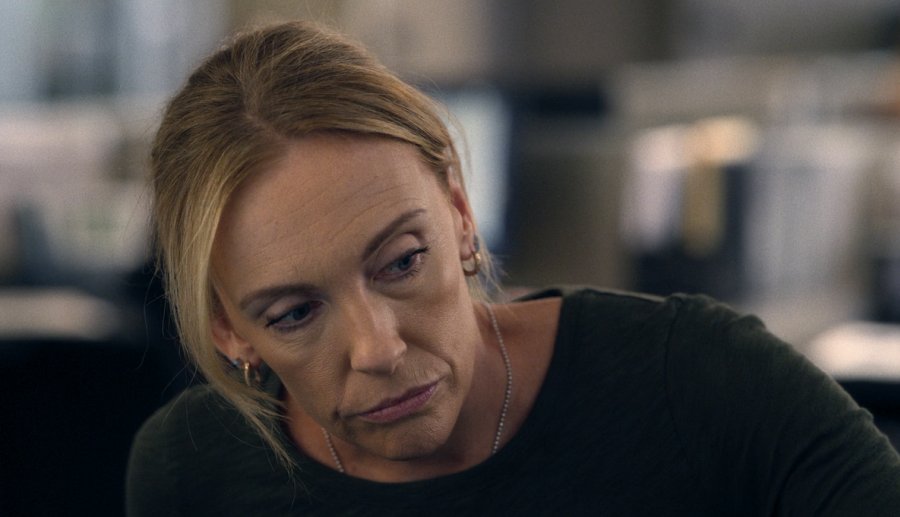
While Marie is suffering from a very different and much more invisible poisoning, a pair of detectives start investigating a string of home invasion rapes. These are Grace Rasmussen and Karen Duvall, who are also based on real people, and are played here by Toni Collette and Merrit Weaver. They disappeared into their characters so completely I didn’t even recognise either of them at first.

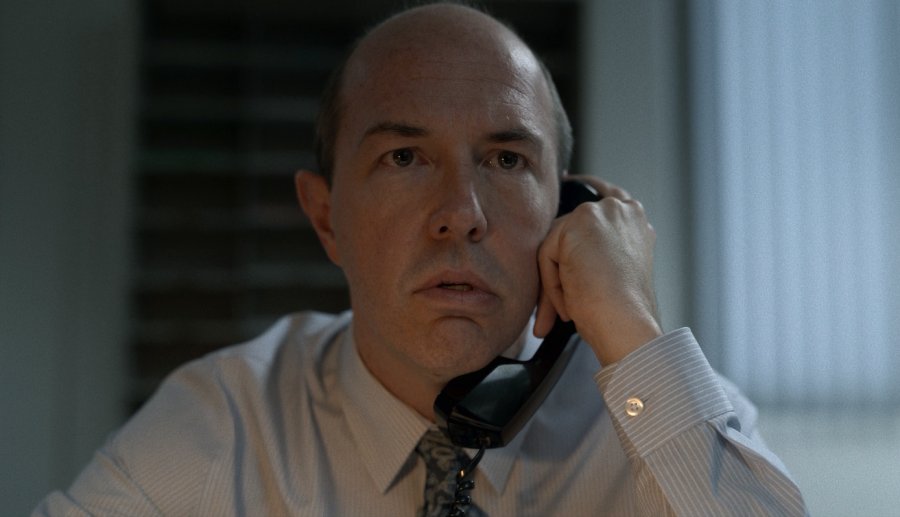
I literally cannot recommend this show enough. I was a nervous wreck by the time the wheels of justice finally started turning, waiting for more horrible things to happen that thankfully never came. Finally, the male officer who accused Marie of lying learns that he was wrong, in a scene so satisfying it’ll be seared onto my eyeballs forever:

Oh, Collette’s face there. Disappointed, exasperated, sad and disgusted all at once.

I can’t think of an aspect of this show which wasn’t perfectly done. For an exmaple of how much thought was put into it – the actress who plays Marie’s therapist is Brooke Smith, aka the victim in The Silence of the Lambs. Because of that, the therapy scene has an extra tinge to it I don’t think it would have had otherwise. Not least because this show is a big middle finger to movies like the aforementioned: Unbelievable is a show about violence towards women, but very little violence towards women is actually shown.

So far, Unbelievable has 97% on RottenTomatoes – that’s actually a higher score than Chernobyl (very deservedly) got. But I hope this show likewise gets embedded deep in the public consciousness. Its message is so, so important.

Some good TV news for once

One Day At A Time has been saved! It happens to be one of my Top Ten Shows That Actually Portray Mental Illness Accurately. PS, there are not actually ten shows in the top ten, because there are not many works of fiction of this type. At all.

Also, I hope Netflix feels a sting from this, because cancelling a critically acclaimed, utterly beloved show for what appears to be no reason whatsoever is a dick move, and the kind of one they’re doing more and more these days.