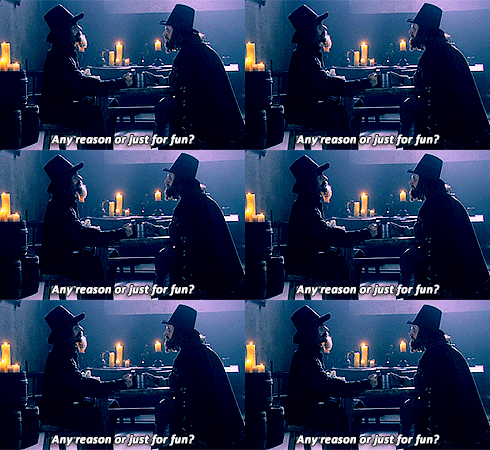
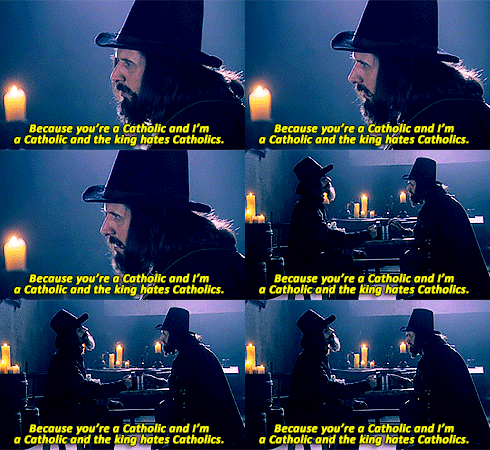
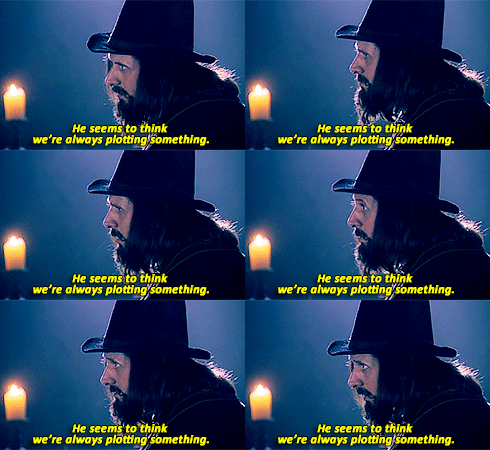
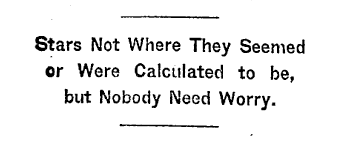
I AM EXTREMELY TICKLED BY THIS.
THEY WENT KAYAKING NEAR THE DUELING GROUNDS. (x)
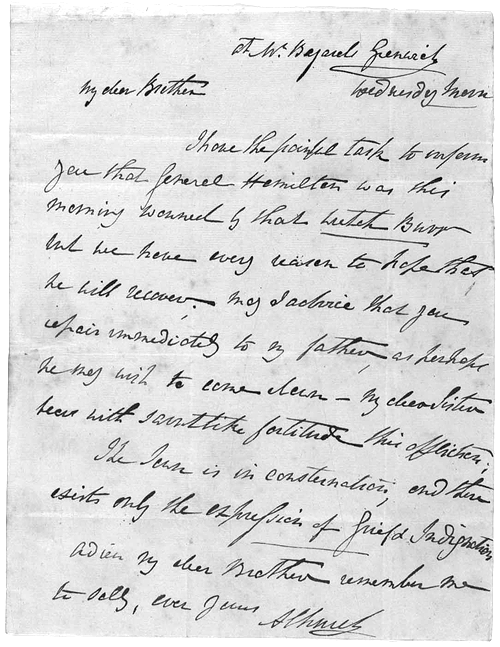
Letter from Angelica Church to her brother Philip J. Schuyler, July 11, 1804.
My dear Brother – I have the painful task to inform you that General Hamilton was this morning woun[d]ed by that wretch Burr but we have every reason to hope that he will recover. May I advice that you repair immediately to my father, as perhaps he may wish to come down — my dear Sister bears with saintlike fortitude this affliction. The town is in consternation, and there exists only the expression of grief & Indignation. Adieu my dear Brother remember me to Sally, ever yours – A Church
note: “Mere hours after the duel, Angelica Church writes in haste to her brother Philip Schuyler to break the news to him, expressing her futile hope that Hamilton would recover. The hasty scrawl of her handwriting suggests the degree of her distress.” [source]

In a private cemetery in small-town Arkansas, a woman single-handedly buried and gave funerals to more than 40 gay men during the height of the AIDS epidemic, when their families wouldn’t claim them.
–Source
One person who found the courage to push the wheel is Ruth Coker Burks. Now a grandmother living a quiet life in Rogers, in the mid-1980s Burks took it as a calling to care for people with AIDS at the dawn of the epidemic, when survival from diagnosis to death was sometimes measured in weeks. For about a decade, between 1984 and the mid-1990s and before better HIV drugs and more enlightened medical care for AIDS patients effectively rendered her obsolete, Burks cared for hundreds of dying people, many of them gay men who had been abandoned by their families. She had no medical training, but she took them to their appointments, picked up their medications, helped them fill out forms for assistance, and talked them through their despair. Sometimes she paid for their cremations. She buried over three dozen of them with her own two hands, after their families refused to claim their bodies. For many of those people, she is now the only person who knows the location of their graves.
How have I never heard of this?
People like her should be remembered. And even more importantly, we must remember that there was a time in our history when we needed someone like her.
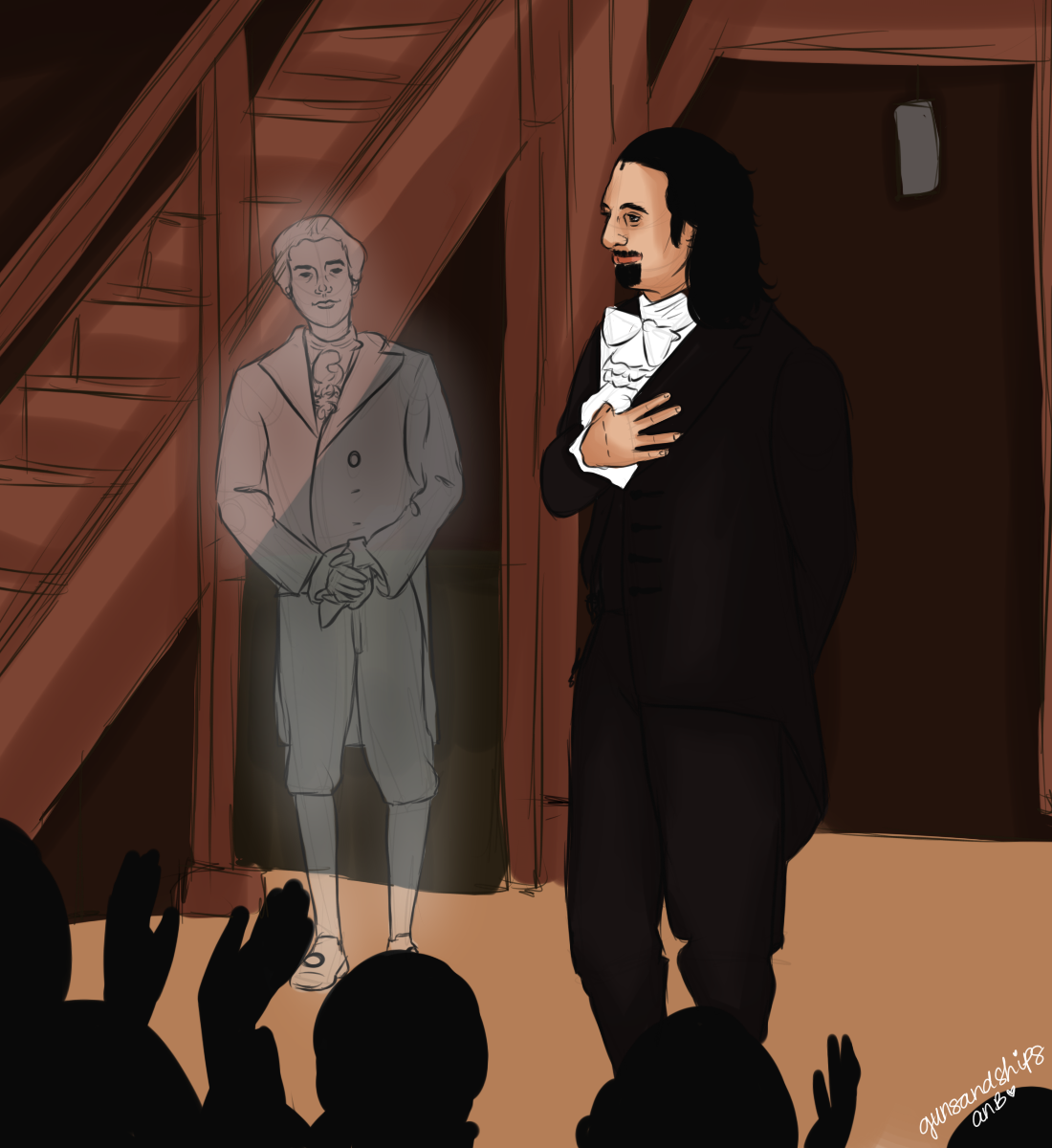
At this point on stage, Hamilton appears next to Eliza, much to her happiness and amazement, as if this is the moment of her death. In fact, after the final note fades, the last sound heard is Eliza’s gasp—perhaps her last breath, or her joy at her dying vision of Alexander waiting for her—as the theater goes dark.
By the end of the show, the title, Hamilton, refers to Eliza Hamilton as much as Alexander Hamilton. It opened by describing Alexander’s birth, so it’s appropriate for it to end with the death of Eliza, the one who told so much of both of their stories.
As the New Yorker describes it: ‘In the show’s final moment, he motions Eliza to the lip of the stage, where she steps beyond him and takes the light. The last image we see is of her awestruck face, gazing out into some blissful beyond.‘ I’m not crying, you’re crying.
~
In this song, Eliza becomes the extradiegetic narrator (lit. narrating from outside the world of the story). So in a way, she is literally looking out into the theater and seeing the crowds of people that have come to see and hear her and her husband’s story in this amazing play that’s being performed for packed audiences and turning the entire world of theater on its head. THEY’RE TELLING YOUR STORY. YOU MADE IT, GIRL, YOU MADE IT.
annotations on the genius.com page for who lives who dies who tells your story
(i am definitely crying)
(via mermatriarch)
HEY HEY did you know it was a team of women who built Waterloo Bridge in the 1940s? Did you know that on the bridge’s opening, politicians referred to the people who built it as “the men who built Waterloo Bridge”? Did you know that their contribution was forgotten for decades and still mostly is now?
Because I didn’t know that at all! It gets only a tiny mention on the Wikipedia page!
“Does the fact that Hamilton’s widow lived fifty years after his death make the tragedy worse?”
Chernow: “Yes, and with the added poignancy that at the time of Hamilton’s death, seven of their eight children were also still alive, the eighth having died in a duel three years earlier. One of the things that I was most at pains to do was to edit Eliza Hamilton back into the story, because she tried so hard to edit herself out. She ran the New York Orphan Asylum Society for several decades. I dug out all the records, and she wasn’t just lending her name to it — she was really running it — dealing with the finance committee, arbitrating disputes — and it frustrated me that there was this missing founding mother. She is usually mentioned as a weak, religious, weepy, neurasthenic woman — as if she hadn’t done anything. In fact, she was a strong, gutsy lady who was still mentally sharp and active until the end of her life.”
Dear Students,
For extra-credit and for a good time,
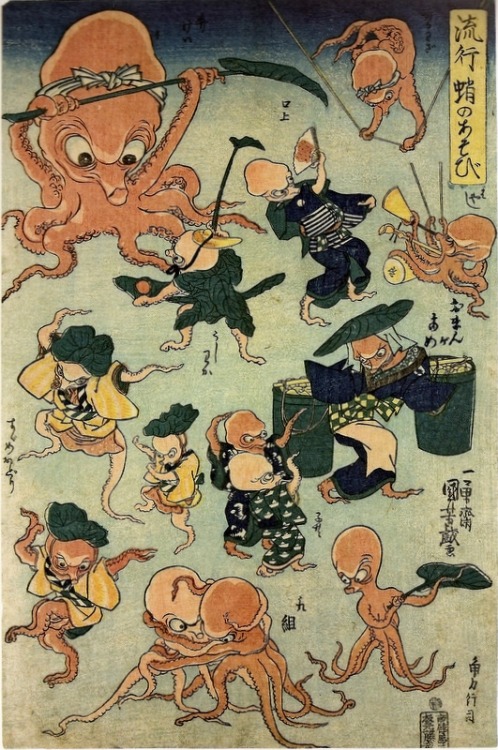
Draw at least five of these characters into your compbook. Take about three or so minutes with non photo blue. Ink at your leisure. Color at your whim. Give each of them a full page with a frame. But before you start, pause to consider them all. What the hell is going on? How can I get into this nightclub?
Sincerely,
Prof. SETI
I thought this must be a modern parody, but no: this is a classic woodcut appropriately titled ”Octopus Games” by Japanese artist Utagawa Kuniyoshi, made circa 1840–42.