With everyone on my dash freaking the heck out about the latest reconstruction of the Cheddar Friend (aka Cheddar Man)* it is a great time for a GEEK’S GUIDE TO BRITAIN: Cheddar Edition!
It is important to point out that the Cheddar Friend is called the Cheddar Friend because they come from the Cheddar Cave Complex, which DOES have to do with cheese. (Also, I call them Cheddar Friend, not Man, and everyone will have to deal with that.)
This is a complex of caves in the southwestern part of England, named for the village of Cheddar, and Cheddar Gorge. A nearby cave complex is called Wookey Hole, which is equally silly.
Cheddar cheese was invented in Cheddar, because of these caves. You make the cheese and put it in a cave to age – then, by the process of alchemy, it turns into Cheddar cheese. It is not a bad little town. You can admire Cheddar Gorge, then go into the Cheddar Caves and see the scratching of a mammoth on the wall that is one of the earliest pieces of art in England and the world, and then you can look at the cheese sitting on the racks in the cave, and then you can buy the cheese and eat it. A satisfying day for all.
The word “Cheddar” comes from an old English word “ceodar,” which Wikipedia says means “dark cavern,” but more accurately is something like “ravine” (because of the gorge.)
So it’s rather sweet because in a way, Cheddar Friend means “Cave Friend!” And while most anthropologists hate the term “caveman” because it’s misleading, it is accurate when you apply it to Cheddar Friend!
Some people are also confused by the news coverage surrounding Cheddar Friend. Why does it seem so contradictory? Was Cheddar Friend a cannibal? Were they there 10,000 years ago or 15,000 year ago or what? This confusion is because the caves have been colonised by early hominids several times over in the ancient history of England, and the news coverage has tried to explain that. The “cannibal” hominids, who lived in the cave 15,000 years ago and had cups made out of human skulls, were outliers adn should not have been in the press materials. That sort of thing just confuses the public. The skull-cup-owners were an older variant of human-adjacent being, and were not considered “modern humans.”
By contrast, Cheddar Friend, who lived in the cave 10,000 years ago, is believed to be a “modern human.” The reason they are the SUPERLATIVE CHEDDAR FRIEND is because the colonization paths of MODERN humans are very interesting. There is no evidence that Cheddar Friend or their fellows were cannibals. That is jumbling and conflating together the news coverage in an incorrect (yet predictable) way.
Anyway, if you ever visit Cheddar, you can go to the Caves and have some Feelings about them. It’s an easy day out from Bath / Bristol, and a half-hour drive from Glastonbury. (Home of the music festival, mythical resting place of King Arthur and possibly the Holy Grail, new age center of fuckery.) You could, if you were an absolute madman, fold it into a trip to Wookey Hole or Longleat. Cheddar Caves are more value for money than Wookey Hole.
* We don’t know that they were a male person. we really don’t. Bone-fondlers would like you to believe that they know this, but really human-bone-fondlers don’t know shit. Nobody can hold up a splinter of bone like they do on TV and go “hmmm hmmm yes this belonged to a 25-year-old white male ironworker with red hair who lived 3,000 years ago,” that’s just what the press releases say because it’s a series of reasonable assumptions, and the news runs with it as truth. We don’t know the exact shade of Cheddar Friend’s skin color. We can’t and we don’t and we never will. But we knew it wasn’t white, because that would have been silly, unless they were an albino, which is possible but statistically unlikely. It was foolish to pretend that they ever could have been white-skinned like a modern white person, because we KNOW that is a recent mutation and Cheddar Friend is older than that, but people pretended this anyway, because that’s what they wanted to do.
The skull-cup cannibals were modern humans; they were Magdalenians. Magdalenians were partly ancestral to Mesolithic Europeans like Cheddar Man, but 5000 years is a pretty long time- 5000 years before us, English and Sanskrit were the same language, Egypt was just unifying, and penis sheaths were the hot fashion in the Levant. Things have changed since then, and things changed between the time of the Magdalenians and Cheddar Man.
That the Magdalenians were cannibals isn’t a slander against them. Early Modern Europeans practiced medicinal cannibalism even as they decried cannibal “savages” elsewhere. Magdalenian finds are most consistent with endocannibalism, also called funerary cannibalism, where members of a social group are partly eaten when they die. It’s smart when you live on the Malthusian margin, and in their culture would have been a sign of respect for the dead. However, even if it was in the context of warfare, I will say that killing someone and then eating them isn’t that much worse than killing someone and not eating them. If Magdalenians warred, that’s not exactly a unique flaw of theirs.
But also, the Magdalenian culture* is also responsible for some of the most iconic artistic achievements of, well, all human history.
*Magdalenians were genetically homogenous, but existed over a wide range of time and space, and so probably spoke many languages and comprised many peoples, who nonetheless shared certain cultural characteristics in common.
(some of these are reproductions, as the moisture from our breath can damage paintings)(I chose a lot of bison ones because i like the bison paintings)
In France and Spain, Magdalenians had a tradition of magnificent cave art. Magdalenians weren’t the only prehistoric Europeans to make cave art; cave art in Chauvet cave is as much older than the Magdalenians as the Madgalenians are than us. But many famous caves like Lascaux are Magdalenian. Looking at their cave art literally brings me to tears. It’s so beautiful, so sensitive to aesthetic quality, to nature, and to a sort of “spiritual” sense.
The leading hypothesis is that Magdalenian art was made in the context of a shamanic spiritual framework, but since Magdalenians left no written records, we can’t know. Whatever the purpose, these paintings were meant to be viewed by lamplight in the dark of a cave, so they were made to swirl and flicker from the darkness. And so the (perhaps illusory) naturalism is sometimes abandoned, for something altogether more impressionistic and emotive.
This is to say that Magdalenians were cannibals, but they were people, and their practice of cannibalism doesn’t detract from their humanity. Also, even non-modern humans like Neanderthals, while they had simpler art and material cultures, were still people, who loved and laughed and cried and had hopes and dreams. The apparent poverty of their culture may have been due to their bands being more isolated from each other, so cultural ideas didn’t spread as well as they did in early modern humans. Even if Neanderthals were “dumb”, like, they’re people, don’t dismiss them as orcs or something.
(for what it’s worth, Magdalenians also had dark skin and black hair, but uniformly had brown eyes, unlike Mesolithic Europeans who were mostly light-eyed. No modern person has more than a small bit of Magdalenian ancestry, though through Western Eurasia it’s present. Magdalenians weren’t any race recognized now because race is a social construct and the Magdalenians lived in a different social context)
(I referred to Cheddar Man as Cheddar Man because, while determining sex from bones is famously iffy, he’s had his genome sequenced, and though it’s not published it seems that he was genetically male. Most XY people are men, so I referred to him as “Man”. That said, it is not impossible that Cheddar Man is inaccurate, since we have many cases across human prehistory of people buried with grave goods indicative of a gender that doesn’t correspond to their genetic sex. So though we can’t ask Cheddar Friend their pronouns, OP might be right and I might be wrong)
(also, Cheddar Friend/Man may have spoken a language without gendered pronouns, so even if you asked their pronouns you might not find out their gender from the answer!)
This is a very charming response and I like it a lot! Thank you!
These ancient mosaic fragments, slightly submerged in the sea, can be found on a deserted stretch of minor road on the East coast of the Greek mainland, untended, unsignposted, unnoticed.
Some people threw white paint on it a few years back.
They want to be a victim so bad.
Fun Fact: That’s a statue of the fist which Joe Louis used to knock out Max Schmeling, Hitler’s favored heavyweight boxer in 1938. Schmeling won the 1st bout by knockout in round twelve, but Joe Louis came back in the follow-up match and laid him the fuck out in the 1st round.
Fun Fact: Schmeling was hated by the Nazis for losing to a black man and for having a Jewish manager, and he hated them right back, stating in 1975 that he was glad he’d lost the fight because the thought of the Nazis using him for propaganda purposes sickened him. He also personally saved the lives of two Jewish children and later became lifelong friends with Joe Louis.
So maybe don’t refer to him as “Hitler’s favored heavyweight boxer”…
Thank you for this additional info!
Reblogging this for the added facts and so people know that Schmeling wasn’t a Nazi or Nazi collaborator and was in fact a good man
Imagine hating Nazis so much that when you get beaten up your response is “Good, now they can’t use me as a role model.”
And even if it WERE a Black Panther memorial, the Panthers are about RESISTANCE to hatred and oppression.
This is almost a textbook-perfect example of how one of the essential elements of Nazi propaganda is appropriation- not just cultural, but individual and interpersonal. They have a long history of not only willing atrocity but using the images, careers, and symbols of others against their will as icons. Fascists don’t just hate the accomplishments of their critics, they claim, profiteer off, and retroactively ruin the accomplishments of people who aren’t even their friends but superficially are useful to them.
The first modern Britons, who lived about 10,000 years ago, had “dark to black” skin, a groundbreaking DNA analysis of Britain’s oldest complete skeleton has revealed.
The fossil, known as Cheddar Man, was unearthed more than a century ago in Gough’s Cave in Somerset. Intense speculation has built up around Cheddar Man’s origins and appearance because he lived shortly after the first settlers crossed from continental Europe to Britain at the end of the last ice age. People of white British ancestry alive today are descendants of this population.
It was initially assumed that Cheddar Man had pale skin and fair hair, but his DNA paints a different picture, strongly suggesting he had blue eyes, a very dark brown to black complexion and dark curly hair.
So the other night during D&D, I had the sudden thoughts that:
1) Binary files are 1s and 0s
2) Knitting has knit stitches and purl stitches
You could represent binary data in knitting, as a pattern of knits and purls…
You can knit Doom.
However, after crunching some more numbers:
The compressed Doom installer binary is 2.93 MB. Assuming you are using sock weight yarn, with 7 stitches per inch, results in knitted doom being…
3322 square feet
Factoring it out…302 people, each knitting a relatively reasonable 11 square feet, could knit Doom.
Hi fun fact!!
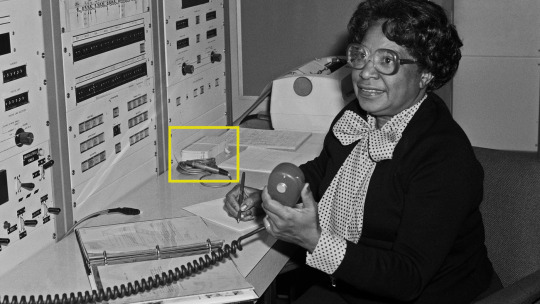
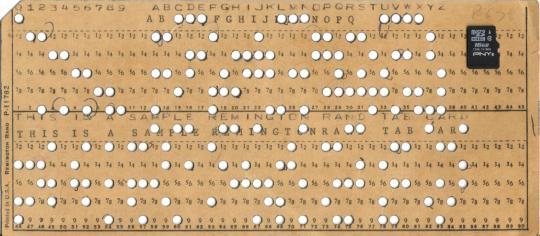
The idea of a “binary code” was originally developed in the textile industry in pretty much this exact form. Remember punch cards? Probably not! They were a precursor to the floppy disc, and were used to store information in the same sort of binary code that we still use:
Here’s Mary Jackson (c.late 1950s) at a computer. If you look closely in the yellow box, you’ll see a stack of blank punch cards that she will use to store her calculations.
This is what a card might look like once punched. Note that the written numbers on the card are for human reference, and not understood by the computer.
But what does it have to do with textiles? Almost exactly what OP suggested. Now even though machine knitting is old as balls, I feel that there are few people outside of the industry or craft communities who have ever seen a knitting machine.
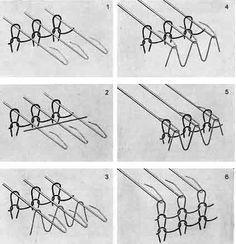
Here’s a flatbed knitting machine (as opposed to a round or tube machine), which honestly looks pretty damn similar to the ones that were first invented in the sixteenth century, and here’s a nice little diagram explaining how it works:
But what if you don’t just want a plain stocking stitch sweater? What if you want a multi-color design, or lace, or the like? You can quite easily add in another color and integrate it into your design, but for, say, a consistent intarsia (two-color repeating pattern), human error is too likely. Plus, it takes too long for a knitter in an industrial setting. This is where the binary comes in!
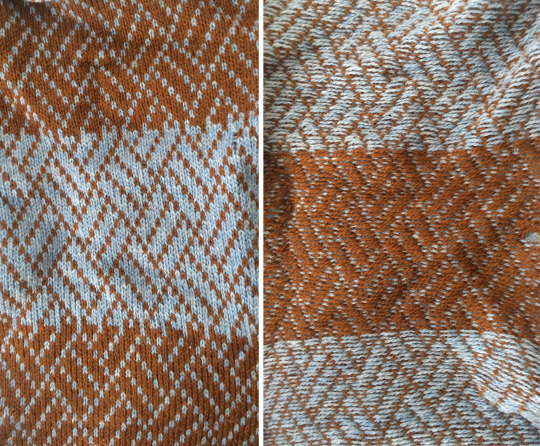
Here’s an intarsia swatch I made in my knitwear class last year. As you can see, the front of the swatch is the inverse of the back. When knitting this, I put a punch card in the reader,
and as you can see, the holes (or 0′s) told the machine not to knit the ground color (1′s) and the machine was set up in such a way that the second color would come through when the first color was told not to knit.
tl;dr the textiles industry is more important than people give it credit for, and I would suggest using a machine if you were going to try to knit almost 3 megabytes of information.
It goes beyond this. Every computer out there has memory. The kind of memory you might call RAM. The earliest kind of memory was magnetic core memory. It looked like this:
Wires going through magnets. This is how all of the important early digital computers stored information temporarily. Each magnetic core could store a single bit – a 0 or a 1. Here’s a picture of a variation of this, called rope core memory, from one NASA’s Apollo guidance computers:
You may think this looks incredibly handmade, and that’s because it is. But these are also extreme close-ups. Here’s the scale of the individual cores:
The only people who had the skills necessary to thread all of these cores precisely enough were textile and garment workers. Little old ladies would literally thread the wires by hand.
And thanks to them, we were able to land on the moon. This is also why memory in early computers was so expensive. It had to be hand-crafted, and took a lot of time.
This is the earliest known tomb painting in Europe, and it’s in Veii, Italy. It’s a very, very early example of the funerary frescoes which the Etruscans would be remembered historically for. This tomb is known as the Tomb of the Roaring Lions and it is probably my favorite thing of all time.
It’s also got some ducks, which were apparently super special to the Etruscans and nobody really knows why.
i just love old things so much. i love standing in a ruin knowing that it was once a city or a building real people lived and walked in, or seeing a weapon someone used to wield to fight for a nation that no longer exists, or a statue of someone who’s been dead for thousands of years. i love hearing songs that have been sung for centuries, or eating foods with ancient recipes. i love the idea that even when people have passed and civilisations have fallen there are still little pieces of the past we can feel today.