URL GRAPHIC: @billspotts
Men aren’t where I keep my eye, actually.
Okay, so: Amy Pond realises halfway through her wedding that there’s someone missing, that while she has gained her parents back she has lost something else. With two different timelines playing through her head, she stands up and calls, begs, for the Doctor. Reactions are…mixed. “The psychiarists we sent her to!” wails her mother. Aunt Sharon, Amy’s sole guardian in the previous version of her childhood, does this:
Which is not a look of sympathy.
If you’re anything like me, you may actually wince a little at that gif. My mental health can usually optimistically be described as ‘fragile’, but I’ve had the verbal version of Aunt Sharon’s facepalm hundreds of time. The reactions of both Sharon and Amy’s mother rather indicate that though they tried to help Amy – sending her to psychiarists and the like – they started to flail as soon as the going got rough.
We don’t know much about Amy’s mother, but we actually do know a bit about Aunt Sharon, and unfortunately none of it is positive. When the Doctor first meets seven-year-old Amelia, he’s surprised to realise she’s been left all alone in the middle of the night, but Amelia herself doesn’t seem too bothered, indicating that it’s not an uncommon occurrence. The laws on leaving a child alone at night are iffy about whether it’s an actual offence to leave a seven-year-old home alone, but it’s clearly not a million miles off. And the clock on the wall in the scene in question shows that Sharon was absent from at least 8:30 to 11:20 – god knows what she was up to, but she’s clearly well-off enough to afford a babysitter, or at the very least someone to check in on her very young niece, and she didn’t do those things.
What I’m getting at here is that Amy Pond, in the first version of her childhood, was pretty clearly neglected. There’s the above, but there’s more: she’s been living with Sharon for presumably quite a while, but doesn’t seem to have particularly warm feelings towards her – “I don’t even have an aunt” “You’re lucky”. When we actually meet Aunt Sharon, she seems nice enough, and has hired a psychiarist for Amy, but as soon as Amy says something she doesn’t like she crossly grouches ‘Oh, Amelia!’ Which, for a seven-year-old, would probably just reenforce ideas like ‘positive attention from adults is dependent on whether or not I fit in with their ideas about the world’. It’s no wonder she grows up to push everyone’s boundaries and behave immaturely.
You can debate til the cows come home about whether Amy is “really” mentally ill in a world where the Doctor actually does exist and it’s the people who don’t believe in him who are wrong (at the moment, I’m not gonna talk about that, I’ll just mention that yes, I think she’s got a similar brain to me), but – Amy’s family react to her, in the scenes we see, as if she’s a problem. That rings…
…awfully true, for people living with mental illness.
There’s one line that’s so important to Amy’s characterisation, and it comes right at the beginning. “Give me five minutes, I’ll be right back” says the Doctor. “People always say that,” says seven-year-old Amy. And she’s right: her parents have abandoned her by circumstance, and her aunt by choice. The Doctor then accidentally contributes to this cycle, making the adult Amy even more deeply mistrustful – but I think, all things considered, it wasn’t actually him who stole her childhood.
Reblogging this because today I learned that Aunt Sharon’s actress, Susan Vidler, played another (more fatally) neglectful parent at the start of her career: the mother of the baby in Trainspotting.
……….Also because I still very much stand by this 100%


Based on what we already know of Aunt Sharon, it’s… kind of obvious she neglected seven-year-old Amy to the point of what most people would call child abuse? And I hate that that goes so ignored by fandom, so I really wish this scene (detailed in the latest Doctor Who Magazine) had been left in.
From my perspective, this is a bit of a ‘kill your darlings’ moment.
I can see the obvious value in keeping the scene in because it establishes the context right off the bat, which is, functionally, helpful. But that’s also the problem with it: it’s hammering you over the head with the context from the get-go, whereas the episode’s final script makes you actually think about the context and infer its meaning.
Amelia is in her house, at night, alone. Why?
Amelia says her Aunt Sharon is “out” when the Doctor inquires about her parents. Red flags should be going up at this point.
Amelia consistently demonstrates apprehension and knowing scepticism towards adults, which we see develop across the series into full-on abandonment issues with an established history of her going to psychiatrists, and she has a general sort of inability to value herself.
The delivery in the show makes it so this scene is unnecessary. It’s all in there and it’s delivered wonderfully. It’s not really the script’s fault that the audience weren’t paying attention to it.
I suppose that’s always the problem with Amy and the fandom. Much of the strength of her character comes in its subtlety, the pain and repression in the silences building to the rare and shattering outburst. I adore it as is, it’s all there and so beautiful as presented, but a lot of people just won’t read the cues.
That’s something that really got me to relate to her right from the start, more than I think I personally relate to any other companion.
Amy suffers in silence because so many of the people she’s supposed to have been able to trust (her family, her psychiatrists, etc) have silenced her since she was a child.
“It’s not real,” they tell her. “You’re just making things up.”
They tried to make her “grow up” like this, which never actually dealt with what she thought and felt – it just shut her up so she could appear ‘normal’ like she’s ‘supposed’ to be. Naturally, she’s disillusioned and she has immense difficulty when it comes to trust and commitment. And it is those moments of anger where her pain has been building up in the background that just makes sense to me.
It is those moments early in Series 5 (like in The Time of Angels) where she just casually tells the Doctor to leave her to die, moments like that where people in the fanbase have deemed her to be “melodramatic” and “annoying”, where I’m rooting for her with all of my heart to discover that she’s not worthless.
I remember a lot of the little moments of Amy’s arc just had me… nodding. It’s not something I can really explain, but those little beats would happen and it’d just click in my head like “yes, that’s right”.
The little moment for me is when Amy stands up at the wedding and shouts for the Doctor and Aunt Sharon just… puts her head in her hands in a ‘oh god, this is so embarrassing’ way.
Waaaaaay too close to home, that one.
Based on what we already know of Aunt Sharon, it’s… kind of obvious she neglected seven-year-old Amy to the point of what most people would call child abuse? And I hate that that goes so ignored by fandom, so I really wish this scene (detailed in the latest Doctor Who Magazine) had been left in.
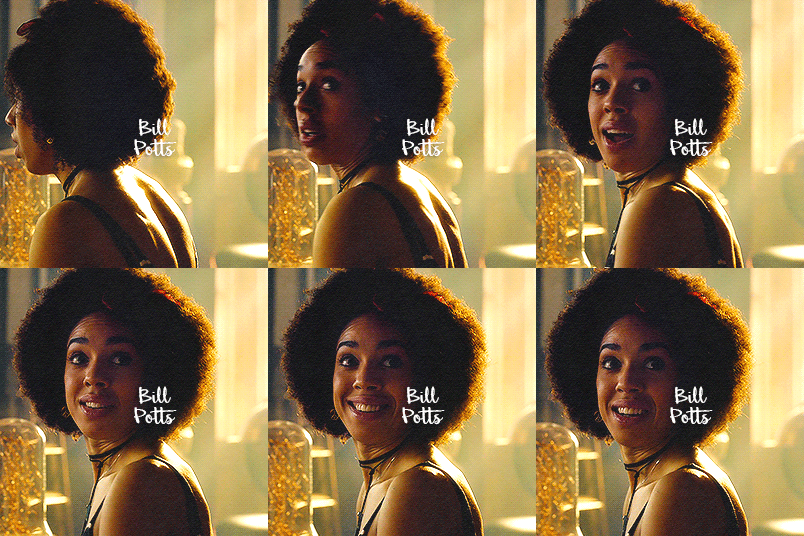
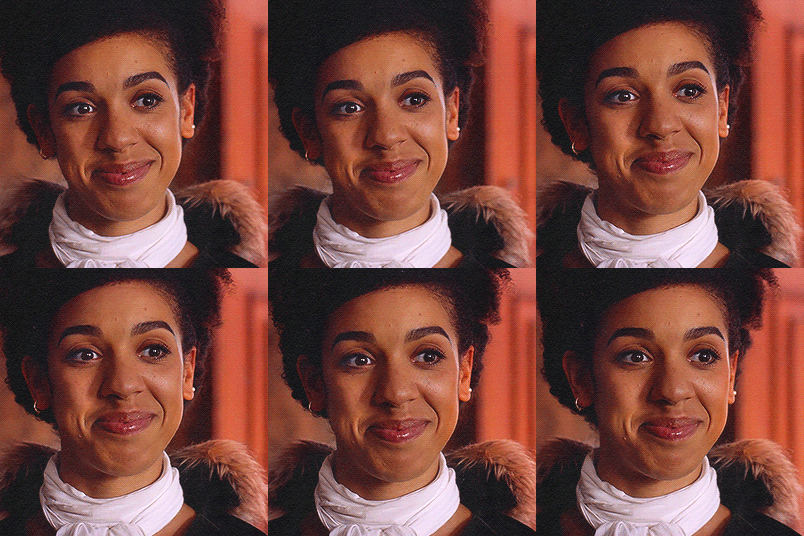
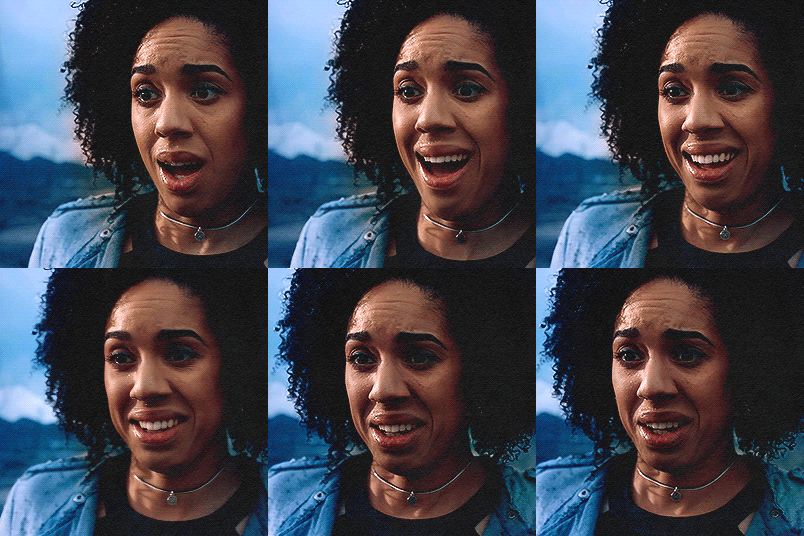
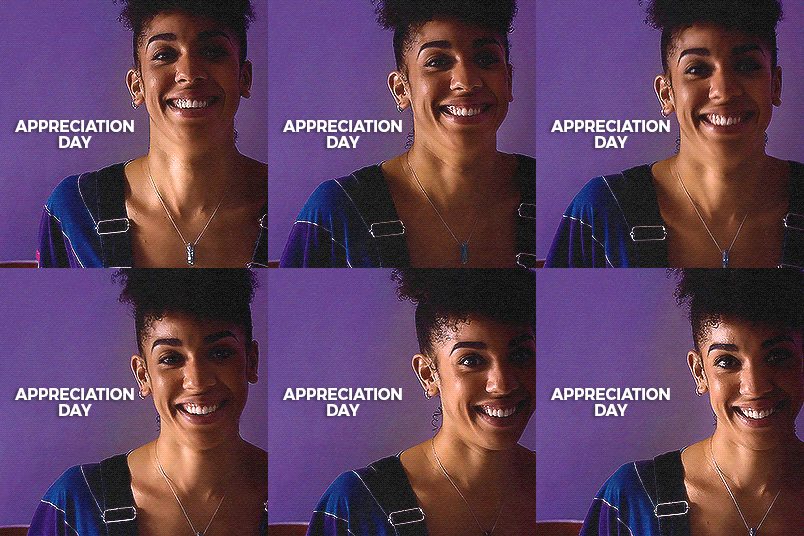
After such a fantastic series 10, it is time for a Bill Potts Appreciation Day. Let’s get together on August 21 to share our love for this wonderful character played by Pearl Mackie.
All types of entries are welcome. Meta, edits, fan art, videos, fanfiction, cosplay…
or whatever else you can come up with.
Please keep it hate-free, please don’t repost anyone else’s work and please tag your posts #bill potts appreciation day (as one of the first five tags). See you then!