Here’s a novel idea: how about we dispense with the assumption that everyone in a wheelchair is paraplegic or tetraplegic?
Take me. I use a wheelchair. Not always, but often. My legs work reasonably well; it’s my spine that’s the let-down. It’s fragile, bent and riddled with painful metastatic cancer and I can’t stand upright for long periods or walk very far. So, for long journeys and/or bad days, I’ve got my wheels.
And sometimes, when I’m out in public, it’s necessary for me to stand up for a few seconds. Usually it’s because there’s at least one step between me and somewhere I need to go, and I refuse to put my poor husband through the strain of lifting both chair and me up that step. So I stand, stumble forward two gruelling paces, leaning on my stick, wait a few seconds and then – with great personal relief – resume my seat in the chair once my husband’s got it through the door after me.
Well, I say I do this. I used to. But one can only tolerate so many astounded-shading-to-judgemental stares from total strangers, gawking at this wheelchair-using lady who’s either experienced an impromptu miracle or is – more likely – just a scurrilous fraud pretending to be disabled.
My cancer is incurable and I’m dying. Slowly but surely. However, I would like to leave the world at least a little bit nicer than I found it. So please feel at liberty to reblog this. I’m sure that the majority of people simply lack understanding…not compassion.
If ONE MORE PERSON says “What if they’d medicated Van Gogh!?” I think I’m permitted to set things on fire. If they’d medicated Van Gogh, he’d either have painted twice as much, or he’d have been happy and unproductive. And you know what? Starry Night wasn’t worth a terrible price in human misery. It’s neat. It wasn’t worth it.
Sometimes I wonder if being an artist makes me jaded to ART. Because it’s not magic and it’s not mystical, it’s just paint or pixels. And it can do amazing things! But you don’t owe humanity to be miserable just so you can move paint around in interesting shapes. Jesus. Art is not some kind of Ones Who Walk Away From Omelas bargain where you agree to be miserable so everybody can go “oh! Neat!” for 5 minutes.
Is funny when doctors and other peeps act like my problem is that I’m obsessed w/ my disability. Um no. You have it backwards. The problem is I HAVE to be cuz it is a constant problem.
I’m deaf. About 25 years ago, I was working for a little while as a classroom aide at a program that worked with deaf children with multiple disabilities. All the teachers and other classroom aides were hearing, but they all could sign. Not at native signing level, but enough to carry on a basic conversation.
So, one evening, all us adults bring all the kids to a special one-night camping trip. All the kids are put to sleep, which frees up the adults to get into a circle and have some fun to ourselves for a while. People start talking, except they were forgetting to sign. So I reminded them to please sign so I could understand them. One of them told me that, no, they weren’t going to sign because this was our night to have fun and not have to think about communication.
So no one signed all night. They talked, they laughed, they had fun. I sat, feeling lost and cut off and betrayed. I remember wishing I had had the nerve to say, “No, what you mean is, you want a night in which everyone EXCEPT ME gets to not think about communication.”
I think sometimes when non-disabled people insist that we are too obsessed with our disability, what they REALLY mean is, “I wish you would stop reminding me that I have a shared responsibility as a fellow member of society to proactively ensure that we all have an opportunity to be engaged in society. I wish you would just pretend to not have a disability so I can pretend that I don’t have to do anything to enable you to do the same things the rest of us are doing.”
The luxury of not needing to think about disability in a society that is designed to lock us on the cold outside is a non-disabled privilege.
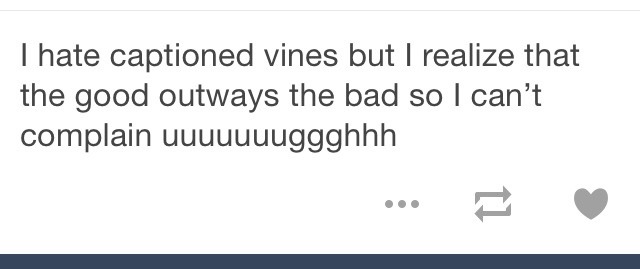
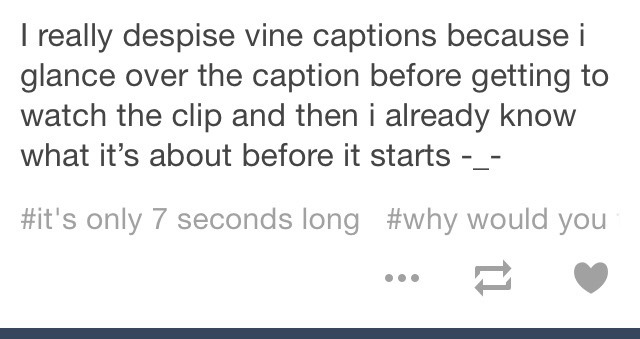
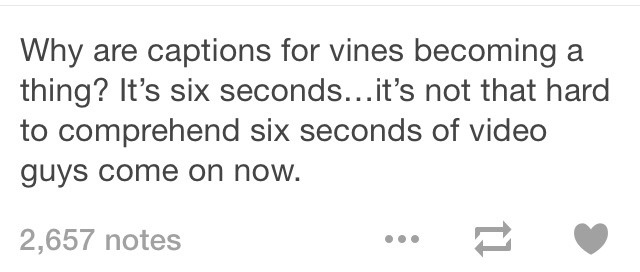
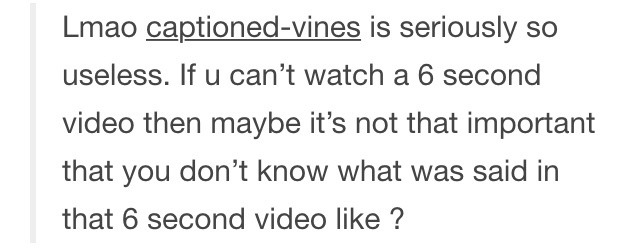
y’know its not like HoH or Deaf, or maybe non-native english speakers watch vines or anything….just a thought….. (BTW Captioned-vines, you’re great, keep doing what you do)
^^^^^^^^^^
Proof that ableism is alive and well on tumblr (well, and everywhere else)
If I could somehow find everyone who ever bullied me and ask them why they targeted me, not a single one would say it was because I was autistic. None of them even knew I was.
Instead they’d say it was because I liked Pokemon too much after it stopped being cool, or my clothes looked ridiculous and I wore the same pair of jeans 3 days a week, or that I was just weird/nerdy/unpopular. In many, many cases, that is what neurodiversity looks like. Not someone with an obvious disability, but someone who’s just weird.
I see so many allistics and neurotypicals on here that claim to be anti-ableism but turn around and make jokes at the expense of people who are eccentric but harmless.
If you’re an allistic that claims to support autistic people, but then you turn around and make fun of the woman who wears a bizarre outfit or the guy who speaks in a monotone or the teenager who carries a teddy bear everywhere, you’re a bad ally and I don’t trust you.
This story would probably be classified as an everyday micro aggression, but micro aggressions can be huge, blatant, discriminatory and very, very public.
I’m an artist by trade and have been since my late teens (I’m 34 now), I’ve lived in Vancouver since 2007 and I’ve been to the Vancouver Art Gallery more times than I can actually count (also, I have memory problems so that’s probably a major reason). I’ve been physically disabled for years, but due to internalized ableism among many other things I wasn’t able to admit it to myself until I had a stroke in late 2013.
That’s enough backstory. Today. Today, I use a wheelchair. I haven’t been to the Vancouver Art Gallery since I started using a wheelchair (although I have been many times with my walking cane and knew a wheelchair was probably inevitable due to the fact that I suffer from progressive conditions and so I’ve been mentally making notes of their wheelchair accessibility for a long time). I’ve seen several other visibly disabled people visiting the gallery in the past, and a number of wheelchair users. The gallery has fully accessible entrances, shop, floors, lifts – even a street-level dedicated 2 hour disabled spot next to the drop off zone right outside their doors.
There are some things that are less accessible – in order to gain access to the café you have to ask a member of staff to take you to the service elevator and once you get up there you better be ready for a fuss because someone will need to move tables AND chairs around to accommodate your wheelchair. The disabled bathroom (on the ground floor) also requires that you physically go around the corner to the security office and ask them to open the door for you (it is automatic – YAY – but locked). Some art plinths are too high to really see what’s on them from a wheelchair.
Still, it’s a ‘very old’ building (for Vancouver, mind) – it used to be the courthouse and the main building was completed in 1905. This was obviously long before it was believed disabled people should ever be seen outside of institutions, so they’re doing very well considering we also have no Canadians with Disabilities Act.
I’ve made mental notes of all of these things, so I thought I was well prepared to zip along in my tiny manual wheelchair and enjoy some fine art.
First of all, let me tell you. I’ve been used to having art gallery security follow my every move with their sharp little eyes and turny little heads, having walked around with a mobile phone in my hand or my camera around my neck; clearly worried I’m going to break that archaic rule of no photographs in some exhibitions. Today, both of those things were tucked away. From the moment I wheeled past the (very friendly) doorman into the galleries the security staff’s eyes were on me. They followed my every move, even stood watching me while I sat still and read some of the large texts on the walls. Obviously they were terrified I was suddenly going to lose control of my little manual wheelchair and go zooming around crashing into rare paintings sculptures all willy-nilly.
“Whatever” I thought “I’m used to this attention”. (I’ve somehow always made security staff suspicious of me – whether in an art gallery or simply at the drug store, it’s the same story; followed everywhere). I have to laugh because at this point I probably sound a wee bit paranoid, but believe me. This is my life.
Having consumed and enjoyed many classic Canadian paintings I make my way to the lifts up to the second floor to see Korean artist, Lee Bul’s exhibit. I am most excited about this, having seen some of her drawings and models online before. A giant room of her drawings spin around me, I take them in with glee, thoroughly enjoying them, and zip round the corner into the room with her latest work; large interactive sculptures made of mirrored shards and a mirrored floor. Several of these sculptures you pass through and experience the shapes and reflections, giving the viewer a chance to gain their own highly personalized experience of the piece. I patiently wait my turn by the first sculpture as I’m excited that it is clearly more than large enough for me and my tiny wheelchair. (I’m very petite and so a manual wheelchair fitted to dimensions I need is luckily very compact – I take up little more room than a person sitting in a compact office chair).
The sculpture clears of the couple of people in front of me (I’d rather wait a turn than cram in there with them, and thus just see my own reflections and in turn ‘reflect’ on my solitary existence and narcissism!). I take a couple of photos (photos are allowed on this floor, as they often are with these kinds of artists and exhibits – the large room has four large sculptures and is filled with people taking selfies).
Suddenly, out of nowhere a member of the security staff has appeared in front of me, bending down with hands on knees (wheelchair using friends, you know the shudderingly condescending stance I refer to; as if I were a small child that needs to learn a lesson). I sweat a little, as is my usual response to the sudden appearance of security staff. I’m fully expecting a ‘no photos please’, even though I know that photos are allowed – I always check. But what comes out of her mouth is this, “Wheelchairs can’t come through here.” No politeness, no niceties, no pleases, no addressing me as a person. I am object. She says it very loudly, likely because I’m obviously physically disabled and either I won’t understand her or I won’t hear her – maybe both!
I am so utterly stunned I just say “WOW OKAY”, turn myself around so that I’m facing away from her and wheel myself out; past the crowd of people that were behind me waiting for their turn. I wheel around the sculpture (which I will note had no more room than inside the sculpture), proclaim loudly to my significant other (‘M’) “Apparently I’m not allowed through there.”, in my best (but shaky) Cross British Voice. He just asks “What? Why?”, so I point over my shoulder and state “SHE SAYS SO”.
At this moment the utter humiliation of the situation sets in completely and I have no choice but to wheel myself away as fast as I can into a corner, behind all of the sculptures and hide. I have no idea if I want to burst into Loud Ugly Tears or spontaneously combust with the very rage of the entire thing. I should state here that I have a number of social and sensory processing issues that all feed into some terrible anxieties; the worst of which is probably Confrontation with Strangers. As a disabled person I’m faced with this reality almost every time I leave my house, even if it’s imperceptible to others.
I stare at the sculpture that’s in front of me with its flashing lights and its surreally appropriate words and blink back hot tears. I grip so tightly on the grip bars of my wheels that I dislocate a knuckle. The bile that regularly burns my stomach and esophagus has turned itself up to 11 and I just want to pop out of existence with a little ‘pffft’ and cartoon dashes in my absence. I wait what seems an impossibly long time, watching the sign on this sculpture flash on and off, off and on. I can’t get any coherent words to line up with my Secondary Voice in my head, just the pictures that my thoughts often exist in are left behind, reeling and spinning and floating around. I’m dizzier than usual. I am outraged, I am deeply hurt, I am horrifically humiliated. I am a young disabled person who appears even younger than she actually is. I wear Doc Martens, biker jeans and have tattoos and extremely short hair. Who the fuck cares.
I stare at every single interactive sculpture in this giant cave of a room, I look down at the mirrored floor, scratched from thousands of feet marks, and hopefully a few wheel marks too. I see my wavy, wobbly, swaying face. I mouth the words ‘None of this is for me.”
M finally rounds the corner of the big, black mountain of an interactive sculpture I chose to hide behind. He tells me he’s spoken to the security manager, because the lady who told me I couldn’t wheel through the sculpture didn’t know anything about official policy. The manager has gone away to check whether this is ‘in writing’ or not, but he generally thinks it’s probably a ‘common sense’ rule. I ramble, perhaps incoherently about why this is such an outrage and why it was handled in exactly the wrong way, and why I just wanted the proverbial ground to swallow me until the manager returns to the floor.
The manager was good. Clearly all about customer service and smoothing things over. He introduces himself, states that no, this isn’t a written policy and that the security staff clearly have a difficult job of making sure everyone enjoys the art safely and respectfully and that yes this clearly wasn’t handled in the best way. Miraculously (I don’t know how) I take a deep breath, pull myself together, and words start eloquently flowing from my mouth of their own accord. “Yes”, I say, “but I just want you to know that the way I was spoken to today was rude and utterly humiliating. It is absolutely discrimination.” He agrees, apologizes and says that yes, he took a look at all of the interactive sculptures and he agrees, I would have no problem fitting in any of them and I should feel free to enjoy them as anyone else. M tells him how he hopes he can spread the word and educate his staff on how to handle this situation in the future and again, somehow eloquently my mouth opens and I state “My wheelchair is a part of my body, I know its boundaries just as anyone does, and have control over it just as much as any other person in here”. He didn’t once crouch down to talk to me, didn’t once raise his voice, he shook my hand, he spoke directly to me, made promises and apologized. We will still be writing in to follow up.
Was the situation rectified before I left? Mostly, yes. Was the security manager good at his job and the ultimate smooth talker? Absolutely. Did he understand how to address a disabled person and speak to them as he would anyone else. Definitely.
I have a number of other things I need to have you listen to before I stick these aching, swollen fingers into a heat pack and give them a rest.
This should never have happened. First off, there was so much room for me in there, remember that I was able to turn myself around, with ease, and leave. Yes yes, I understand that I could have crashed and damaged the art. I am not ignorant (something the security staffer clearly assumed I was). But here’s the thing, so could have any ambulatory person that walked through there. Anyone could trip, stumble, turn around too fast, be too wrapped up in taking selfies with friends, run through in a wild manner – I could go on. Me using a wheelchair does not make me any more likely to damage the art than any of the other hundreds of people that will go through it while it’s on display. This is a risk that both the artist and gallery take into consideration when creating an interactive sculpture. Had I in fact been too large to fit through there (as could have any ambulatory person), she could have easily said, in a quiet professional and friendly tone, something along the lines of “I don’t think you’ll fit through this next bit, would you like me to guide you out of here?” Yes these people have pretty crappy jobs of telling people NO all day, but I wasn’t breaking any rules or doing anything other than using wheels to move around instead of legs.
So, I wasn’t actually able to go back and enjoy the sculptures I’d been kicked out of. How could I? That experience was thoroughly ruined. I was still reeling from the whole thing, hot coals burning in my guts, tears burning in my eyes and the memory of how the group of people behind me backed away and averted their eyes as I stalked out of there (yes you can stalk in a wheelchair, believe me). I am very awful at shrugging things off and moving on. Really it’s one of the biggest things I struggle with mentally, but I am trying my absolute hardest to practice this whenever I can. Today, I actually did manage it to some degree. I turned my back on the shiny interactive sculptures, and slowly and deeply took in Lee Bul’s smaller, darker, intenser models. I am a dark intense person anyway, so this probably suited me. I sought out the quiet corners of the gallery and revelled in the distant sounds, the beautiful art that nourishes my brain meat and tried my damnedest to reset my sensory systems so that I could continue on and enjoy my day without even a meltdown.
Here’s the crux though. Why, above anything else these things shouldn’t happen. I will never be able to go back to the Vancouver Art Gallery, or any art gallery, for that matter, without this incident burned into my highly detailed visual memory. Every time I visit a gallery this will be on my mind: Am I allowed to be here? Is this art for me?
I am a person. Disabled people are people. I am an adult; disabled adults are still adults. Talk to me like a person and an adult. Include me in your decision over whether my body and my mobility aids are suitable for something. Stop watching me like a hawk while neglecting to watch other patrons. Do not exclude me because you think you know better about my ability to control myself or my mobility aids than I do.
Have some bloody compassion. Disabled people are people.
All aggressions are harm. Many actions have lasting consequences long past your part in it.
I am so sorry this happened to you. That’s so fucked up. I want to print this out and give it to anyone who doesn’t believe that ableism is a thing.
I know this is a bit long but I urge you all to read it; I think OP was able to detail the experience in such a way that even my able-bodied followers might come close to understanding what this experiences like.
Did these people [in academia who claim that they are not exposed to disabled people] realize that when they encountered the work of Rosa Luxemburg (who limped), Antonio Gramsci (a crippled, dwarfed hunchback), John Milton (blind), Alexander Pope (dwarfed hunchback), George Gordon Brown (club foot), [Jorge] Luis Borges, James Joyce, and James Thurber (all blind), Harriet Martineau (deaf), Toulouse-Lautrec (spinal deformity), Frida Kahlo (osteomyelitis), Virginia Woolf (lupus), they were meeting people with disabilities? Do filmgoers realize when they watch the films of James Ford, Raoul Walsh, André de Toth, Nicholas Ray, Tay Garnett and William Wyler that these directors were all physically impaired? Why is it when one looks these figures in dictionaries of biography or encyclopedias that their physical disabilities are usually not mentioned – unless the disability is seen as related to creativity, as in the case of the blind bard Milton or the deaf Beethoven? There is an ableist notion at work here that anyone who creates a canonical work must be physically able. Likewise, why do we not know that Helen Keller was a socialist, a member of the Wobblies, the International Workers of the World, and an advocate of free love? We assume that our ‘official’ mascots of disability are nothing else but their disability.
Lennard J. Davis, Enforcing Normalcy: Disability, Deafness, and the Body (via irwonder)
I know. This is a very controversial topic right now but hear me out. Because I am disabled and I am frustrated with what this site has turned ableism into. Nothing more or less than a list of words to be avoided . Tumblr informs me that that is all I have to face and struggle with every time I leave the house. I really wish a simple list was all ableism was. I do. But Why aren’t we focusing on the real culprit here?
Ignorance. Ignorance that tumblr is spreading because they refuse to talk about the real issues. How about the unheard of concept that people with mental disabilities are not stupid! And you know what? Not one single time in all of these lists floating around have I seen someone say that. No, instead we are told that you should not use the word because the mentally disabled should find it hurtful and offensive. Excuse me? These lists have spread all across this site and back. Lists informing everyone that the first thing you should think of when you think of the mentally disabled are the taboo words “stupid” and “dumb”. And no one seems to understand how problematic that is. How you all have single handedly put that label on people by claiming to fight against ableism. Let me instead give you something new to think about. People with mental disabilities are NOT stupid and that word has NO place being used that way. Trying to turn it into a slur? That will never happen. It is a common part of our language. It’s not going away. All you have done is told people that they have a new set of words that should hurt them every time they hear it and made an association so that the first thought when someone hears that word is now the disabled, creating new prejudice and more ableism than before.
Why are you focusing on words instead of teaching that not everyone in a wheelchair is paralyzed? Every person who has ever needed a wheelchair knows all too well that this is a very serious problem that tumblr surprisingly shys away from. And what about the fact that just because you see a person walking in a store or down the street, you cannot assume they do not have a chronic and/or invisible illness? These are some mind blowing topics right? Things that might really educate some people about what ableism is help help limit the prejudice and fear that people face every single time they leave their house.
Ableism isn’t a list of words that some able bodied and minded people put together to inform the disabled what they should and should not find offensive. Ableism is maintaining ignorance and ignoring the real issues.
OH MY GOD THIS.
I would also be very happy if people who are new to the whole disability awareness thing could /not/ just transpose concepts from other oppressions, and look into the history or the movement first. There’s a decades long offline history of trying to normalise the use of disability aids, because everyone uses things to make life easier and those we use should also be considered normal!
I come on tumblr and see that normalisation we’ve been fighting for dubbed “appropriation”.
Reblogging again for this important added point about not misusing the term “appropriation” where it isn’t meant to be used.
I see this all the time with people who are interested in learning sign language being afraid to start because they think that their learning our language will somehow “appropriate” it from us or be offensive to us. Um, no. Us Deaf/deaf people who sign usually WANT more people to learn how to sign so it will be easier for us to communicate with more of the people around us. LEARNING SIGN LANGUAGE IS NOT A FORM OF APPROPRIATION.
This is bad enough when it comes from hearing people who are just interested in the language (whether ASL, in the U.S., or BSL in the UK, or whatever sign language in whatever country). But what is especially heart breaking is that I also see people who really NEED sign language for themselves hesitating to learn it because they’re so afraid of “appropriating” it from Deaf/deaf people. No. Look, if you have a speech impairment, or if you have motor processing or other issues, or for whatever reason cannot always rely on talking as a way to express yourself quickly and easily to others, then YES, you have EVERY right to learn sign language. I’m saying this as a Deaf/deaf person, okay? Please don’t allow hearing people who aren’t even members of the Deaf community scare you off from taking classes, or joining “Deaf events” where you can be around people who sign, or whatever. Please DO learn sign language. I still welcome your learning sign language partly for the selfish reason that it benefits me when more people can sign. But also partly because I want for YOU to have a better way to express yourself if it might help you. Because you HAVE A RIGHT to better communication.
Which brings me to another point: if you’re a non-disabled person, (and here I’m using the general “you”, not specific to one person) then, I’m sorry, but it’s really not appropriate for you to be deciding on our behalf what things are “ableist” or not. Instead of talking over disabled people and arguing why yet another 100 words needs to be added to the list of ableist words, how about doing some reading to learn about the ways that far more serious forms of ableism impact disabled people? For example, did you realize that, YES, some people DO commit hate crimes against disabled people? That disabled people are very disproportionately targeted for abuse, torture, and other violence? That accessibility barriers can often block us from accessing an education, or job opportunities we are qualified for, or using public transportation systems, or accessing basic health care services, and so on? Please go learn about THESE and consider ways to stop THESE forms of oppression. That would be a far more productive use of your time and energy.
Check out this blog post, which has a list of links you can explore to learn more about what ableism really means, besides just a list of words. This will lead you to a mix of academic, journalistic, and anecdotal sources. The anecdotal sources for the most part are written by people who have disabilities sharing their own first-hand experiences:
This is important. For a long time I was afraid of admitting there was something wrong with me, then I was afraid of admitting it had an impact on my life, then I was afraid of calling myself disabled. Because I was afraid of somehow becoming part of a community that society looks down upon.
I am a disabled person. I cannot function “normally” in everyday life, I have had to adapt to function. And that is okay. What’s not okay is that I’m afraid of telling family members who think being disabled is a dirty word. My family—who was so adamant my brother did not have a developmental disorder and so he did not receive the treatment he needed as a child—is ableist. I will not be accepted by them because I identify as what I am: a person with an invisible disability.
That is ableism.
That is what hurts disabled people.
Ignorance and fear. Not words. Access issues and challenges. Not appropriation. Judgement and arbitrary “rules” about disability. Not acceptance of who we are.
Reblogging yet again for yet more important commentary
With regard to the ‘stupid’ thing, I have heard some people saying that equating ‘stupid’ with cognitive disability is far more ableist than the word ‘stupid’ could ever be. But we’re few and far between and people don’t listen to us. We’re also supposedly insensitive to the suffering of people who’ve been called stupid for having a cognitive disability, or other words, etc. Hell, the word idiot is in my diagnostic papers – something I doubt the vast majority of people alive right now, of any diagnosis, could say – and I don’t think the word needs to be abolished. I also am aware that its use as an insult predates its use as a medical term, but the people who make the word lists don’t seem to want people to know that.
There’s also the fact that it’s ableist to expect everyone to memorize a list of words that is not okay, and then for each word, to memorize a list of substitute words that are okay. It’s ableist because lots of disabled people are partially or totally incapable of that. They say it’s easy. They all say it’s easy. And the few who don’t say it’s easy say everyone should try anyway. I’ll agree that there are certain words that should almost never be used. Retard is one, vegetable (when referring to a human being) is another. But some people would have you believe that stupid is just as bad, and to me that cheapens the definition of what a slur is. Hell, even crazy, which approaches a slur more closely than stupid does, isn’t quite a slur in most contexts.
And these word lists, they become shibboleths. A shibboleth is a word or phrase used to distinguish an in-group from an out-group, either through pronunciation or through knowledge of the word in general. And that’s more the real function of these word lists, than an attempt to not be ableist.
And when I see oppressions listed out, I’ll see a thoughtful discussion of every other form of oppression. And then they’ll get to ableism. And it’ll be, “Fighting ableism is about understanding why it’s bad to call people stupid.” And that enrages me because disabled people are incarcerated every day for being disabled, we are dying every day for being disabled, but ableism is all about words. And by focusing so hard on words, people are acting like the rest of this stuff isn’t even happening.
And people say it’s not happening. Especially people from other oppressed groups. “Nobody’s ever locked up for being disabled.” “Nobody’s killed for being disabled.” “Disabled people aren’t subject to genocide.” To which my response is basically WTF, WTF, and WTF. Hell, someone nondisabled studying what happens to disabled people coined a new term, eugenocide, to describe the way eugenics has played out for disabled people both in the past and present.
Oh yes and can’t forget the way, when people discuss eugenics, it’s entirely in terms of race and sometimes class, but never disability, even though ableism is the fundamental principle that the specific kinds of racism and classism found in the eugenics movement were based on. Similarly, ableism isn’t really that important to learn about according to most people, even though it holds a position at the heart of every single other kind of oppression out there, a conclusion many disabled people from many different backgrounds have come to, independently of each other, because it really is that obvious once you know what you’re looking at.(1)
It also just makes me feel ill sometimes… because disabled people are out there dying right now, in horrible ways, directly because of ableism. And most people, including most people who claim to be fighting oppression, don’t notice, don’t care, or both. And the entire idea that ableism is a list of words feeds into this idea that disabled people don’t face real oppression.
I mean, what if all you knew of classism was: “Don’t say poor (say bad instead), rude/crude (say impolite), mean (say unkind), low (I’m going to stop acting like a thesaurus now because I suck at this), coarse, vulgar, cruel, etc. because all of these things can be tied in with class on some level etymologically or directly, if you squint at them hard enough and tilt the paper to the side.”(2) Would you take classism seriously or believe that it kills people? And a lot of the ableist word list crap has less basis than the list of words I just used.
(1) And no, this is not “my kind of oppression is worse than your kind of oppression” nor is it “my kind of oppression is the worst in the world” nor is it “my kind of oppression is unique” nor any of the other knee-jerk reactions people have to hearing ableism is at the heart of every other kind of oppression.
What it means, is just that you can’t deal with any kind of oppression without dealing with ableism, because there is always some core belief about, or action towards, every oppressed group of people, that is ableist in nature. And if you don’t address the ableism you’ll never get anywhere much, you’ll just shift things around for other people to have to deal with.
It’s sort of like you can’t deal with homophobia without dealing with sexism, because sexism is built into core aspects of homophobia. Except ableism is built into core aspects of every major kind of oppression that exists. Try to find a kind of oppression that doesn’t have some core belief about the abilities and inabilities of the oppressed people in question. You won’t. I don’t know how ableism got so intertwined into everything. There are other oppressions that are intertwined like that (like homophobia and sexism) but I haven’t yet found another one where it’s intertwined across the board.
And also, this kind of intertwined is different, and deeper, than the only kind of intertwined I’ve seen SJ people deal with. Which is people dealing with multiple oppressions at once: Lesbians deal with sexism and homophobia at once, for instance. But lesbians dealing with sexism and homophobia at once, is very different from the fact that homophobia contains sexism (and, for that matter, ableism) at its core.
So when I talk about ableism being so deeply intertwined with all other oppressions, I’m not talking about the fact that there are disabled people facing other kinds of oppression at the same time, and the way these things interact. That’s important, but it’s not the same thing. I’m talking about something closer to the way IQ is used against people of color, to pick one example among many. You couldn’t have that situation without ableism, and you can’t address it properly without addressing ableism. You can pretend to address it, sure, in the way most oppressed groups pretend to address it – keep the ableism but distance your group from disabled people as much as possible. But that will never get rid of the problem.
And what angers me about this the most is that not only do people not see this, but when it’s pointed out to them, they find ways of ignoring it. Mostly by saying that disabled people are trying to claim that our oppression is special or something. When that’s not what we’re saying. We’re saying our oppression is bound up with all other oppressions in a very strange way. We didn’t create the situation, we don’t want the situation, but the situation exists. And not only do people ignore it, not only do people find ways of telling disabled people that we don’t know what we’re talking about, but people then turn around and say ableism is the least important kind of oppression if it’s really oppression at all. Which would be bad enough if it were just throwing disabled people under the bus, but it’s really throwing everyone under the bus, including the people who say it, and they don’t even know.
Also I’m oppressed in way more ways than disability. If it were really “my kind of oppression is special” wouldn’t I have done it with every kind of oppression I experience, not just one of them? Or is it that, due in part to ableism, people see me primarily as a disabled person and forget that I’m also dealing with sexism, homophobia, sizeism, transphobia, and classism on just as much a regular basis as ableism? So if I were going to declare “my kind of oppression” the worst kind, I would sort of… no I can’t even imagine it so I’m not going there.
(2) Please for the love of everything holy, do not start a “classist words we shouldn’t say” list based on my list here. That would miss the point in a spectacular yet horrible way.
I come back to this post every so often because of how influential it’s been to me and how I look at ableism. As a baby autie just learning about social issues, ableism was something I kind of tossed aside because I only ever heard about what words were “wrong” to say. I didn’t start learning about it until later, when I started looking into the “mercy killings”, the casual eugenics, psychiatric/medical abuse, workplace discrimination, and all the other things that make up the complex beast that is how we look at disability, that I finally started wrapping my mind around this stuff.
The thing is that ableism is one of the brushed over topics in sj circles, mainly because disabled people are simply not considered. We’re not seen as worth considering, and people don’t take time out of their day to actually educate themselves about all of the nuances of what ableism is. Anyone who does take a moment to consider us often just takes that list of words, extinguishes them from their vocabulary, and say, “Well, I guess I fixed that problem now.”
I’m a person who’s been called “stupid” and “retarded”* by people in my life, and those words, while painful, were not what made growing up difficult for me. The lack of understanding, the bullying, the fact that I didn’t know how to ask for accommodations, the fact that getting a diagnosis was so difficult because I’m afab. There are so many different aspects and experiences erased by simply “getting rid of words”.
*note: The useage of this word isn’t okay, but I’m saying that this isn’t the main problem I’ve faced.
All of this post is basically what I’ve been saying for a long time.
You guys probably don’t remember but about a year ago I got called out for using one of these naughty buzzwords- lame. By someone who is able bodied. Bc they’d seen that list and thought they were being a good ally for “calling me out”. I literally cannot walk without an aid and I told them to fuck off,basically.
All I’d add to this is that even WITHIN the disability community we must take care not to talk about experiences that aren’t ours. Like, a lot of disability overlap but…if you only suffer from mental disability don’t speak for people with physical; if your disability is developmental don’t speak for people who have mental disability, if you have physical disability don’t speak for autistic ppl etc. Like if you overlap, go ahead, but I’m tired of seeing ,for example, able bodied depressed people say “but it makes me feel sick this is a physical disability!!! ” which… happens a lot. No its not, stay in your lane, how can you compare temporary sickness with lifetime/long term physical disability? Just don’t.
The disabled community needs a bigger voice tbh.
I’m going to preface with this with the fact that I needed to use the speech function to process this wall of text and that I have memory issues so I don’t actually fully remember what the top said other than the notes I took on what I wanted to respond to, so if I’m repeating or missing something I apologize and it’s probably not on purpose.
I’m pretty new to the tumblr specific ableism conversation, I don’t really venture out of the disability community so I can’t comment on how it’s perceived coming from the other end. However I’ve only ever seen those don’t use these words a handful of times.
I’ve seen appropriation, almost exclusively in terms of mobility aids. (I saw once the idea of ASL, but as someone who uses it both because of being from a Deaf family and also for non-verbal episodes due to anxiety I commented and moved on quickly) I understand and agree that using mobility aids to represent limitations is ableist I also understand it’s not the worst thing. I was dragged by my ankles out of class once because the teachers trusted that I didn’t have the communication skills to tell on them. I am not unknown to the abusive medical establishment. This isn’t about it being out of my experience. But I also have a very hard time with the word dumb. Like I said I’m in a Deaf family. I have been told that dumb exists to equate the ability to communecate with intellegence. My mum was called dumb because she couldn’t speak well because she’s HoH. In a way it could be supposed that it’s ableist that she was offended to be lumped in to a group with lower intelegence. But that’s not really the point. The point is individual people will have different experience with words. My mum would be more offended for you to call her Dumb, than Retarted because of her life experience. And so it comes down to being respectful of peoples individual preferences over obscure lists meant to encompass everyone.
^I can’t even make sense of what I was trying to get through in that paragraph so if it makes no sense I’m sorry, and if you think you get what I’m trying to say I’d love to hear it and see if you’re right.
Basically what I’m getting at is that if a person with psychosis tells a person without psychosis that they’re offended by the way the person without psychosis used the word crazy, the person without psychosis should not use the word in that way. But the person without psychosis isn’t allowed to turn around and tell a different person with psychosis that they’re using crazy wrong, generally in a totally different circumstance.
It’s like white people policing how black people use the N word.
I heard a disability slur the other day that I’d never run across before. It was in a social justice context (surprise surprise), and one commenter said to another: “If you really believe that, you probably shouldn’t go out without a carer.”
Ah, yes. It’s the ultimate insult: Being disabled and needing a caregiver. Wow. Is that the hierarchy in which most people live? Yes. Could the hatred be any clearer? I don’t think so. That kind of thinking speaks volumes about how even the most enlightened radical folk see disabled people — which makes such radical folk not radical at all, but really quite mainstream.
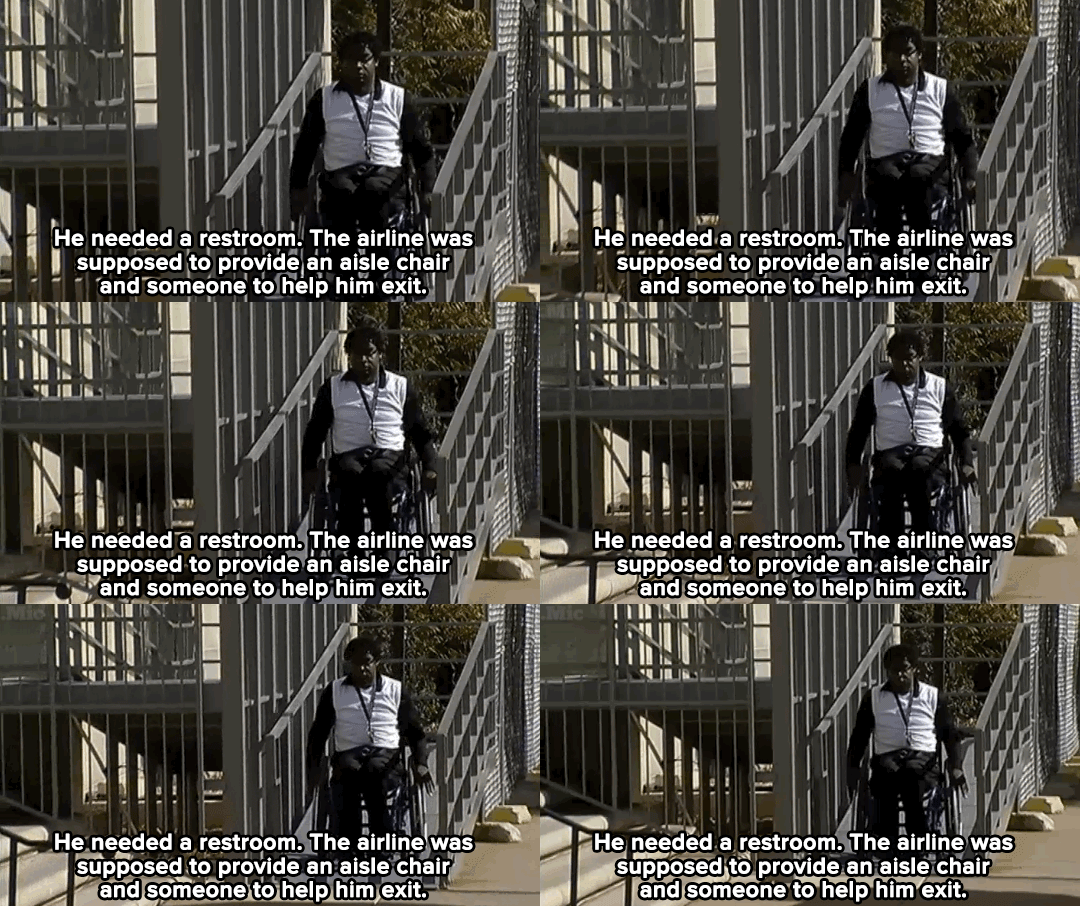
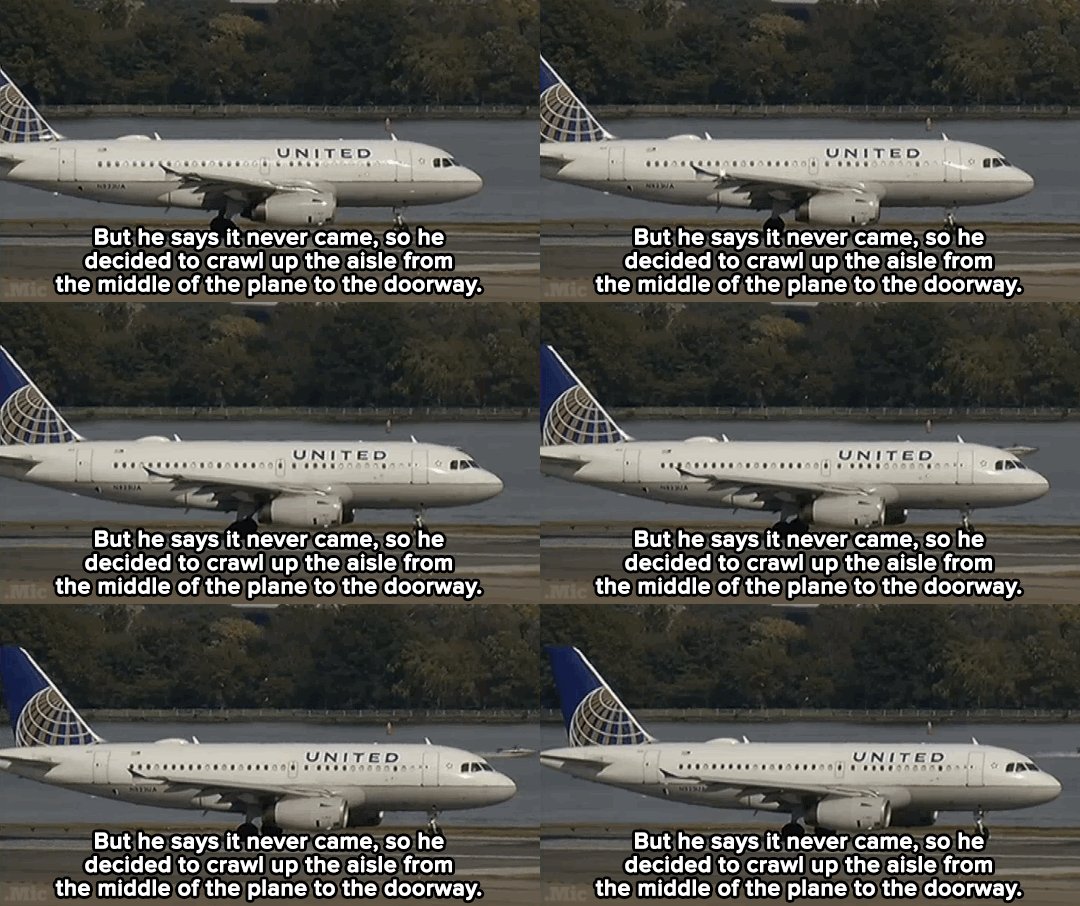
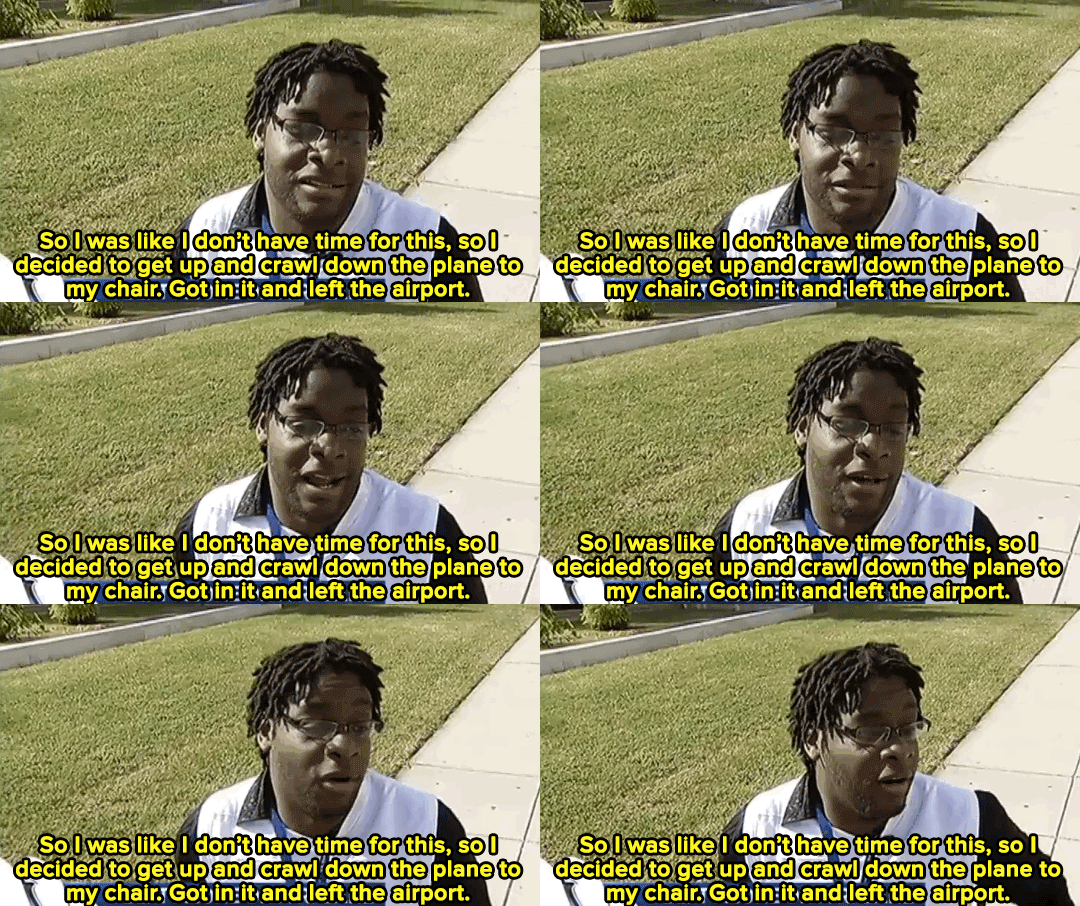
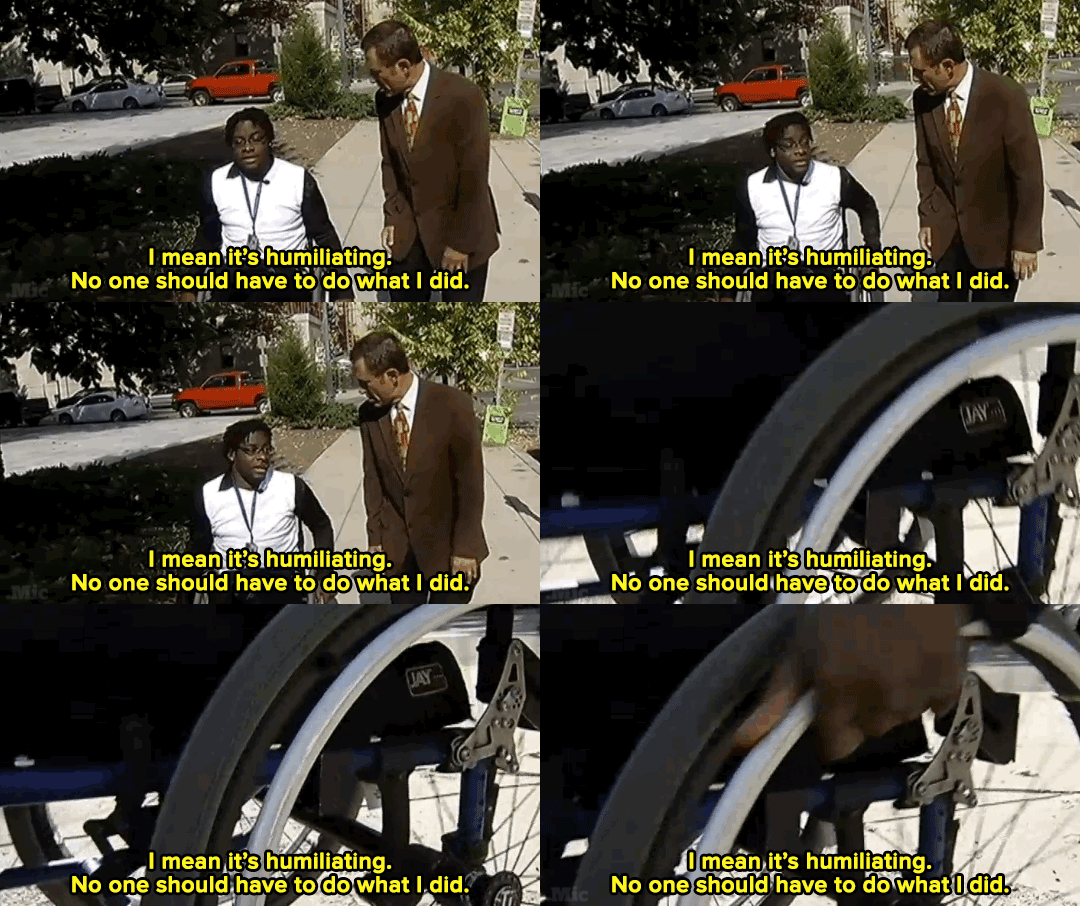
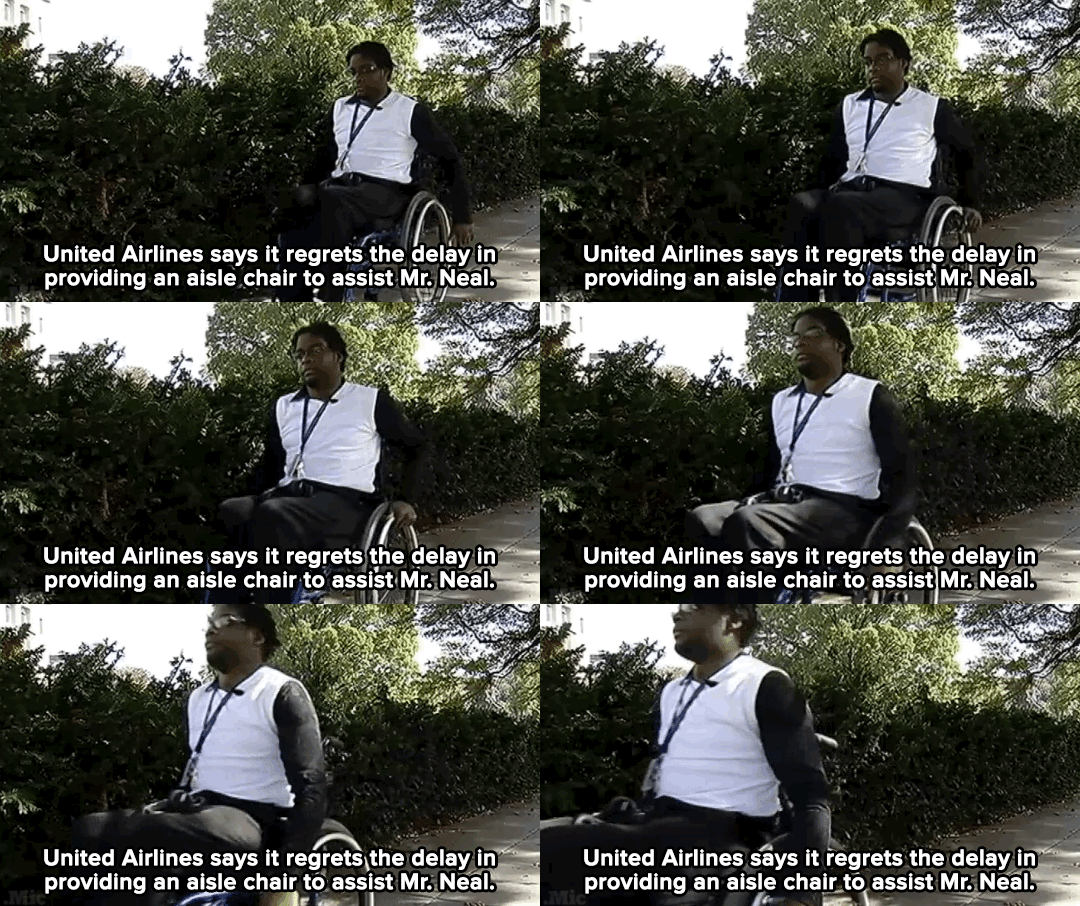
D’Arcee Neal is no stranger to travel and the complications that can come with it, but his experience on a United Airlines flight Tuesday went beyond imagination. Neal said the incident proved to him that the airline industry is stuck in the stone age when it comes to accessibility.
Something like this happened to me too. I was supposed to have a guide thru a huge airport and they just never showed up so I left b/c I had to get to my gate but I ended up stranded in the middle of a crowded walkway with every single employee who walked by refusing to help me for a half an hour before I got someone to help. It was delta I think, but yeah this kind of shit happens with p much every airline. The entire industry is fucked up and completely inaccessible.