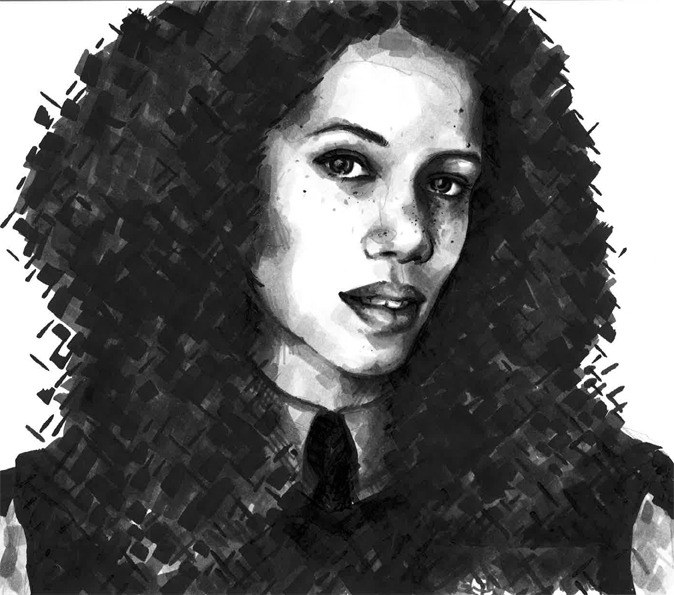
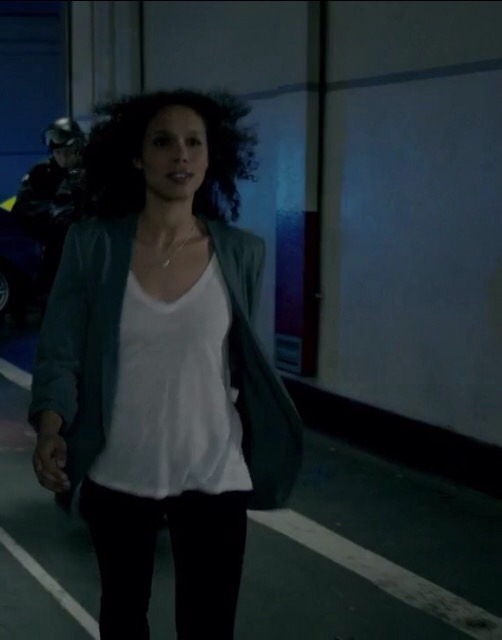
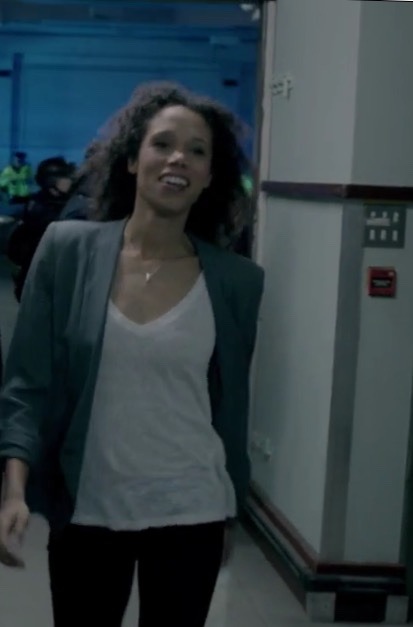
Sally Donovan
Because I haven’t drawn her yet that’s why…
Steven Moffat on twisting his words about gay representation to suit Johnlock conspiracy theorists (from With an Accent interview):
“What is irksome is what I am talking
about is quite a serious thing, a serious question, seriously answered
by both myself and Bryan Fuller who managed to answer much more quickly
than I did. I was talking about the representation of minorities in
science fiction shows and in popular culture. Using the example of
talking about gay characters and how you present them. I was actually
largely talking about Doctor Who, ’cause Doctor Who addresses children. And I was talking about how do you handle gay characters in a fiction like Doctor Who
when you are addressing very directly, children. You don’t want it to
be campaigning. You don’t want to be table thumping about it. You don’t
want to essentially tell children that there’s something to campaign
about. You want to say this is absolutely fine and normal. There is no
question to answer. You want to walk right past it, in a way. You don’t
want to… If you say, as sometimes other kinds of literature or movies
might, we forgive you for being gay. You’re just saying you’re gay and
it doesn’t matter. There’s no issue.”“That’s what I was talking about.
Was not talking, I was very much specifically not talking about…”
continued Moffat, clearly passionate about the topic, and frustrated at
the way his words have been twisted, “It is infuriating frankly, to be
talking about a serious subject and to have Twitter run around and say
oh that means Sherlock is gay. Very explicitly it does not. We are taking a serious subject and trivializing it beyond endurance.”[…] “I was talking about representation, as
was Bryan, in quite a serious way. What they did was scale back that
conversation and make it about something extremely silly. And that’s not
helping anyone. I cared a lot about what I said on that panel. I meant
it. And I don’t like it being reinterpreted as something else. [We’re]
not telling anyone what to think. Mark isn’t saying other people can’t
write that version of John and Sherlock getting together. We’re not.
We’re not engaging in a clever conspiracy to write something under the
radar, we’re just writing the show we’re writing.”I clarified, at this point in the conversation, “That’s not the story you’re telling.”
“Yeah, that’s it,” Moffat responds.
“But they can. They can. Once we hand the show to them, it’s theirs and
we’re finished with it. They can do what they like.”
…I don’t know what to make of this, not in the slightest, beyond “I suppose that puts that Johnlock Conspiracy thing to rest” and “whilst I’m not qualified to talk about what counts as ‘good’ representation of gay characters, he…really isn’t either?”
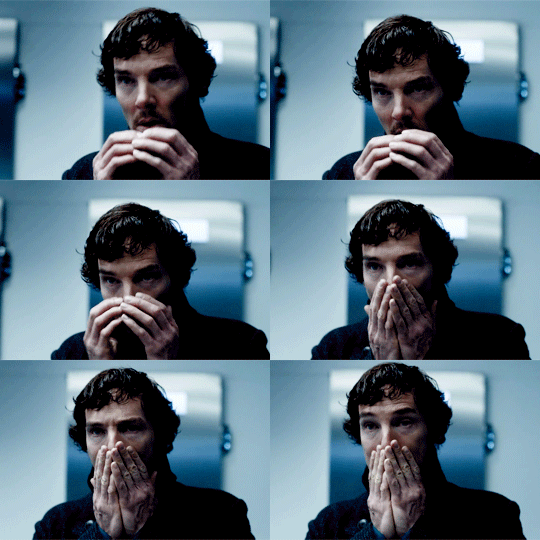
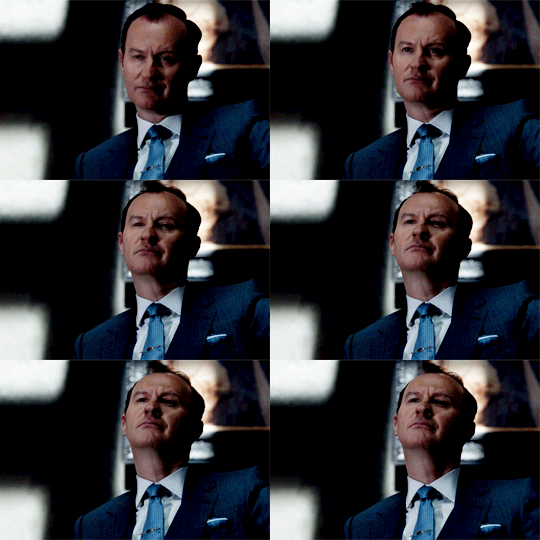
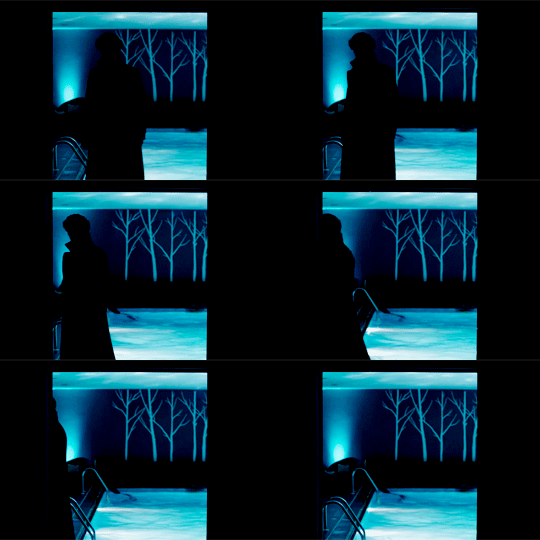
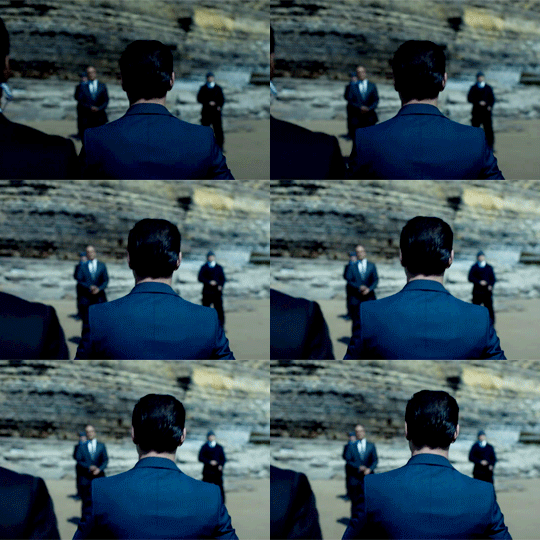
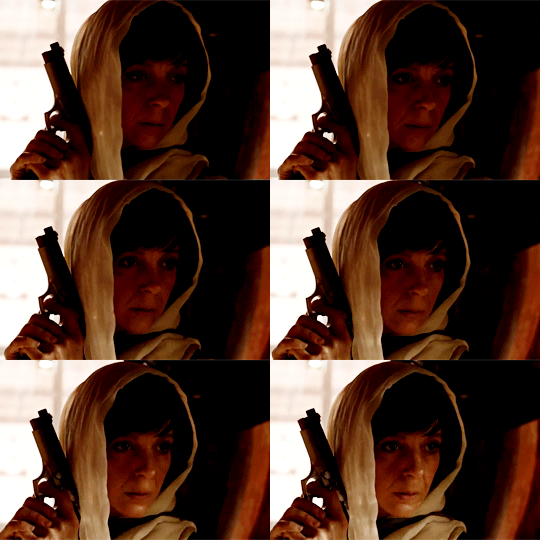
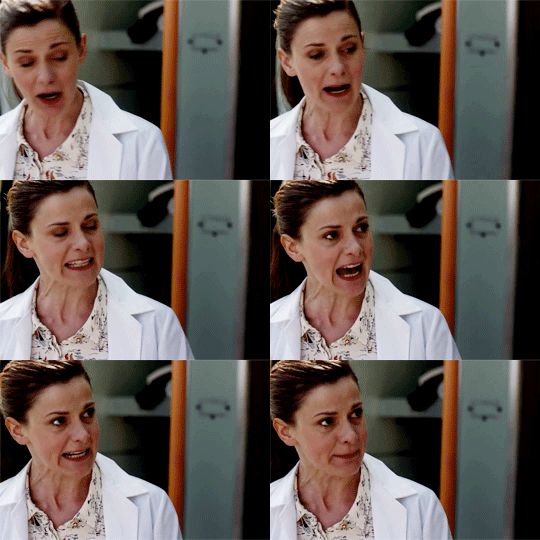
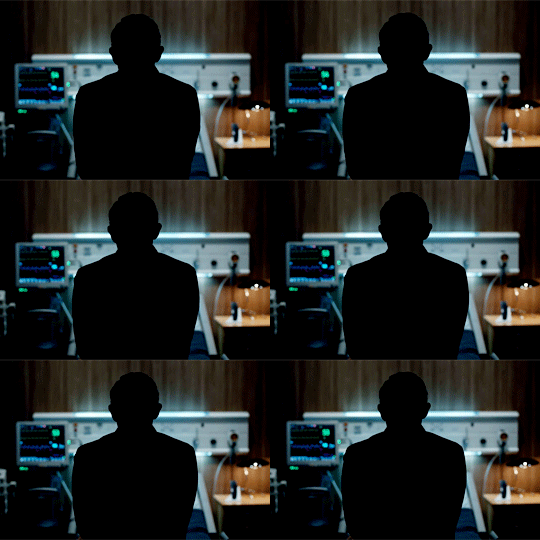
Sherlock, Series 4: First Look
Is that the Doomsday/Time of Angels/Dinosaurs on a Spaceship beach (aka Southerndown) again?!
I am so sick of people saying that fans of Johnlock hate Mary/Amanda.
I love Mary as a character and that character happens to be a villain.
I also love Amanda and her puppy cuddles.It is possible to love a character but acknowledge that they are not some kind of precious and pure snowflake.
Ugh.
But she’s not a villain. She’s no shining beacon of pure pureness, but she’s not a villain.
Okay, lets look at some facts about Mary:
She lied to John about everything.
She has killed multiple people and went “rogue” and became an assassin who was most likely paid to murder all sorts of people, innocent and bad.
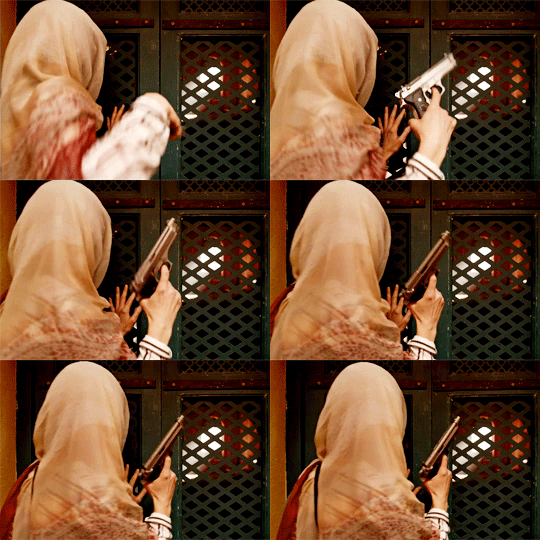
She killed Sherlock, stopped his heart and in this scene you can see that the surgeons have stepped away from trying to save Sherlock and have probably pronounced him dead.
No one is such a good shot that they can know that someone will come back to life.She threatens Sherlock and tells him he can’t tell John.
She is possibly one of the snipers at the pool who worked for Moriarty.
She herself says that if John knew the things she has done that he would not love her anymore.
She is possibly involved with Moriarty or is Moran of both or she IS Moriarty.
Amanda says she is fucking psychopath.
Tell me, does none of this sound like a villain to you?
It’s textbook.Also, this is just a very short list and I could go on and on but I’m pretty sure this gets my point across.
Let’s look at some facts:
- John and Mary love each other, as people. The rest is backstory: fit to burn.
- Mary described her work as an assassin by saying “People like [Magnussen] deserve to be killed, that’s why there are people like me.” It’s a view shared by men who say things like “but he wasn’t a very nice man” and “neonazi; don’t waste your time”.
- When she left that life, she chose to become a nurse. She could have done anything; she decided to heal the sick.
- No one can stab someone through a belt and not kill them until they take it off; and yet. A woman who can shoot a hole through a coin in a dim corridor doesn’t miss a man’s heart at five paces by mistake.
- Invented theories are a sign that you’ve passed beyond finding reasons
- Amanda says that they’re all psychopaths, and she did that because she’s using the word as a causal term for ‘person more suited to the greenworld than mundanity’. Which is its own problem, but not related to Mary’s heroism.
Moriarty was a villain, Magnussen was a villain, that cabbie, Lord Moran, the photographer guy and the random racist-stereotype Chinese gang-slash-circus were villains. (Irene was
almost, but not quite a villain.)
Mary isn’t.
She has a pretty similar backstory to Black Widow, really.
Very true. There’s also the drugging in Baskervilles. Sherlock is an asshole, but we still root for him. But the moment Mary does something selfish like that, trying to protect the life she built with John after rejecting her past, people label her pure evil. She did a bad thing, yeah. She’s a complex protagonist, like him. That’s good.