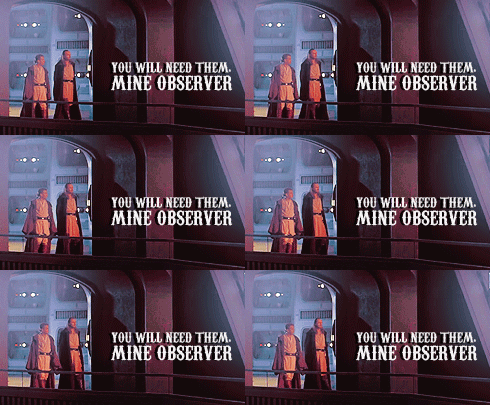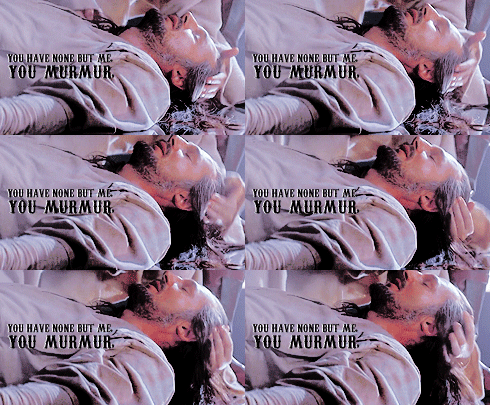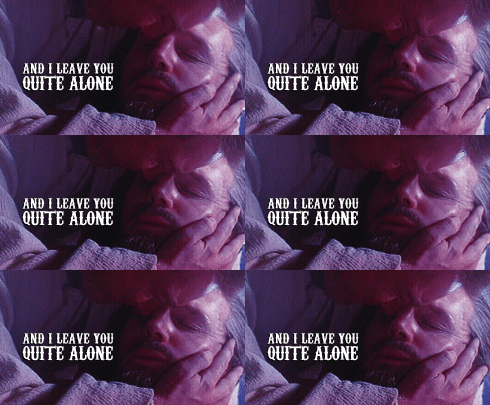





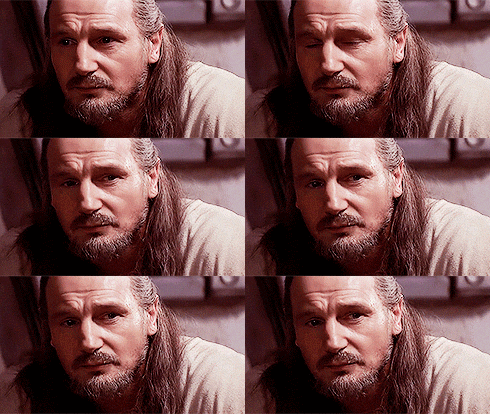

A Gif Meme: merrlocked asked: Star Wars + Most Attractive
qui gon jinn

do you think obi-wan ever referred to qui-gon as his father when he was constructing the civilian “ben kenobi” identity, though?
i mean, clearly there were elements of his jedi identity he couldn’t bear to part with – he kept his last name (the only link he had to his pre-temple past, really), the lightsabers (both his and anakin’s), the robes. so he retained a certain reckless sentimentality, clearly, even in his disguise and exile?
and there must have been records to forge and backstories to make up and a whole past to fabricate and i just – well, i wonder, if he were ever asked to name a fictional father for a database or for a form or even just by a stranger in a cantina – i wonder whether the name “qui-gon” could’ve just slipped out
idk, it’s 2 am and i like making myself sad about obi-wan kenobi
This is my headcanon now.
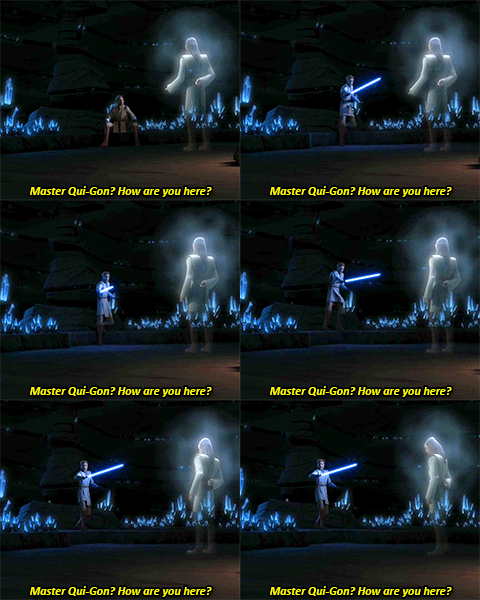
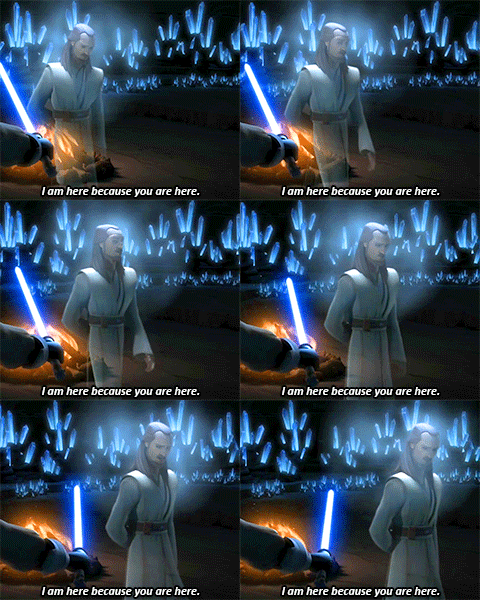
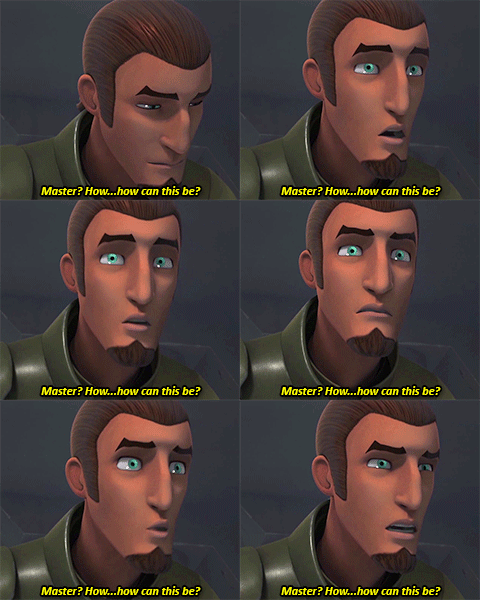
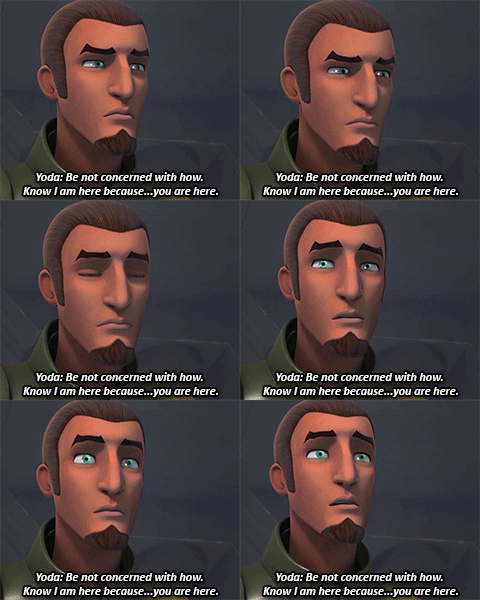
“I am here because you are here.”
Can we talk about how Obi takes a step back to gain the high ground, cause his light saber training?!?!?
Sometimes I wonder if Qui-Gon was concerned by how much the war had changed Obi-Wan?
Like Qui-Gon would probably understand how his death had affected his apprentice, but the way the movies and The Clone Wars played out they made it seem like Obi-Wan wasn’t permanently scarred by events of The Phantom Menace. Perhaps because he (and everyone else) did think for a while that Darth Maul was dead, they had closure and moved on.
The war was different because it just went on and on and on. The unwavering wariness for confrontation, the growing weariness towards the war… did Qui-Gon notice these qualities developing in Obi-Wan and did it worry him?
I summon youto bring out the Jedi Apprentice references.DIDST THOU SUMMON ME???
ahhh I feel like a mythical creature now hahaha XD
I don’t…guess I have anything really amazing to contribute, but let me gush over this in wayyyy-too-long meta anyway??? Cause damn, if that isn’t one of my favorite lines in the whole series.
I mean, LOOK at it. Obi-Wan doesn’t just take a step back; he takes one and then keeps going. He draws his saber.
Just…pausing to process that for second: Obi-Wan draws his saber on Qui-Gon – or, from his point of view, an apparition taking on Qui-Gon’s form. Which, given what we know about Obi-Wan (that no matter how many times Qui-Gon gets into it with the Council, loyal-to-a-fault Obi-Wan always elects to follow him anyway), seems incredible.
But it makes sense. Obi-Wan has spent years and years forcing himself to accept Death, Qui-Gon’s in particular. This apparition throws everything he knows into a tailspin. He doesn’t believe it. And (in my own personal interpretation, which absolutely no one is obligated to share), I don’t think he believes it even after he puts the saber away, even after he’s had an entire conversation with this thing that walks and talks like the long-dead person he’d loved beyond measure. To me, Obi-Wan is much more likely to interpret “I am here because you are here” as “The Force is tripping on this planet and I am a projection of your own thoughts/wants/needs/memories”, because the alternative is absolutely, positively impossible, cannot be true, Qui-Gon is dead, you can’t have him back, period, the end, we’ve been over this, stop thinking about this absurdity you dealt with that a long time ago there’s a war on get yourself together Kenobi.
But…I am here because you are here.
This says so much, and in so few words – and thank goodness, because Obi-Wan won’t say any of it out loud. You’re right when you talk about the deemphasizing of TPM – Obi-Wan certainly doesn’t talk about it much, and it isn’t referenced much in the show, outside that Maul moment. And of course that’s how it would be – Obi-Wan has been taught since he was a baby to accept and then let go of emotions. It’s not Jedi-appropriate for him to dwell, not encouraged for him to fixate on a loss, and Obi-Wan has always truly believed in the Jedi way, even when it’s a struggle for him. So – he knows he was attached, he knows he failed in that regard, but he does his best to deal with the consequences, and his best means that we don’t see the echoes of Theed anywhere near as much as he’s feeling them.
But then we get a line like this, and whether Obi-Wan is talking to actual!Qui-Gon or to a funky Force projection drawn from Obi-Wan’s own mind, the meaning stays the same: it is with me always. Obi-Wan carries Qui-Gon with him everywhere he goes, in everything he does. This is the line that belies the idea that TPM didn’t affect him much, the one that reminds us what Obi-Wan has been holding, quietly and without complaint, for years. Obi-Wan worked damn hard to come to terms with losing his teacher – parent, in many ways, let’s be real – he worked hard to find the measure of peace he’s achieved – and even though the healing he did is genuine, the loss is never forgotten, either, even if it goes unspoken now more often than not. Everywhere I am, there you are also. Silently, maybe; invisibly, maybe; but present nonetheless.
*slow clap* You’ve done it again pan. I am a fountain of tears ;__;
Just so you know, your interpretation of what Obi-Wan thought that vision really was is actually canon. Anakin said as much in the Yoda arc.
God, I love the Obi-Wan/Qui-Gon relationship. It breaks my heart in so many ways.
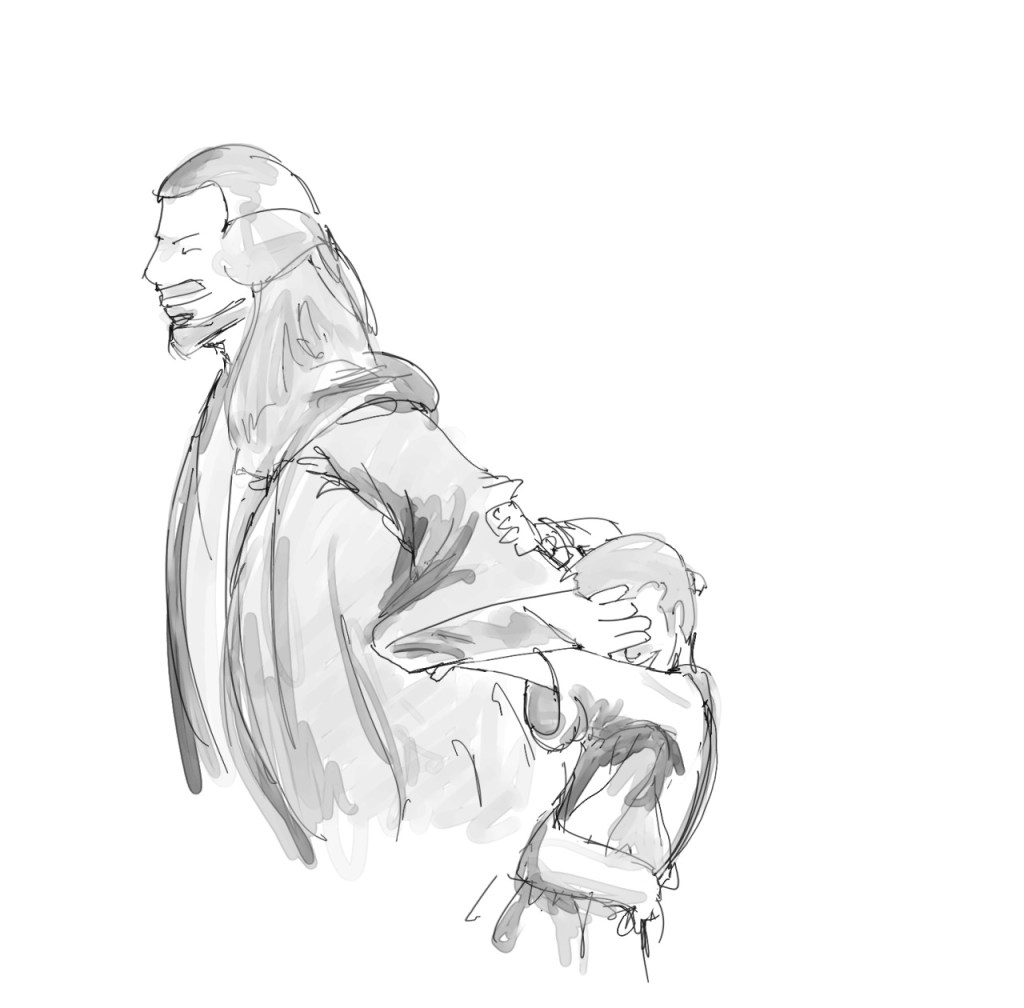
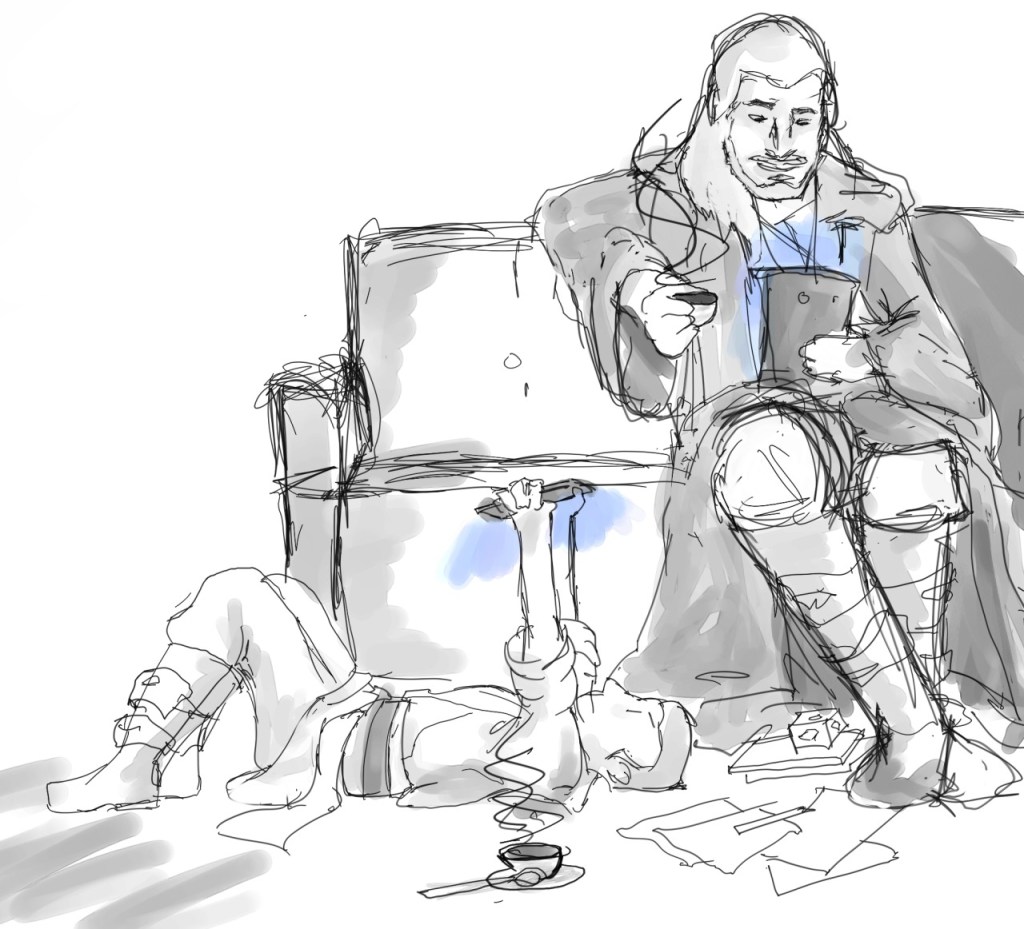
I put this in the tags of this reblog the other day, but I guess I might as well make a post out of it. And add pictures, because hey, why not.
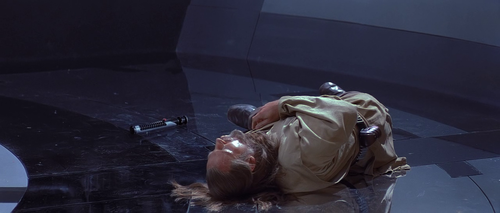
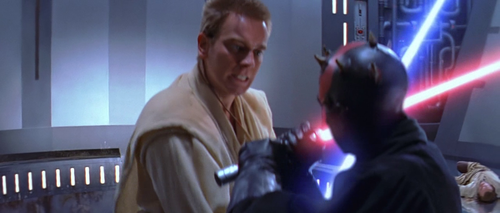
Sometimes during the duel in TPM I think about Qui-Gon lying on the floor, knowing he’s dying, listening to Obi-Wan screaming, knowing that as soon as those ray shields go down Obi-Wan’s going to come through and go after Maul on his own. And if Qui-Gon, a Jedi master, couldn’t defeat Maul, then there’s barely a snowflake’s chance in hell that his apprentice can, which means he’s going to have to lie there helpless on the floor and listen to Obi-Wan die. He can’t pick up his lightsaber. He can’t even turn his head to watch. He can’t give Obi-Wan any help.
So when the ray shields go down and Obi-Wan comes through, all he can do is listen to the duel, to the clash of lightsaber on lightsaber and flesh on flesh. They’re not yelling, they’re not taunting each other: they’re fighting to the death, deadly and quiet and he can’t see what’s happening, just the occasional flash of a lightsaber now and then. It’s a small space to fight in, but somehow the duel doesn’t come near him. Obi-Wan’s still putting himself between Maul and Qui-Gon. There’s hope, a little, but not much. Obi-Wan’s good, but he’s not that good. Qui-Gon’s better, and look where he is now.
And then Obi-Wan goes over the reactor shaft.
And Qui-Gon knows he’s not dead, not yet, but he hears Maul kick his lightsaber over, listens to the sound of Maul’s lightsaber on metal as he sends sparks showering down onto Obi-Wan. And thinks, “this is the end. I failed. No one’s going to be able to tell the Council what happened and this is important. This is the Sith.” It’s not even that his apprentice is going to die. It’s that his apprentice is going to die and Qui-Gon is going to be there and not be able to do anything and that is torture. And that this is maybe the single most important event in the history of the Jedi Order — the return of the Sith — and no one is going to survive to tell the Council.
Just think about that. Qui-Gon was alive through the entire duel. He was dying — but he was still alive. And he couldn’t even turn his head to watch.


Why must you hurt me in this way.