Look even a little past the surface, and Peter Pan is revealed as the tragic figure he is at heart. Yet only one version of the story has really acknowledged this. Not coincidentally, it’s by far the best one: P.J. Hogan’s 2003 film Peter Pan.
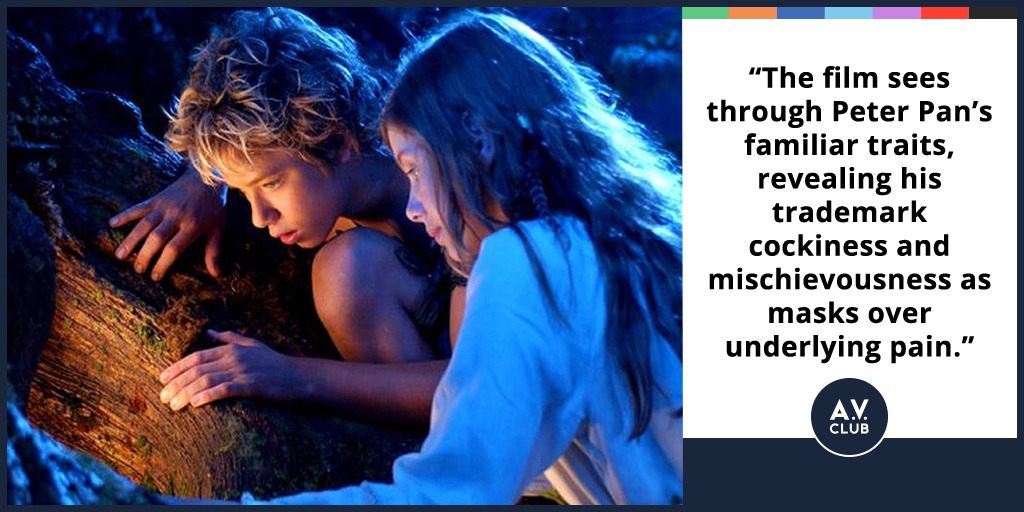
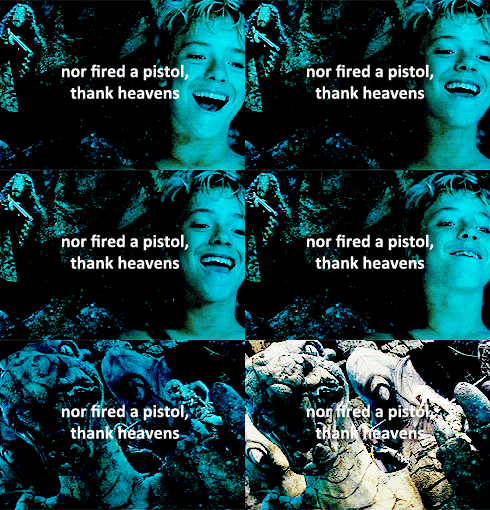
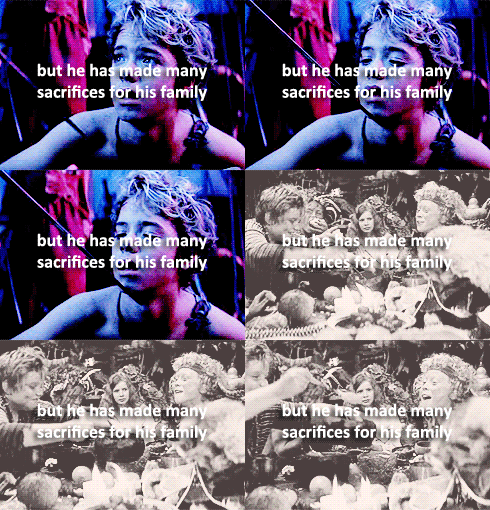
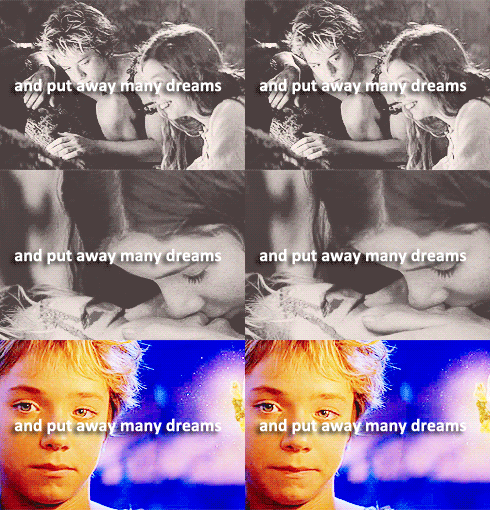
The Peter Pan of this film (Jeremy Sumpter) is a wounded creature. Like many troubled children, he reacts with hostility and violence when attacked, though the dangers that set him off here aren’t the physical kind posed by Captain Hook, but emotional ones that are threatening in their adultness. The film sees through his familiar traits, revealing his trademark cockiness and mischievousness as masks over underlying pain. When claims he wants only to be a boy and have fun, Wendy calls bullshit: “I think it is your biggest pretend.”
Remember that Pan’s ability to fly is contingent on not just fairy dust, but optimism; if he lets unhappy thoughts into his head, he will quite literally fall. This doesn’t result in a joyful character, but one in denial. When he plays a kind of word association game, pairing “jealousy” with Tinker Bell and “anger” with Hook, he claims ignorance at the word “love,” hissing that “the sound of it offends me.” While it’s never underlined in close-up, there’s a scar running across Sumpter’s heart.
Everyone always wants to talk about Hook or Pan. Everyone always wants to debate which one is good and which is evil – who we’re supposed to follow and who we aren’t. The Peter Pan mythos has pretty much shrunk down to nothing but Hook and Pan (Hook, SyFy’s Neverland, Pan, OUAT, etc). Occasionally Tinkerbell factors in (Hook, Disney’s Tinkerbell, OUAT, etc). There’s one character, however, that always gets sidelined – which is puzzling since they are the main character of both the play and the book. That character is, of course, Wendy Darling.
Peter Pan is Wendy’s coming of age story. Wendy who decides to run away from home. Wendy who realizes that she must grow up – and that there’s no shame in that. Wendy who sees Peter as deficient and sees Hook as empty and decides that, no, she doesn’t want to be a part of that. Wendy gets the adventure she’s always wanted and she turns away because she realizes that it’s lacking. She’s the only one who truly sees the hollowness of being young forever. Barrie even says “You need not be sorry for her. She was one of the kind that likes to grow up. In the end she grew up of her own free will a day quicker than other girls.”
People always debate on who the hero is. When they learn that Peter could be horrid they assume it has to be Hook. Of course, the answer is that neither of them are the hero. Wendy is the hero of the story. You’re not supposed to be like Peter, who kept every good and bad aspects of being a child and can’t tell right from wrong. You’re not supposed to be Hook, either. He let go of everything childish and loving about him and became bitter and evil. They’re both the extreme ends of the scale. You’re supposed to fall in the middle, to hold onto the things about childhood that make it beautiful – the wonder, the imagination, the innocence – while still growing up and learning morality and responsibility. You’re not supposed to be Hook. You’re not supposed to be Peter Pan.