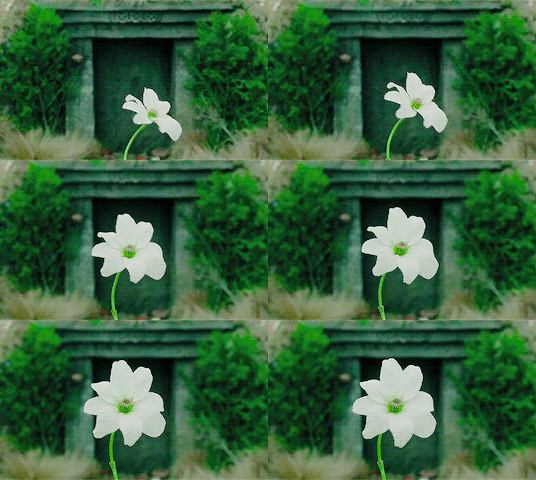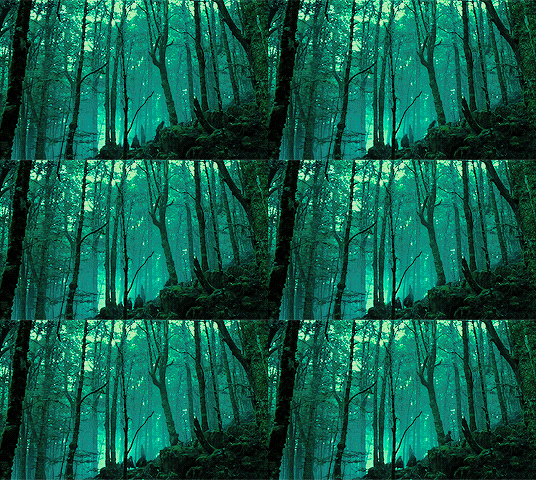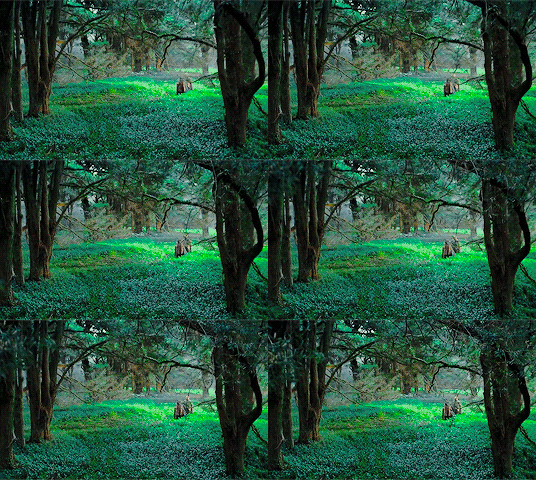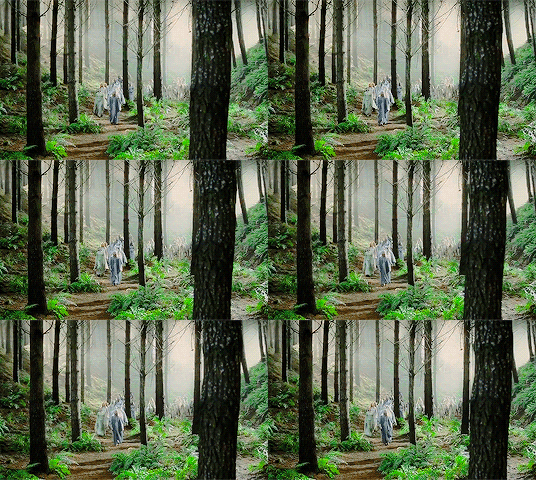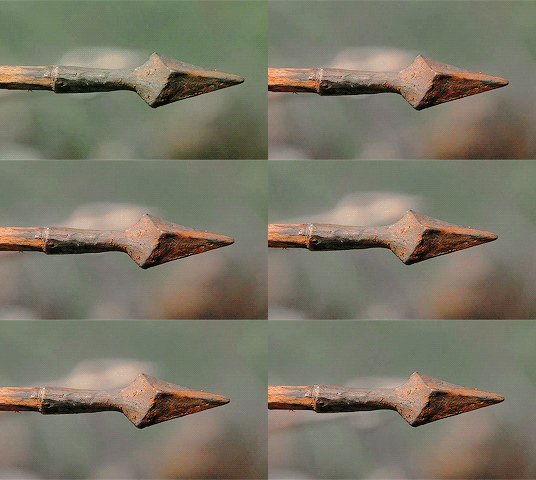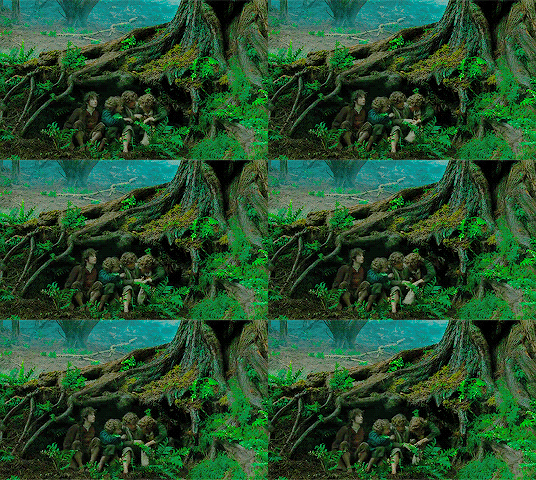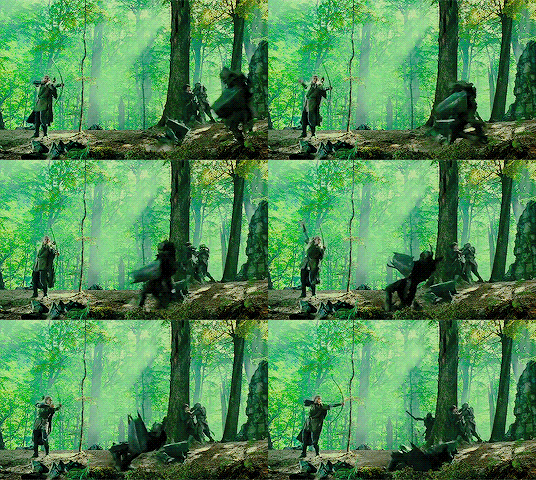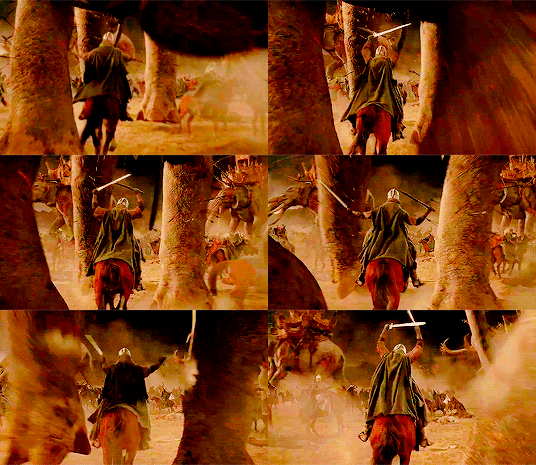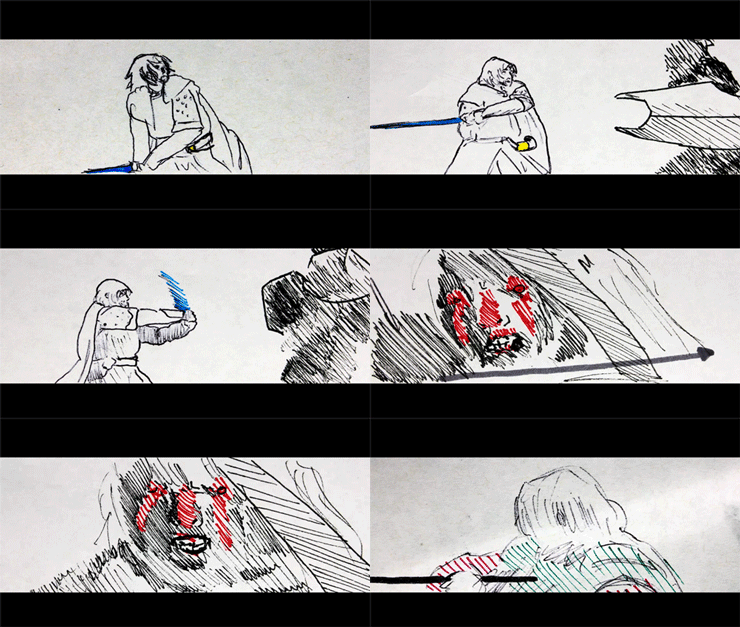
Beginning of Boromir’s death sequence in LOTR: Fellowship.
Ballpoint pen on paper, Sharpie accents.
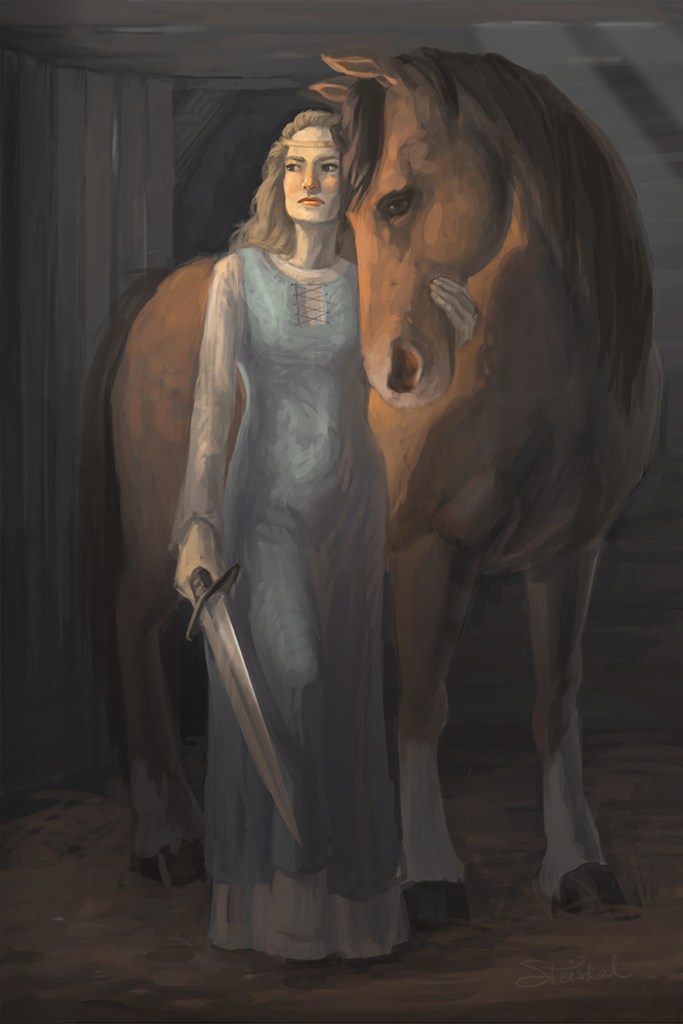
Eowyn
Eowyn has had a special place in my literary pantheon since I first read the Lord of the Rings when I was thirteen. I created numerous drawings of her, some of which are most likely still buried in my old high school portfolios. She represented so many things I hoped (and still strive) to be: brave, committed, loyal.
I chose to depict her before her victory over the Lord of the Nazgul because this is the time I relate to Eowyn the most. She’s unsure of the future and longs to fulfill her potential. There’s a hunger and determination to her that speaks to me and mirrors the passion necessary to grow both personally and artistically.
Aragorn knelt beside him. Boromir opened his eyes and strove to speak. At last slow words came.
“I tried to take the Ring from Frodo ’ he said. “I am sorry. I have paid.” … “They have gone: the Halflings: the Orcs have taken them. …” He paused and his eyes closed wearily. After a moment, he spoke again.
“Farewell, Aragorn! Go to Minas Tirith and save my people! I have failed.”“No!” said Aragorn, taking his hand and kissing his brow. “You have conquered. Few have gained such a victory. Be at peace! Minas Tirith shall not fall!”
Boromir smiled.
“Which way did they go? Was Frodo there?” said Aragorn.
But Boromir did not speak again.
“Alas!” said Aragorn. “Thus passes the heir of Denethor, Lord of the Tower of Guard!
It puzzles me when people cite LOTR as the standard of “simple” or “predictable” or “black and white” fantasy. Because in my copy, the hero fails. Frodo chooses the Ring, and it’s only Gollum’s own desperation for it that inadvertently saves the day. The fate of the world, this whole blood-soaked war, all the millennia-old machinations of elves and gods, comes down to two addicts squabbling over their Precious, and that is precisely and powerfully Tolkien’s point.
And then the hero goes home, and finds home a smoking desolation, his neighbors turned on one another, that secondary villain no one finished off having destroyed Frodo’s last oasis not even out of evil so much as spite, and then that villain dies pointlessly, and then his killer dies pointlessly. The hero is left not with a cathartic homecoming, the story come full circle in another party; he is left to pick up the pieces of what was and what shall never be again.
And it’s not enough. The hero cannot heal, and so departs for the fabled western shores in what remains a blunt and bracing metaphor for death (especially given his aged companions). When Sam tells his family, “Well, I’m back” at the very end, it is an earned triumph, but the very fact that someone making it back qualifies as a triumph tells you what kind of story this is: one that is too honest to allow its characters to claim a clean victory over entropy, let alone evil.
“I can’t recall the taste of food, nor the sound of water, nor the touch of grass. I’m naked in the dark. There’s nothing–no veil between me and the wheel of fire. I can see him with my waking eyes.”
So where’s this silly shallow hippie fever-dream I’ve heard so much about? It sounds like a much lesser story than the one that actually exists.
People don’t often include LotR as post-WWI literature because of the fantasy setting and because so much time passed, but young Tolkien had a particularly horrific WWI experience and that understanding of what war , even just war, is like and how trauma changes you suffuses every page.
real talk why do so many fantasy universes think giant spiders are necessary
The sad part is there’s a decent chance a large proportion of them can be blamed on one spider.
The tarantula that bit JRR Tolkien as a child.
He swore he didn’t have a spider phobia and the experience had nothing to do with the man-eating giant spiders in The Hobbit, the even more giant and even more man-eating spider in Lord of the Rings, or the unholy eldritch spider from outside creation that plunged the world into darkness and made literal Satan scream like a little kid in the Silmarillion. Very few people believe him.
Given LotR’s influence in the fantasy genre, there is a high probability that tarantula is the progenitor of even more fictional spiders than Ungoliant was.
wow fuck that one tarantula