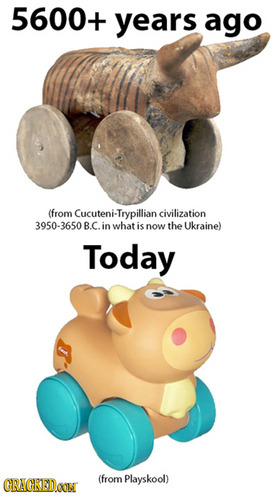
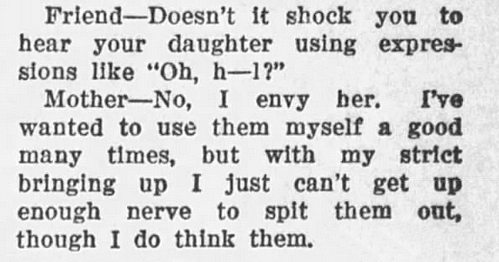
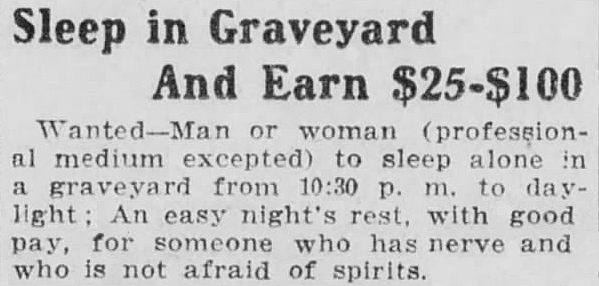
I love how humans have literally not changed throughout history like the graffiti from Pompeii has people from hundreds of years ago writing stuff like “Marcus is gay” “I fucked a girl here” “Julius your mum wishes she was with me” and leonardo da vinci’s assistants drew dicks in their notebooks just for the banter and mozart created a piece called “kiss my ass” so when people wish for ‘today’s generation’ to be like ‘how people used to’ then we’re already there buddy we’ve always been
The Hagia Sophia has inscriptions that were considered sacred for centuries until they were deciphered in the 70s to be Nordic runes saying “Halfdan wrote this”
my old english prof told us that theres a cave in Scandinavia where a viking gratified some runes like 14 feet up on the wall and when they finally reached it all it translated into was “this is very high”
Ancient Shitposting
Now on the History Channel
‘People have literally just always been people’ is genuinely my favorite fact about the world
“Times are bad. Children no longer obey their parents, and everyone is writing a book.” – Marcus Tullius Cicero, 106 BC – 43 BC
A few notes on the organization of the National Guard in Paris at the time of the June Rebellion.
The National Guard is organized into legions, which are subdivided into battalions. (Any time you see Hugo mention a legion in the Paris chapters, he’s talking about a National Guard unit rather than a Municipal Guard unit or an army unit – the army is organized into regiments in this era.) There are thirteen Parisian legions, one for each arrondissement* plus a cavalry unit. In addition, there are four legions from the suburbs.
Parisian legions, quite sensibly, take the number of their arrondissement. Each legion is comprised of four battalions, one for each quartier. The Thirteenth Legion is the cavalry unit and covers the whole of the city.
The banlieue legions each correspond to two of the cantons surrounding Paris. The First Legion covers Saint-Denis and Pantin, the Second covers Courbevoie and Neuilly, the Third covers Sceaux and Villejuif, and the Fourth covers Vincennes and Charenton. Within the legions, each battalion corresponds to a different commune or handful of communes. I’ve put the full list up here.
This means that if you know anyone’s home address, you can figure out which National Guard unit they’d be assigned to, and likewise you can trace people’s address (or at least their arrondissement) from their legion number.
Some Points of Interest
Jean Valjean/Fauchelevent is registered for guard duty at his Rue Plumet address, so he’s in the Tenth Legion.
The Sixth Legion whose standard Enjolras spots on his dawn reconnaissance is the legion that corresponds, to a first approximation**, to the neighborhood of the barricade. It’s interesting that they even mustered, as the 6th arrondissement is not particularly wealthy and it’s right at the center of the fighting. During the June Days some of the National Guard units from the rebellious arrondissements stayed home or defected to the side of the insurgents, but that clearly isn’t happening here. It indicates to a certain degree the lack of popular support for the rebellion – it’s not just legions from the richer neighborhoods in the western half of the city and the outlying suburbs that are being marched in to knock down barricades in the slums; the local unit has also turned out to fight against the insurgents.
Of course, the National Guard isn’t exactly an unbiased sample of the neighborhood, since Louis-Philippe had purged it of everyone who couldn’t pay for their own weapons and uniform, but I think the choice of legion was very deliberate on Hugo’s part. This is the point at which Enjolras realizes the rest of Paris is not going to join the revolt and the barricade is doomed, because he’s seen the banner of the local National Guard unit arrayed alongside the rest of the forces of order. The people have risen, but they’re fighting on the wrong side.
* Under the the old twelve arrondissement system in place at the time
** The barricade itself is actually on the border of the 4th and 5th arrondissements, because the layout of the old arrondissement system was ridiculous. But the 6th arrondissement covers the neighborhood on the other side of the Rue Saint-Denis, which is the main thoroughfare the barricade is theoretically guarding (to the extent it’s guarding anything besides Grantaire’s wine supply).
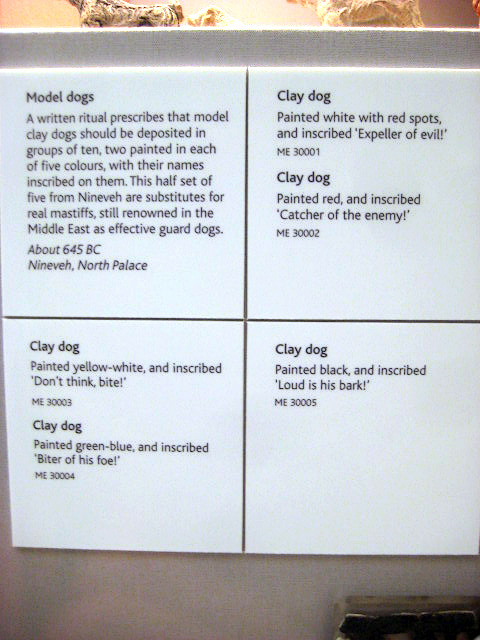
These clay dogs (~645 BC) were substitutes for real dogs in a ritual from ancient Nineveh, located along the Tigris River in what is now northern Iraq. Well-trained, effective guard dogs were probably too highly valued to kill, hence the substitution of clay figurines. Each figurine may have represented an actual, living dog who bore that name. The ritual required that the clay dogs be painted two each of five colors, with their names written on them, and buried in groups of ten on either side of a gateway’s foundation. The ritual was thought to magically transfer the dogs’ protection to the gates. The dogs have fierce names, like, “Expeller of evil”, “Don’t think, bite!”, “Biter of his foe”, and “Catcher of the enemy”. The dogs are a breed of large, muscular mastiff-type dogs with prick or half-prick ears, a round head with a pronounced stop and heavy muzzle, large paws, and a tightly curled, chow-like tail. They are in the British Museum.
Archaeologists examining these models came to the startling conclusion that every single one of these dogs was such a good boy.
He essentially halted the rape and murder orgy by American soldiers at the village of My Lai in Viet Nam during the Vietnam War by placing his chopper between the civilians and his own soldiers and telling them he’d mow their asses down if they continued the onslaught. He then flew the survivors to military hospitals for care. At least 500 Vietnamese non-combatants were brutally murdered at My Lai by US soldiers before Thompson intervened.
He was vilified by the Army and many of the American people for publicly exposing the Army’s actions at My Lai, and spent the rest of his life with ptsd, alcoholism, and severe nightmare disorder that contributed to his divorce. In other words, his own life was basically ruined by his heroic compassion. He died about 12 years ago at the age of 62 of cancer, and is buried in Lafayette, Louisiana, with full military honors.
He should be remembered.
Hail.
According to Wikipedia, he was part Native American, too.
how did they learn to translate languages into other languages how did they know which words meant what HOW DID TH
English Person: *Points at an apple* Apple
French Person: Non c’est une fucking pomme
*800 years of war*
Fun fact: There are a lot of rivers in the UK named “avon” because the Romans arrived and asked the Celts what the rivers were called. The Celts answered “avon.”
“Avon” is just the Celtic word for river.
Fan Fact #2: When Spanish conquistadors landed in the Yucatán peninsula, they asked the natives what their land was called and they responded “Yucatán”. In 2015, it was discovered that in those mesoamerican languages, “Yucatán” meant “I don’t understand what you are saying”
When the remains of this older Neanderthal were discovered at Shanidar Cave in Iraqi Kurdistan in 1957, his many physical injuries and disabilities were immediately apparent. Analysis of his skull showed that he suffered a crushing blow to the head near his eye socket when he was young, likely causing some visual impairment. His right hand and forearm were missing, the result of an amputation. He likely walked with a serious gait, and he suffered from hyperostotic disease (DISH), which is associated with muscular pain and reduced mobility along the spine.
But a new analysis of this specimen, known as Shanidar 1, shows he had another major disability—one not noticed during earlier examinations. New research published in PLOS One reveals that the bony growths found in this Neanderthal’s ear canals would have resulted in serious hearing loss. So this Paleolithic-era hunter-gatherer, according to the updated analysis conducted by anthropologists Erik Trinkaus from Washington University in St. Louis and Sébastien Villotte of the French National Centre for Scientific Research, was profoundly deaf.
Yet despite his deafness and his other physical setbacks, Shanidar 1 died between 40 and 50 years of age (based on dental analysis). By Paleolithic standards, he was an old man. The only way he could have lived to such a ripe old age is by receiving considerable help from others. “More than his loss of a forearm, bad limp and other injuries, his deafness would have made him easy prey for the ubiquitous carnivores in his environment and dependent on other members of his social group for survival,” said Trinkaus in a statement.
Trinkaus and Villotte says it’s not surprising that his fellow Neanderthals were able and willing to provide this level of social support. Profoundly, these extinct humans buried their dead, a funeral act that anthropologists say is indicative of social cohesion, social roles, and mutual support. What’s more, Neanderthals used pigments and feathers to modify their appearance, which the authors say is “a reflection of social identity manipulation and social cohesion.” To say Neanderthals cared for the physically impaired is therefore not a stretch.
As Arnold points out, there is an otherwise inexplicable shift in direction in the Piccadilly line passing east out of South Kensington. “In fact,” she writes, “the tunnel curves between Knightsbridge and South Kensington stations because it was impossible to drill through the mass of skeletal remains buried in Hyde Park.” I will admit that I think she means “between Knightsbridge and Hyde Park Corner”—although there is apparently a “small plague pit dating from around 1664” beneath Knightsbridge Green—but I will defer to Arnold’s research.
But to put that another way, the ground was so solidly packed with the interlocked skeletons of 17th-century victims of the Great Plague that the Tube’s 19th-century excavation teams couldn’t even hack their way through them all. The Tube thus had to swerve to the side along a subterranean detour in order to avoid this huge congested knot of skulls, ribs, legs, and arms tangled in the soil—an artificial geology made of people, caught in the throat of greater London.