In which important things keep falling at Enjolras’s feet
You know, that quote I reblogged not long ago (“Remember, there are two ways to dehumanize someone: by dismissing them, and by idolizing them”) quite nicely leads into a discussion of E/R as well, actually:
Because I’ve often heard people say that Grantaire was much more in love with Enjolras the idea than Enjolras the person, and to some extent that might be true, perhaps to R Enjolras represents the brighter future he can’t make himself completely believe in, or represents something he finds greater than himself at least. And Hugo outright says that Grantaire ‘venerated’ Enjolras, so there’s that.
So does R actually dehumanise (in a loose sense) E through idolising him? Maybe a little. Remember when Enjolras yells at Grantaire for being drunk at the barricade and Grantaire just looks at him “with indescribable gentleness”- doesn’t yell back, doesn’t really defend himself that much? That’s not healthy behaviour, especially since Enjolras’s assessment of him is extremely harsh and a little cruel.
BUT: then we have OFPD. And Grantaire wakes up to see Enjolras covered in blood, and at the point of a gun and about to die. Surely, surely he must see him as human now- he’s failed, just like Grantaire failed, he’s lost the battle and he’s about to lose his life. And Grantaire still goes to him, still cries out when he could’ve gotten away. I don’t think he’d have done that if he was only in love with the idea and not the man, after all, it was the man who was dying. I think they both died seeing each other as people, as people who were absolutely worthy of love, rather than disdain or veneration…
Think about it, though. Enjolras was never really around when R made his more socially concerned rants. The fact Enjolras was seemingly surprised that R was well read when he offers his help attests to this.
Enjolras probably had no idea about R’s knowledge of poverty in London, his concerns for underprivileged children or his disdain for American slavery. He was probably unaware of why Grantaire was so cynical beyond being a sceptic.
He didn’t get to appreciate R as a multi-faceted being until the very end, and he evidently liked what he saw.
You may not know this but I had a proper Christian upbringing, church every Sunday, prayers before bed, free Bibles for everyone, all that sort of thing. (Wait! Don’t go away! This is actually Les Mis E/R meta.) One of the stories that was in a lot of the children’s books I read was The Denial Of Peter, it’s stuck in my mind for years. You know, the bit where Jesus tells Peter he will deny him? Come on down, Wikipedia:
The second denial to the same girl in Mark 14:69-70 is:
When the servant girl saw him there, she said again to those standing around, “This fellow is one of them.“ Again he denied it. [6]
One of them – now doesn’t that remind you of something? I’ve been trying to puzzle out all the Enjolras-as-Jesus imagery for ages, but I really like the idea of Grantaire being able to stand up where even Saint Peter fell down, crying out instead of being afraid. Because of course:
…the soldiers whose eyes were fixed on Enjolras, had not even noticed Grantaire, and the sergeant was preparing to repeat his order: “Take aim!” when all at once, they heard a strong voice shout beside them:
“Long live the Republic! I’m one of them.”
Grantaire had risen. The immense gleam of the whole combat which he had missed, and in which he had had no part, appeared in the brilliant glance of the transfigured drunken man.
And here, try this on for size:
Jesus replied, “Where I am going, you cannot follow now, but you will follow later.”
37 Peter asked, “Lord, why can’t I follow you now? I will lay down my life for you.”
38 Then Jesus answered, “Will you really lay down your life for me? Very truly I tell you, before the rooster crows, you will disown me three times! [x]
*
But Grantaire, still keeping his tender and troubled eyes fixed on him, replied:—“Let me sleep here,—until I die.”
Enjolras regarded him with disdainful eyes:—
“Grantaire, you are incapable of believing, of thinking, of willing, of living, and of dying.” [x]
So that’s…interesting. And here’s how Peter died:
Origen wrote: “Peter was crucified at Rome with his head downwards, as he himself had desired to suffer.“[32] This is why an upside down cross is generally accepted as a symbol of Peter, who would not have considered himself worthy enough to die the same way as his Savior.
And…straaaaight back to Les Mis…if you’re reading this you probably know how Enjolras and Grantaire die: Enjolras stays upright in a crucified-like position and Grantaire falls at his feet, presumably with his head down.
So, er, is this a snazzy possible extra layer to things, or just me reaching massively through old Bible stories? (Has anyone better-read than me got anything to add?)
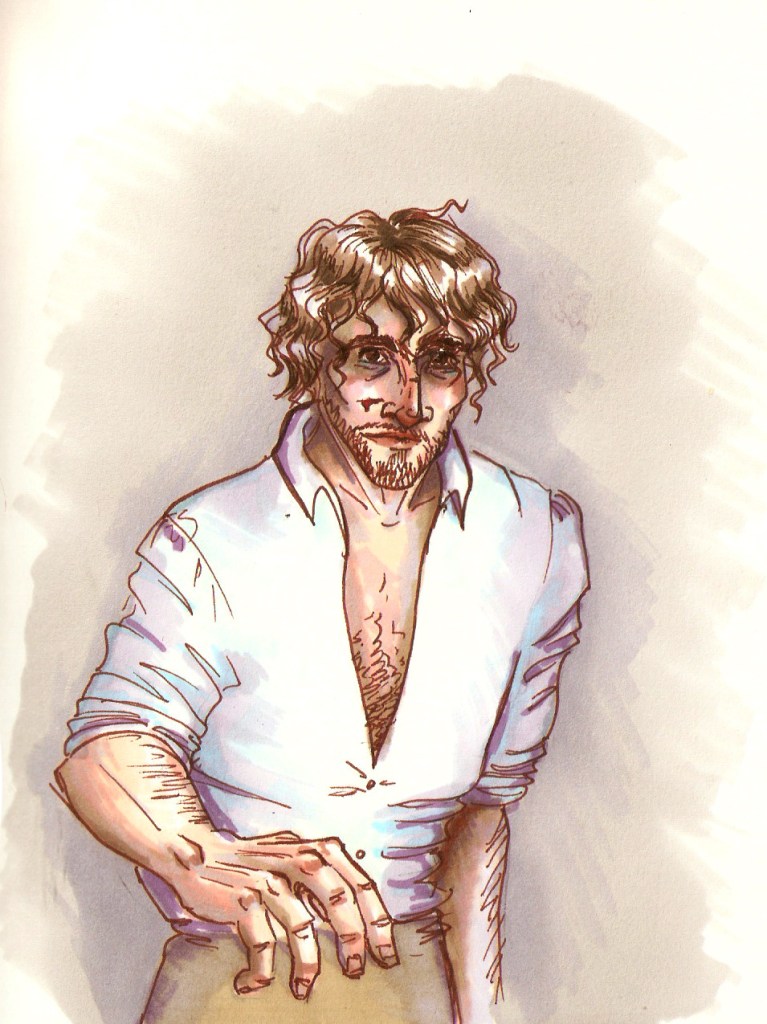
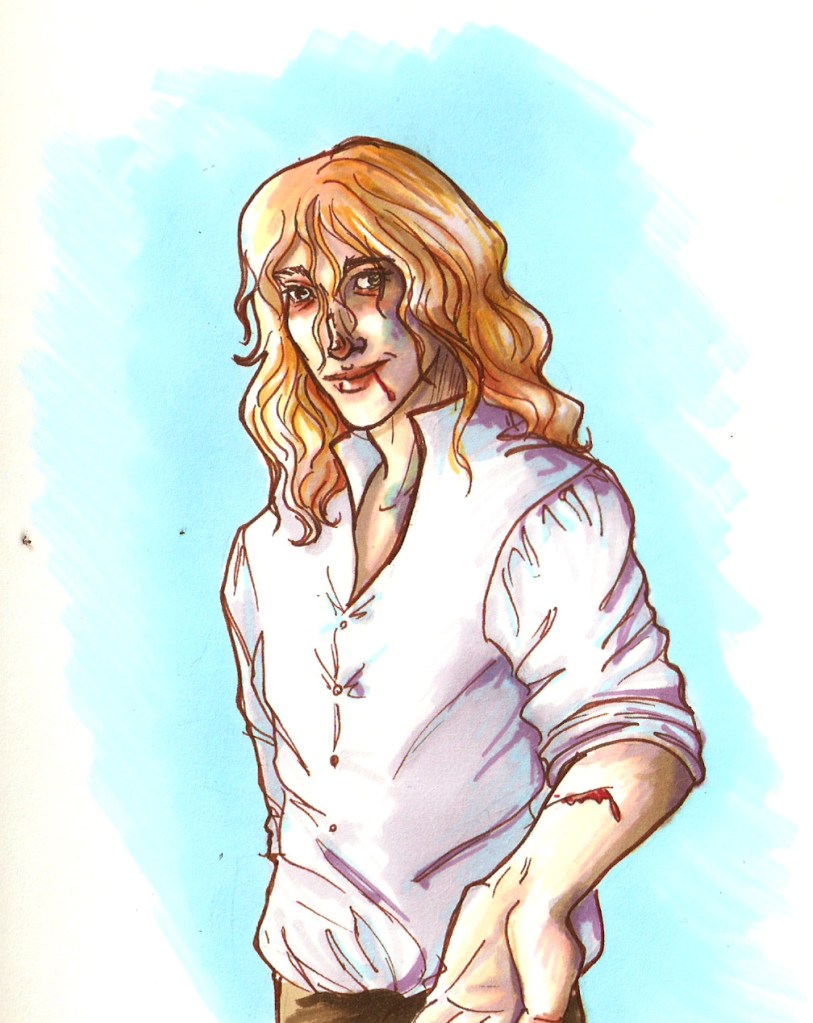
And you say “Each life has its place”
Ever since I finished drawing it, my girlfriend has been repeating she hates me and I’m an evil person. I have no idea why.
why haven’t i seen fan art of a dark-skinned enjolras being worshiped by a light-skinned grantaire?
Apologies it’s so sloppy.


This drawing took me waaaay too long, but i enjoyed doing it. To go along with my Les Miserables obsession, i drew Enjolras’ death scene (ugh i love him why did he have to dieeee?). Drawn in ball point pen, not sure how long it took in hours… just 7 days worth of free time
BALL POINT PEN
Ten Little Bullets in my Hand: flo-nelja: Allons nous coucher, etc.[Grantaire], tu es un misérable…
Allons nous coucher, etc.
[Grantaire], tu es un misérable s’écria Enjolras ; tu excelles à donner des raisons basses pour ne pas faire les choses nobles. Tu souffles sur l’enthousiasme avec une mauvaise haleine.
– Extinguit candelam cum bombo, dit Courfeyrac.
[Grantaire]…
I wish I knew French SO BADLY. Is this Enjolras being a big ol’ meanie again?
I couldn’t wait for an actual French speaker to translate, so here’s what Google translate says:
Go to bed, etc..
[Grantaire], you’re a miserable cried Enjolras, you excel to low for reasons not to do noble things. You blow on the enthusiasm with bad breath.
– Extinguit candelam cum bombo said Courfeyrac.
[Grantaire] divided smiled:
– Enjolras, we will cut the throat in the morning.
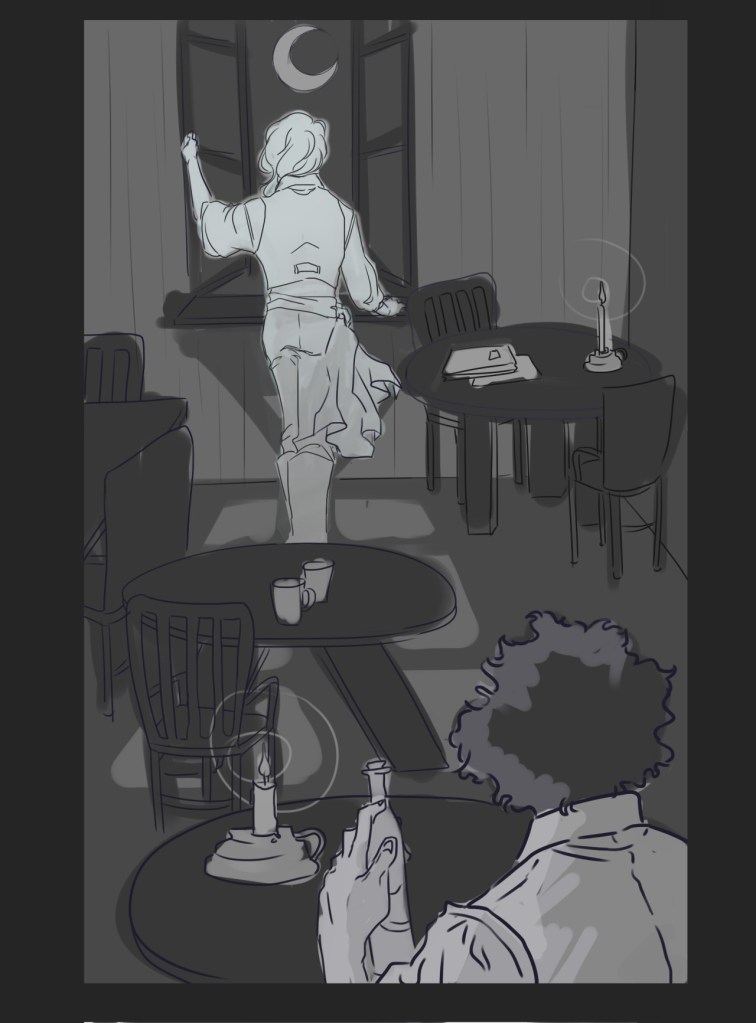
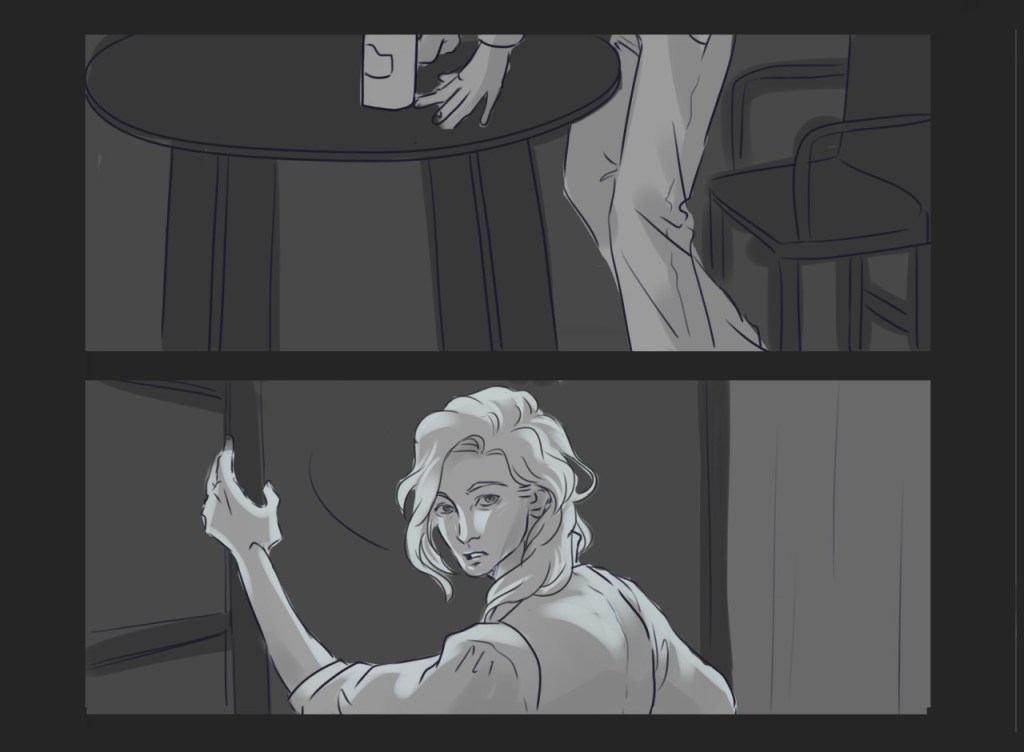
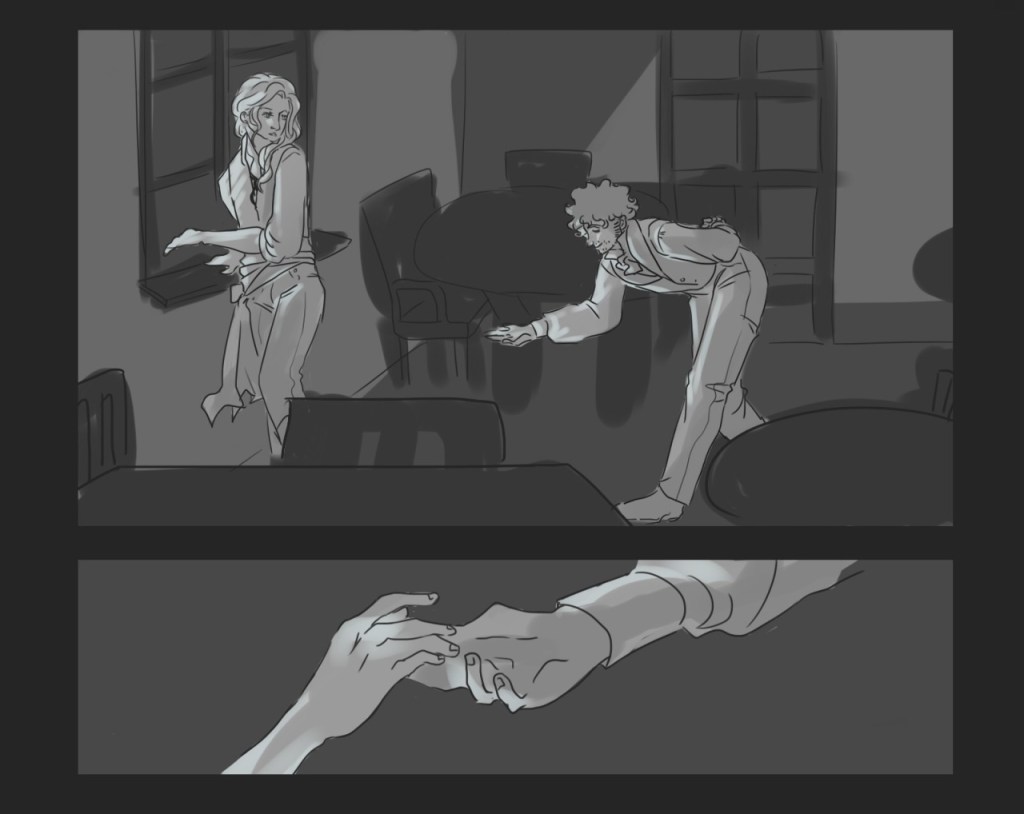
They both die. – [Grantaire] gay and heroic; Enjolras seeks the hand of [Grantaire]. Take my hand.
(Victor Hugo, Building – draft folder on Les Misérables)
(Name changed, because even if we can see what Hugo talking about is the time when Bossuet and Grantaire were the same character, and it’s just too weird. Indeed, many names are not the same in drafts, it gives a misunderstanding each time)
So it sounds like Enjolras is being frustrated with Grantaire’s cynicism – but given that Courfeyrac follows it with what I assume is a joke about extinguishing a candle with a bomb and Grantaire smiles, I’m not sure if Enjolras is being properly angry or just (almost fondly?) exasperated.
(I also wonder if that other draft fragment was banter rather than meanness – without context it’s difficult to know. Though even if it was intended as banter I could see Grantaire being hurt by it because he’s a depressed alcoholic with the self-esteem of a caterpillar)
And then Victor Hugo making a note about how they end up dying together.
(I am totally going to take that note as evidence that the “Enjolras grasped his hand with a smile” or “Enjolras clasped his hand with a smile” are closer to what Hugo intended than “Enjolras shook his hand with a smile” – apparently the French like can be read either way, but I always assumed the gesture was sort of about presenting a united front. And the idea of them shaking hands in front of the firing squad just seems… awkward? Idk)
Oh, I love this all so much. Especially the last little note. “They both die”! Like Hugo was thinking “HMM THIS IS A NICE LITTLE STORY. HOW COULD I POSSIBLY END IT? WAIT, I KNOW!”
(…and then we get to “Grantaire, happy and heroic” and “Take my hand” and I start bawling like a baby.)