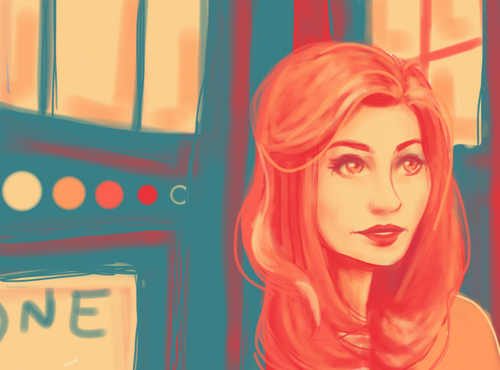
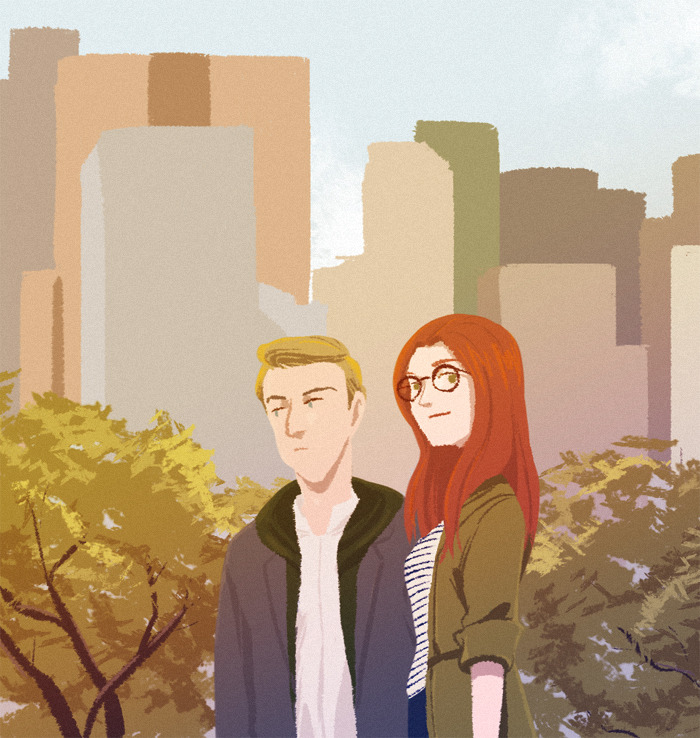
[via claraoswin]

ladyvengaence-deactivated201705:
I don’t know. Well, my life has changed so much. There was a time, there were years when I couldn’t live without you.
This is stunning in every concievable way.
My latest rant on Doctor Who and feminism (via mansplainedmarxist)
I do not think Moffat is a good writer: I think, essentially, he’s a one-trick pony whose one trick (timey wimey stuff!) stopped being clever quite some time ago. His dialogue in the show is usually pretty good, but he’s hopeless at plots, a fact made all the worse by him thinking he’s great at them. I won’t even go into all the thoughtlessly offensive crap he’s spewed over the years, on Twitter and elsewhere – for someone who runs not one but two shows that celebrate thinking, it’s bloody ridiculous how little he actually does. When this leaks into the show itself, it infuriates me.
But that being said, I cannot take seriously any critique of him that writes off Amy, in particular, as not being a ‘full person’. Insofar as any fictional character can be considered anything like a person, Amy qualifies. We know what she does, we know why she does it, we know her thoughts, her feelings, and her fears. We know she’s terrified of abandonment (because: most of the people she’s been close to have abandoned her). We know she hides her emotions (because: she’s afraid of being ‘clingy’, because: everything she’s clung to she’s lost.) We know more about her childhood than we know about almost any of the other companions, we know what her favourite subject was at school and what sport she played. We know who her favourite artist is, and that she’s a good artist herself. We know that when she loves, she loves hard, even though she’ll barely admit this to herself. (see: everything involving her and Rory). We know she’s pretty comfortable around guns and violence, and we know she’s the only modern-day companion to ever actually murder someone in cold blood. (Yes, it was undone shortly after, but she didn’t know for sure that that would happen in the moment she was doing it.) We also know that this affected her to the extent that a few episodes later, she’s adamant that the Doctor not kill someone in revenge.
We’ve seen her grow from immaturity to maturity, we’ve seen her grow from weakness to strength. We have seen -and this is no small thing- that this is a woman who would die rather than lose a loved one. We’ve seen her be the complete opposite of a Strong Female Character (which I’m starting to think is a concept that needs completely, utterly tearing down) because when something goes wrong – when Rory is in danger, when the Doctor appears dead, when her daughter’s taken from her – she goes either completely hysterical or completely catatonic, unable to fight back. The loss or potential loss of a loved one paralyses her completely. Her reaction when Rory is shot by Restac looks like a full-blown panic attack, to me. I can, for what should be obvious reasons by now, relate to that wholeheartedly.
I’ve seen some other things: people commenting that watching Amy’s journey helped them relate to and deal with things in their own lives. Four psychiarists? I’ve been there, and I’m very glad to see someone on my TV screen who also has.
Did inexcusably sexist plotlines (read: the intensely disturbing pregnancy arc) happen to Amy? Hell yes, I’ll never deny that. But regardless of who invented her – and don’t forget that Karen Gillan had a lot of input into her as well – I am exceedingly grateful that she came to life.
Furthermore she is, after all, the only companion of whom you can say that her life has been touched by some form of mental illness. Whether it was realistic, well-written or not is a whole ‘nother debate, but she grew up doubting what was real and what was not. So did I.
Just let me keep my fucked-up, weak, obsessive, panic-attacky girl, and the woman she grew into.

underappreciated characters meme > favourite underappreciated recurring character
Angie Maitland (Doctor Who) – Fandom’s awfully hard on her – yeah, she’s a bit of a brat, but that’s probably because she’s a teenage girl who just lost her mother. She’s also very clever and very ambitious, and – everyone’s forgotten this – she solved the central mystery of Nightmare In Silver, singlehandedly. Queen of the Universe, indeed.


You took my baby from me and hurt her. And now she’s all grown up and she’s fine. But I’ll never see my baby again.
One of the most chilling moments in Doctor Who comes from the look on Amy Pond’s face and the revenge in her voice as she openly defies any moral code she is expected to live by as the Doctor’s associate and kills the woman who kidnapped and tortured her daughter.
You know, for all that Amy wonders what killing Madame Kovarian ‘makes [her] now’, for all that it seems to have affected her, for all that she’s so outspoken against the concept of killing for revenge in A Town Called Mercy…
She never once actually says she regrets it.