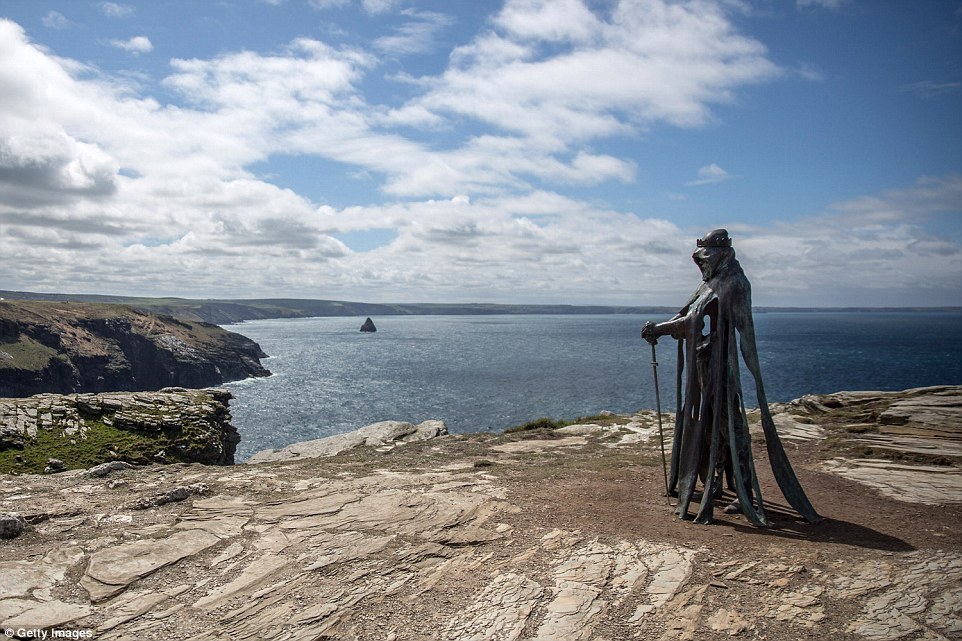
Now THIS is how you make an Arthurian statue! HOly crap, how have I not seen this before? As with all things, people apparently accused the English Heritage of it being too corny (heh, corny, cornish, get it?) but come on – look AT IT!
“Perched above the Atlantic breakers (is) the imposing bronze statue of a regal figure clutching a sword and gazing back across the ruins of Tintagel castle and towards the Cornish mainland…“
The statue is called Gallos – Cornish for power, and was made by Rubin Eynon.
The late Ruth Thompson, a cell painter on “Snow White” who later became a multiplane scene planner, recalled: “We tried everything – airbrush, drybrush, even lipstick and rouge, which is perhaps the basis for the legend because we did, in fact, try it. But nothing worked.”
The airbrush was difficult to control on such a small area; drybrush was too harsh; lipstick and rouge unwieldy and messy. Everything proved to be impractical and all hope seemed lost to give Snow White her little bit of color when the idea of using a dye was proposed.
Again Ms. Thompson: “Someone suggested a red dye because the blue day we added to give Donald Duck his distinctive sailor-blue never really could be washed off the cell without leaving a bluish stain where the paint had been applied.”
Ever since the mid 30’s when color became the norm for all the cartoons, not just the “Silly Symphonies,” all paints and inks were made at the studio. During this period as well cells were routinely reused for economic reasons, thus the need to wash them off. Apparently Donald’s special blue color was made with a dye added to the usual powdered pigments. “So we tried that.” As the women gathered around in what must have seemed just another dead-end effort, all eyes became fixed on the red dot which soon became a small glow with no perceptible edge. The hushed silence soon gave way to sighs of relief. The method had finally been found. Now the application.
…
Among the studio’s many inkers (an extremely demanding profession), was one young lady whose training and skill was unique: Helen Ogger. Just being an inker placed one within the elite confines of this most “holy of holies” area of the Nunnery, as the Ink and Paint Department was so called (Walt had strict and quite Victorian views that the sexes not mingle at the workplace, allowing no male personnel save the “gofer” boy and the paymaster “Mr.” Keener to enter this domain of mostly unmarried women ). But Helen was in addition a very fine cartoonist and one of the few women at Disney’s or anywhere else, who could animate.
…
Such a seemingly insignificant detail (as the cheek colors) might be thought not worthy of special mention (she, as well as the other inkers and painters, was given no screen credit). But when one adds up the number of footage required to be tinted freehand on each individual cell, the hours suddenly turn into weeks and months. In fact, such a treatment was never attempted again on such a scale and even today, the publicity stills from “Snow White,” most of which do not have the added blush, bear witness to how that little touch of extra care adds to the vitality we see on the screen.
The work was done on all close-ups, most medium shots, and even on some long shots. The Queen was also similarly tinted. Hundreds of hours were needed to complete this task, arduous, repetitive and, of course, hard on the eyes. Ultimately a handful of other girls were needed to assist Helen as the clocked ticked toward the deadline.
Helen had to place several cells together on an animation board, one atop the other, just like in the process of animation, in order to get the ‘registration’ right (the spot of red just right in relation to the preceding and following ones) – all of this without any guide. She would work out her own extremes and then ‘animate’ the blush in inbetweens. Her work deserves admiration and gratitude and it is unfortunate that her contribution has remained unknown and her anonymity unaltered during her lifetime. She was paid, as were the rest of the Inkers, $18 a week, which included a half-day on Saturday and the many, many hours of unpaid overtime “Snow White” would require – all given unstintingly, (by everyone involved, it should be added), to a project whose joy in participating was its own reward.
She eventually became head of Inking and Special Effects and even taught classes in animation at the studio. She left in 1941 (apparently part of the terrible strike that would leave the Disney Studio changed forever), taking her skills with her. She died in Glendale in February of 1980. Perhaps it is safe to say that her departure was critical to the abrupt demise of this now unique effect (it was also used, though on a much smaller scale in both “Pinocchio” and “Fantasia”). None of the other inkers or painters were animators and it is this fact, not just the factor of economy nor the changing tastes, which surely must be considered a reason why such details were never attempted again. The golden age was over.
Also, here’s an interesting article about female cel painters at Disney. I am now fascinated by the idea of writing something with a Depression-era cel painter as a protagonist.
A sand pendulum that creates a beautiful pattern only by its movement.
But why does the ellipse change shape?
The pattern gets smaller because energy is not conserved (and in fact decreases) in the system. The mass in the pendulum gets smaller and the center of mass lowers as a function of time. Easy as that, an amazing pattern arises through the laws of physics.
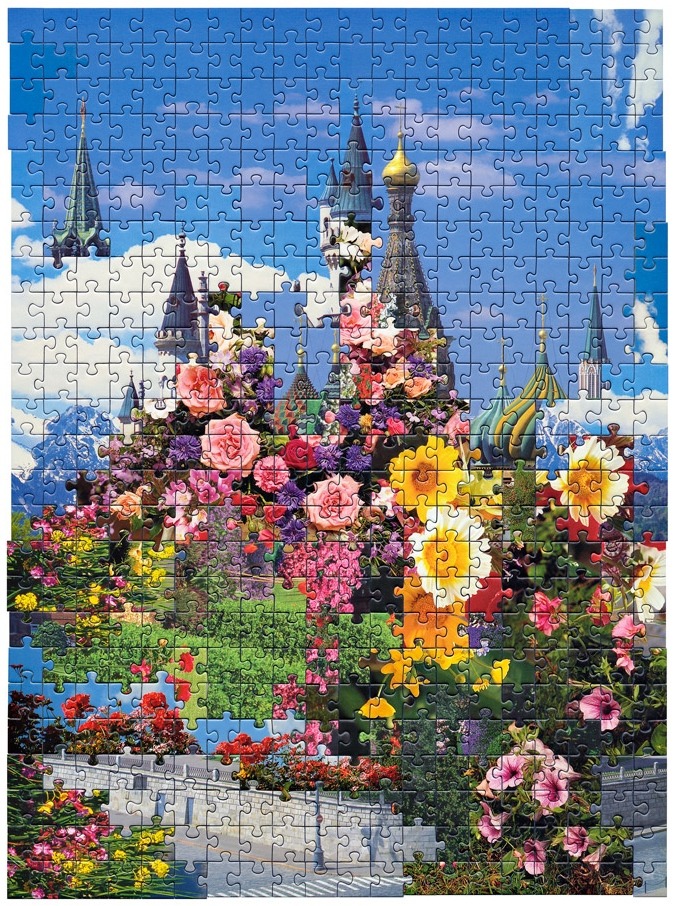
Love=Love is a series of collages that were created using pieces of over 60 store bought puzzles. Although puzzle pieces are unique, and can only fit into one place within a puzzle, they are sometimes interchangeable within a brand. These puzzles were cut using the same die, but depict unrelated images.
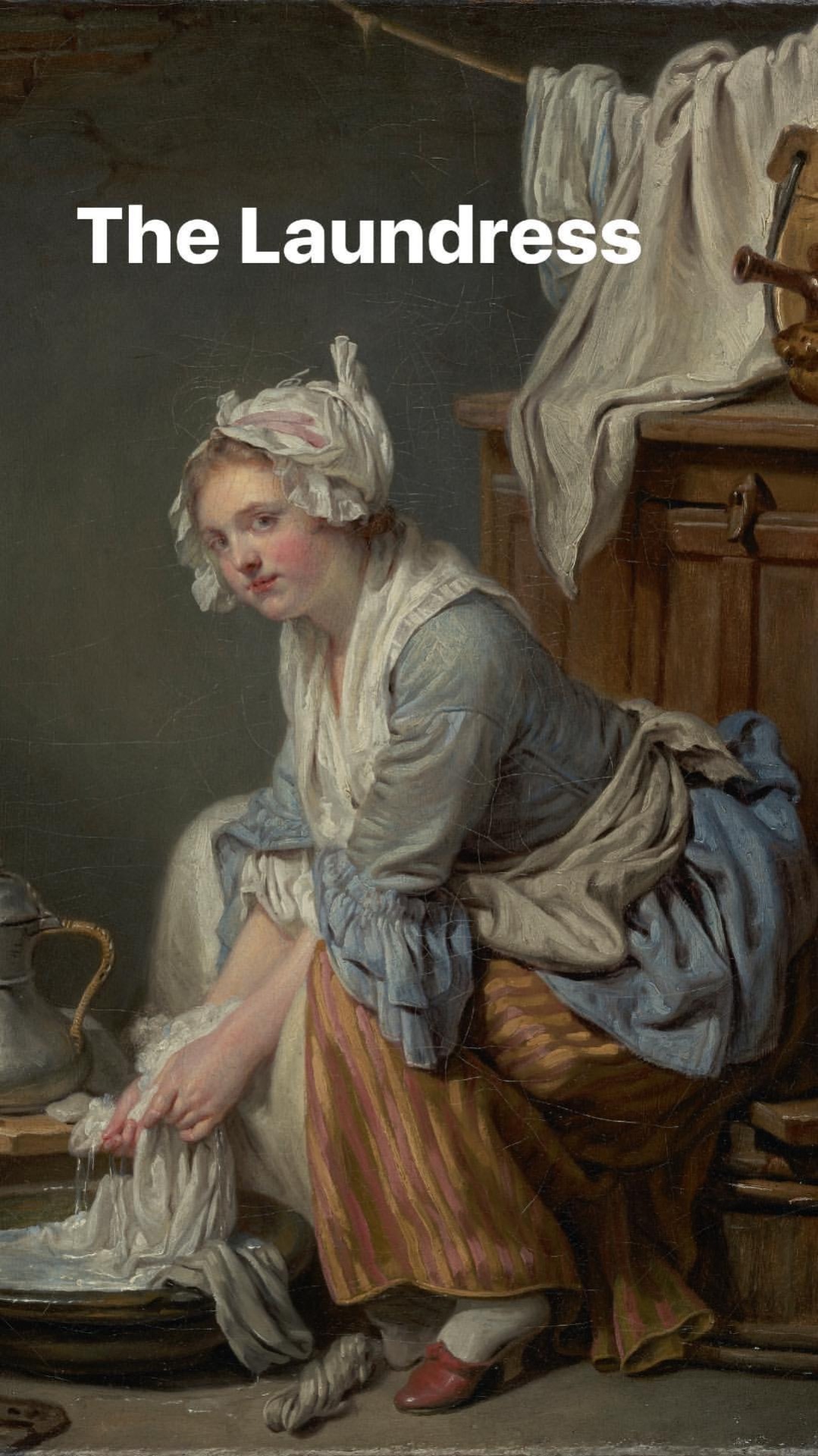
I find that hard to reconcile with how 18th century dresses had boobs practically hanging out of them. Maybe the chest wasn’t as sexualized as the ankles were back then…
I have a dim memory from back in high school… I think someone once told me that breasts were no big deal back in corsetry-and-necklines-down-to-there days, they were considered a food source for children and that’s it.
But ANKLES. Oh, GOD. ANKLES. The ANKLE was connected to the LEG, which connected to THIGHS, which hid a woman’s SECRET FLOWER. The ankle was the gateway to the secret flower, so it was considered quite a stirring sight!
I have never considered that “leg bone connected to the ankle bone” song as a sexy tune before but