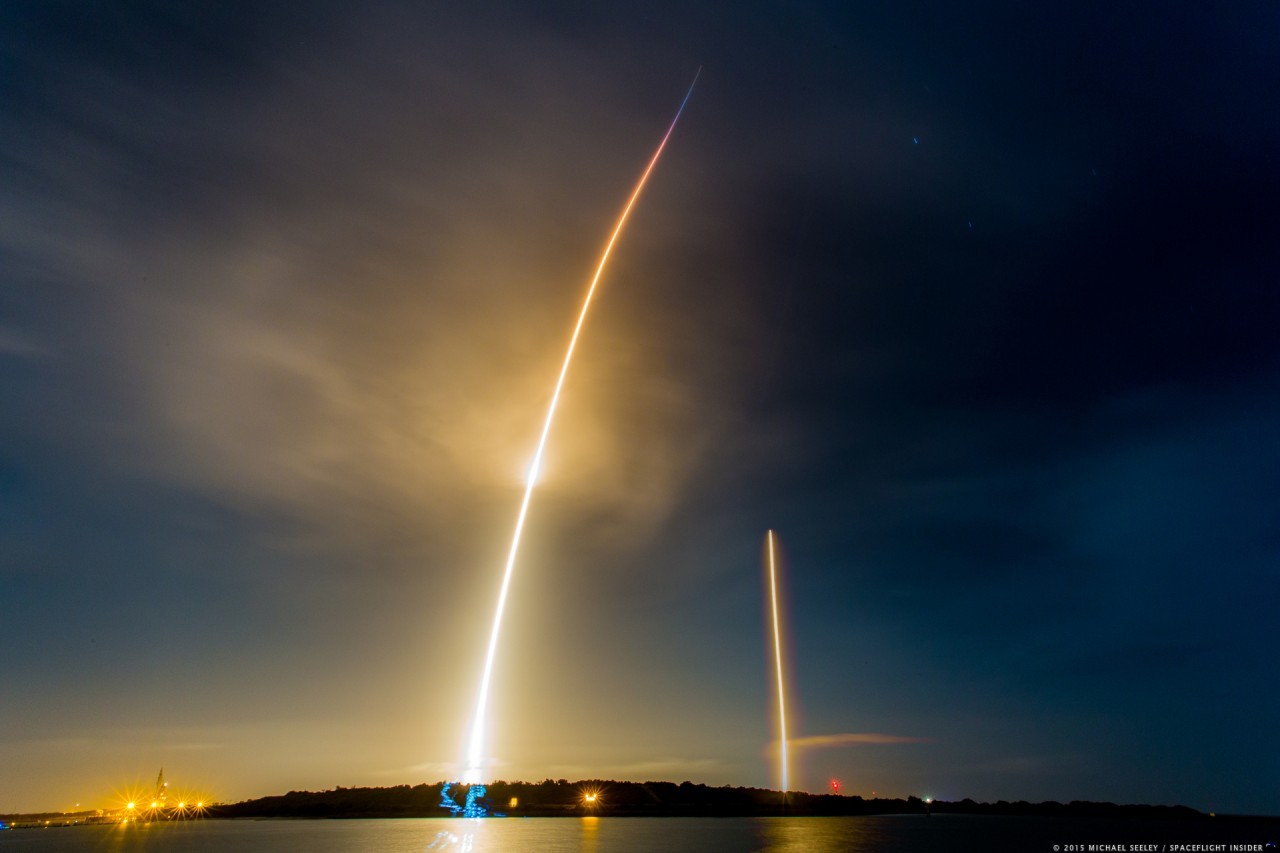
In a history-making launch on Monday night
, the private spaceflight company SpaceX blasted one of its huge two-stage Falcon 9 rockets into space, then returned the first stage of the rocket back to Earth in a stunning nighttime landing. The upper stage, meanwhile, delivered 11 satellites to orbit for SpaceX customer Orbcomm.
This success has the potential to change spaceflight as we know it.
Right now we rely on rockets to launch things like satellites and supplies for the International Space Station into space, but just one rocket costs over $60 million, and you can only use it once. That’s why Elon Musk’s SpaceX and Bezos’ rocket company Blue Origin are trying to develop reusable rockets.
Instead of throwing away $60 million on every single launch, reuseable rockets could fly over and over again.
But it’s far from easy: three tries at vertical landings earlier this year failed. see how SpaceX managed the succesful feat hereBlue Origin,
interested in space tourism, successfully landed a booster last month but it had been used for a suborbital flight. The SpaceX booster was more powerful, flying faster and higher in order to put satellites into orbit, making the landing much more difficult to pull off.
image: SpaceX’s Falcon 9 rocket lifted off at 8:29 p.m. EST and touched down about 10 minutes later. Photo Credit: Michael Seeley / SpaceFlight Insider
