joly got to be a doctor before he died
Tommorrow.. WE CRY
STOP
What now? Joly..my baby? staaahpp!
i know everyone’s having feels but can we just take a moment to discuss that this is a moment the majority of people seeing this movie would completely overlook
and yet to anyone who knows the book, this is a moment to me that just shows the sort of dedication they had at parts to including book canon things (especially where the barricade scenes were concerned)
i mean maybe it was hugh’s idea to do that and if so hell yes
but all the same just the little things like this blow my mind about this movie
I can’t tell who’s in the�?background�?but I’m going to headcanon it as Combeferre unless I’m proven wrong.
It’s Jehan (I can’t find the fuller version of the shot at the moment, but I’ve seen previously that it’s him.)
Darn. Oh well, still a great moment.
It is still a great moment. I don’t know, I sort of picture it half as Jehan grieving/trying to accept that the man is dead, and half as him giving a final expression of love and friendship, sending him on into the next life.
les miserables

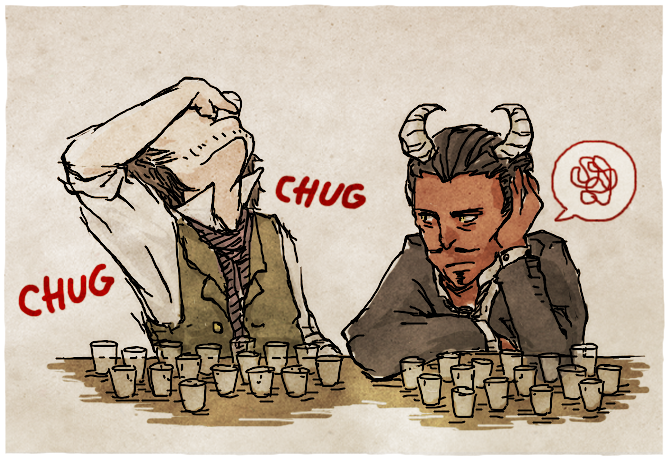
“Here’s an even better idea,” said Grantaire. “How about I take on eight of your hellish host? For each one of you I outdrink, you release a name on my list back into the land of the living.”
“You have yourself a wager,” said the Devil. “Who will we be starting with? This— Enjolras?”
“Let’s save him for last,” said Grantaire. “I’ll get to him.”
Or: Grantaire survives the barricades and marches down into the underworld to bring all of Les Amis back to life. They are all in hell because they are Deist heathens, the lot of them.
Oh my god-
someone write this!
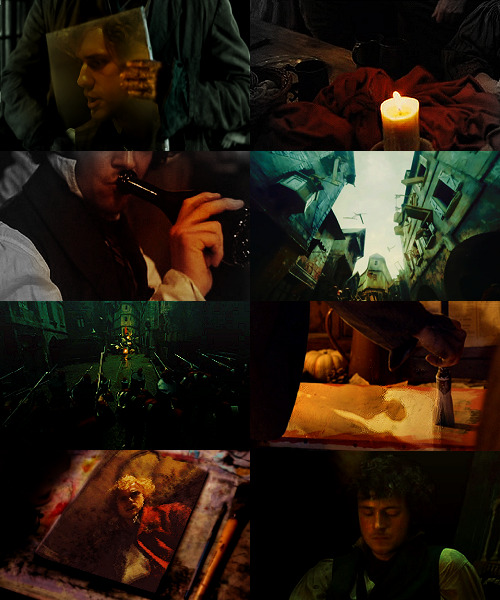
Les Miserables AU: Grantaire made Enjolras up
He knows the revolution will fail, he knows the world and his soul are both voids. He has nothing to believe in. He drinks.
From his position in the dark in the corner of the bar, he paints them all a leader- part man, part angel, leading them into battle. But his imagination only stretches so far. He takes the hand of this being he created. He dies beside him with joy. There’s still a little light in the endless darkness, there’s still a little light in him. But he can’t imagine living, let alone living with love. He buys red paint.
The barricades fall. He still drinks. His angel stares from the canvas half-accusing and half-pitying. Before long, only the paintings remain.
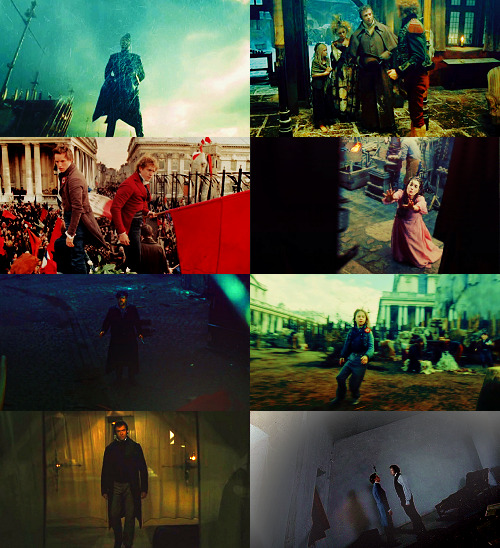
Screencap meme: Les Mis + full body shots for feministinthetardis
[insert the ‘did someone say bodyshots’ gif here]
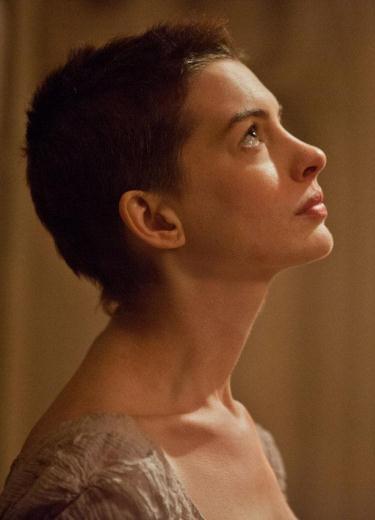
This is the third time I’m restarting this post about Fantine. It’s difficult for me to know how to begin talking about this character who has been so important to me over the past 14 years. I just passed her death in my reread, and she has been on my mind a great deal. Fantine is a woman capable of many things. She strikes for Paris completely on her own when she is a teenager. She feels sympathy for old cart horses. She manages to laugh with her friends when the man she loves leaves her, waiting until she’s alone to cry. Courage, compassion, dignity. A woman anyone would be lucky to know.
But not many people do know her. She slips away, unnoticed by the world. Even her daughter, the most important person in her life, leaves her life by a chain in the road. Fantine thinks that she’s giving Cosette shelter and safety and even playmates; she’s wrong. Fantine is wrong about a lot of things. She thinks the Thenardiers will give her daughter the dress that she buys with the money from her hair. She thinks that she saves Cosette from disease with the money from her teeth. She thinks, until the moments before her death, that she will see Cosette again.
If you saw her on the street and actually noticed her, you wouldn’t know all of the untrue things that she believed. You wouldn’t know how she was fired and too simultaneously ashamed and proud to speak to the man who supposedly fired her when he would only humiliate her a second time (wrong again). You wouldn’t know that she had been in an abusive relationship. You wouldn’t know why she had no hair and front teeth. You wouldn’t know about the moment she decided “All right! I’ll sell what’s left.”
She was wrong about a lot of things, but based on what she knew, “all right, I’ll sell what’s left” was the right thing to do. In this book, what society deems wrong is often right. Breaking parole, becoming a prostitute. Both Jean Valjean and Fantine have their plights related to Christ’s at various points. To me, Fantine’s love is divine and radical in its abjection. Lose her place in society completely, endure what she clearly does not want to endure? That’s fine. She expects nothing but her daughter’s safety in return for her sacrifice. She dreams of Cosette, and in the hospital she believes she will see her again, but at the moment of “all right, I’ll sell what’s left,” she stares down an endless dark tunnel and chooses to answer it anyway. She might not be able save herself, but she’ll be damned if she doesn’t save her daughter.
Courage, compassion, dignity. You’d be lucky to know her. But you wouldn’t.
Jean Valjean did, though. He notices her – too late for Fantine, but in time for Cosette. And make no mistake, this is Fantine’s victory. She saves her daughter through Jean Valjean. The Bishop is the source of virtue in this novel; Fantine is the source of love. She completes Jean Valjean’s salvation. She does not die with a resolution to her agony in the garden. She dies in misery and fear – as, I think, she always knew she might, once she decided to sacrifice everything she could. “All right! I’ll sell what’s left.” I will give up my hope if it allows me to hope for you.
Hers is the bleeding, burning heart of an unsaved savior. She is buried in a pauper’s plot. You wouldn’t notice her there any more than you would have noticed her when she lived. But her legacy is love. The people she brought to a state of love – Jean Valjean, Cosette – amplify and spread her gift. Her love lasts and lasts and lasts. That you might notice. You wouldn’t know it was from her. But in her short time, Fantine made the world better.
Climbing to the light: Why Enjolras and Grantaire are like Orestes and Pylades
Wow. That actually improves the dynamic of their relationship. While fandom often interprets the Orestes/Pylades allegory as purely romantic, your interpretation of Pylades protecting Orestes sets Grantaire in a better light. He didn’t just raise himself up to be at Enjolras’s side, he assists him, and that certainly makes him no longer “unaccepted”.
(This is really good so I’m just throwing thoughts around, wheeee)
There’s also the bit after the execution of Le Cabuc, where Combeferre calls out to Enjolras, “We will share your fate.” He probably wasn’t even considering Grantaire when he said it, but poor old R got to be one of the ‘we’ in the end as well…
About Orestes Fasting And Pylades Drunk, I was wondering the other day, why didn’t Grantaire try to protect Enjolras more, stop the shooting- make up some lie, try and fight someone, any of that stuff. Because he probably could have stopped it, if he’d really tried, the National Guard were unsure anyway about what they were doing. Anyway, that’s what you’d expect a person to do if someone they loved was in grave danger, but that’s not what he does. He doesn’t even plead with Enjolras not to throw his life away so easily (and he’d certainly never dream of admonishing him…) he just…goes to him, because he knows Enjolras would rather die for his cause in the manner he chose than whatever other options were available at that point. He’d rather watch ‘the bird in flight’ soar right on away from him than do anything to clip its wings.
Which may be the moment Enjolras realises that even though Grantaire doesn’t subscribe to his ideals, he respects them, he respects them a lot– places them way above his own desires, even. To the point of asking Enjolras if he doesn’t mind dying beside a cynic! That, combined with the realisation that Grantaire would rather die with him than live in a world without him, is what I think made him take his hand and smile…
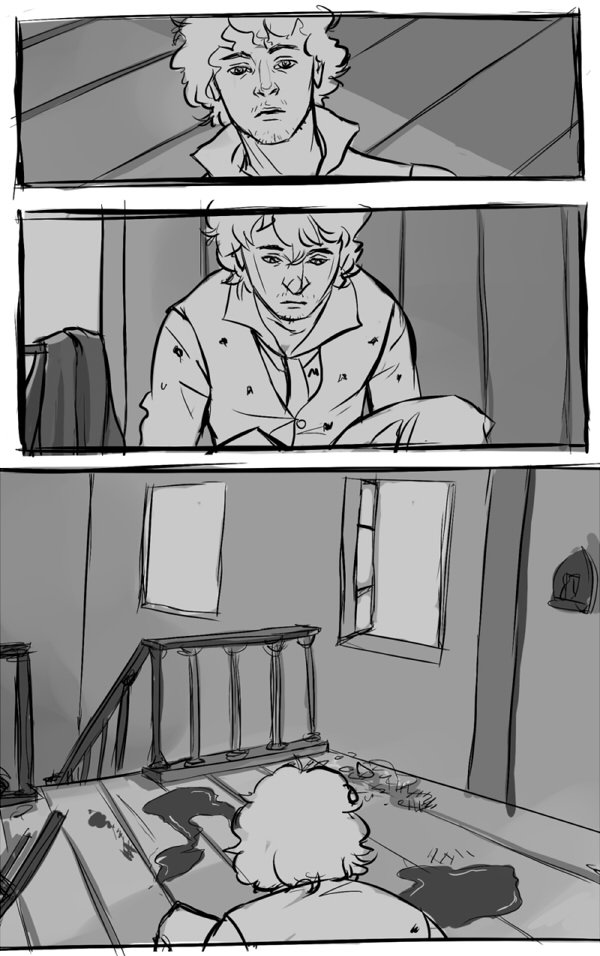

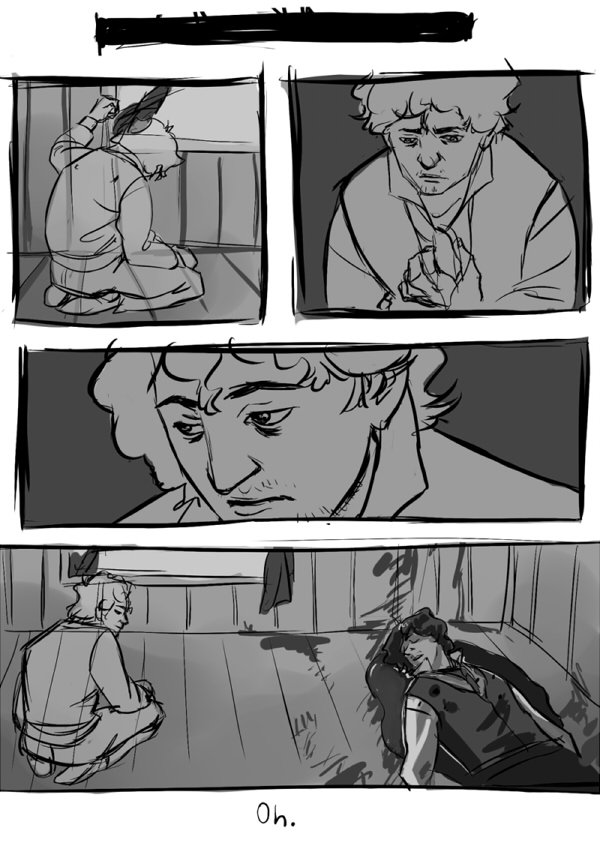
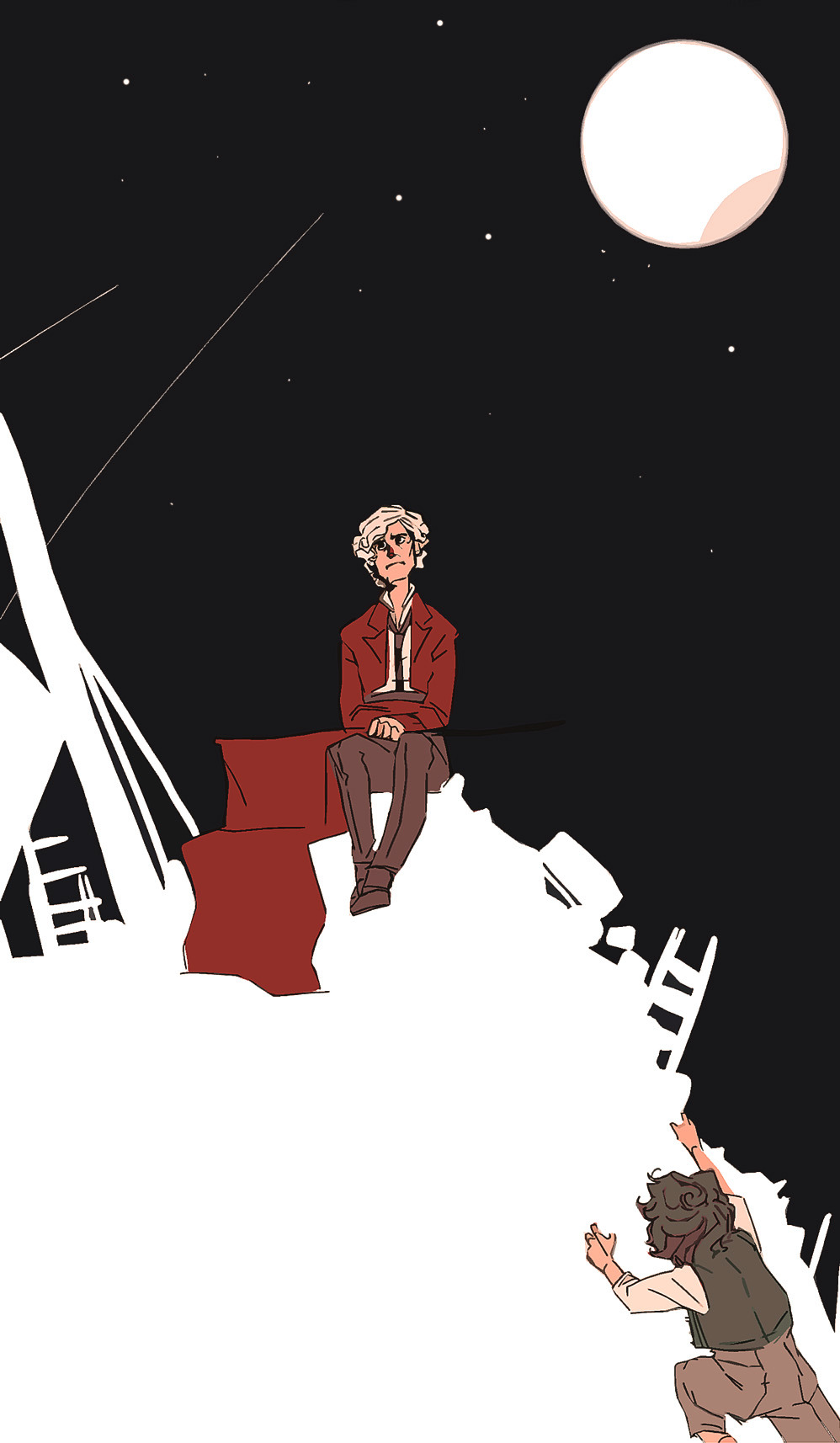
So, as has been abundantly clear over the past few weeks, my life has been consumed by Les Miserables. Again. This story, in both book and musical forms, has occupied a huge space in my heart since I was 10 years old. For reference, I’m turning 24 in two days. I’ve spent a lot of time with this story.
A lot (read: all) of the characters are extremely important to me, and I’ll probably wind up writing about many of them. But I wanted to talk about Grantaire (she said to the surprise of literally no one in the world). The earliest memory I have of neglecting the rest of my life to think thinky thoughts about Grantaire is of zoning out completely in eighth grade English class, so when I was 13 or 14. So I’ve had a decade to sort out my feelings, and this is what I’ve come up with.
The thing that has always captured me about this character, who is so vastly different from basically any other favorite character I have, is the way Hugo uses him to portray cynicism as a trap. It’s extremely easy to fall into (because let’s face it, there are a lot of horribly messed up things in this world), and desperately difficult to climb out of. After all, once you convince yourself that the world sucks – that people suck – how can you ever believe anything else? You’ll always be able to talk yourself out of whatever hope may arise. The cynic hurls himself to the bottom of the well, and then convinces himself that any ladder lowered down to him is bound to give way.
But that’s no way to live, and we can’t help but resist it – even if we find ourselves at the bottom of the well. Hugo beautifully outlines the contradiction of Grantaire: he has given up on humanity, but he cares for his friends. He can’t believe in anything – except Enjolras. By virtue of being human, the very thing he detests, he proves himself wrong. We’re never as bad as we think we are.
As a philosophy, “we’re never as bad as we think we are” doesn’t seem too inspiring at face value. But sometimes, that’s what you need to hold onto. My brain chemistry didn’t start causing real problems for me until quite a few years after my first intense ruminations on Grantaire. But when it did, my thoughts latched onto very serious real world problems. It was – and sometimes still is – very, very difficult to separate which fears were rational and which weren’t. Though I didn’t choose to be there, I found myself at the bottom of the well, convinced that people would not be able to make the world better.
But I knew that wasn’t me. I knew I wasn’t Hugo’s cynic. Hugo’s cynic wasn’t even that person, not in the end. I couldn’t always feel my real self, but I knew she was somewhere in the shadows of the well, waiting with an unbroken ladder and a heartfelt cry of “Long live the Republic!” I found conviction in affection, just like Hugo said. I have so many people to love in my life, and from that, I have held onto loving – and believing in – the world. Everyone is someone’s Enjolras, and I believe we can act like it. Essentially, I believe in what Grantaire believed in, but I’m just trying to apply it on a broader scale than he was able to.
I can’t be Enjolras all the time. Not many people can. I also don’t think I’d want to. But what I can try to be is the grasped hands, the permission, the smile. The meeting of fiery passion and tender devotion. You can’t separate The People from individual persons. By fighting for and loving both, I believe in change. I believe in anything.
I believe in you.
Reblogging this again because it’s perfect, so perfect it almost made me cry. Just…the power of this thing, of characters and literature- “everyone is someone’s Enjolras.” Damn, I would frame this if I could. I love it to pieces.
Sitting in a cafe near the Jardin du Luxembourg reviewing the suicide scene, I noticed that Javert committed suicide between two bridges: the Pont Notre Dame and the Pont au Change. I looked these sites up on the map and was stunned to realize Javert is standing literally in between the Notre Dame Cathedral and the Palais de Justice: the symbol of Grace and the symbol of the Law. Not only were these buildings in his line of site, he is standing smack in the middle of them. Grace on his left, Law on his right. Looking up from the Seine River, Javert would have confronted visually the very conflict that was raging in his mind. Does he follow Grace or does he follow the Law? Caught between the two and unable to reconcile them, he casts himself into the Seine.
This blog entry gives Google Maps locations for many of the important locations in Les Miserables and then this happened and help I can’t (via comfortableandkind)