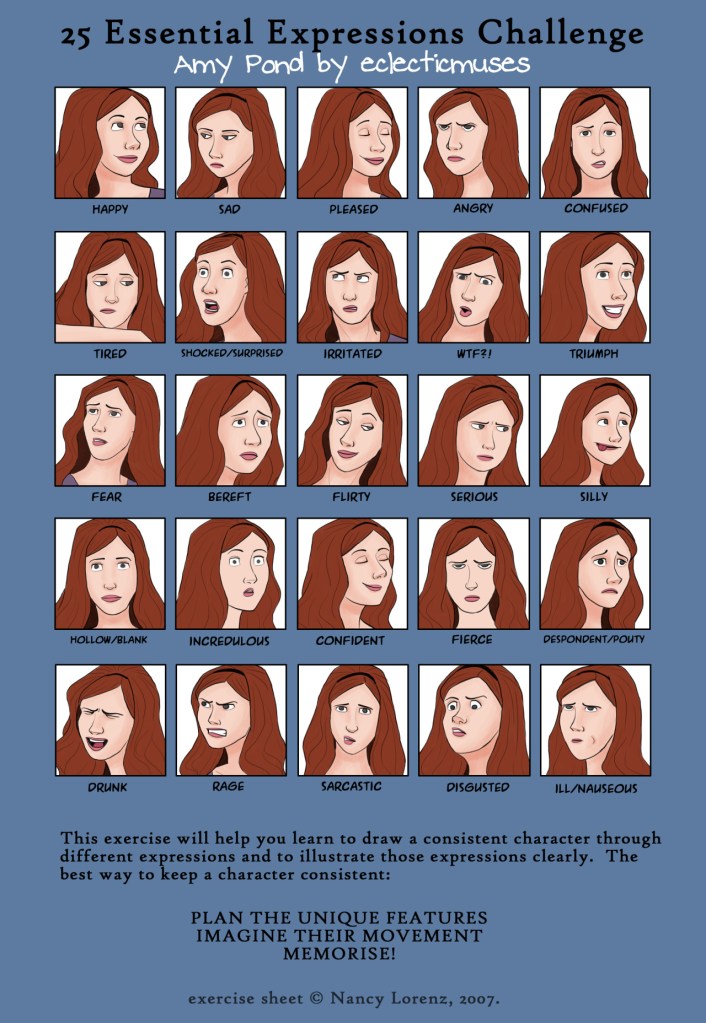
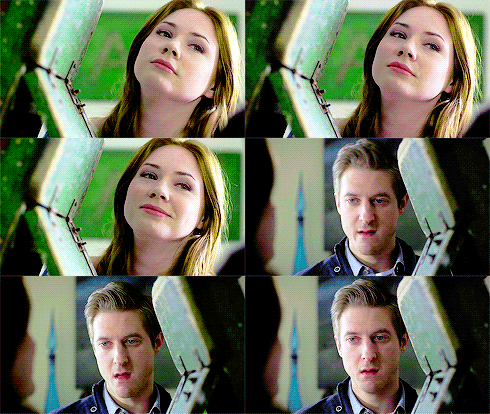
amy pond

“I hate when people say things like, “yeah, maybe Steven Moffatt is a little bit sexist, but he’s still a great writer.” No, he’s not! Leaving aside the gaping plot holes, leaving aside some of the most compelling story lines he’s left untouched, Steven Moffatt should not be considered a “good writer” because he cannot or will not write female characters that are full people. The women in his years of Doctor Who live half their lives as caricatures, and the other half only as people by analogy. That level of poor characterization is the epitome of bad writing.” —

My latest rant on Doctor Who and feminism (via mansplainedmarxist)

I do not think Moffat is a good writer: I think, essentially, he’s a one-trick pony whose one trick (timey wimey stuff!) stopped being clever quite some time ago. His dialogue in the show is usually pretty good, but he’s hopeless at plots, a fact made all the worse by him thinking he’s great at them. I won’t even go into all the thoughtlessly offensive crap he’s spewed over the years, on Twitter and elsewhere – for someone who runs not one but two shows that celebrate thinking, it’s bloody ridiculous how little he actually does. When this leaks into the show itself, it infuriates me.

But that being said, I cannot take seriously any critique of him that writes off Amy, in particular, as not being a ‘full person’. Insofar as any fictional character can be considered anything like a person, Amy qualifies. We know what she does, we know why she does it, we know her thoughts, her feelings, and her fears. We know she’s terrified of abandonment (because: most of the people she’s been close to have abandoned her). We know she hides her emotions (because: she’s afraid of being ‘clingy’, because: everything she’s clung to she’s lost.) We know more about her childhood than we know about almost any of the other companions, we know what her favourite subject was at school and what sport she played. We know who her favourite artist is, and that she’s a good artist herself. We know that when she loves, she loves hard, even though she’ll barely admit this to herself. (see: everything involving her and Rory). We know she’s pretty comfortable around guns and violence, and we know she’s the only modern-day companion to ever actually murder someone in cold blood. (Yes, it was undone shortly after, but she didn’t know for sure that that would happen in the moment she was doing it.) We also know that this affected her to the extent that a few episodes later, she’s adamant that the Doctor not kill someone in revenge.

We’ve seen her grow from immaturity to maturity, we’ve seen her grow from weakness to strength. We have seen -and this is no small thing- that this is a woman who would die rather than lose a loved one. We’ve seen her be the complete opposite of a Strong Female Character (which I’m starting to think is a concept that needs completely, utterly tearing down) because when something goes wrong – when Rory is in danger, when the Doctor appears dead, when her daughter’s taken from her – she goes either completely hysterical or completely catatonic, unable to fight back. The loss or potential loss of a loved one paralyses her completely. Her reaction when Rory is shot by Restac looks like a full-blown panic attack, to me. I can, for what should be obvious reasons by now, relate to that wholeheartedly.

I’ve seen some other things: people commenting that watching Amy’s journey helped them relate to and deal with things in their own lives. Four psychiarists? I’ve been there, and I’m very glad to see someone on my TV screen who also has.

Did inexcusably sexist plotlines (read: the intensely disturbing pregnancy arc) happen to Amy? Hell yes, I’ll never deny that. But regardless of who invented her – and don’t forget that Karen Gillan had a lot of input into her as well – I am exceedingly grateful that she came to life.

Furthermore she is, after all, the only companion of whom you can say that her life has been touched by some form of mental illness. Whether it was realistic, well-written or not is a whole ‘nother debate, but she grew up doubting what was real and what was not. So did I.

Just let me keep my fucked-up, weak, obsessive, panic-attacky girl, and the woman she grew into.


aflawedfashion:

You took my baby from me and hurt her. And now she’s all grown up and she’s fine. But I’ll never see my baby again.
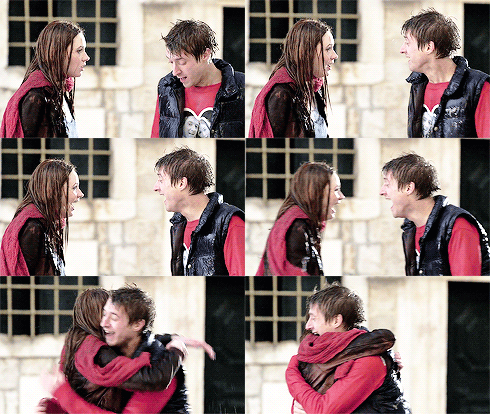
One of the most chilling moments in Doctor Who comes from the look on Amy Pond’s face and the revenge in her voice as she openly defies any moral code she is expected to live by as the Doctor’s associate and kills the woman who kidnapped and tortured her daughter.

You know, for all that Amy wonders what killing Madame Kovarian ‘makes [her] now’, for all that it seems to have affected her, for all that she’s so outspoken against the concept of killing for revenge in A Town Called Mercy…

She never once actually says she regrets it.

Amy Pond, Aunt Sharon, mental health, and child neglect

sarah531:

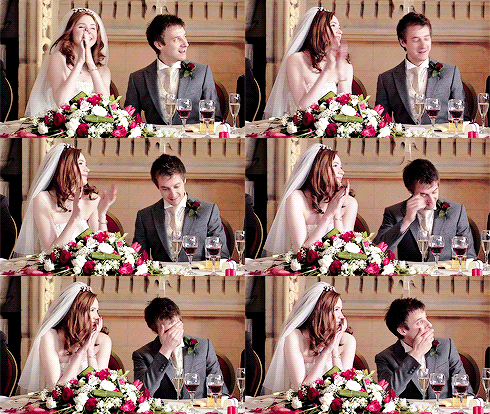
Okay, so: Amy Pond realises halfway through her wedding that there’s someone missing, that while she has gained her parents back she has lost something else. With two different timelines playing through her head, she stands up and calls, begs, for the Doctor. Reactions are…mixed. “The psychiarists we sent her to!” wails her mother. Aunt Sharon, Amy’s sole guardian in the previous version of her childhood, does this:

image

Which is not a look of sympathy.

If you’re anything like me, you may actually wince a little at that gif. My mental health can usually optimistically be described as ‘fragile’, but I’ve had the verbal version of Aunt Sharon’s facepalm hundreds of time. The reactions of both Sharon and Amy’s mother rather indicate that though they tried to help Amy – sending her to psychiarists and the like – they started to flail as soon as the going got rough.

We don’t know much about Amy’s mother, but we actually do know a bit about Aunt Sharon, and unfortunately none of it is positive. When the Doctor first meets seven-year-old Amelia, he’s surprised to realise she’s been left all alone in the middle of the night, but Amelia herself doesn’t seem too bothered, indicating that it’s not an uncommon occurrence. The laws on leaving a child alone at night are iffy about whether it’s an actual offence to leave a seven-year-old home alone, but it’s clearly not a million miles off. And the clock on the wall in the scene in question shows that Sharon was absent from at least 8:30 to 11:20 – god knows what she was up to, but she’s clearly well-off enough to afford a babysitter, or at the very least someone to check in on her very young niece, and she didn’t do those things.

What I’m getting at here is that Amy Pond, in the first version of her childhood, was pretty clearly neglected. There’s the above, but there’s more: she’s been living with Sharon for presumably quite a while, but doesn’t seem to have particularly warm feelings towards her – “I don’t even have an aunt” “You’re lucky”. When we actually meet Aunt Sharon, she seems nice enough, and has hired a psychiarist for Amy, but as soon as Amy says something she doesn’t like she crossly grouches ‘Oh, Amelia!’ Which, for a seven-year-old, would probably just reenforce ideas like ‘positive attention from adults is dependent on whether or not I fit in with their ideas about the world’. It’s no wonder she grows up to push everyone’s boundaries and behave immaturely.

You can debate til the cows come home about whether Amy is “really” mentally ill in a world where the Doctor actually does exist and it’s the people who don’t believe in him who are wrong (at the moment, I’m not gonna talk about that, I’ll just mention that yes, I think she’s got a similar brain to me), but – Amy’s family react to her, in the scenes we see, as if she’s a problem. That rings…

…awfully true, for people living with mental illness.

There’s one line that’s so important to Amy’s characterisation, and it comes right at the beginning. “Give me five minutes, I’ll be right back” says the Doctor. “People always say that,” says seven-year-old Amy. And she’s right: her parents have abandoned her by circumstance, and her aunt by choice. The Doctor then accidentally contributes to this cycle, making the adult Amy even more deeply mistrustful – but I think, all things considered, it wasn’t actually him who stole her childhood.

#I could write long and hard about how amy’s character is so important to me #and why I get so utterly mad when people say there’s nothing about her not linked to the men in her life #because that’s completely dismissing the trauma and mental issues amy suffers from all her life #the reasons behind her choices and the fears she has #amelia pondwas a neglected and marginalized child #who was told her whole life that she was delusional and worth nothing when she was stunningly talented and told nothing but the blunt truth #who fought tooth and nail for her truth #and who rewrote the universe to suit her story because her story was stolen away from her #she is so important and season 5 as a whole is so important (x)

Amy Pond, Aunt Sharon, mental health, and child neglect

Okay, so: Amy Pond realises halfway through her wedding that there’s someone missing, that while she has gained her parents back she has lost something else. With two different timelines playing through her head, she stands up and calls, begs, for the Doctor. Reactions are…mixed. “The psychiarists we sent her to!” wails her mother. Aunt Sharon, Amy’s sole guardian in the previous version of her childhood, does this:

image

Which is not a look of sympathy.

If you’re anything like me, you may actually wince a little at that gif. My mental health can usually optimistically be described as ‘fragile’, but I’ve had the verbal version of Aunt Sharon’s facepalm hundreds of time. The reactions of both Sharon and Amy’s mother rather indicate that though they tried to help Amy – sending her to psychiarists and the like – they started to flail as soon as the going got rough.

We don’t know much about Amy’s mother, but we actually do know a bit about Aunt Sharon, and unfortunately none of it is positive. When the Doctor first meets seven-year-old Amelia, he’s surprised to realise she’s been left all alone in the middle of the night, but Amelia herself doesn’t seem too bothered, indicating that it’s not an uncommon occurrence. The laws on leaving a child alone at night are iffy about whether it’s an actual offence to leave a seven-year-old home alone, but it’s clearly not a million miles off. And the clock on the wall in the scene in question shows that Sharon was absent from at least 8:30 to 11:20 – god knows what she was up to, but she’s clearly well-off enough to afford a babysitter, or at the very least someone to check in on her very young niece, and she didn’t do those things.

What I’m getting at here is that Amy Pond, in the first version of her childhood, was pretty clearly neglected. There’s the above, but there’s more: she’s been living with Sharon for presumably quite a while, but doesn’t seem to have particularly warm feelings towards her – “I don’t even have an aunt” “You’re lucky”. When we actually meet Aunt Sharon, she seems nice enough, and has hired a psychiarist for Amy, but as soon as Amy says something she doesn’t like she crossly grouches ‘Oh, Amelia!’ Which, for a seven-year-old, would probably just reenforce ideas like ‘positive attention from adults is dependent on whether or not I fit in with their ideas about the world’. It’s no wonder she grows up to push everyone’s boundaries and behave immaturely.

You can debate til the cows come home about whether Amy is “really” mentally ill in a world where the Doctor actually does exist and it’s the people who don’t believe in him who are wrong (at the moment, I’m not gonna talk about that, I’ll just mention that yes, I think she’s got a similar brain to me), but – Amy’s family react to her, in the scenes we see, as if she’s a problem. That rings…

…awfully true, for people living with mental illness.

There’s one line that’s so important to Amy’s characterisation, and it comes right at the beginning. “Give me five minutes, I’ll be right back” says the Doctor. “People always say that,” says seven-year-old Amy. And she’s right: her parents have abandoned her by circumstance, and her aunt by choice. The Doctor then accidentally contributes to this cycle, making the adult Amy even more deeply mistrustful – but I think, all things considered, it wasn’t actually him who stole her childhood.