

We’ve previously written about “book curses” and other threatening inscriptions left by the young owners of early textbooks. But while these formulaic ownership notes were fairly common, they certainly weren’t the only things schoolchildren were penning in their books.
Not every student cared for their textbooks enough to claim ownership so strongly. On the contrary, another very common type of annotation we see in schoolbooks of this era is the student complaint – many schoolchildren, especially in the 19th and early 20th centuries, used the flyleaves and margins of their textbooks to make disparaging remarks about their teachers, classes, or the books themselves.
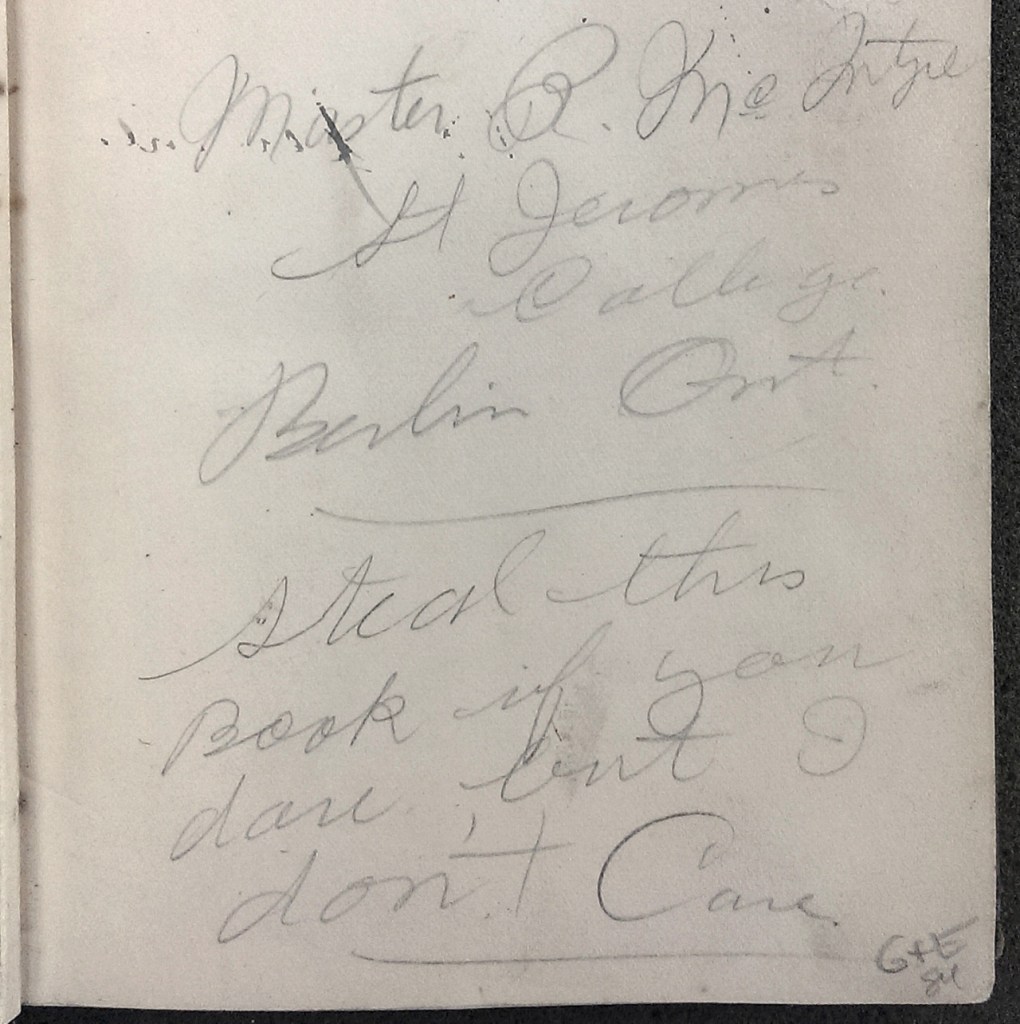
The owner of our first book above, an 1881 textbook of “natural philosophy,” puts his own indifferent twist on a traditional ownership rhyme:
Steal this
Book if you
dare, but I
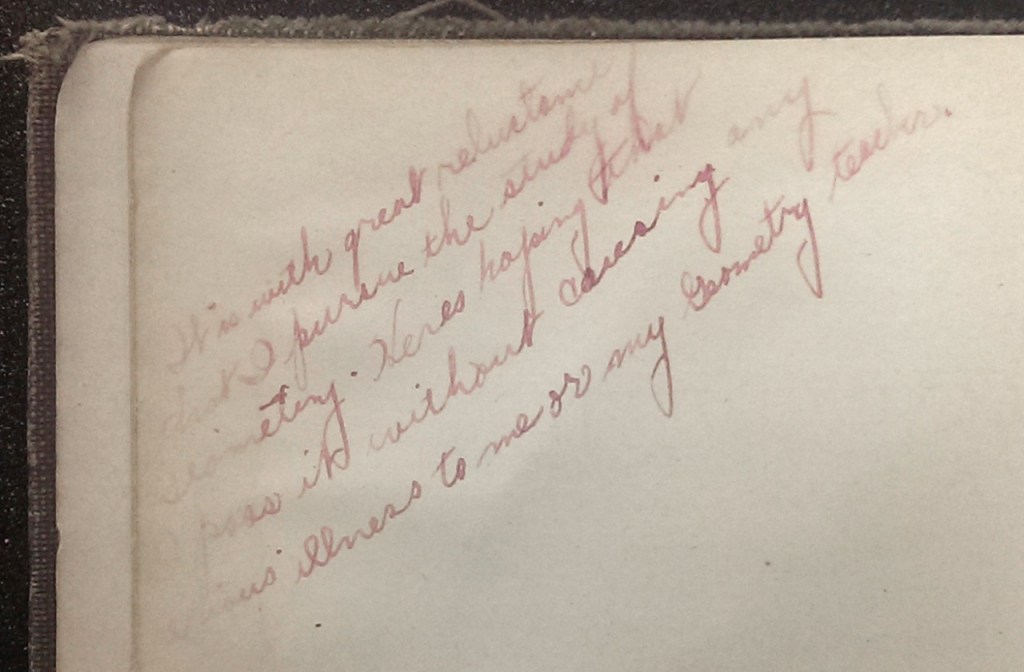
don’t care.The second note, penned in a 1913 geometry text by a female student (she identifies herself elsewhere in the book), playfully expresses the annotator’s reservations about her math class:
It is with great reluctance
that I pursue the study of
Geometry. Heres hoping that
I pass it without causing any
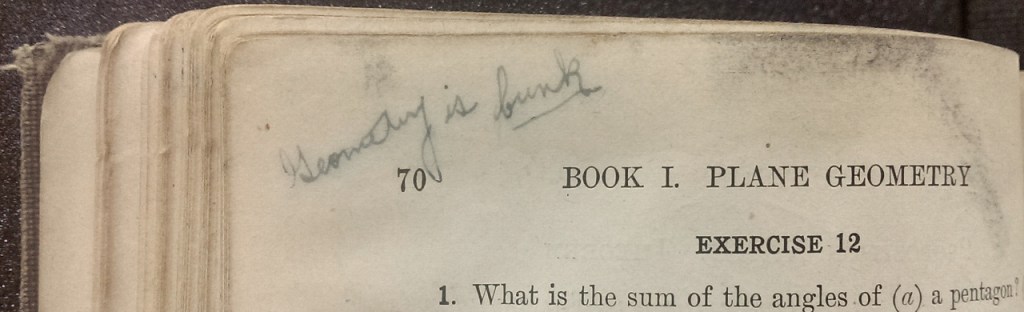
serious illness to me or my Geometry teacher.Later in the same volume, we find a terse update in the same hand:
Geometry is bunk.
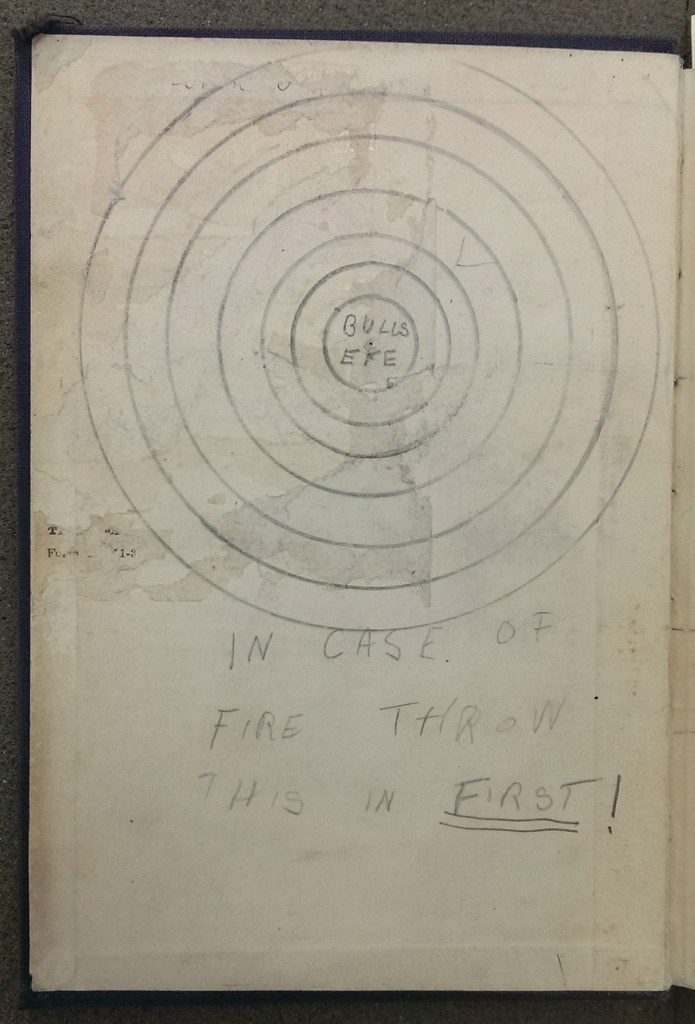
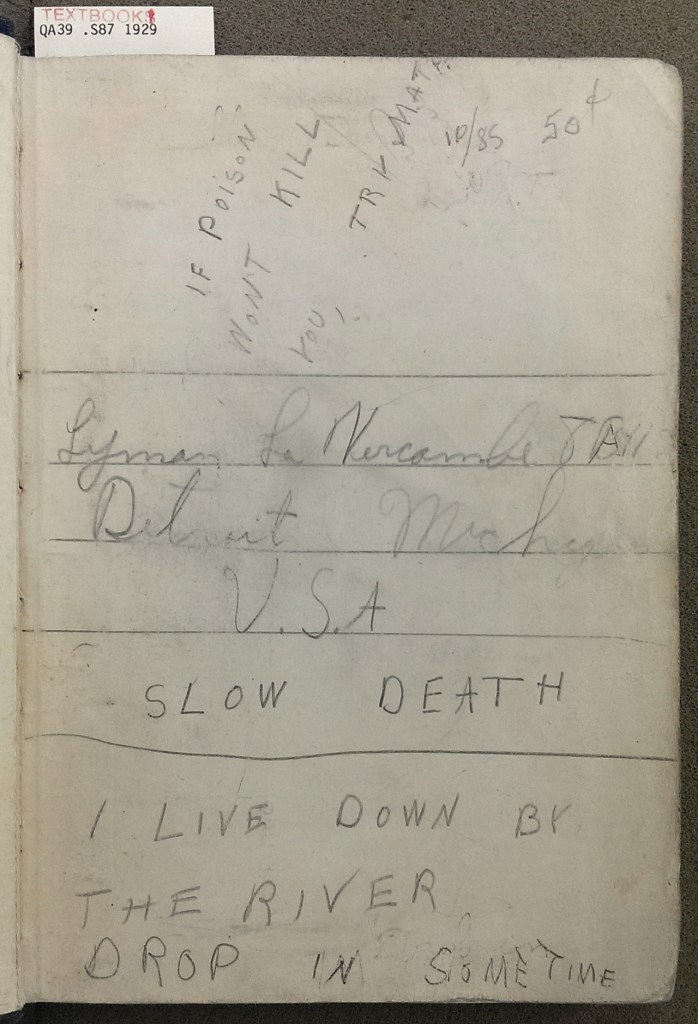
Perhaps it should come as no surprise that math classes have aroused similar feelings in other students. Some of our next annotations, in a 1929 junior mathematics textbook, take aim at the book itself (literally). In addition to the target drawn on the pastedown, we find a number of acerbic inscriptions:
IN CASE OF
FIRE THROW
THIS IN FIRST!If poison
wont kill
you, try mathSLOW DEATH
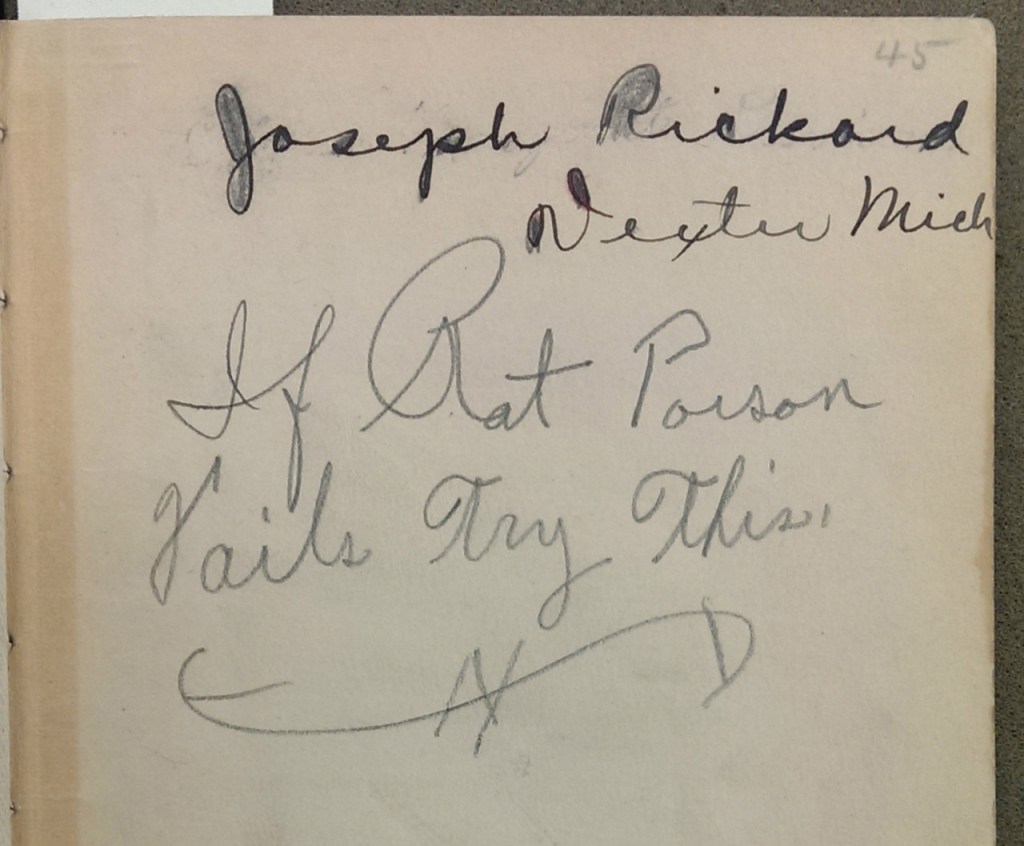
But of course it wasn’t only math that had students complaining. We find a take on the “poison” line used above in another 1920s textbook, this one a 5th and 6th grade Aldine Speller:
If Rat Poison
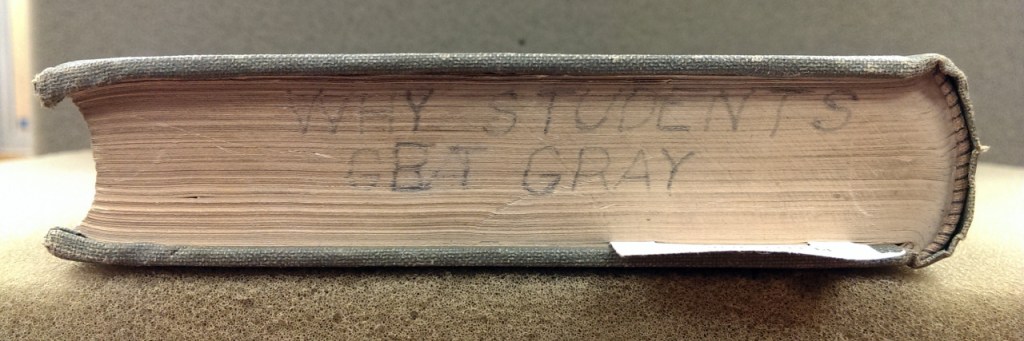
Fails Try This.And penciled on the top edge of a 1923 composition textbook, we find this accusatory line:
WHY STUDENTS
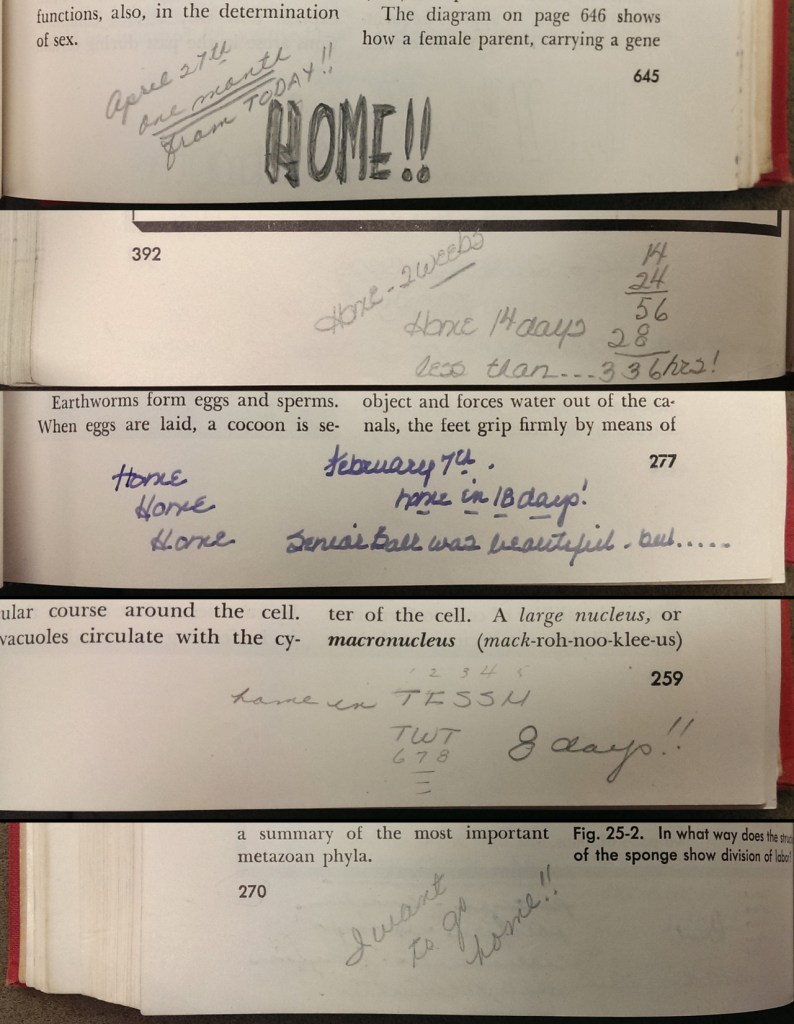
GET GREYOur final set of examples is a little different. While the previous user of this 1950s biology text doesn’t often explicitly complain about her class, she does make use of her schoolbook’s margins to make dozens and dozens of notes counting down the weeks, days, or hours until she can leave her boarding school and return home.
These are just a few examples of the colorful inscriptions found in our textbook collection. Schoolchildren of the past, just like students of today, expressed a range of emotions about their classes – and just like today, those emotions were often (unfortunately) indifferent or negative.
~Andrew